
Do Self-Driving Features Complicate Charlotte Car Accident Claims?

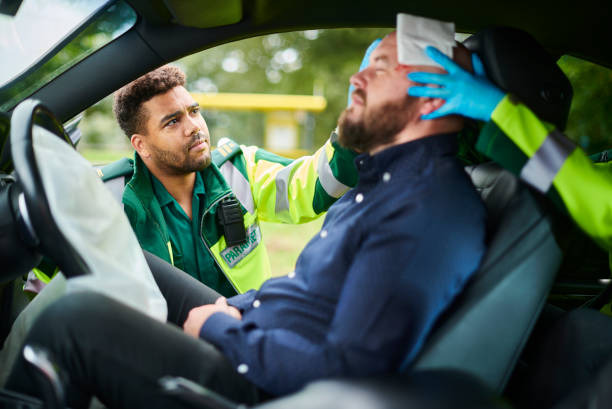
A vehicle equipped with autonomous driving features generates thousands of data points per minute, recording everything from steering angle to braking pressure. When a collision occurs, that same data stream often dictates fault long before a police report becomes available. While advanced driver assistance systems provide critical data, traditional eyewitness accounts remain a fundamental component of motor vehicle accident claims and do not guarantee a denial.
The presence of autopilot technology may introduce elements of product liability into a claim, though driver negligence remains the primary focus in systems requiring human supervision. A local dispute over a red light suddenly involves global software companies and massive corporate defense budgets.
How Vehicle Telemetry Overrides Witness Testimony
Data collected by modern vehicles fundamentally changes how fault is assigned after a collision. Human memories fade or distort over time, while digital logs remain pristine. Attorneys must secure these electronic records immediately because physical evidence alone rarely tells the full story. While highly accurate, electronic logs and sensor data can be subject to calibration errors, software glitches, or misinterpretation, requiring specialist forensic analysis.
Black Box Event Data Recorders
Nearly all modern vehicles contain event data recorders that capture metrics in the seconds preceding an impact. This hardware tracks vehicle speed, seatbelt status, and brake application. Extracting this information requires specialized software interfaces. Event Data Recorders store data locally; while continued driving in non-deployment events may overwrite previous data, manufacturers do not remotely delete these files.
Cloud-Stored Sensor Logs
Advanced driving systems continuously transmit telemetry data back to corporate servers. Cameras and radar sensors generate a three-dimensional reconstruction of the environment leading up to the collision. Accessing this remote data requires aggressive legal action because tech companies fiercely guard their proprietary datasets.
Following a collision, you can immediately protect your rights by coordinating with Stewart Law Offices. Their attorneys provide assertive representation and will travel directly to visit you if you are unable to reach their office. You can contact them at (704) 521-5000 or visit 2427 Tuckaseegee Rd, Charlotte, NC 28208.
The Liability Shift From Human To Machine
Vehicles operating with engaged self-driving software introduce an immediate conflict over who is responsible for a crash. Traditional tort law evaluates human negligence by measuring whether a driver acted reasonably under specific road conditions. Autonomous features blur this line by introducing a third party into the driver’s seat.
Establishing fault now requires analyzing whether the human driver failed to take control or whether the machine failed to relinquish it. Retaining a Charlotte car accident lawyer encompassing the work of Stewart Law Offices, named the 2026 Best Personal Injury Law firm by the Post and Courier, provides the resources necessary to address this detailed technological analysis. These claims require forensic evaluation rather than just witness statements. Liability rests on split-second data.
The Reality Of Multiple Corporate Defense Layers
When a crash involves autonomous technology near the South End or along I-77, the defense strategy shifts immediately. The human driver’s insurance company will invariably point the finger at the vehicle manufacturer. The manufacturer will then blame the software subcontractor or assert that the human driver ignored system warnings.
This cyclical blame game stalls the recovery process. “In an era of autonomous vehicles, data is the ultimate eyewitness. Traditional accident reconstruction is obsolete if you fail to legally secure the vehicle’s cloud and sensor logs before the manufacturer purges the files or hides behind proprietary trade secrets,” stated Brent Stewart, a 2026 Best Overall Attorney award winner, Charlotte car accident attorney. Defeating this strategy requires serving preservation letters to all potential corporate entities simultaneously. Delays destroy cases.
When The Manufacturer Becomes A Defendant
Filing a lawsuit at the Mecklenburg County Courthouse against an automotive manufacturer involves entirely different procedural hurdles than a standard negligence claim. These corporations deploy massive legal teams to protect their intellectual property. Injured parties recovering at Atrium Health Carolinas Medical Center often face intense pressure from adjusters seeking early settlements before the full scope of the software failure becomes apparent.
According to the National Safety Council, medically consulted injuries in motor vehicle incidents totaled 4.9 million in 2024. Treating these severe injuries requires substantial financial resources. Victims cannot rely on basic insurance limits when a defective machine causes catastrophic harm. The stakes are massive.
The Challenge Of Accessing Proprietary Software Data
State agencies track overall roadway safety, but they rarely investigate the granular software failures that cause specific crashes. The North Carolina Department of Transportation notes that reportable traffic crashes in the state increased by 3.8 percent in 2023. Proving that an autonomous system malfunctioned requires accessing the manufacturer’s source code and system design documents.
Companies heavily resist these discovery requests by citing trade secret protections. Overcoming these objections requires filing specific motions to compel. Judges refuse to grant access to this data without a highly specific technical justification. General allegations fail. Separately, the Bureau of Labor Statistics reports that transportation incidents account for 38.2 percent of all occupational fatalities, highlighting the widespread hazard of experimental driving systems on public roads.
Why Immediate Action Preserves Digital Evidence
The legal framework surrounding self-driving vehicles remains under constant development. State laws dictate specific operational parameters for these technologies. North Carolina statutes specify that a child under 12 years of age shall not be an unaccompanied occupant in a fully autonomous vehicle.
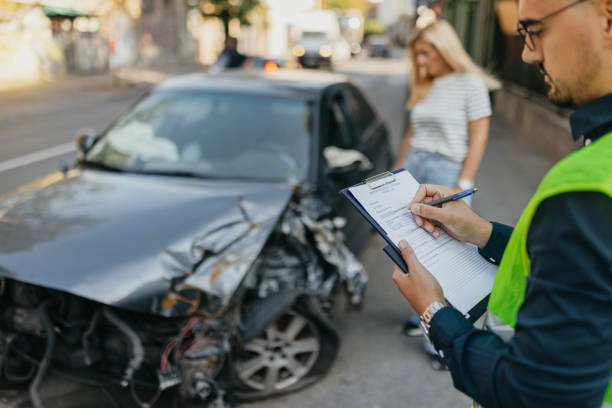
Because the technology outpaces the legislation, securing physical and digital evidence immediately after a collision remains the only way to build a viable claim. Skid marks wash away rapidly. Cloud data gets overwritten. Rapid investigation secures the facts before they vanish into a corporate server. Action creates results.
Questions About Autonomous Vehicle Accidents
How long do car manufacturers keep autonomous crash data?
Manufacturers often overwrite local event data recorders within weeks or even days, depending on the storage capacity. Cloud-stored telemetry data might remain accessible longer, but companies routinely purge unflagged files. Sending a formal spoliation letter immediately prevents the legal destruction of this digital evidence.
Does an active autopilot feature automatically shield a driver from fault?
No. Current state laws mandate that human operators remain alert and ready to resume control at any moment. If digital logs prove the driver ignored warnings to place their hands on the wheel, the human driver remains liable for the resulting collision.
Can injured parties access vehicle sensor footage without a subpoena?
Voluntary release of video data by tech companies rarely happens without formal legal pressure. These corporations view sensor data as proprietary intellectual property. Obtaining this footage requires filing a lawsuit and executing formal discovery requests specifically targeting the company’s data retention departments.
This content is for informational purposes only and does not constitute legal advice. Readers should consult a licensed attorney for guidance specific to their situation.