
Ford’s Mystery EV Truck Is Hiding in Plain Sight

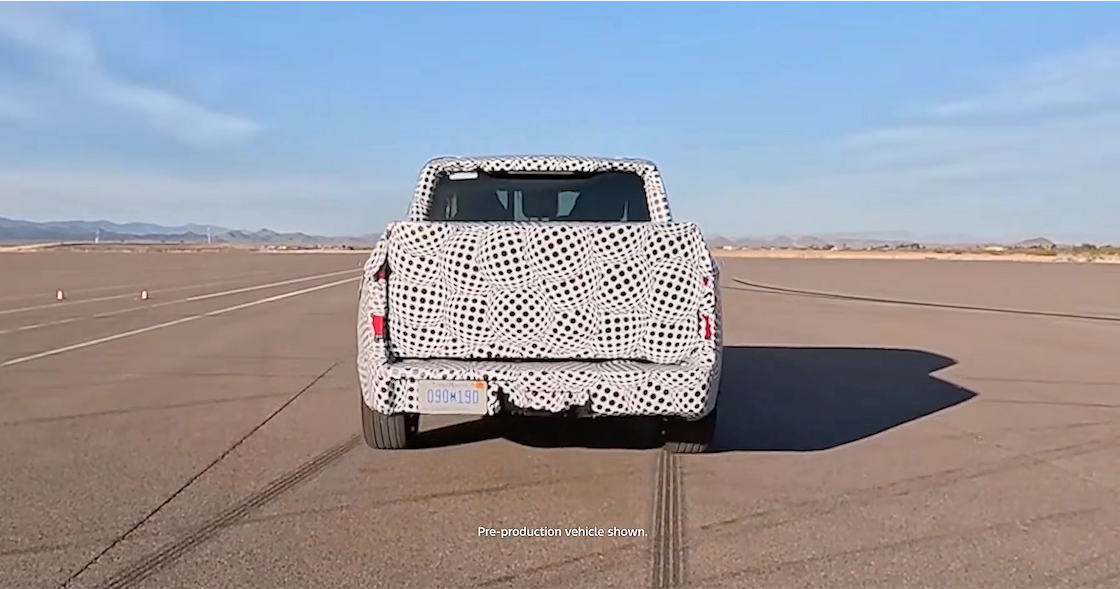
Ford has been showing off a heavily camouflaged pickup prototype in desert heat, cold-weather testing, and wide-open development environments. Ford’s teaser page calls it a “unicorn,” which is a cute way of saying, yes, this truck is real, yes, Ford knows people are watching, and yes, it is coming.
But the bigger story is not the camouflage. It is what is underneath it.
This prototype is tied to Ford’s new Universal EV Platform, which is supposed to launch with a midsize, four-door electric pickup arriving in 2027. Ford is targeting a starting price of about $30,000, and if the company can actually deliver that, this could be one of the more important electric vehicles to come from a Detroit automaker.
Not because it is the flashiest. Because it could be the most realistic.
It looks smaller, and that may be the point

From the prototype footage and images, this does not appear to be another full-size electric truck. It looks smaller and more manageable than an F-150 Lightning, which could be exactly what a lot of buyers actually need.
Ford has described the upcoming truck as midsize, but the more interesting detail is how much space Ford says it will offer. The company says the truck is expected to have more passenger room than a Toyota RAV4, while also offering both a frunk and a bed.
That is the kind of packaging advantage EVs are supposed to deliver.
For everyday life, this could be the sweet spot. A truck bed for weekend projects, sports gear, mulch runs, camping equipment, bikes, coolers, and all the other stuff people do not want inside the cabin. A second row that should still work for normal passenger duty. And a smaller footprint that should be easier to park, easier to maneuver, and easier to live with than the massive EV trucks we have already seen.
Ford already proved with the Maverick that there is real demand for a smaller, more affordable pickup. This new EV truck sounds like it may be aiming at a similar idea, just with a fully electric twist.
Ford is trying to make affordability the headline
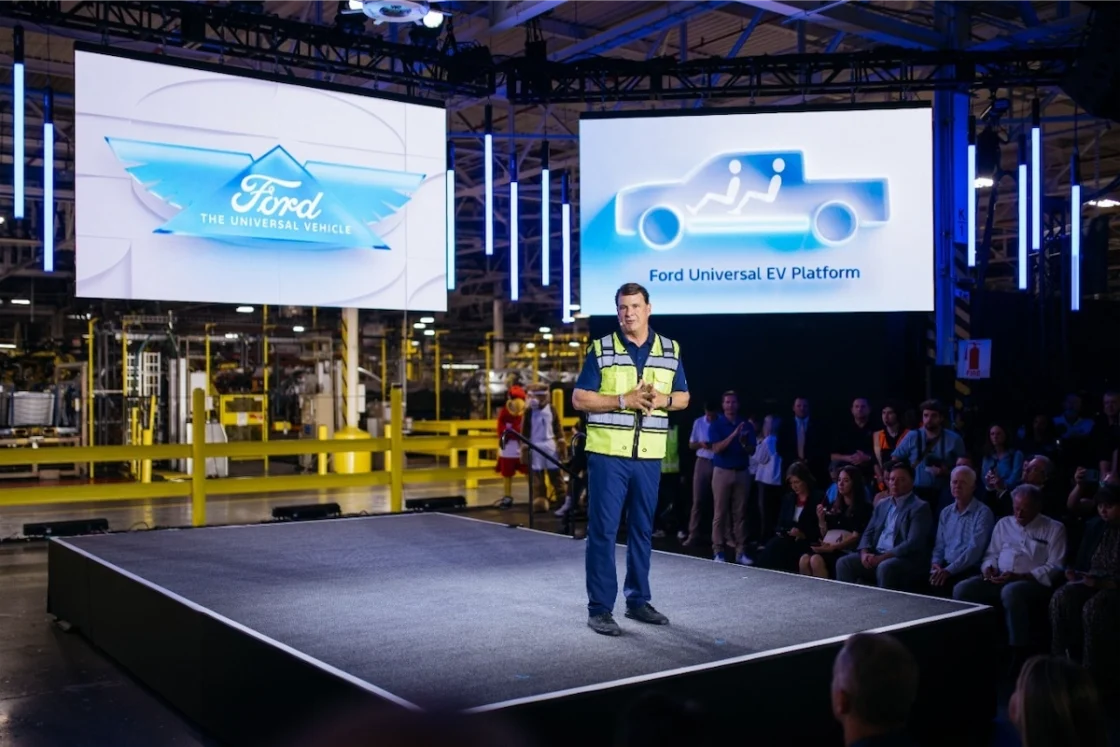
The targeted $30,000 starting price is the detail that matters most.
Electric trucks have been impressive, but many have also been expensive, heavy, and overbuilt for the way most people use a truck. Ford appears to be taking a different approach here by focusing on lower cost, lower complexity, and a more efficient manufacturing process from the beginning.
Ford says the Universal EV Platform uses 20% fewer parts than a typical vehicle, 25% fewer fasteners, 40% fewer dock-to-dock workstations, and 15% faster assembly time. The company also says the truck’s wiring harness will be more than 4,000 feet shorter and about 22 pounds lighter than the harness used in Ford’s first-generation electric SUV.
That may sound like factory-floor trivia, but it matters. Fewer parts and less complexity can help reduce cost, improve quality, and make the vehicle easier to build at scale.
Ford is also using lithium iron phosphate batteries, commonly called LFP batteries. These batteries do not use nickel or cobalt, and they are typically known for lower cost and durability. Ford says the new prismatic LFP battery pack will also serve as a structural floor assembly, helping reduce weight, lower the center of gravity, and open up more interior space.
In other words, Ford is not just trying to make a cheaper EV by cutting features. It is trying to rethink the vehicle around cost and efficiency from the start.
The factory story is almost as important as the truck

Ford is investing nearly $2 billion into Louisville Assembly Plant to build this midsize electric pickup. That investment is part of a larger roughly $5 billion plan when combined with Ford’s previously announced BlueOval Battery Park Michigan investment, where the prismatic LFP batteries are expected to be produced.
The production system is new, too.
Instead of relying only on the traditional moving assembly line format, Ford says it is creating a Universal EV Production System. The idea is to build major parts of the vehicle in parallel, then bring them together later in the process.
Ford describes it as a way to simplify assembly, reduce reaching and twisting for workers, and improve quality. The company says this setup could make assembly of the midsize electric truck up to 40% faster than the current vehicles built at Louisville Assembly Plant.
That is a big claim, but it also shows why this truck matters so much to Ford. This is not just a new product. It is a new way for Ford to build lower-cost EVs in America.
The truck still needs to prove itself

As promising as this sounds, there are still a lot of unanswered questions.
Ford has not given us final range, battery size, charging speed, towing capacity, payload, trim details, or final pricing. Those are the numbers that will decide whether this truck is a great idea on paper or a real-world winner.
The price target is especially important. A roughly $30,000 electric pickup sounds fantastic, but the final transaction price will depend on trims, options, availability, incentives, dealer behavior, and how much equipment Ford includes at the entry level.
Range will matter, too. A smaller, more affordable EV truck does not need to tow like a Super Duty or road-trip like a luxury EV SUV, but it does need to give buyers enough confidence that it can handle daily driving, weekend errands, and the occasional longer trip without becoming a planning exercise.
Charging speed and charging access will also play a major role. Ford has access to Tesla Superchargers through an adapter now, and future Ford EVs are expected to use the North American Charging Standard port, but the details for this specific truck still matter.
Why this could be Ford’s most important EV yet

The EV market is not where it was a few years ago. The hype has cooled, buyers are more cautious, and automakers are learning that expensive electric flagships are not enough.
That is why this truck could matter.
If Ford gets this right, it could offer something the market still does not really have: a useful, approachable, reasonably priced electric pickup from a brand truck buyers already know. Not a six-figure statement piece. Not a giant EV that weighs nearly as much as a commercial vehicle. Just a smart, smaller pickup with good space, real utility, and an ownership cost that makes sense.
Ford says the truck should be as quick as a Mustang EcoBoost, offer over-the-air updates, and cost less to own over five years than a three-year-old used Tesla Model Y. Those are bold benchmarks for a vehicle that is also targeting an affordable price point.
Of course, Ford has to deliver. The truck needs to look right, feel right, charge well, have enough range, and avoid feeling like a compromise. But the early signs are encouraging.
The camo-covered prototype may look like a mystery today, but the mission is becoming pretty clear. Ford is not just trying to build another electric truck. It is trying to build the electric truck more people can actually justify.