
$24,950 for a Brand New Truck?


The Slate Truck strips the modern pickup back to basics with a low price, simple EV powertrain, real utility, and a build-it-your-way approach that could make a lot of sense for everyday life.
Pickup trucks have gotten big. Really big.
They have also gotten expensive, complicated, heavy, tech-filled, and in some cases, a little too fancy for the jobs many people actually need them to do. That is what makes the Slate Truck so interesting.
Instead of chasing luxury-truck buyers with massive screens, power-everything features, and a price tag that looks more like a mortgage payment, Slate is going in the opposite direction. This is a small, simple, electric pickup with a starting price of $24,950, basic controls, a 5-foot bed, and a whole lot of room for owners to make it their own.
For families trying to stretch a budget in 2026, that kind of simplicity might be more than a gimmick. It might be exactly the point.
The price is the headline
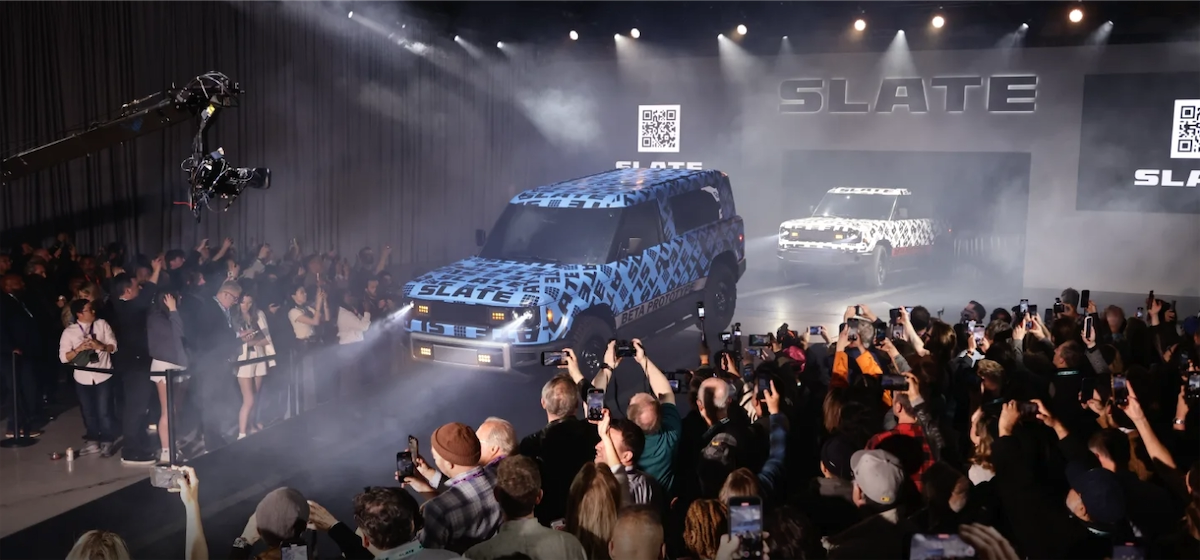
The Slate Truck starts at $24,950, which immediately makes it stand out in a truck market where affordability has become harder and harder to find. That price is half the price of an average new vehicle sold in America today.
Trucks have drifted far away from their original purpose for a lot of buyers. Today, many pickups are luxury vehicles first and work vehicles second, especially here in Texas. That is great if you want massaging seats, massive screens, leather everywhere, and four-figure monthly payments. It is less great if you just need something practical for commuting, home projects, weekend errands, or hauling gear.
Slate seems to understand that not every truck buyer is looking for a status symbol. Some people just need useful transportation that does not eat the entire family budget.
That is the most interesting part of this truck. The price is not low because Slate forgot to add a few fancy features. The price is low because the entire truck was built around the idea of not adding things buyers may not need in the first place.
It is electric, but not trying to be futuristic for the sake of it
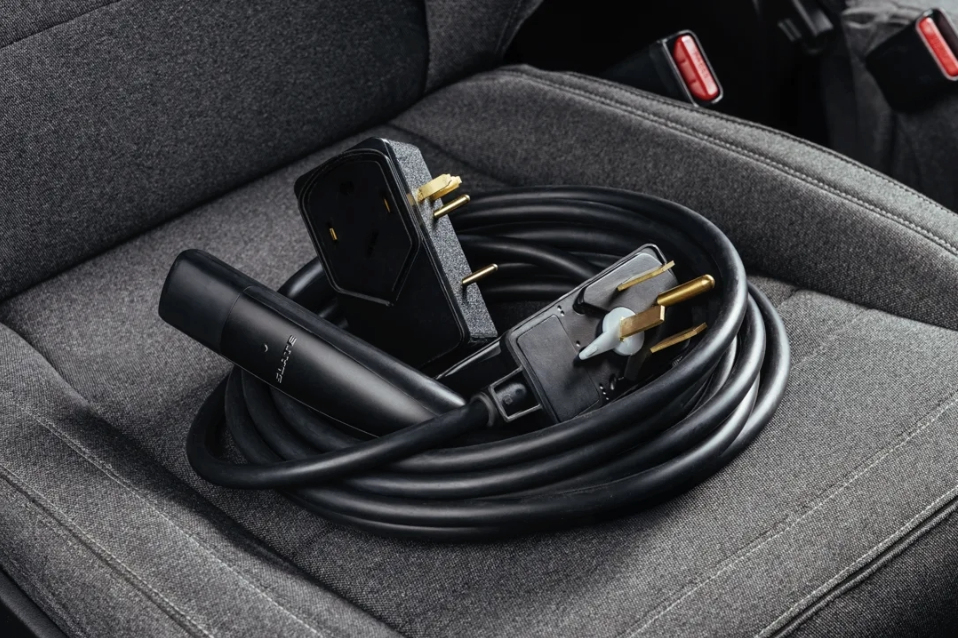
The Slate Truck is powered by a 65-kWh lithium iron phosphate battery and a single rear-mounted electric motor. Output is rated at 181 horsepower and 195 lb-ft of torque, with an estimated 0-60 mph time of 8 seconds and a top speed of 90 mph.
No, that is not going to win a drag race against a high-output luxury EV truck. That is also not the point.
Slate estimates 205 miles of range, which should be enough for a lot of weekday driving, school drop-offs, hardware store runs, short commutes, and around-town family duty. Charging is listed at about 14 hours from a standard household outlet, roughly 4 hours from a 240-volt connection, or about 30 minutes with a DC fast charger.
The truck also uses the NACS charging port, commonly known as the Tesla-style plug, which should help with public charging access as more automakers move in that direction.
For families who already have a larger road-trip vehicle in the driveway, the Slate Truck could make more sense as a second vehicle than as the only vehicle. That is not a knock. In fact, it may be where this truck fits best.
The size feels intentionally useful
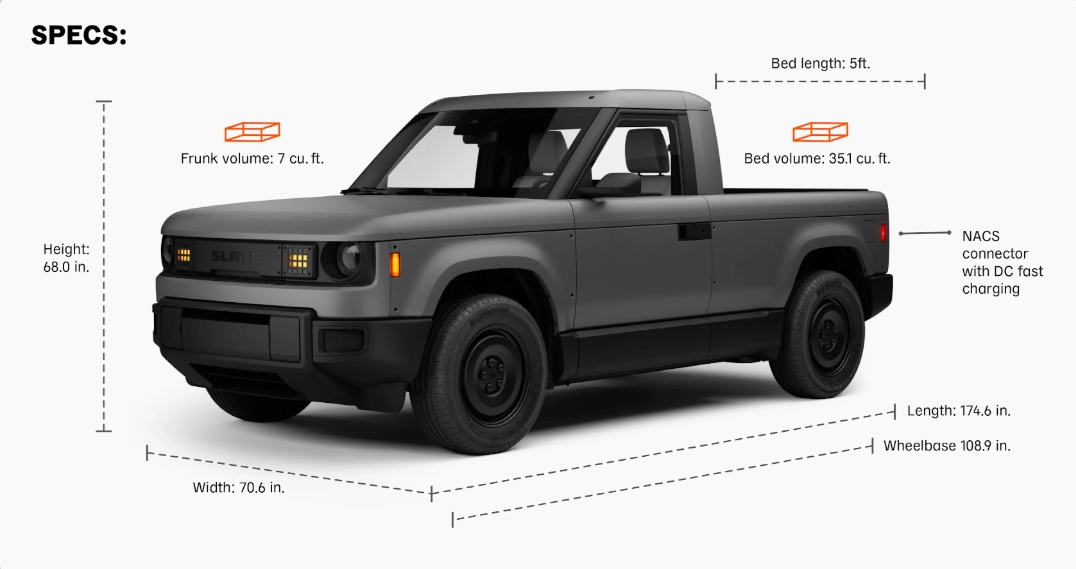
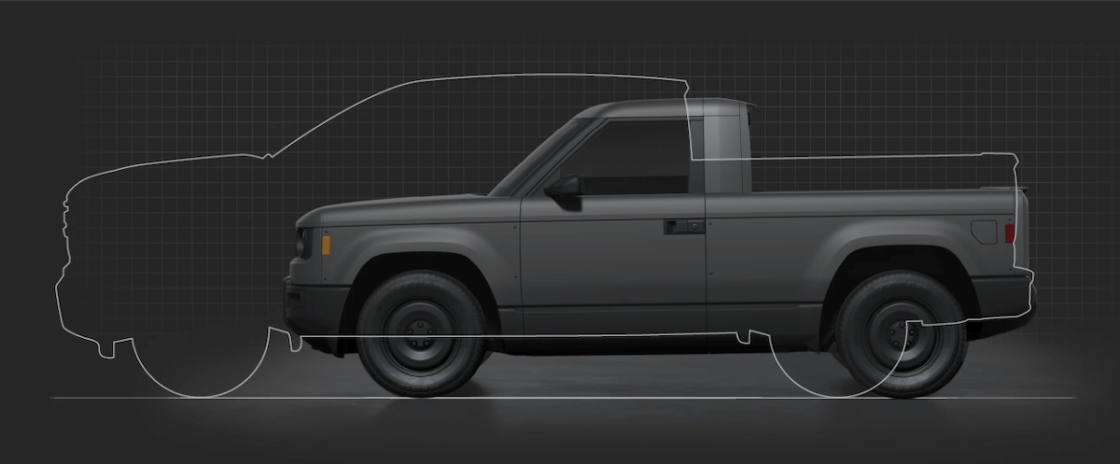
Slate did not try to make this truck huge. It is a two-door, two-seat pickup, and that decision is part of the whole simplicity play.
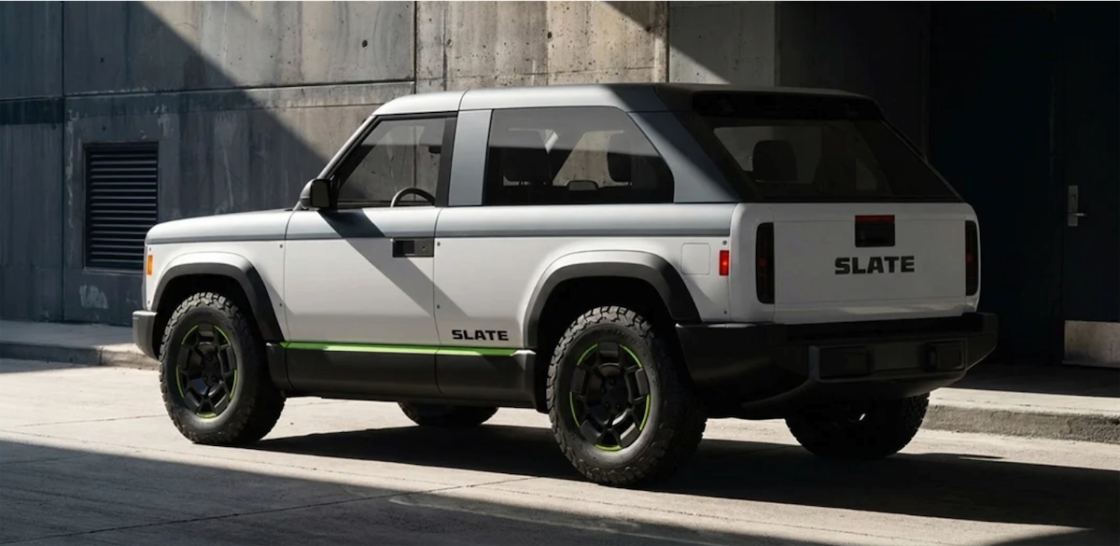
That will immediately limit its appeal for some families, especially anyone who needs to regularly carry kids in the back seat. But Slate is also offering an SUV-style configuration, and the truck can be converted later into Squareback or Fastback SUV forms. That kind of flexibility is rare in today’s market.
As a pickup, Slate says the truck has a 5-foot bed with 35 cubic feet of cargo space. With the tailgate down, the bed stretches to 6.725 feet. There is also a 7-cubic-foot front trunk.
Payload is rated at 1,550 pounds, while towing capacity is listed at 2,000 pounds.
Those numbers are not full-size truck numbers, but they do cover a lot of real-world needs. Mulch, sports gear, camping supplies, bikes, weekend projects, small trailers, and the random oversized thing you did not plan on buying at the store, this is the kind of work a lot of people actually do with a truck.
And because it is smaller, it should also be easier to park, easier to maneuver, and less stressful in daily use than the full-size trucks that have grown into rolling living rooms.
The interior is refreshingly basic
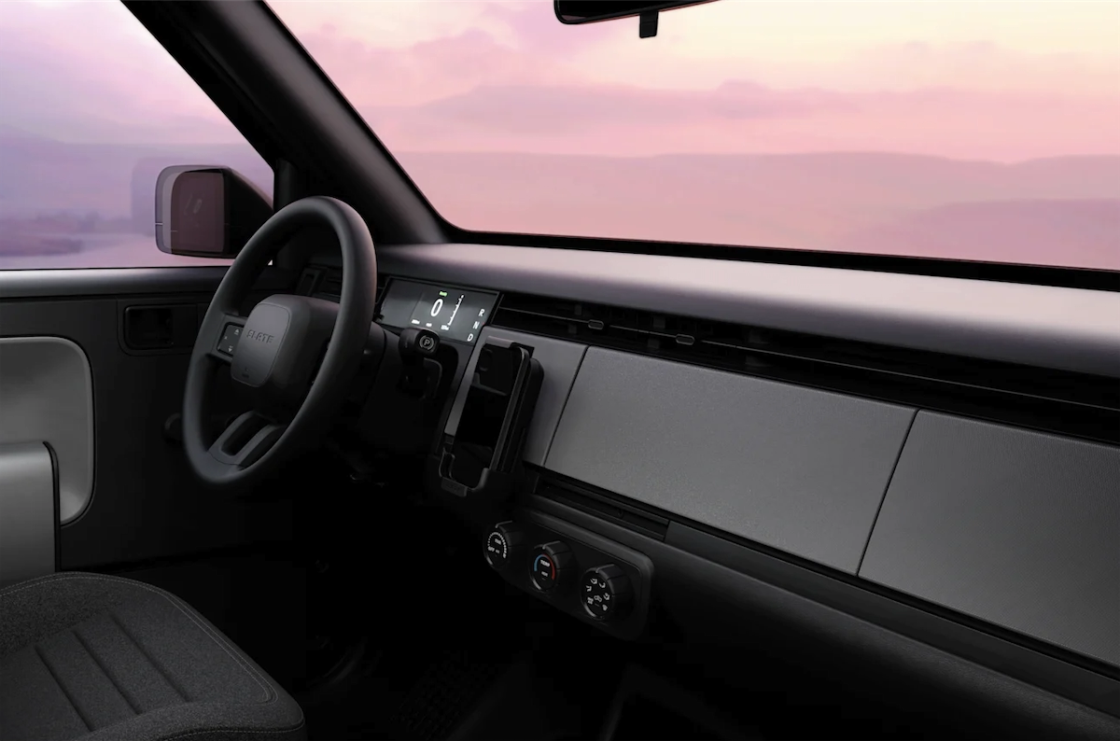
One of the boldest things about the Slate Truck is what it does not have.
There is no giant touchscreen taking over the dashboard. There is no complicated infotainment system trying to run your entire life. Instead, Slate leans into physical controls and a bring-your-own-tech approach, with a place for your phone or tablet near the steering wheel.
That may sound too basic at first, but it could be a welcome change for a lot of buyers.
Modern vehicles are packed with screens, menus, updates, subscriptions, and settings buried three taps too deep. Slate is betting some people are tired of that. Families may appreciate that, too. When life is already noisy, a simple cabin with actual controls can feel like a feature.
This will not be the truck for someone who wants every luxury convenience built in. But for the person who wants fewer distractions and fewer things to break, Slate’s approach starts to make sense.
Customization is built into the plan
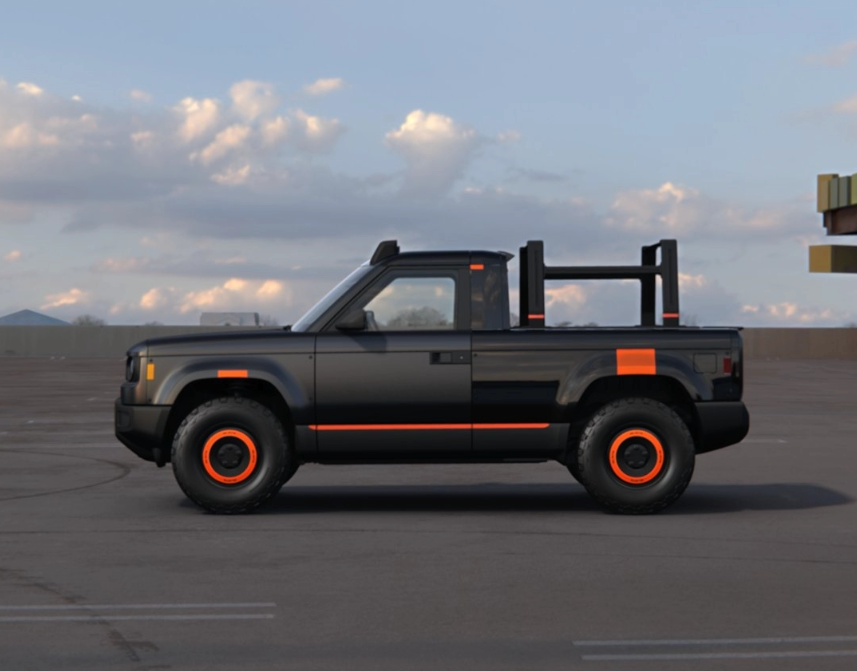
Slate calls this a blank-slate vehicle, and that is not just clever branding.
The truck comes in slate gray from the factory, and the company designed the body with simple coach lines to make wraps easier. More than 100 wrap colors are expected, and Slate says wraps will cost less than $500 and can be installed in hours rather than days.
The company also plans to offer more than 200 accessories through its marketplace, with more than 80 percent priced under $500.
Customization usually gets expensive fast, but here, the idea is to let buyers start simple and add what they need over time. Maybe that means starting with the basic pickup, then adding storage, graphics, utility items, or an SUV conversion later.
For a family budget, that approach is appealing. You do not have to pay for every feature on day one. You can build toward what you actually use.
Repairs and service are part of the simplicity story
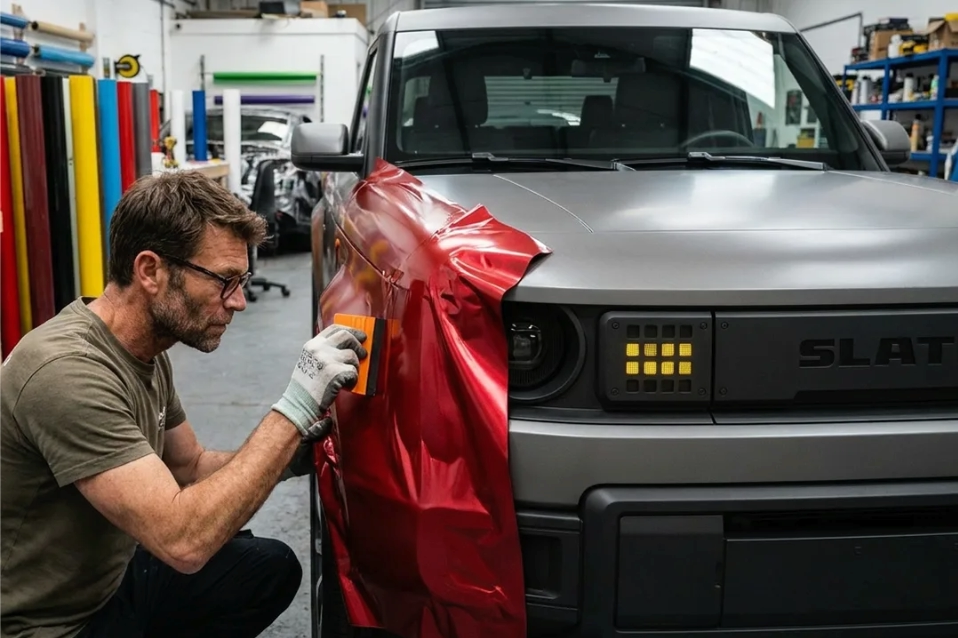
The Slate Truck is also designed with repairability in mind. The use of composite body panels and exposed fasteners is meant to make some parts easier to remove or replace.
Slate also plans to support owners through Slate U, which is described as a way for owners to handle some repairs themselves. For work that needs a professional, Slate says owners will have access to more than 3,000 RepairPal shops and more than 100 facilities equipped for EV service.
The truck also comes with a 10-year, 110,000-mile battery and powertrain warranty.
That service strategy will be important. Slate is a new company, and buyers will want to know they are not stranded if something goes wrong. A low price gets attention, but long-term support is what will determine whether this idea works in the real world.
The American manufacturing angle is worth watching
Slate was founded in 2022 and is based in Troy, Michigan. The truck was designed and engineered in Michigan and California, with production planned for Warsaw, Indiana.
The company plans to invest nearly $400 million in Indiana and create more than 2,000 jobs. Deliveries are expected to begin in the fourth quarter of this year.
That gives this story another layer. Slate is not just talking about affordability. It is also trying to build a simpler vehicle with American engineering and U.S. production behind it.
For buyers who care about where their vehicle is built, and the jobs connected to that production, that could become part of the appeal.
Final thoughts
The Slate Truck is not trying to be everything for everyone.
It is small. It is simple. It is electric. It is two-door in its most basic form. It will not replace a three-row SUV for family road trips, and it will not replace a full-size truck for heavy towing.
But that is exactly why it is interesting.
The Slate Truck feels like a response to a market that has gotten too expensive and too complicated. It is a reminder that useful can still be cool, simple can still be smart, and affordable still matters.
For families in 2026, that may be the biggest story here. Not everyone needs more truck. Some people just need the right amount of truck, at a price that still leaves room in the budget for everything else.