
Even an 1,800-Horsepower Bugatti Has to Pass the Summer A/C Test


Here in East Texas, we know summer heat. Every parent has climbed into a car that’s been baking in a parking lot and prayed the A/C kicks in before the kids start complaining. As it turns out, even the 1,800-horsepower Bugatti Tourbillon has to pass that same test.
Bugatti just took its new hypercar to southern Spain for hot-weather testing, where temperatures climbed past 104°F. The goal wasn’t just to see how fast it could go. It was also to make sure the cabin stays comfortable, no matter how hot it gets outside or how hard the car is working. Here’s a look behind the scenes, and why it’s more relatable than you might think.
Why Bugatti Took the Tourbillon to Seville

Bugatti’s development team set up shop at a racetrack in Seville, Spain, for several days of testing. The program is featured in the latest episode of Bugatti’s documentary series, “A New Era: Extreme Conditions pt. 2,” on the official Bugatti YouTube channel.
Testing focused on three main areas:
- How well the cabin climate-control system performs
- Temperatures across the car’s critical components
- Validation of the Tourbillon’s overall cooling system
This isn’t the car’s first trip into the heat, either. Roughly 15 months earlier, an earlier test vehicle went to Dubai and saw temperatures above 122°F. Spain was the next step, this time with more advanced validation prototypes that are closer to the finished car.
A Hybrid V16 Makes a Lot of Heat
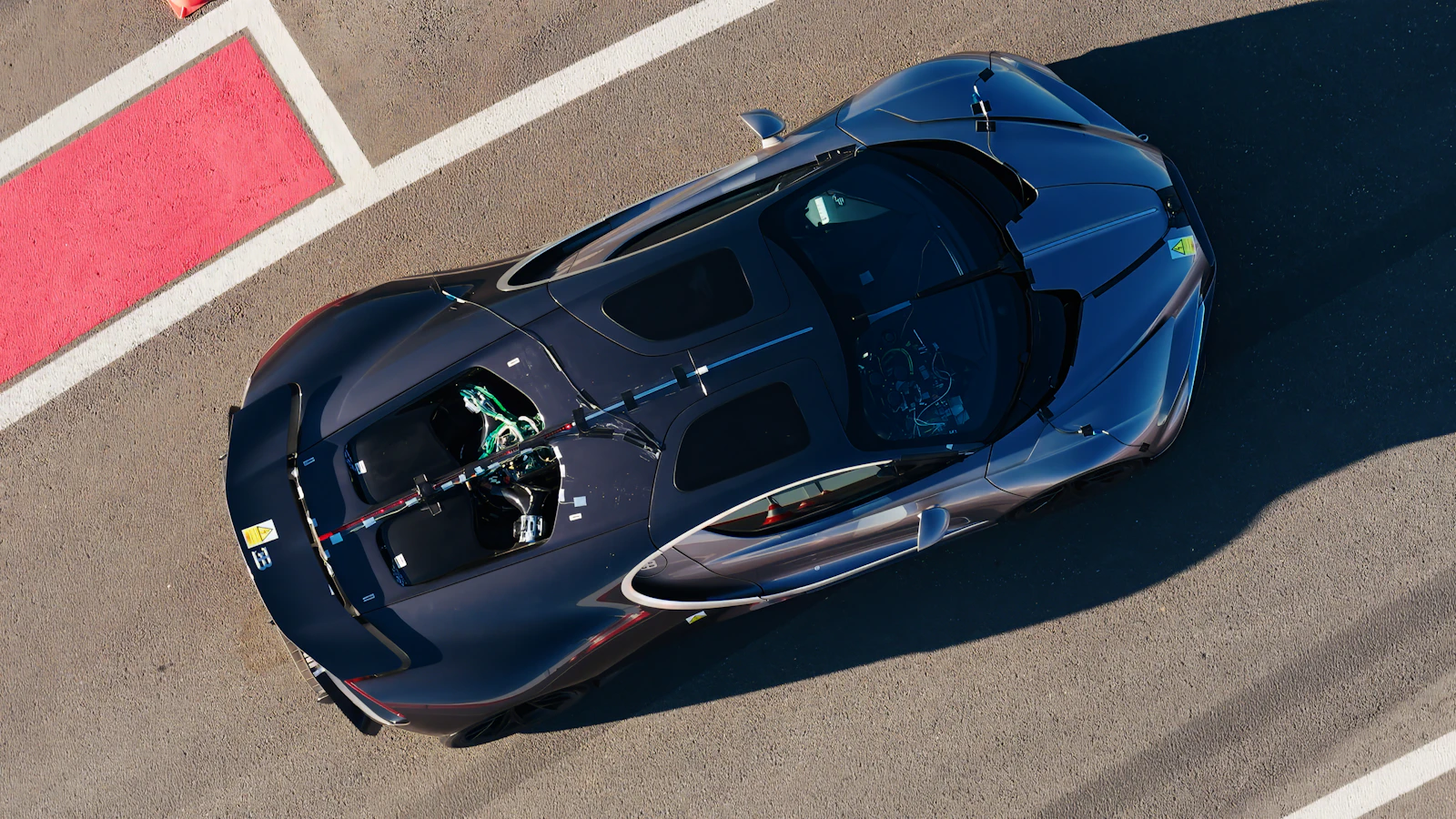
So why does a hypercar need this much attention? The Tourbillon is an entirely new kind of Bugatti. It pairs a naturally aspirated V16 with three electric motors to make 1,800 horsepower. Two of those motors drive the front axle, while the third works with the V16 at the rear. Meanwhile, an 800V battery sits at the heart of the system.
That’s an incredible amount of power, and it creates an incredible amount of heat. Combine that with 100-degree-plus air outside, and engineers have a serious challenge on their hands. Plus, Bugatti didn’t want to ruin the car’s sleek shape with giant vents and scoops.
In order not to compromise the shape and the design, we have very clever cooling circuits and cooling systems inside the car to make sure that all the systems remain under controlled temperatures.
Daniel Ríos Hidalgo, vehicle development engineer at Bugatti Rimac
More Than 200 Sensors Watching Every Degree
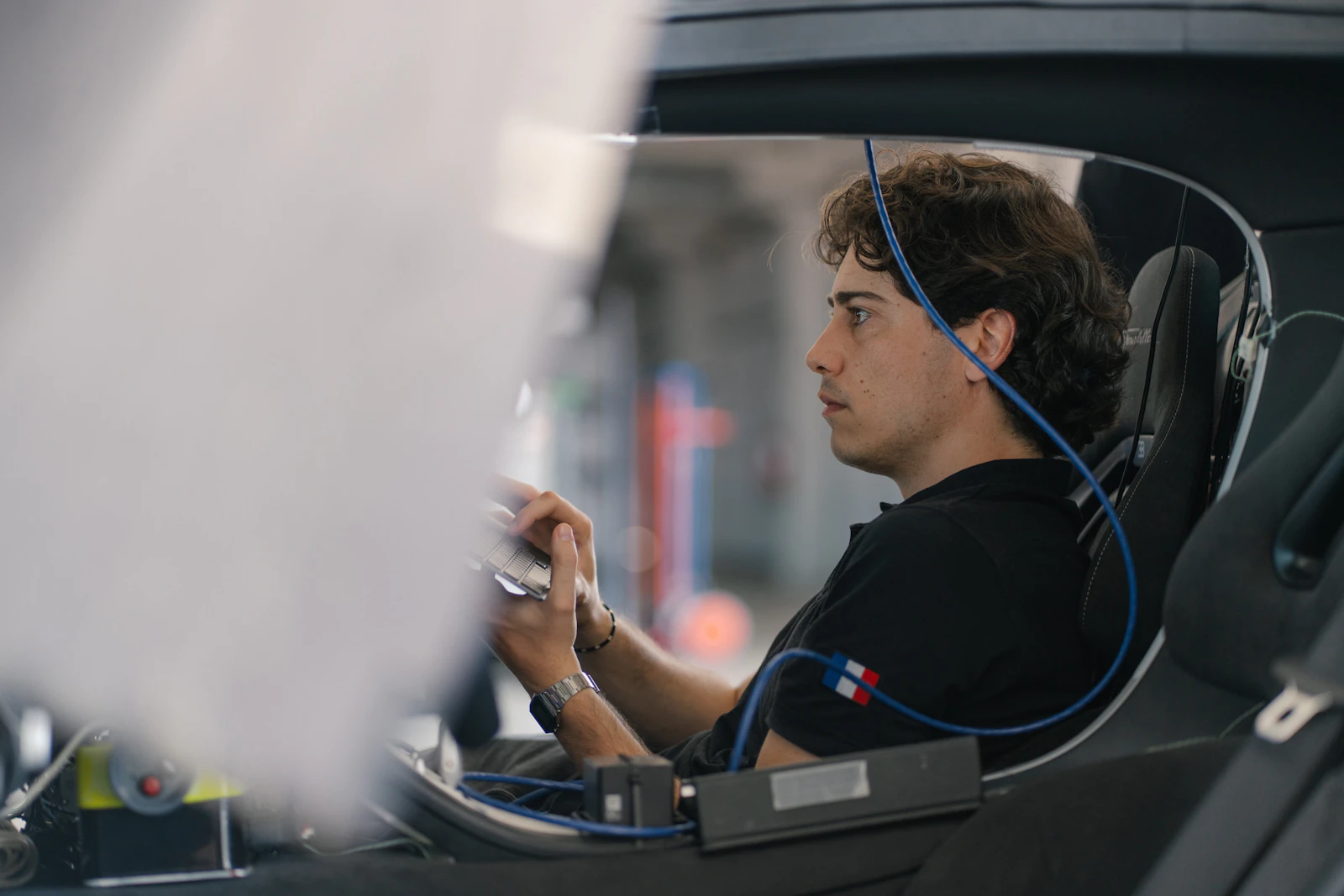
To see exactly how the Tourbillon handles the heat, Bugatti installed more than 200 thermocouples throughout the prototype. Those sensors constantly measure temperatures as the car moves between different conditions. As a result, engineers can see in real time how each part of the car responds.
Bugatti also tested on both the racetrack and public roads, at high and low speeds. On the open road, temperatures reached about 113°F, similar to what owners might see in some of the world’s hottest places. However, the track is where everything gets pushed at once. Tires, brakes, the powertrain, and the cooling system all work hard, lap after lap.
Simulations had already predicted how the car should behave. Still, this real-world testing is how Bugatti confirms the computer got it right. According to Bugatti, the team collected the data it needed and successfully validated the systems it set out to test.
A Cool Cabin Makes a Better Driver

Here’s the part I love. Bugatti says the most important outcome wasn’t just protecting the machinery. Instead, it was making sure the cabin stays pleasant, with steady airflow and temperature, even when the car is working at its absolute limit.
When you have a lot of power but you don’t feel comfortable on the track or on the road, it’s very difficult to be precise. So it’s very important to keep the comfort in the cabin and the temperature in the cabin quite fresh to allow the customers as well to enjoy the car at its best.
Paolo Magrone, vehicle development driver at Bugatti Rimac
Any parent who has driven a hot, cranky carload of kids across Texas in August would agree. A comfortable driver is a focused driver.
From Sweden’s Ice to Spain’s Heat

The Spain trip is the counterpart to Bugatti’s winter testing earlier this year in Arjeplog, Sweden. There, temperatures dropped as low as -22°F. In the cold, engineers focused on low-grip handling, braking, stability systems, and how the cabin works in severe weather.
Seville flipped the script. Together, the two programs are meant to prove the Tourbillon works anywhere its owners decide to drive it. After all, Bugatti delivers cars all over the world, and every customer expects the same experience whether they live in the desert or the snow.
What a Bugatti Can Teach Us About Our Family Cars

Let’s be real: most of us will never park a Tourbillon in our driveway. I’ll keep dreaming, though, just like I did with the 1991 Lamborghini Diablo that left me weak in the knees. Still, this story is a great reminder that every automaker puts its vehicles through extreme testing like this, from hypercars to minivans.
So, the next time your family SUV cools down a scorching cabin in a few minutes, think about the engineers who spent days in the heat making sure it would. And if your A/C is starting to struggle, have it checked before next summer hits. Your kids and your sanity will thank you.
Which dream car would you take on a summer road trip? Let us know on social media, and keep following GT: Garage Talk® for more stories from the wild world of cars.