Toyota’s Snowhunter Concepts Turn 5 Trucks and SUVs Into Snow-Crawling Monsters

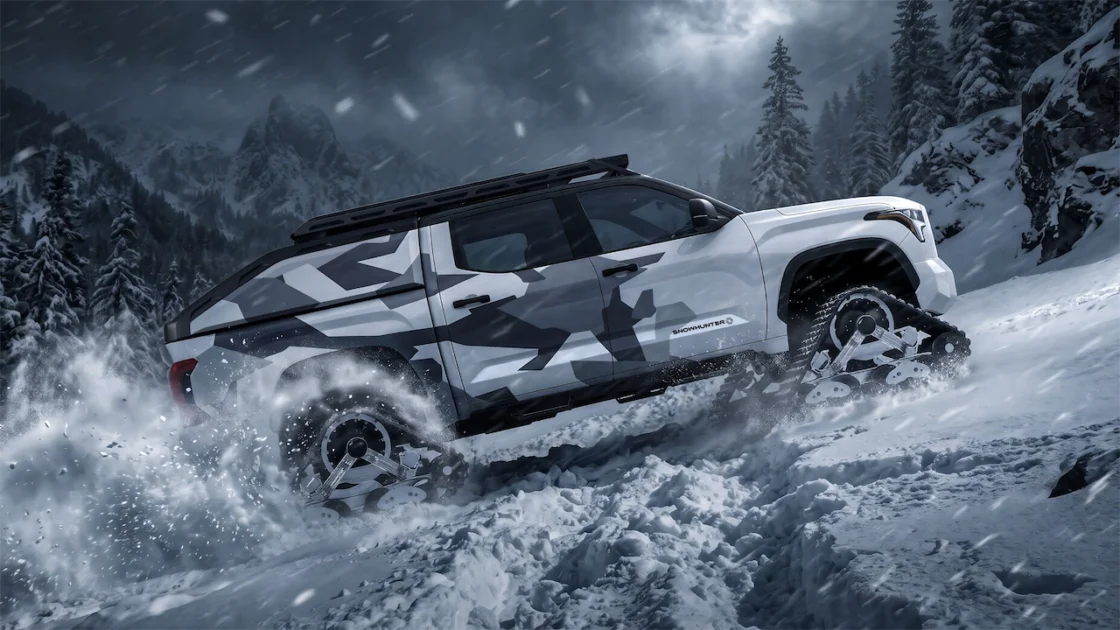
It’s hard to wrap my head around snow tracks when it’s still pushing past 80 degrees here in Texas at the end of October. We’re still sweating our tails off doing “fall things,” and we haven’t even hit the streets for Halloween candy yet. Mariah Carey has not even thawed out yet. So forgive me if the Toyota Snowhunter concepts, built to crawl through waist-deep powder, feel a little like science fiction right now.
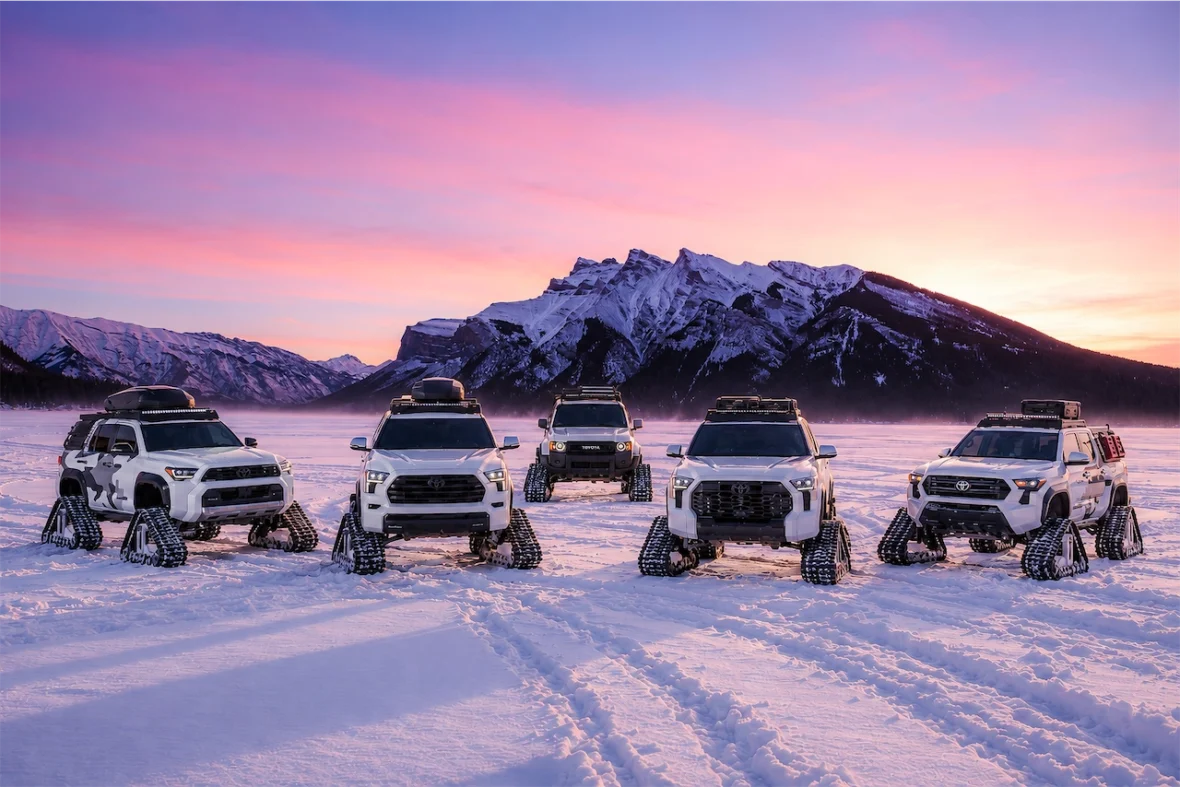
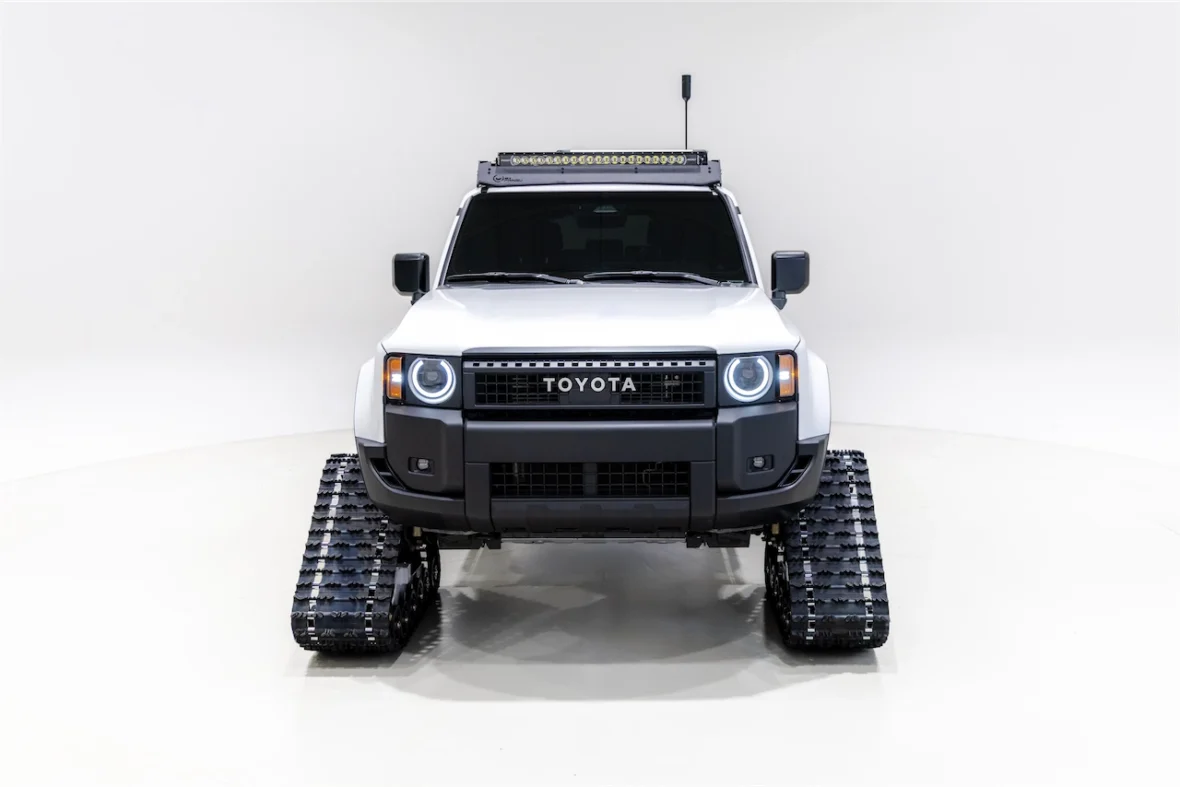
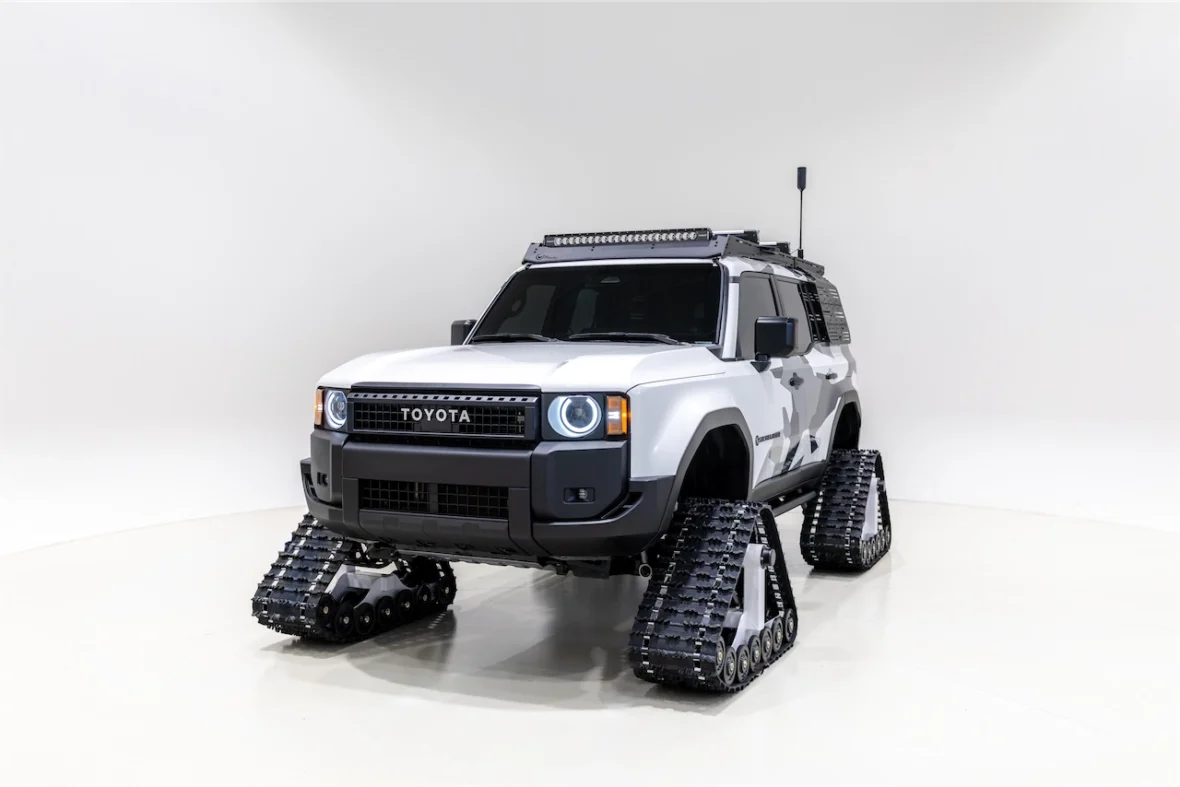
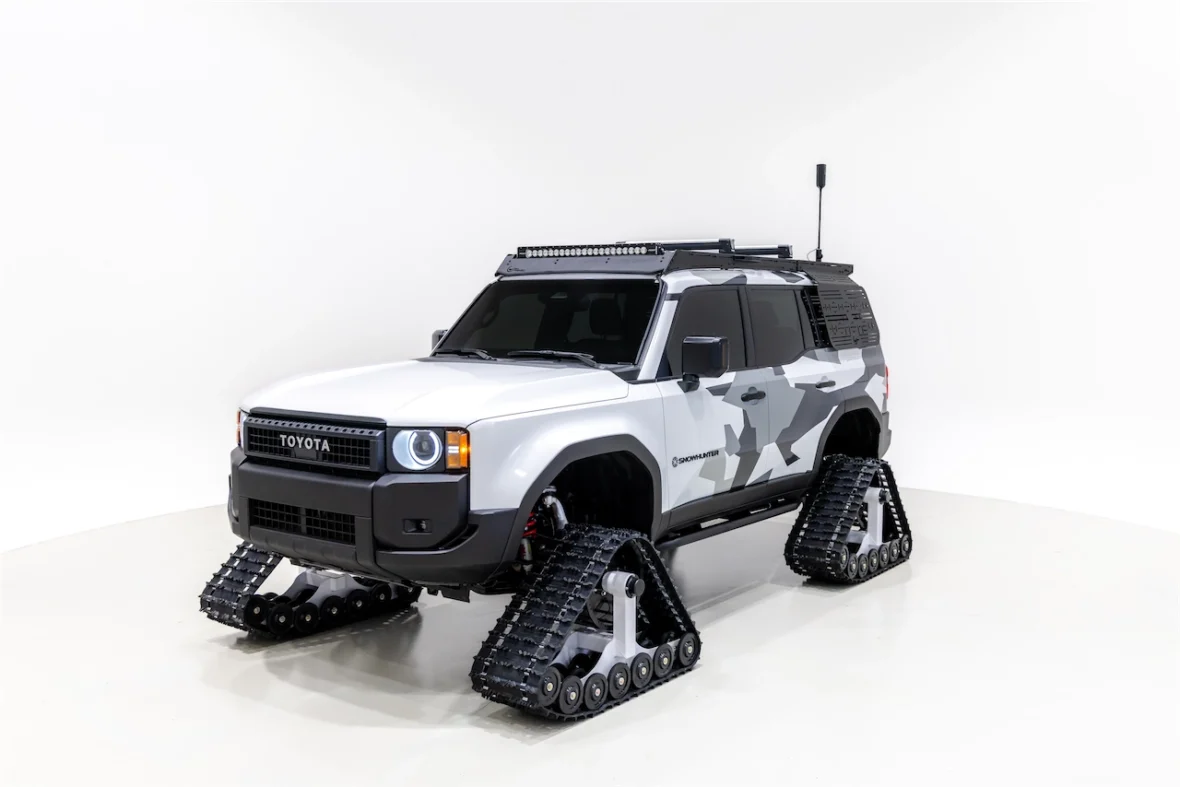
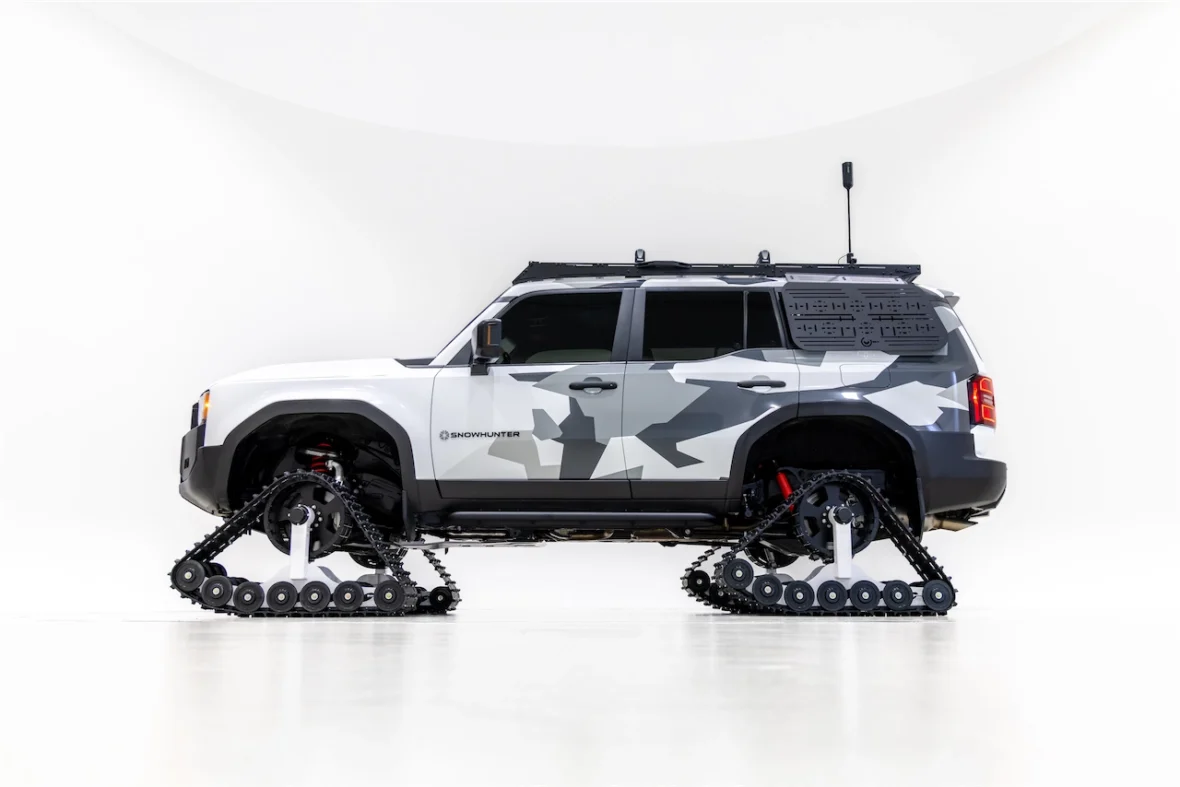
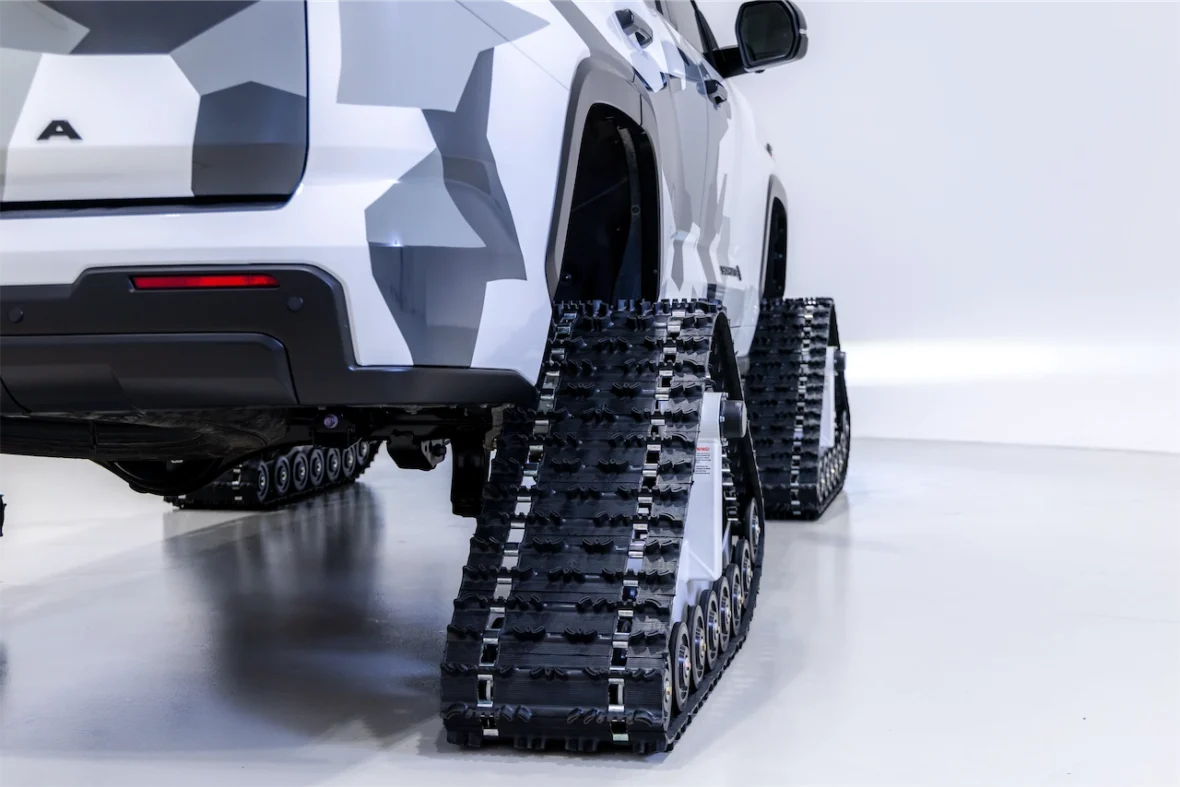
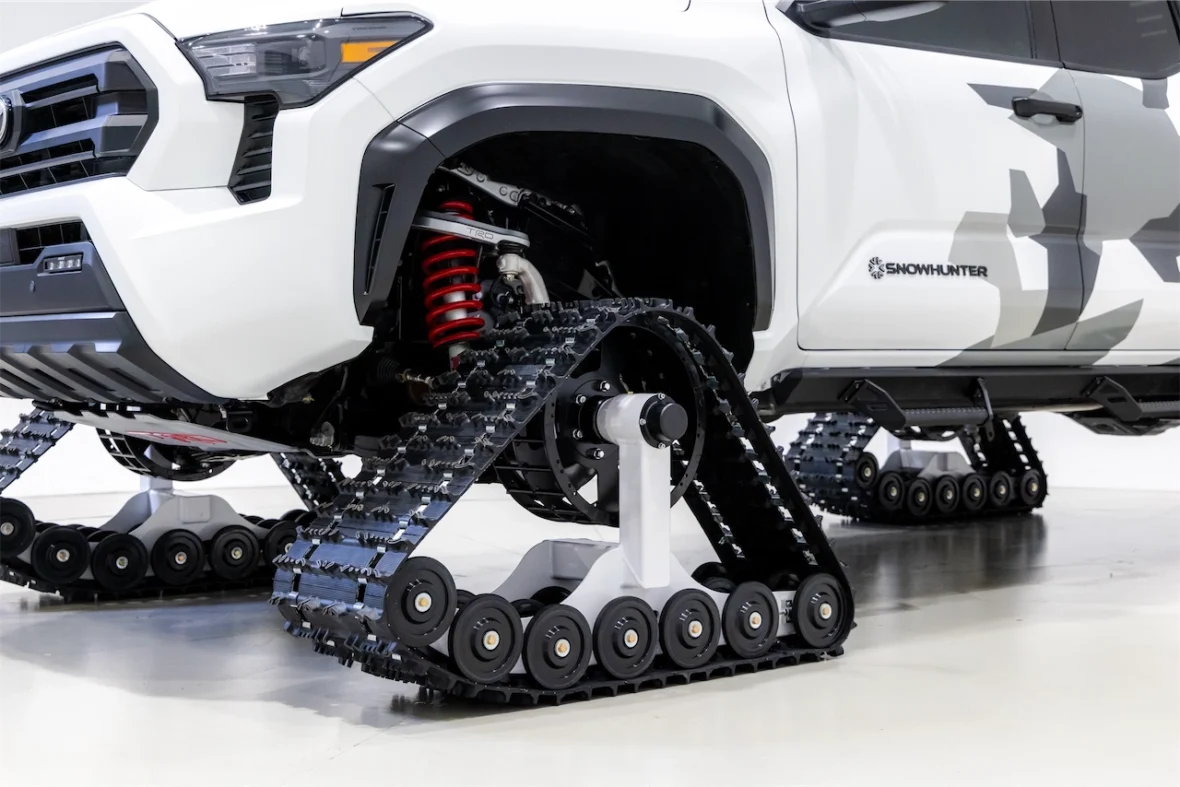
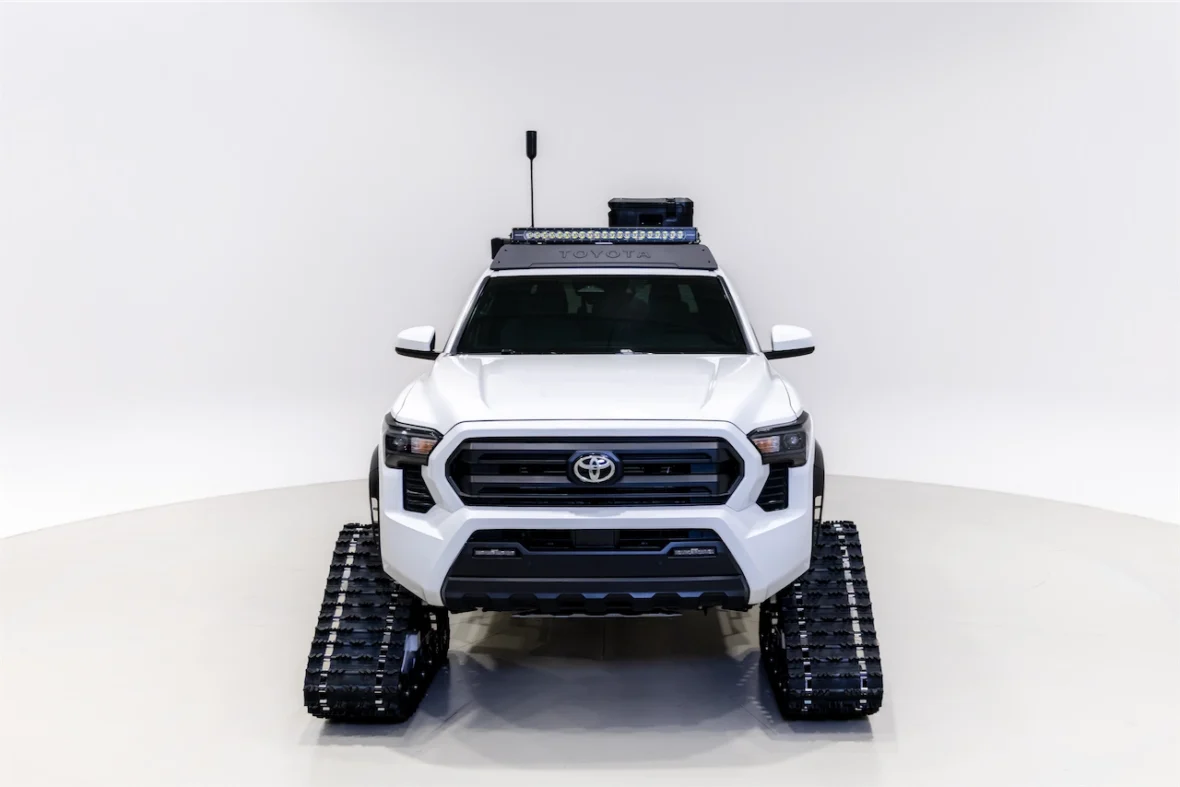
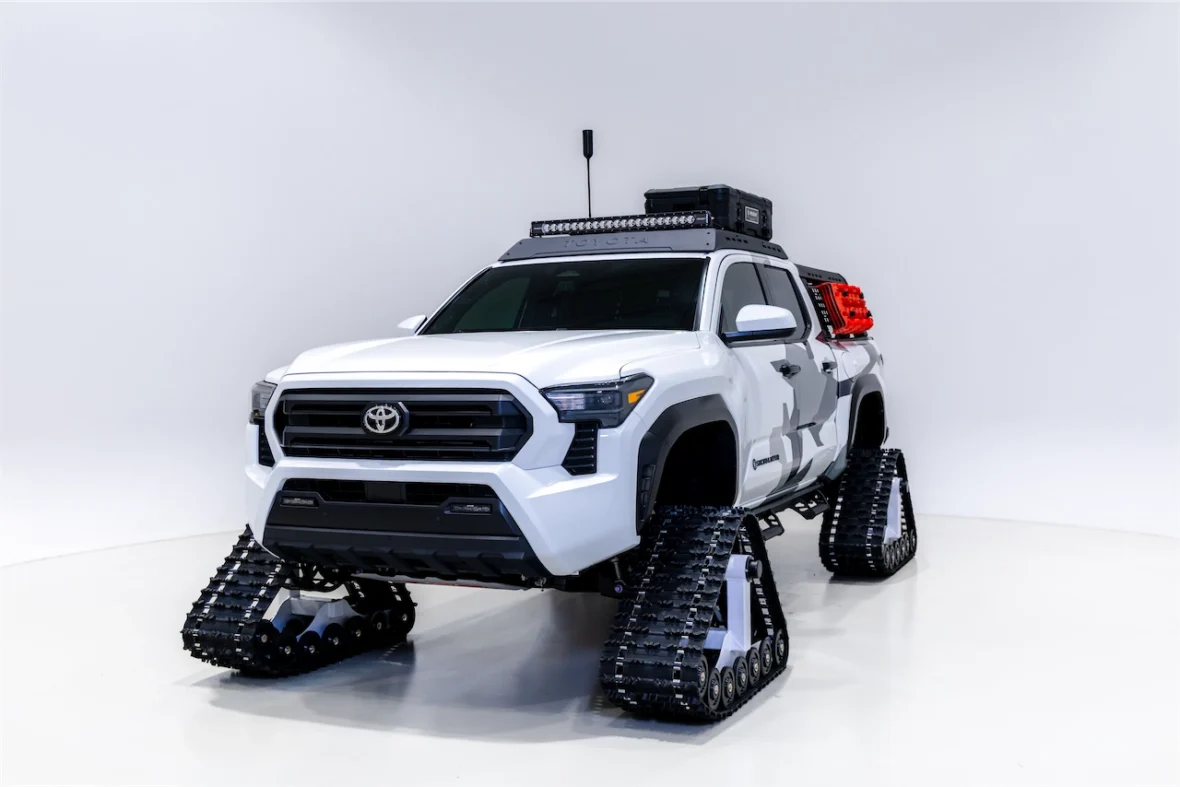
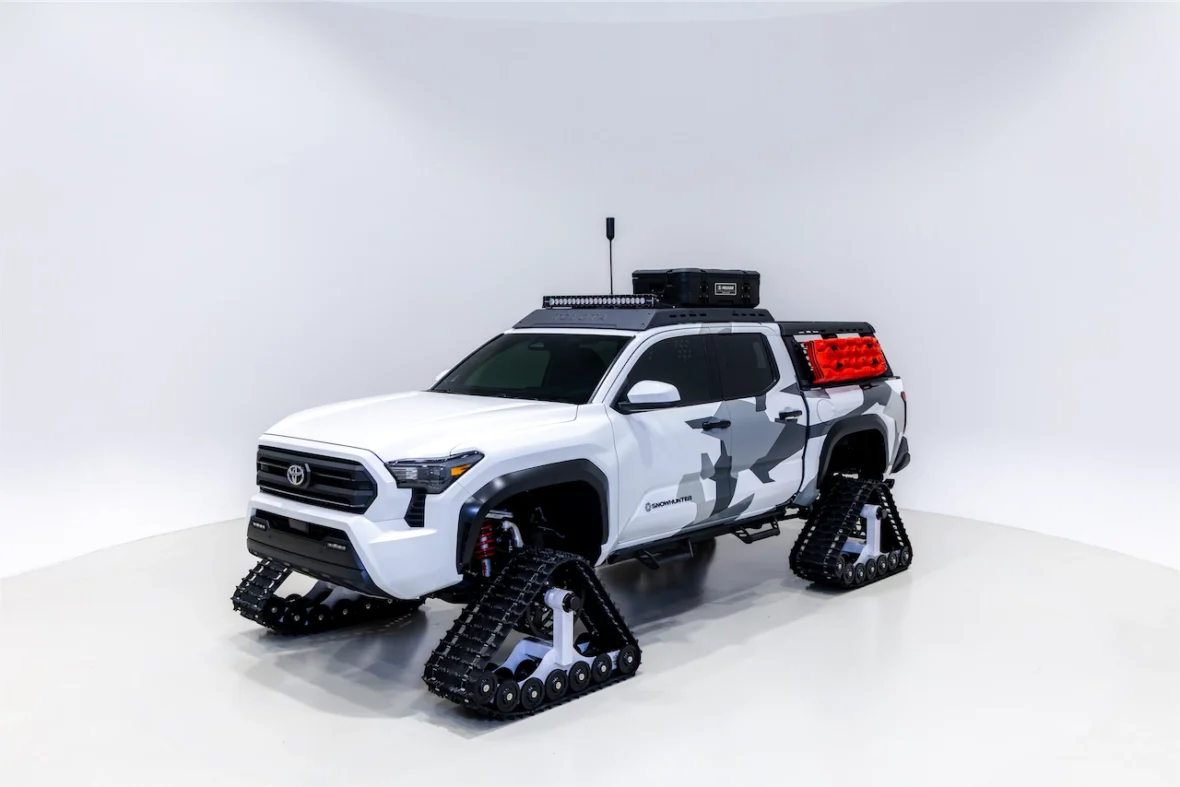
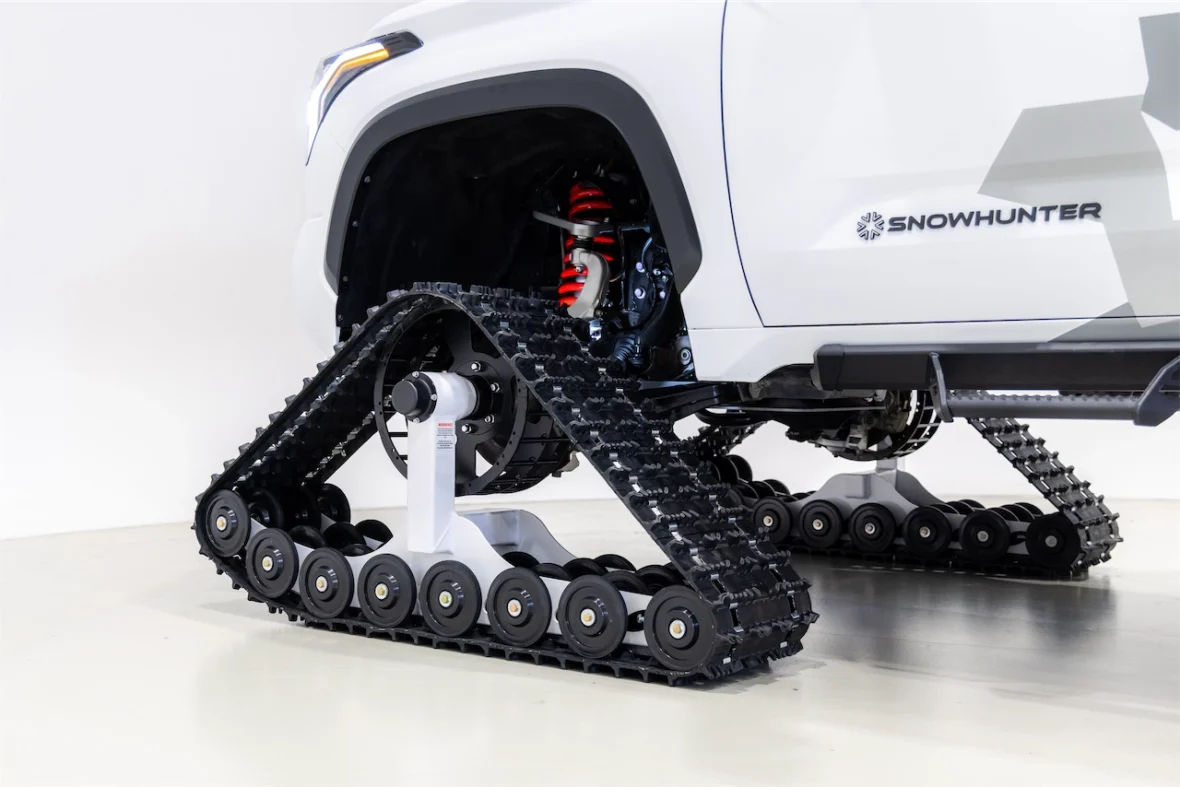
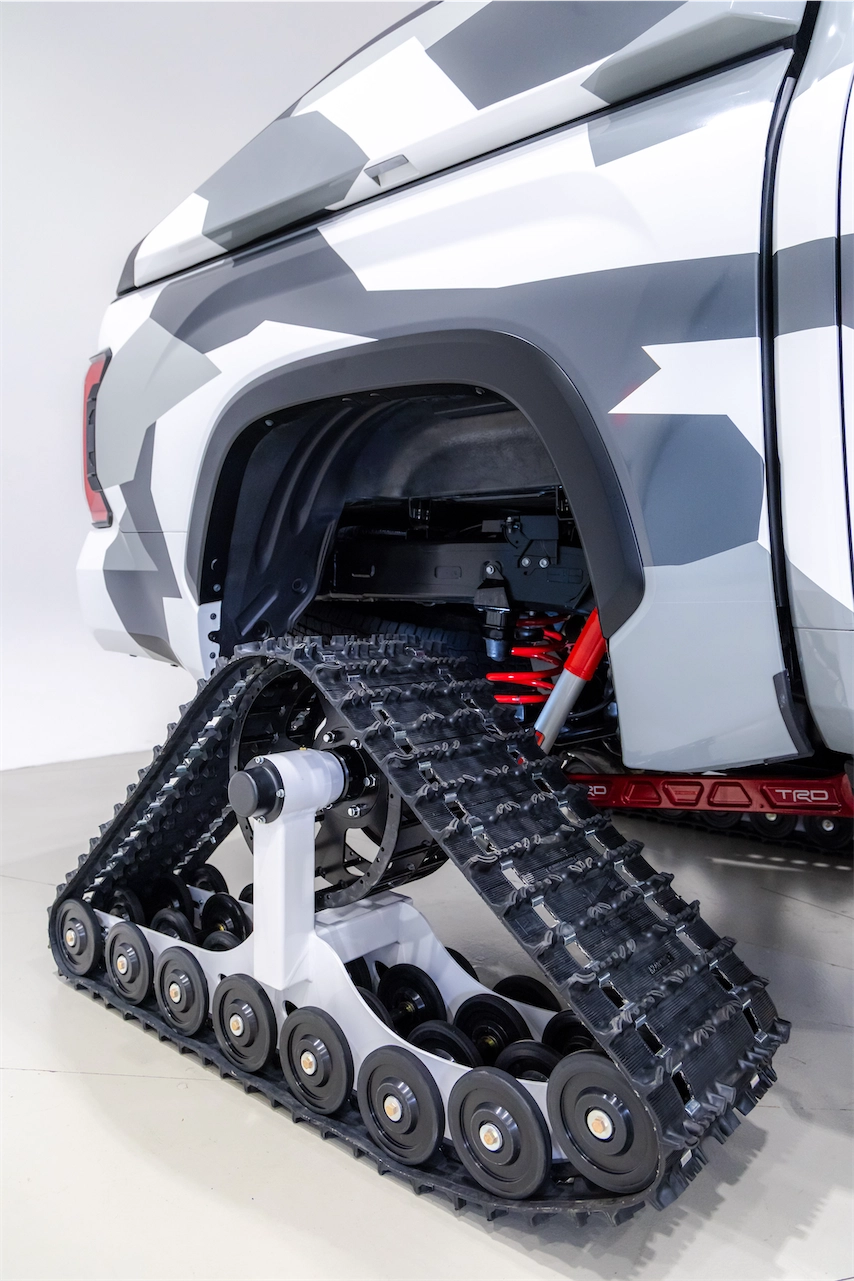
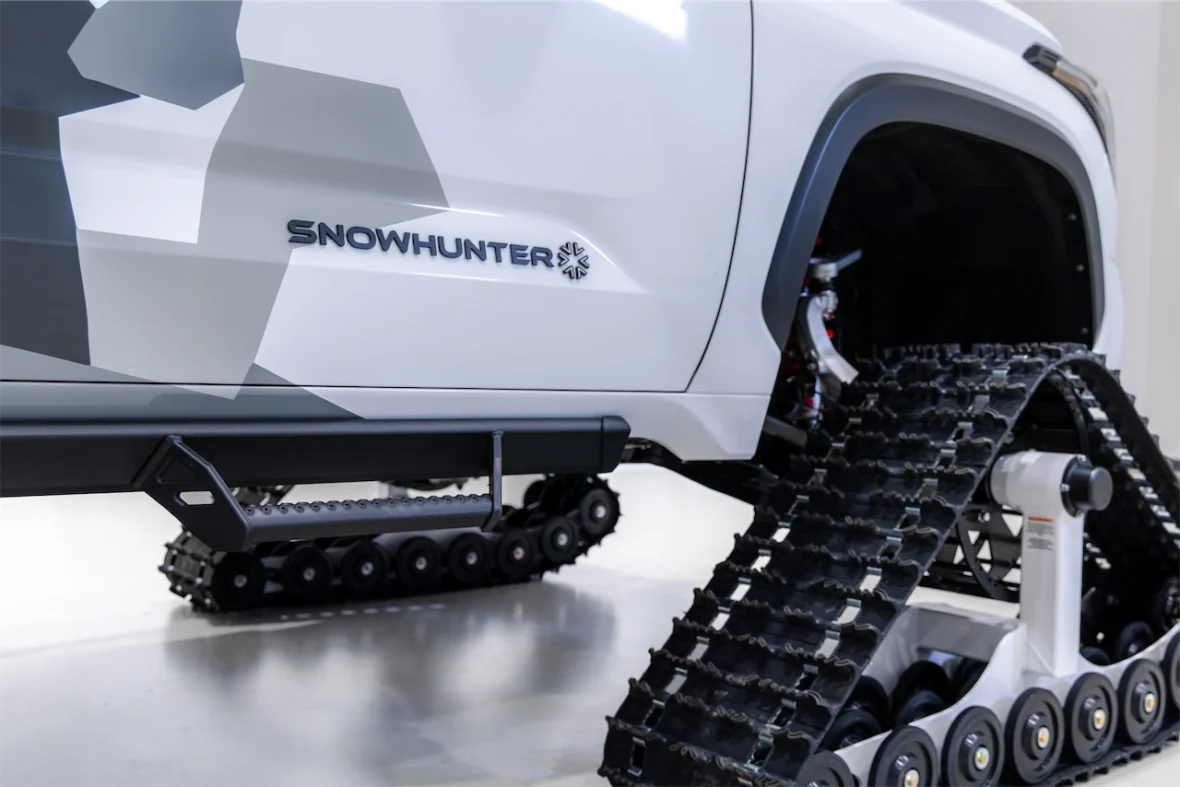
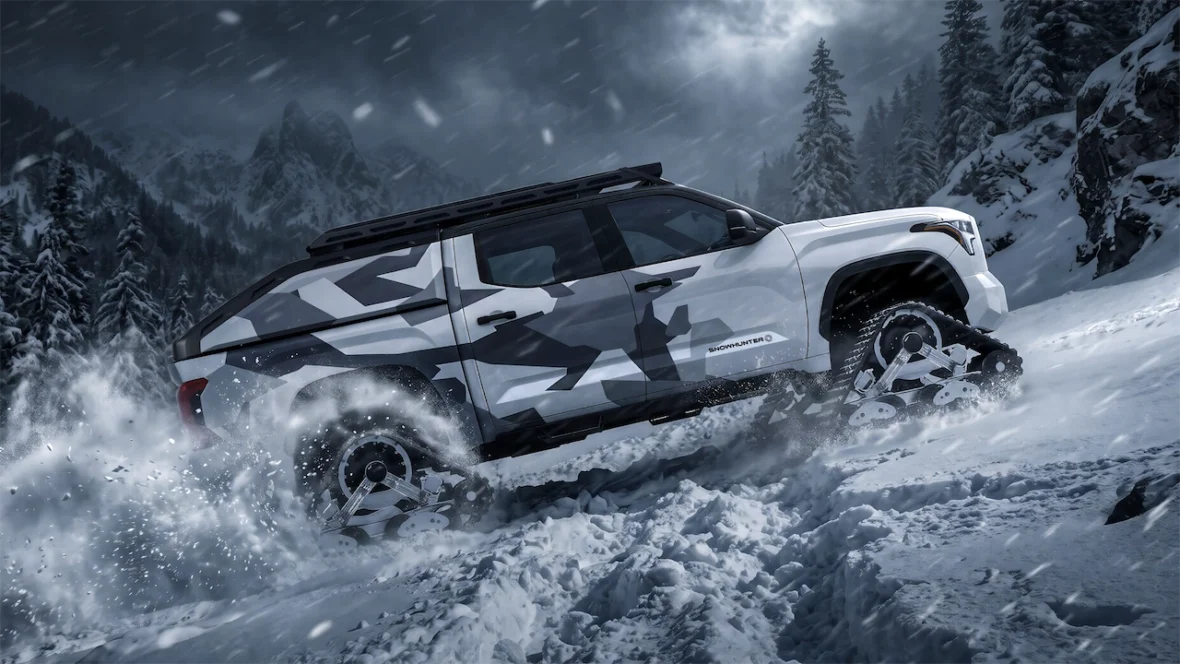
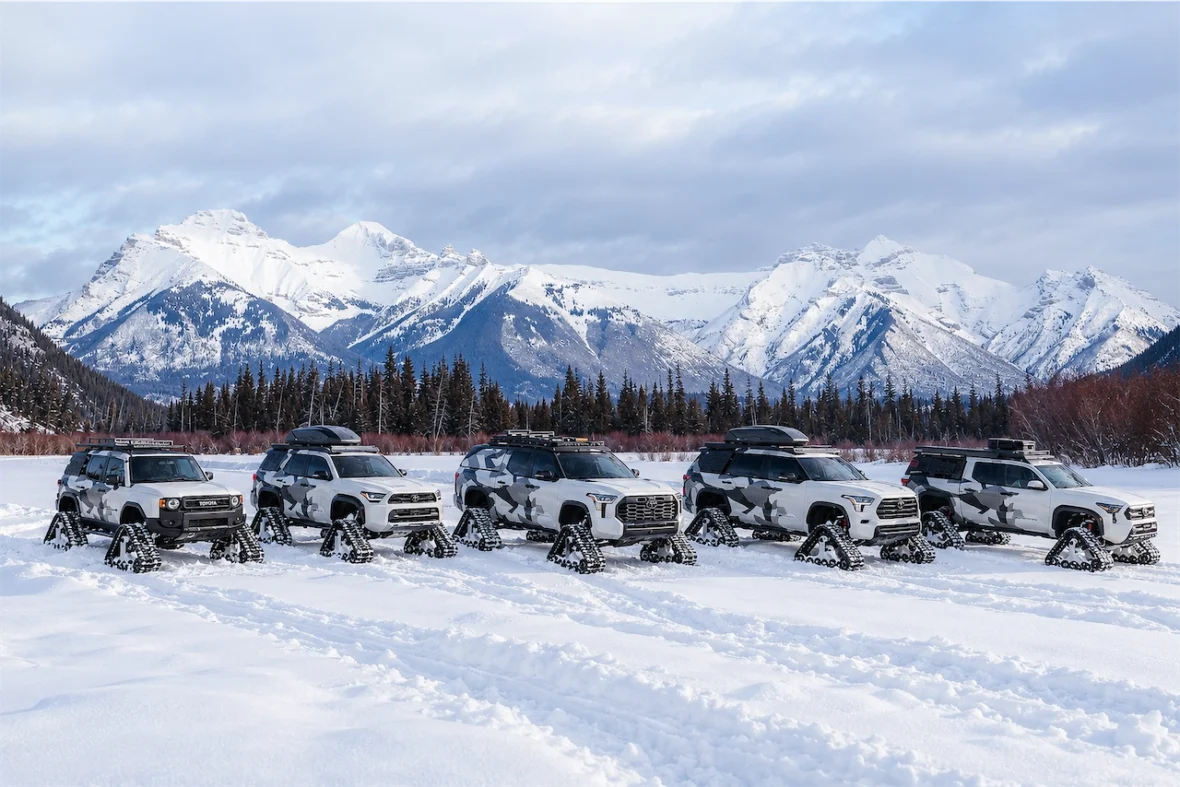
Toyota is bringing an entirely different kind of off-roading to the 2026 SEMA Show. Forget another collection of lifted trucks and SUVs on oversized all-terrain tires. Instead, the Toyota Snowhunter concepts replace the wheels on five of the automaker’s most capable vehicles with snow tracks.
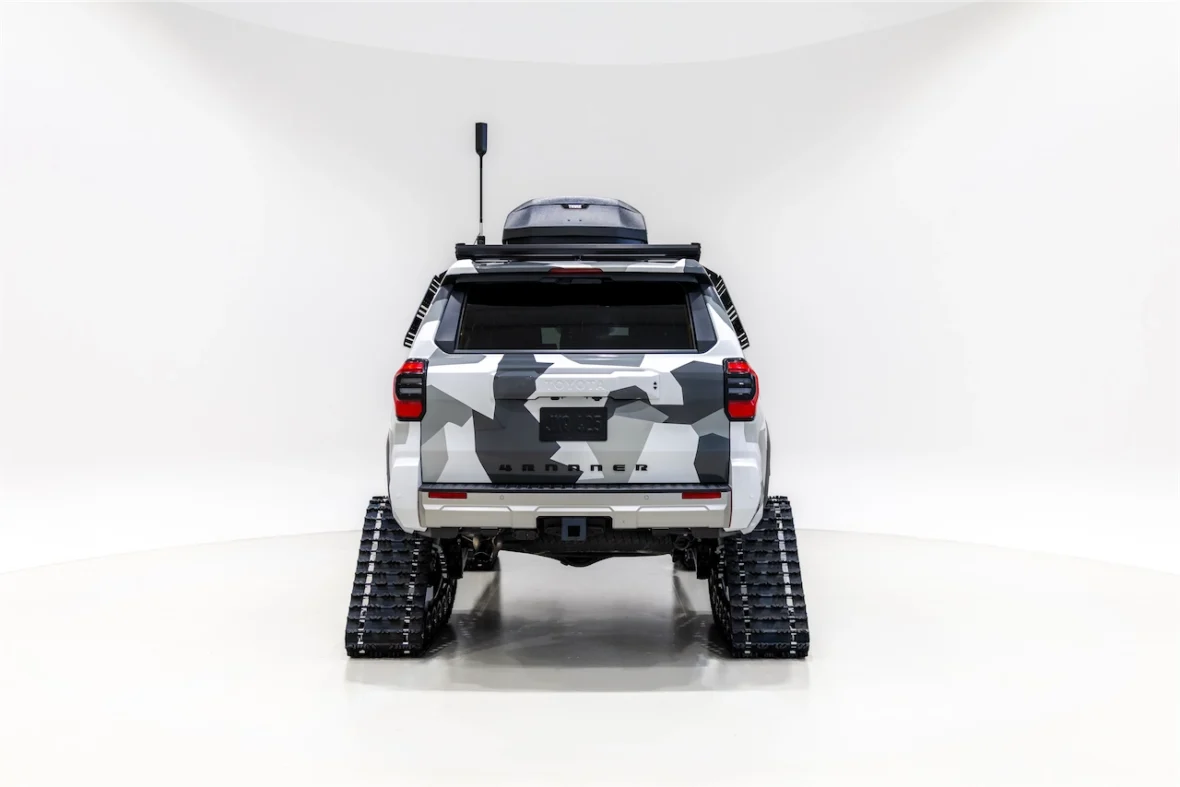
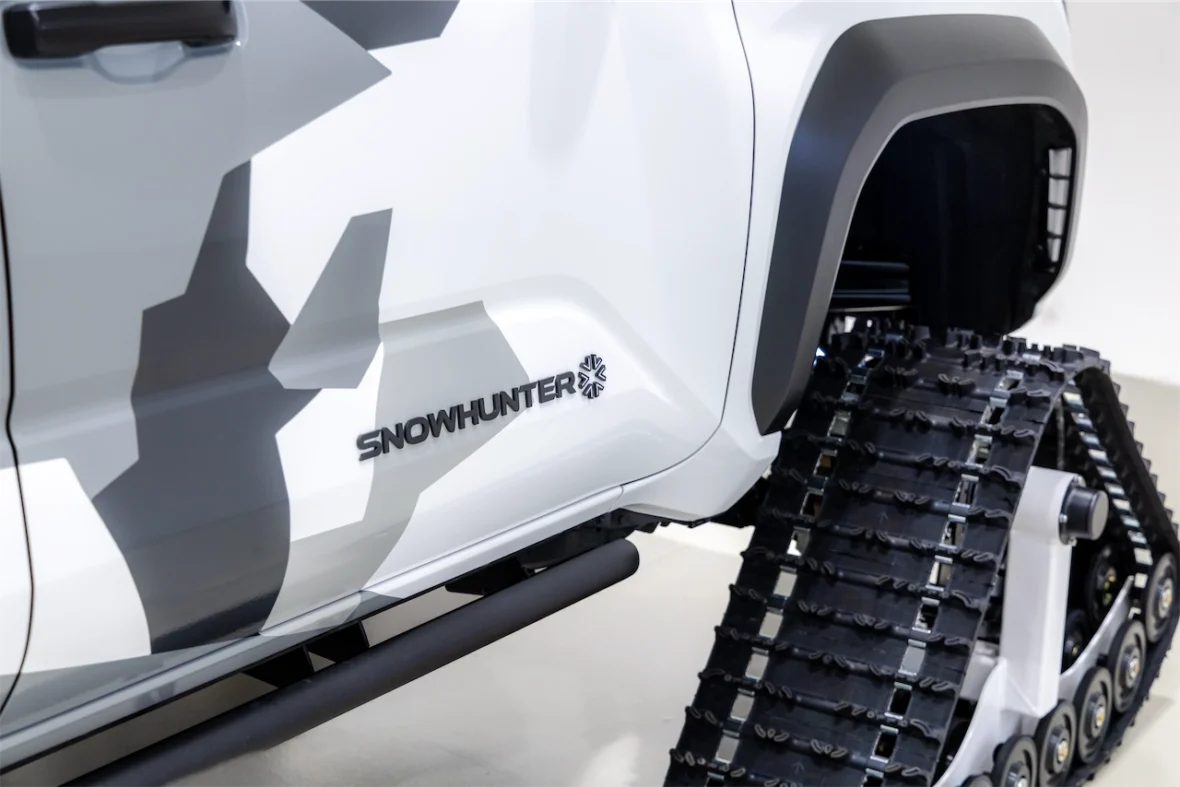
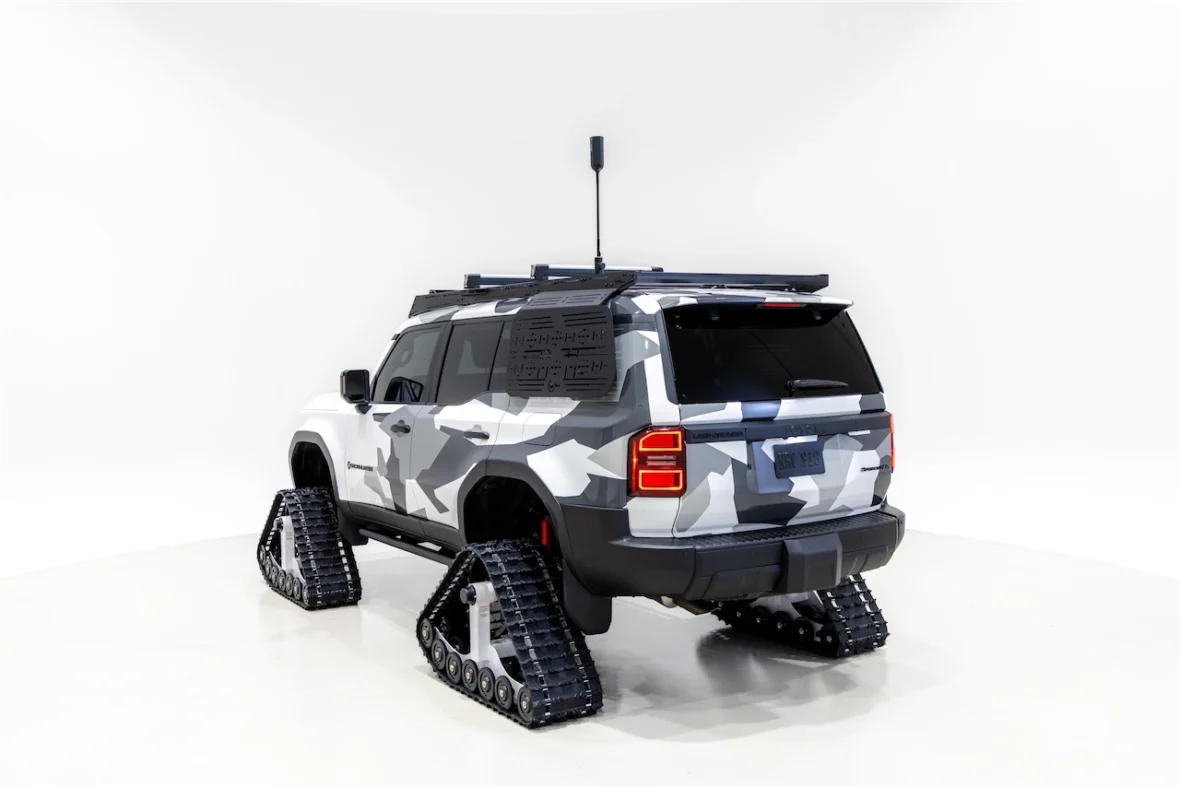
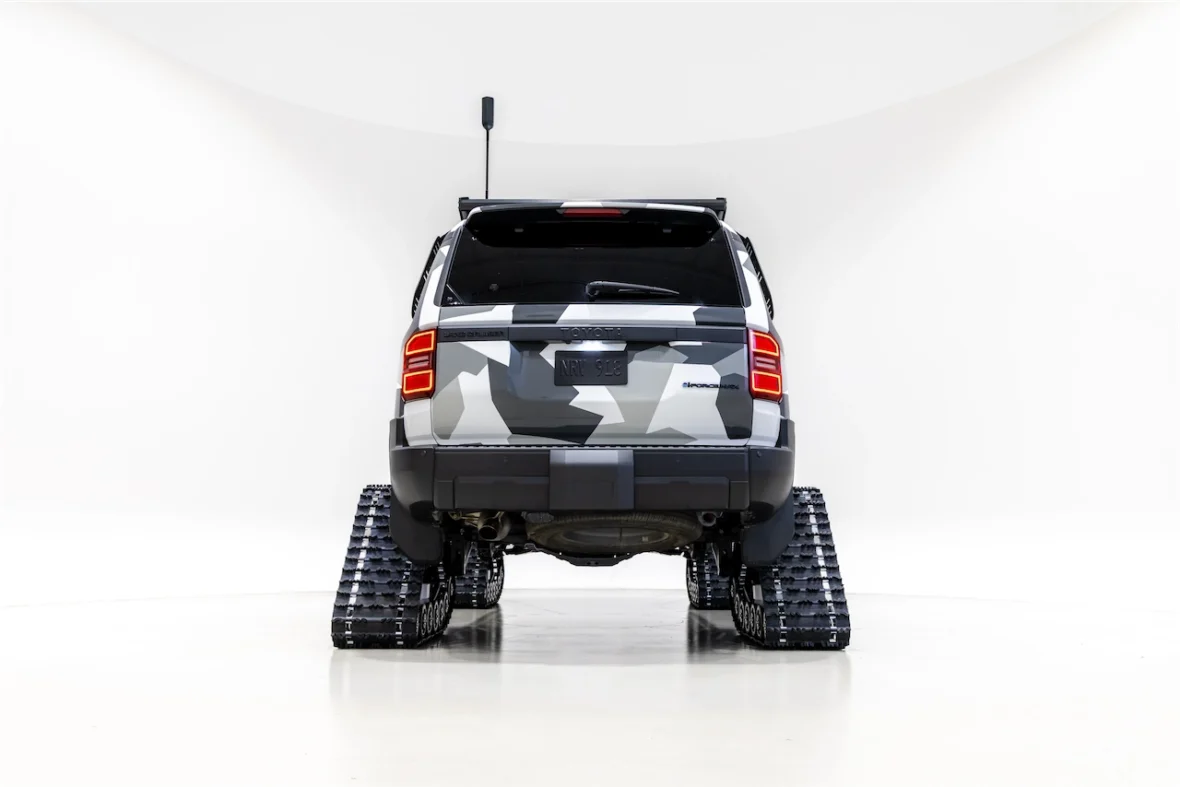
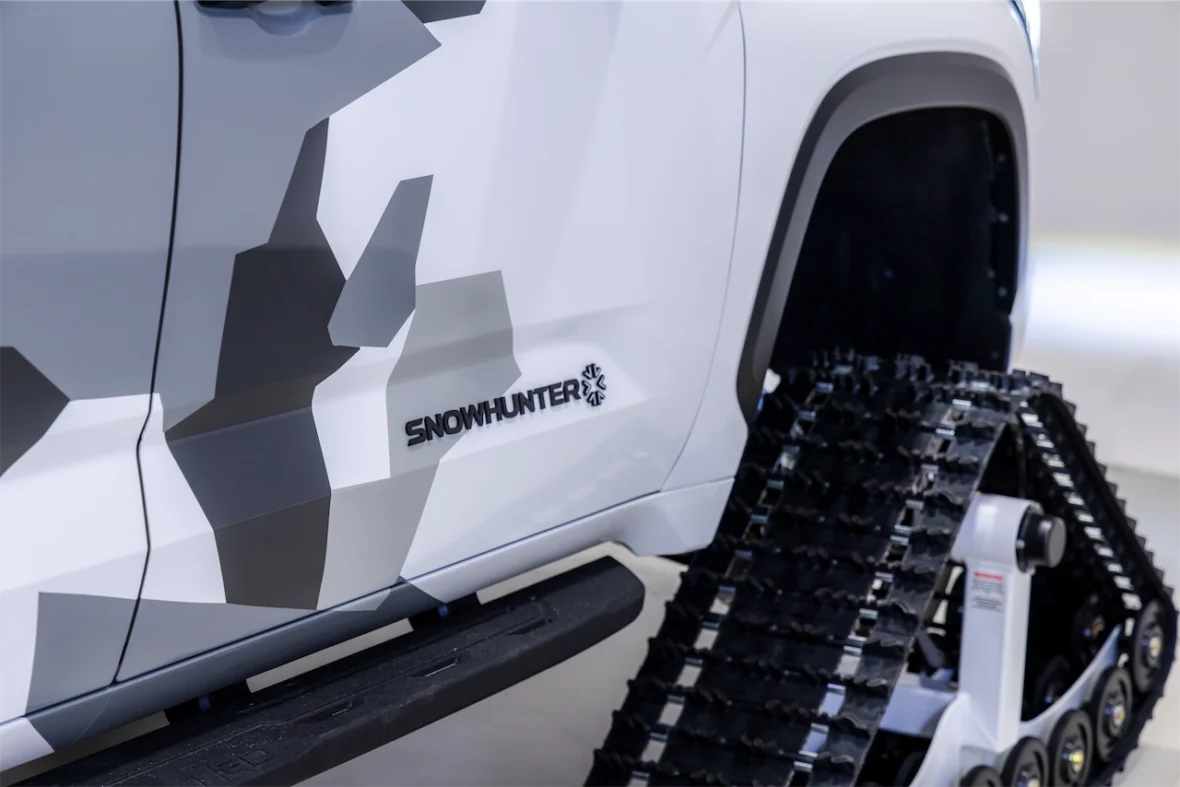
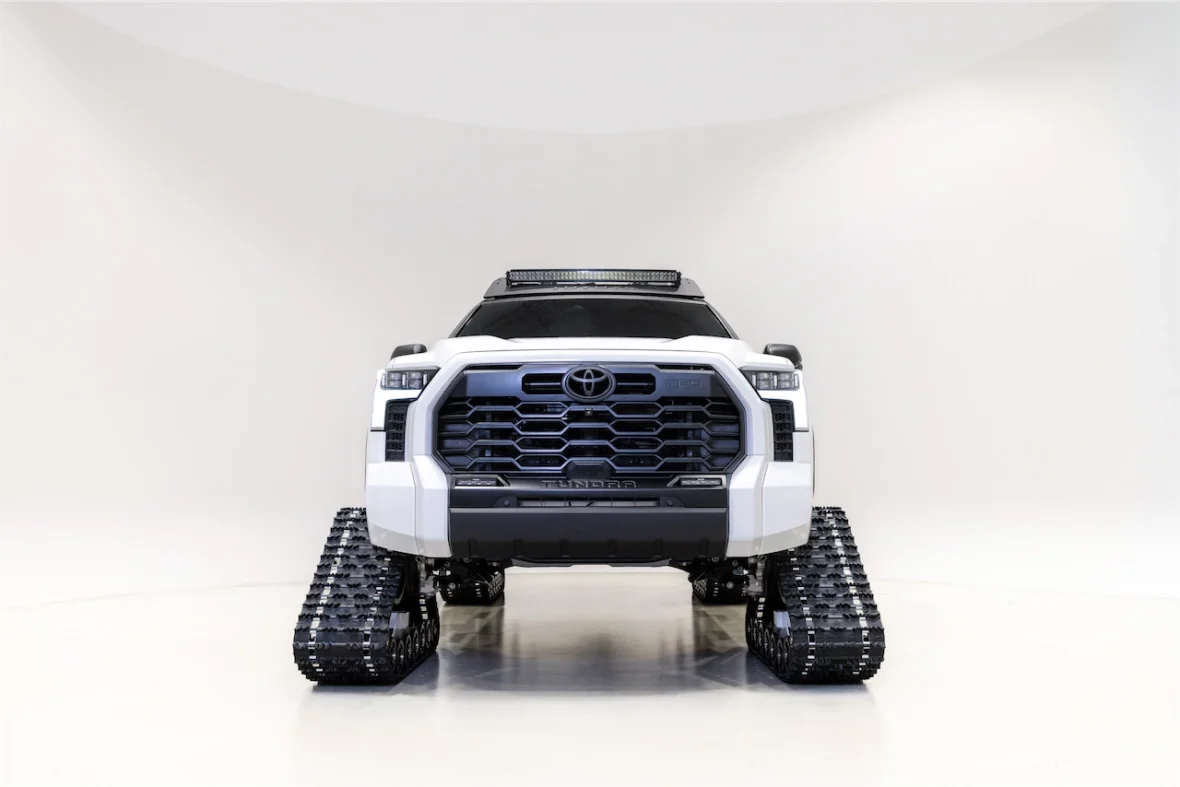
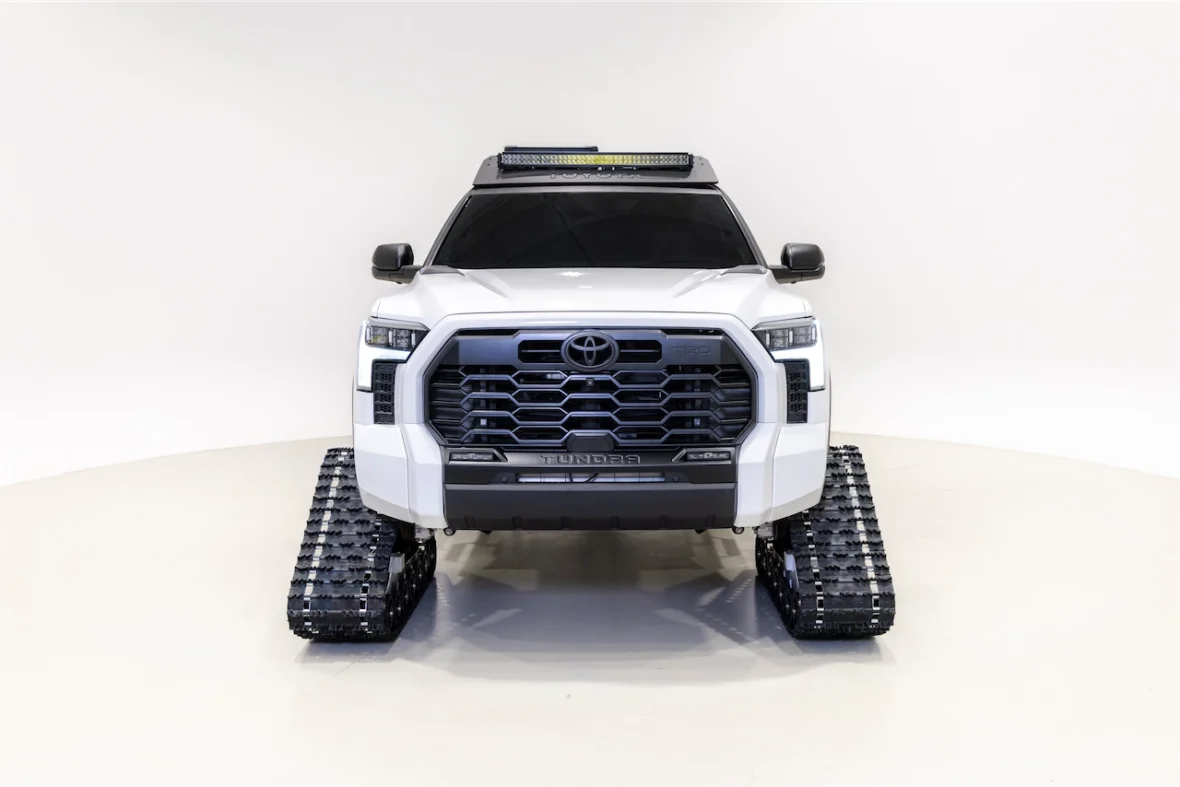
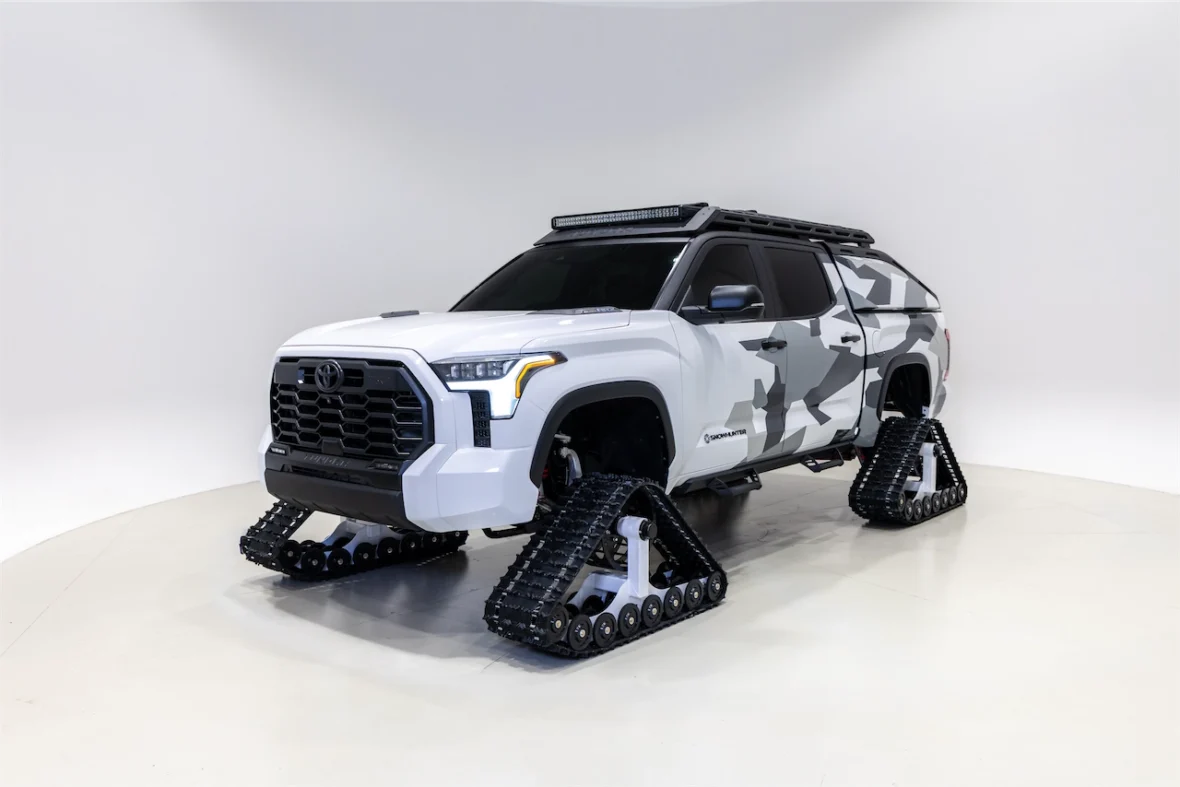
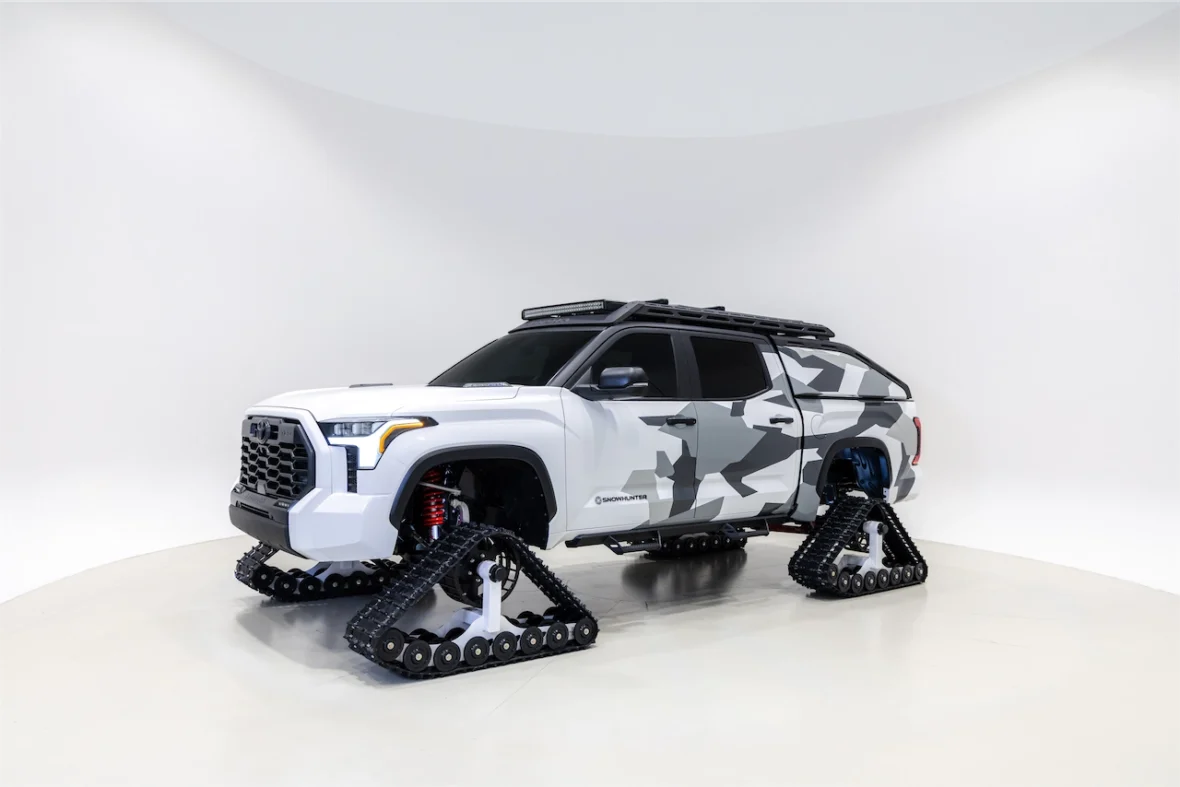
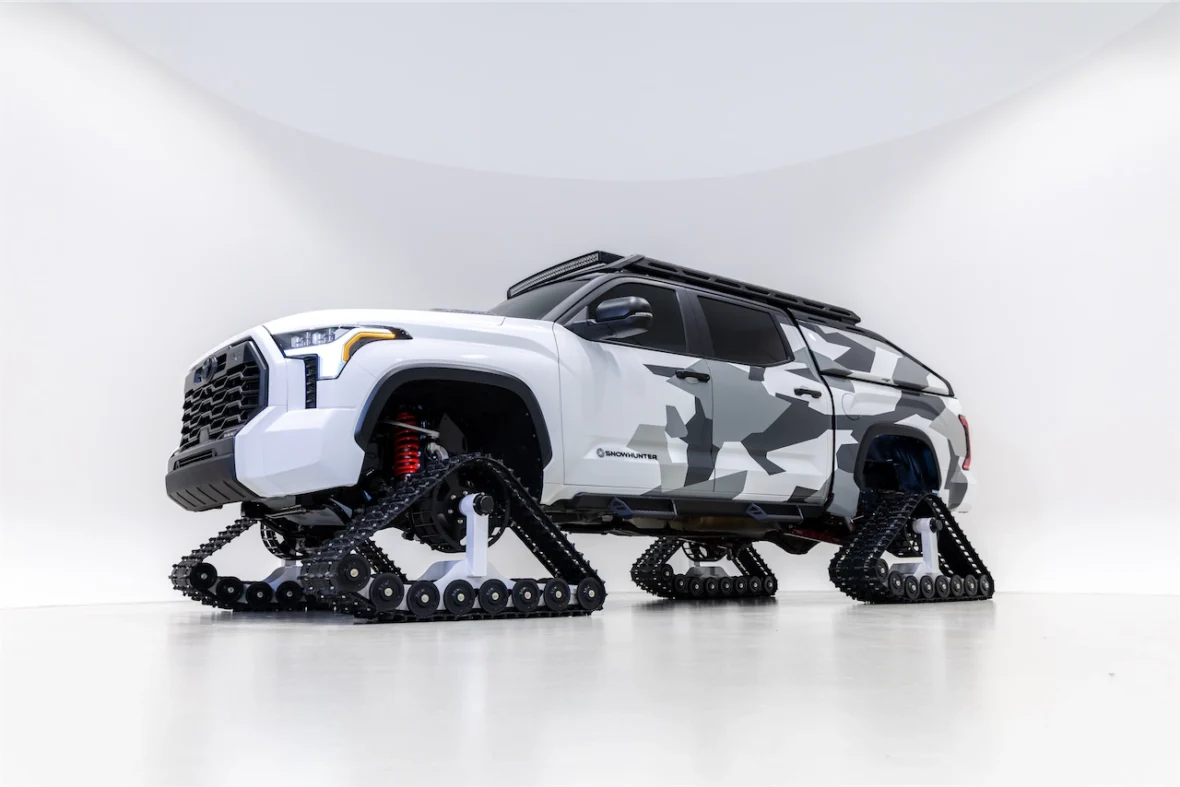
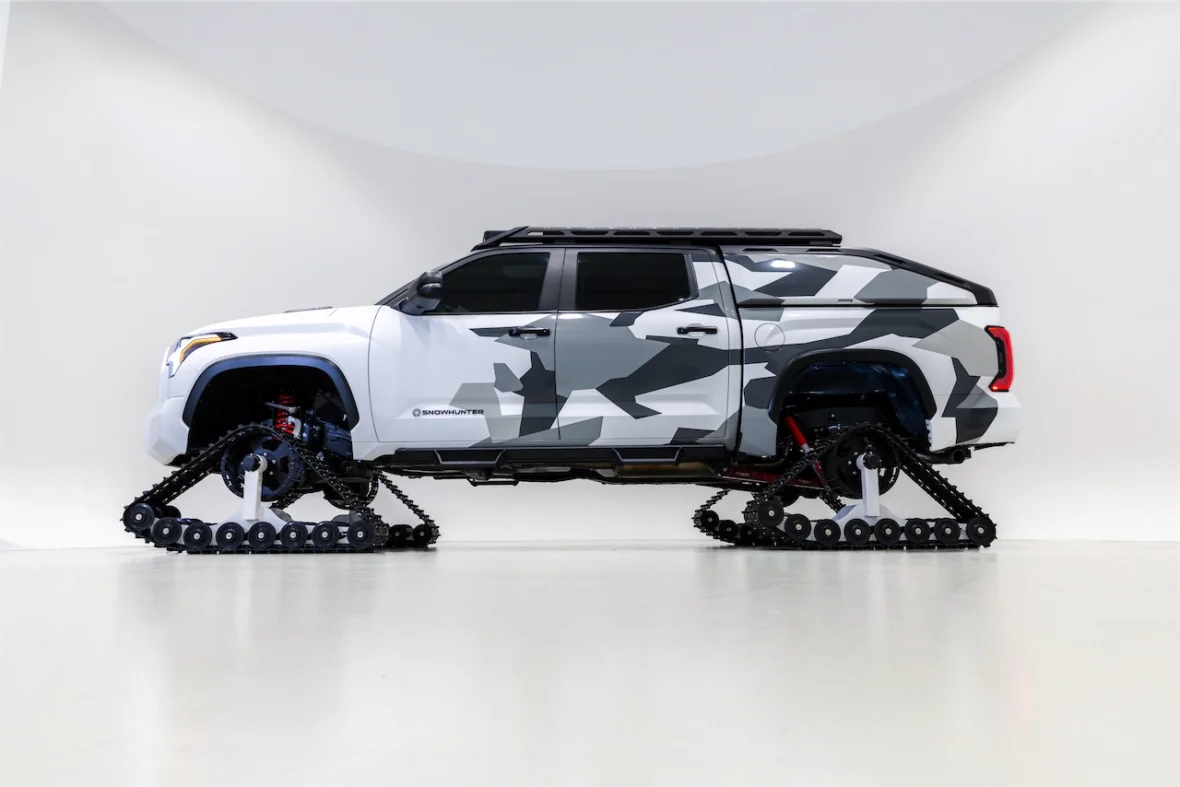
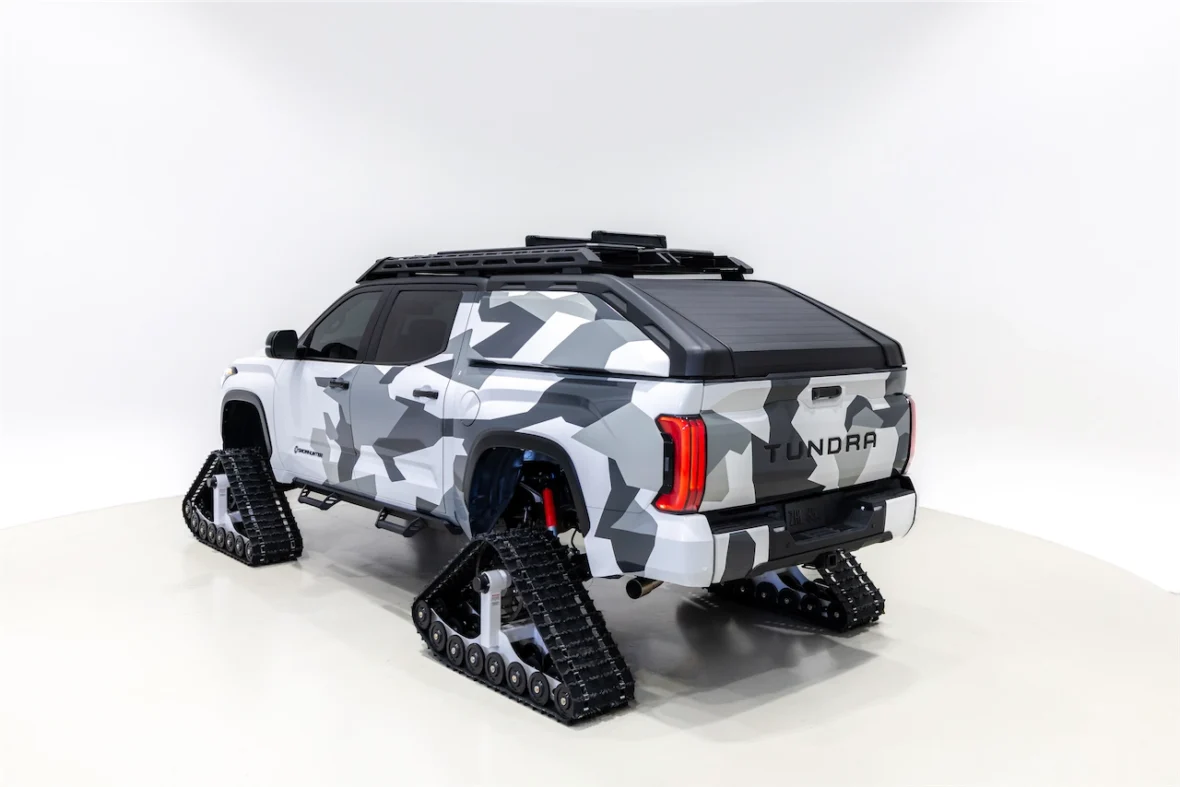
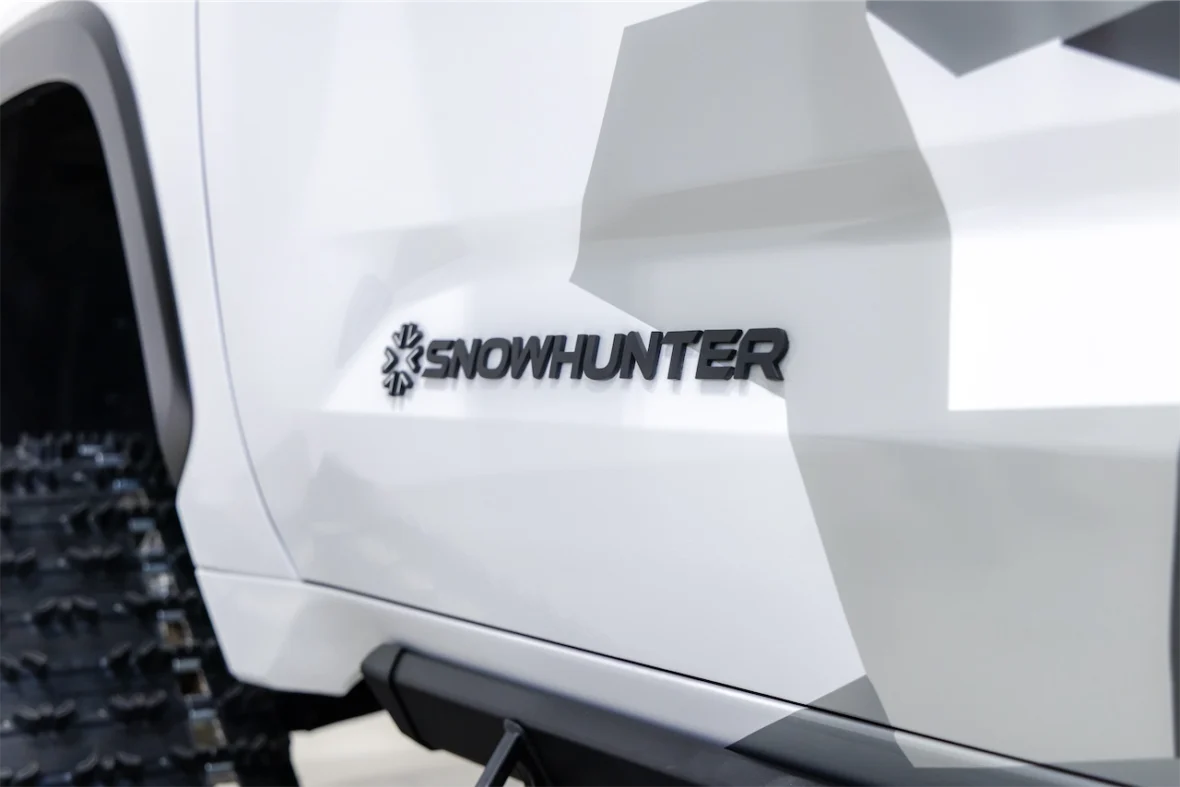
Meet the Toyota Snowhunter family, a collection of five concept vehicles based on the Tundra, Tacoma, 4Runner, Land Cruiser, and Sequoia. Each has been outfitted with winter-specific accessories, expedition equipment, and a set of white snow tracks designed to tackle terrain that would stop even the most capable traditional off-road tires.
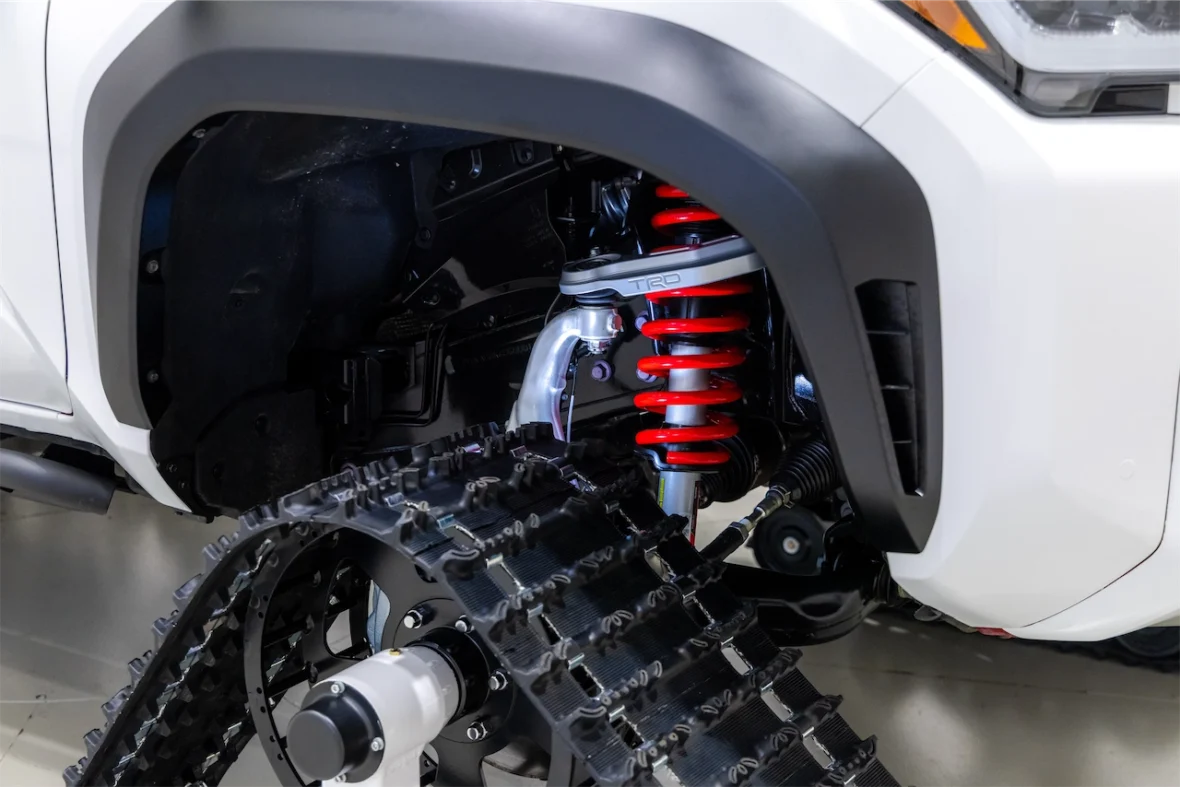
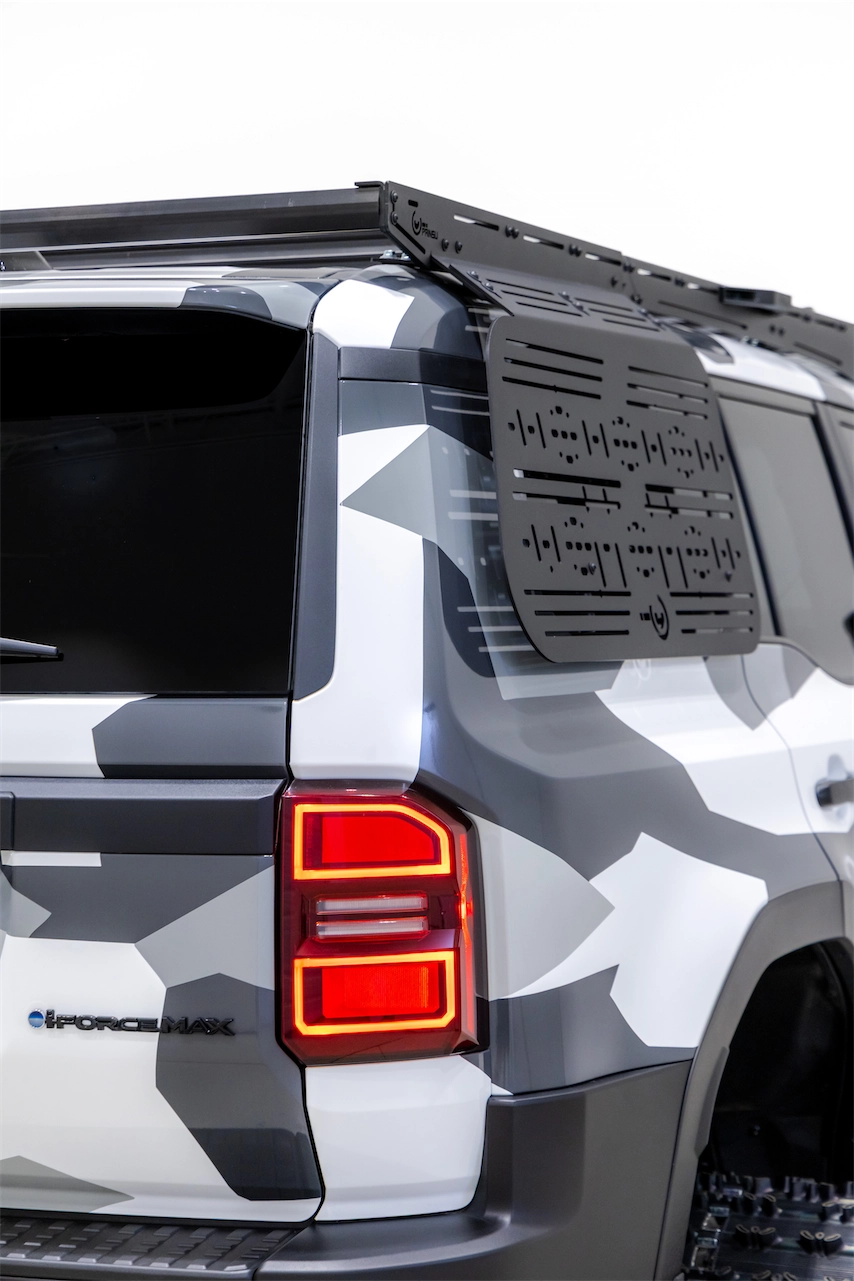
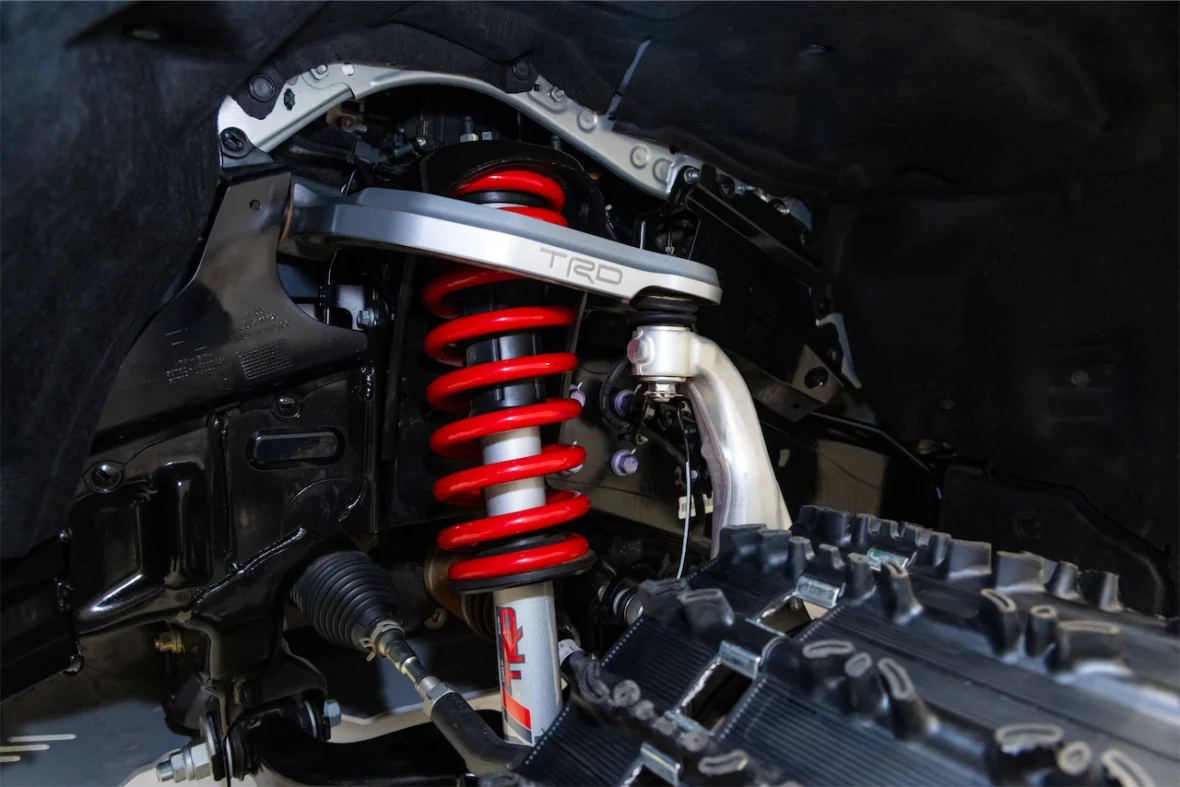
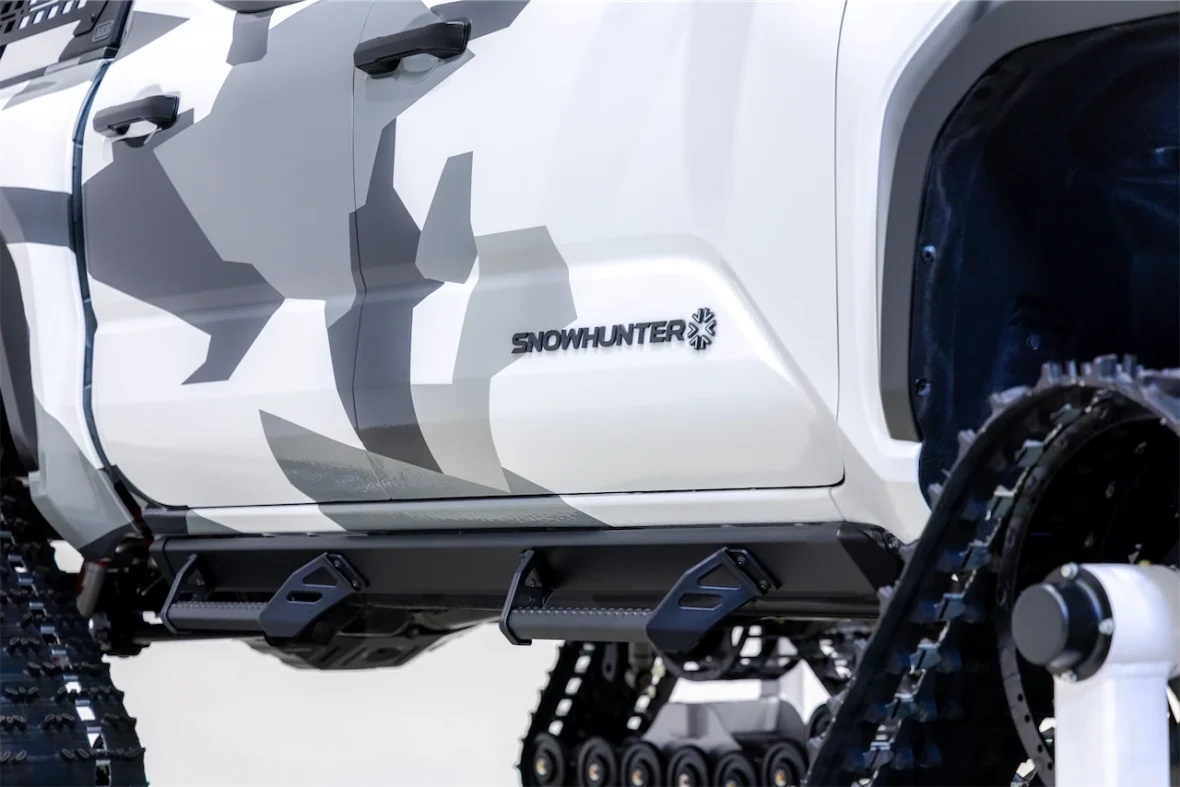
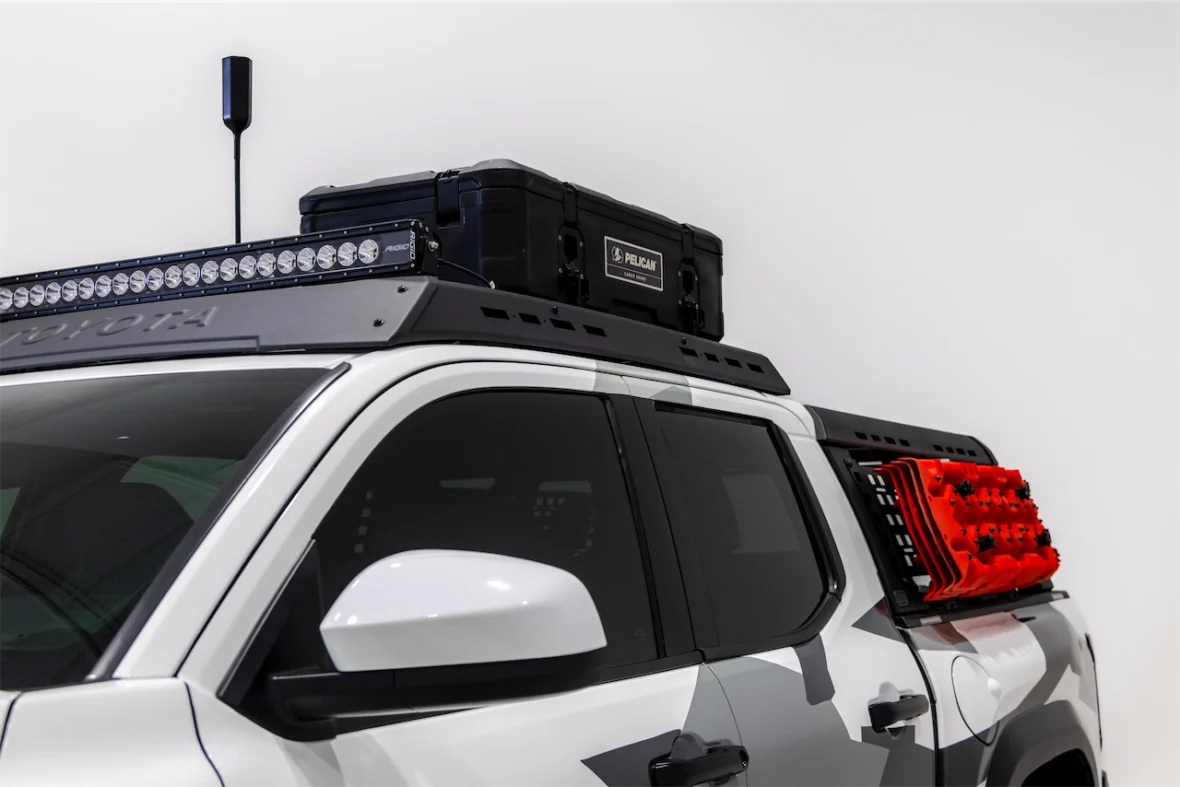
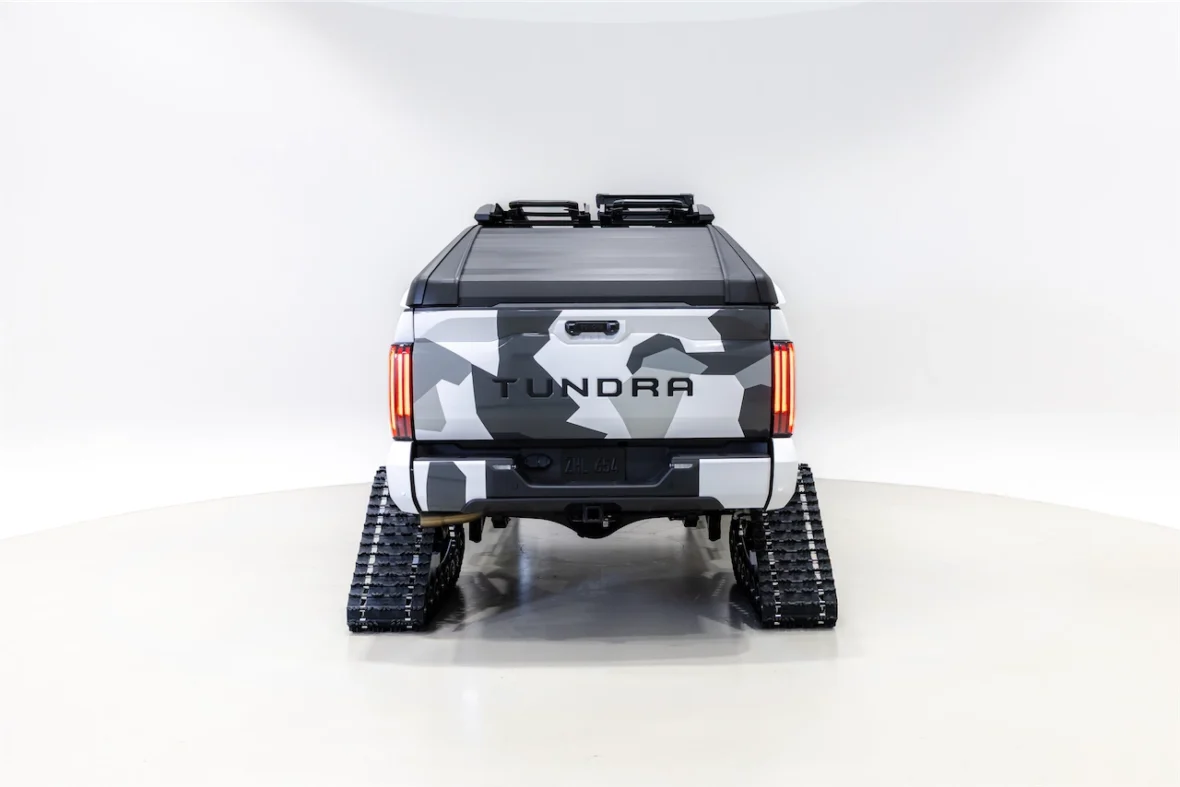
The concepts come from Toyota’s CALTY Design Research team in Ann Arbor, Michigan. They share distinctive camouflage graphics, black exterior accents, Rigid auxiliary lighting, and suspension modifications. You won’t find these at your local Toyota dealership. Still, they offer a glimpse at how Toyota could adapt its existing trucks and SUVs for far more than a typical weekend adventure.
Toyota Tundra Snowhunter Becomes a Mobile Winter Basecamp
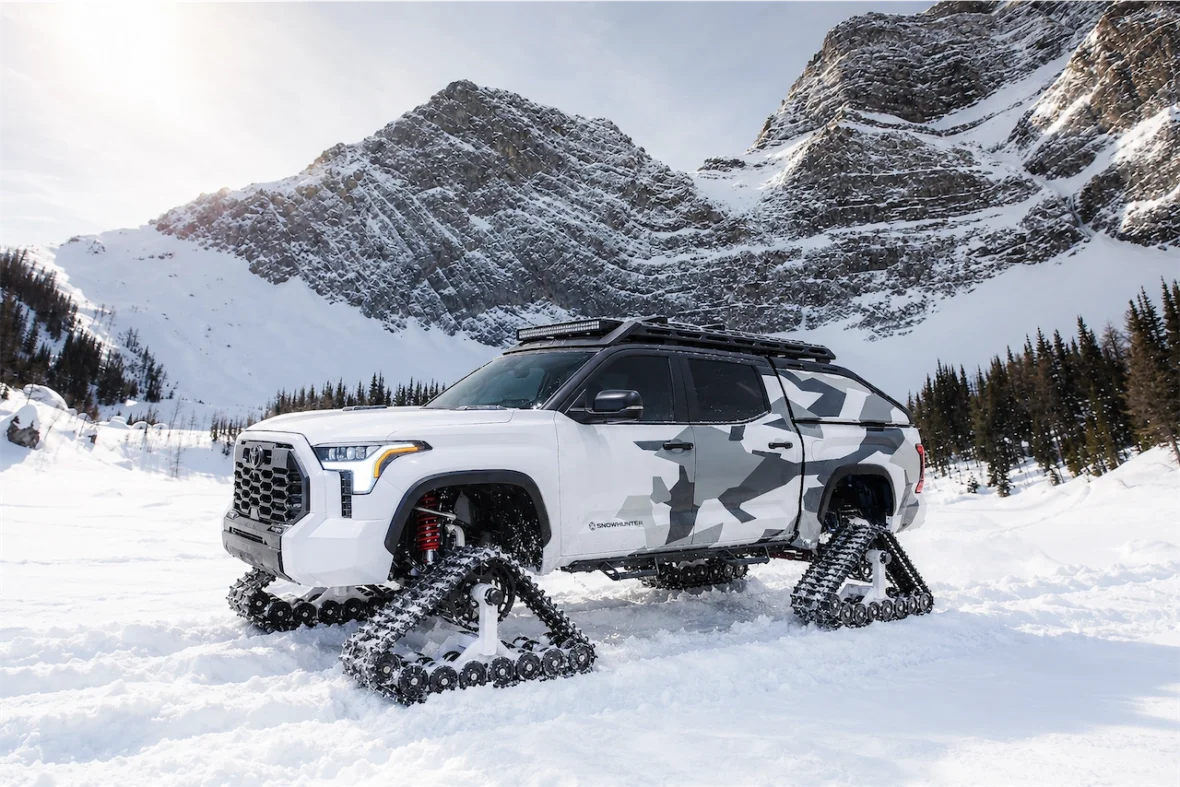
Of the five concepts, the Tundra Snowhunter might offer the most from a utility perspective.
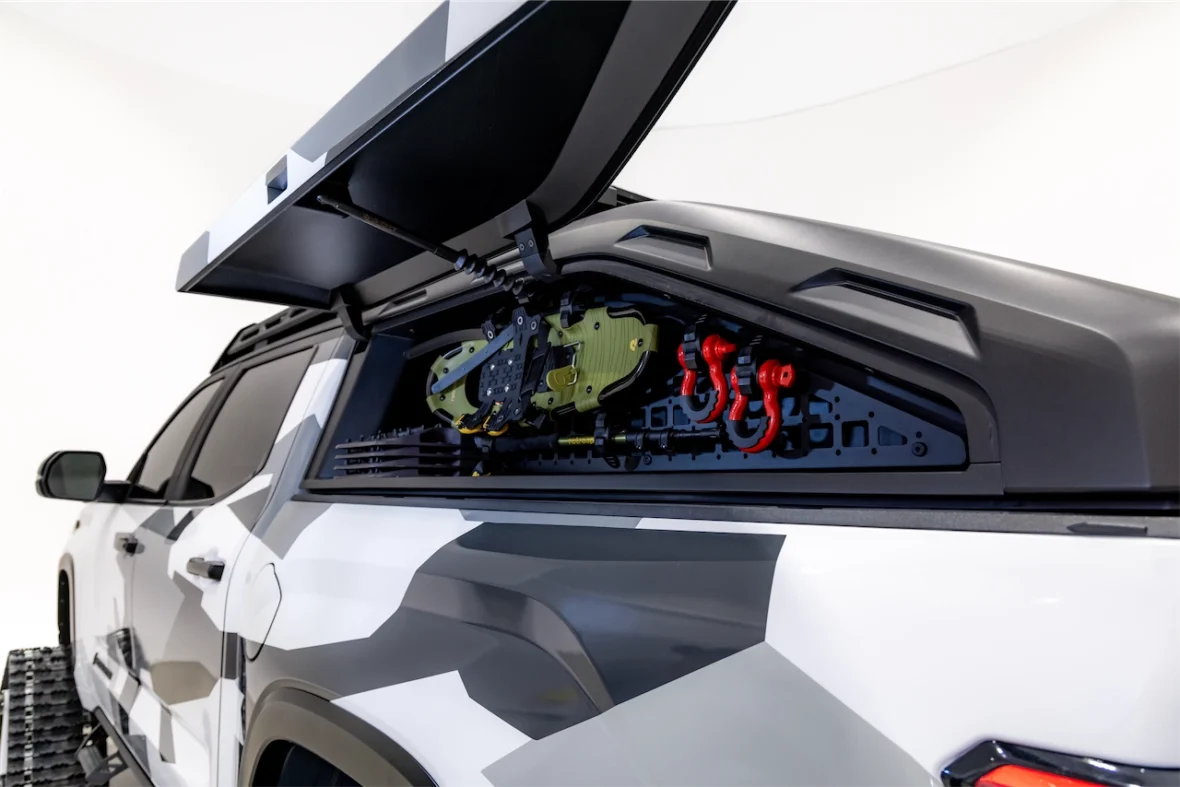
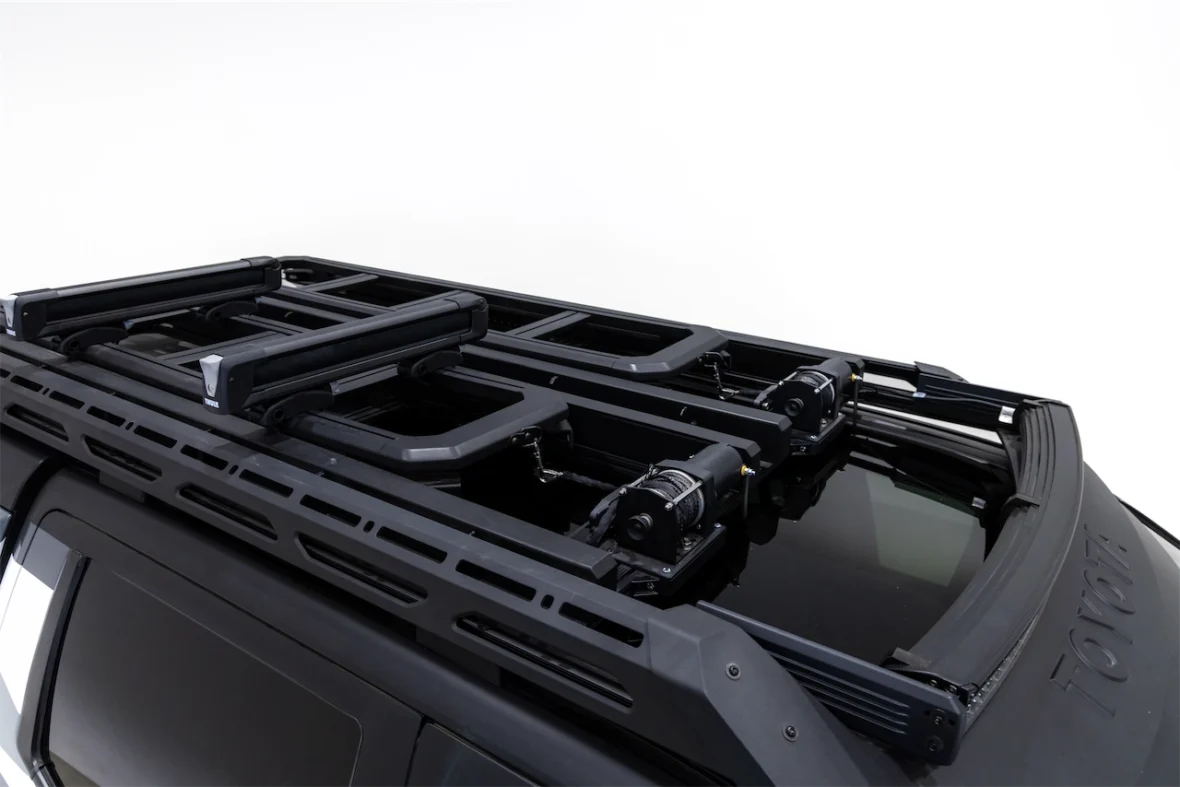
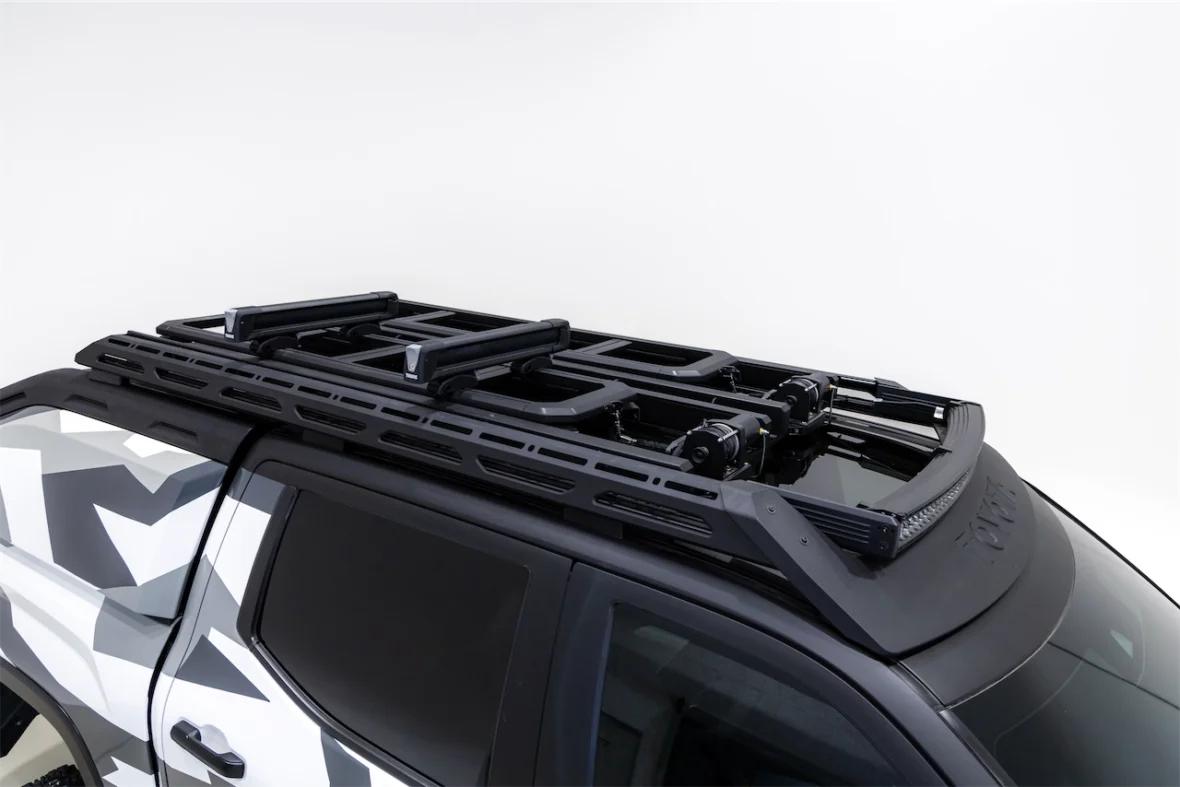
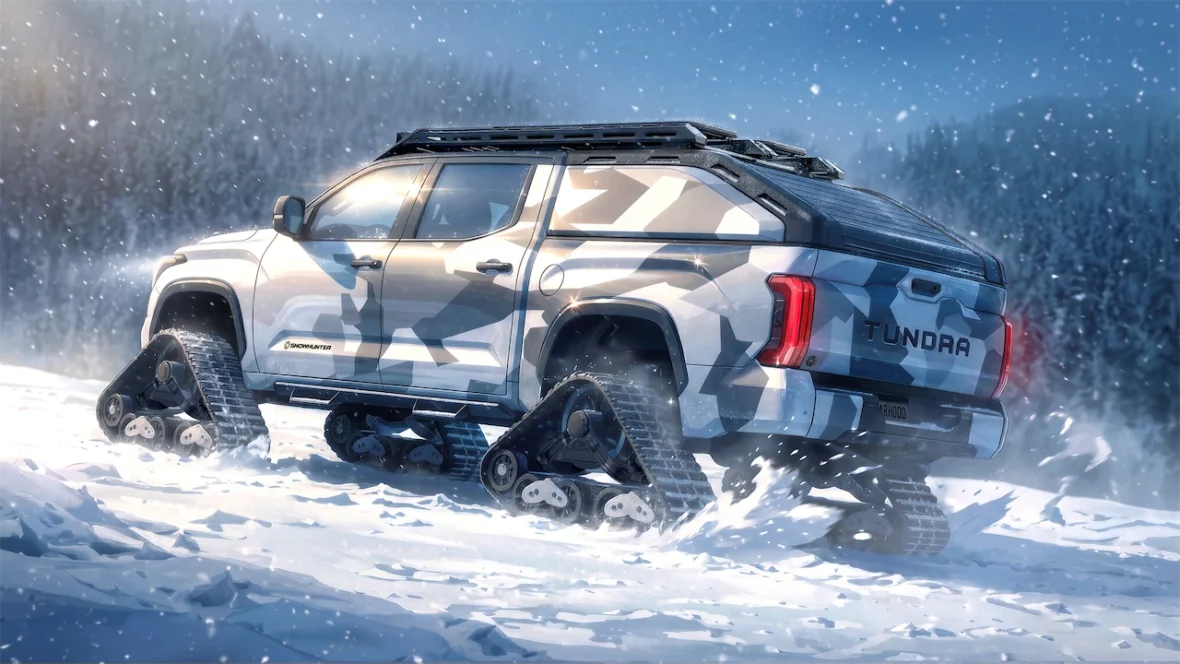
Toyota’s full-size pickup serves as the foundation for a mobile winter basecamp. Its upgrades make carrying equipment into remote areas easier. That starts with the CALTY-designed Toyota TrailLift Pro Rack System Concept, which transforms the truck bed into a configurable storage platform.
The standout feature is an articulating upper rack that can lower to make loading bulky equipment easier. Toyota envisions owners using the system for everything from bicycles and kayaks to canoes and other heavy adventure gear.
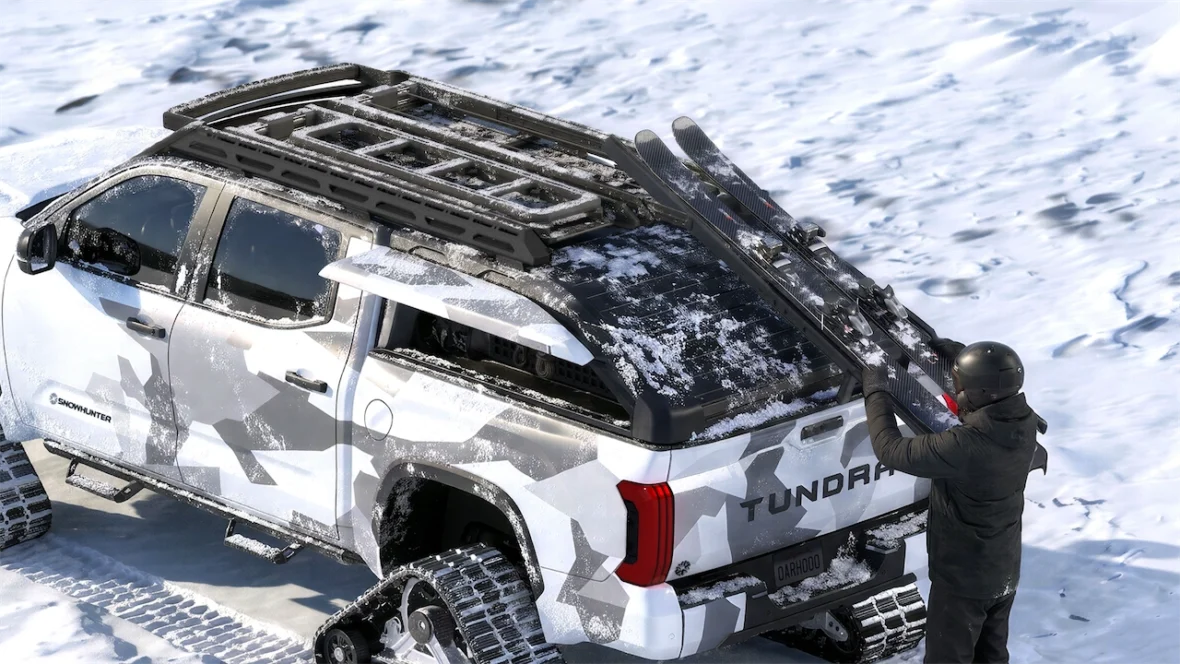
That might sound like an odd gear list for a vehicle riding on snow tracks. Still, the concept shows how such a rack could make a traditional pickup easier to load, too.
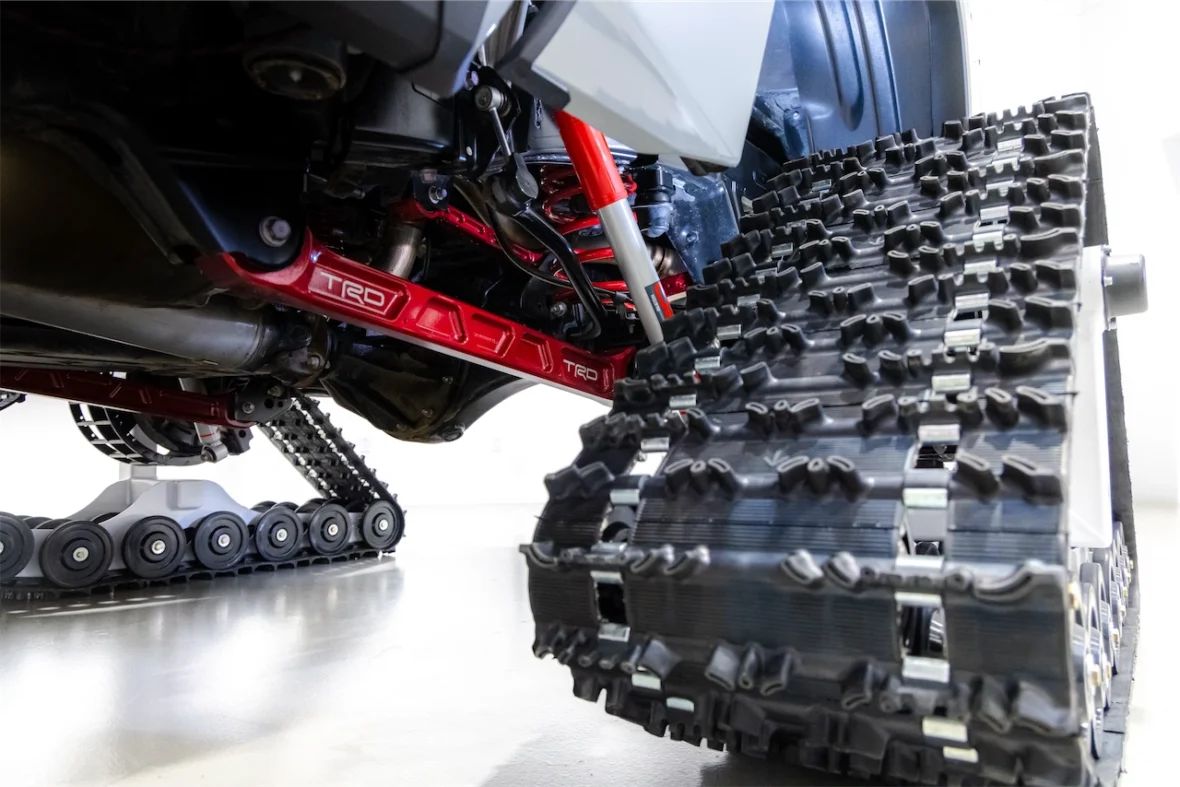
The Tundra also receives TRD rear billet control arms, a Predator Step, and additional lighting. Of course, the four massive snow tracks are the real attraction, giving Toyota’s full-size truck an entirely different appearance and purpose.
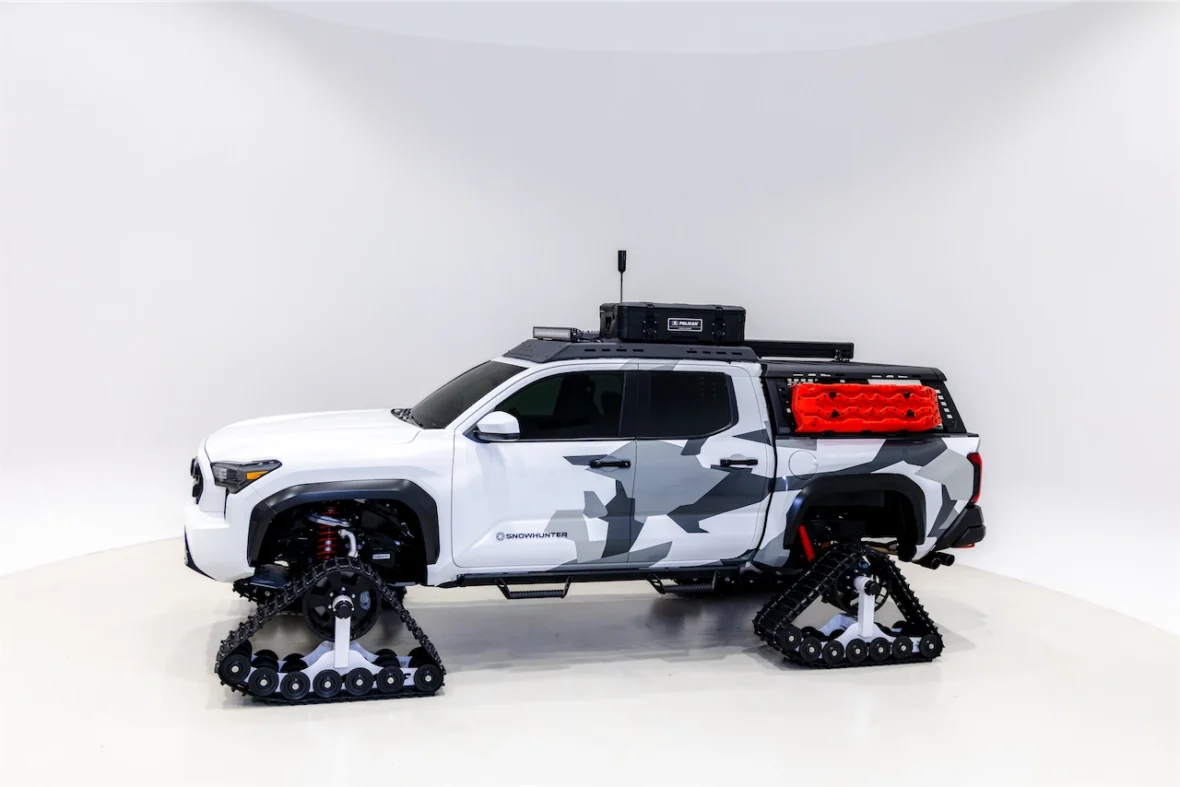
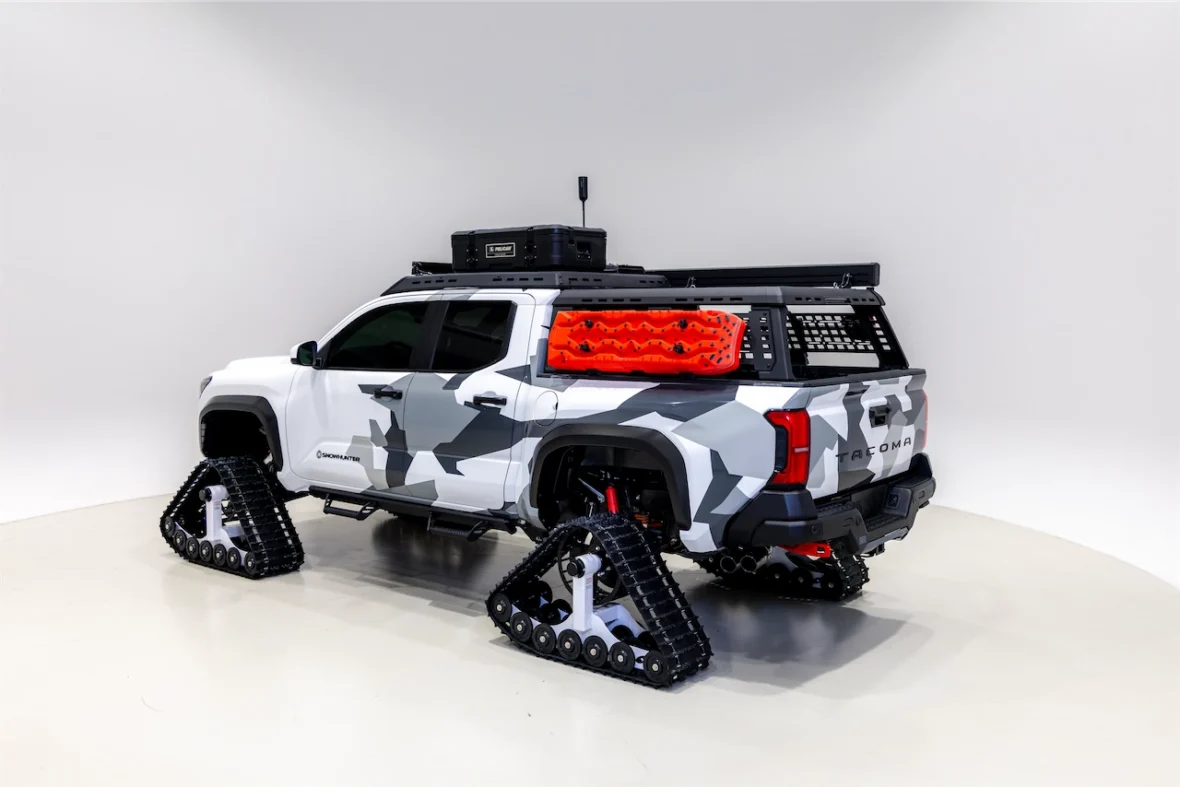
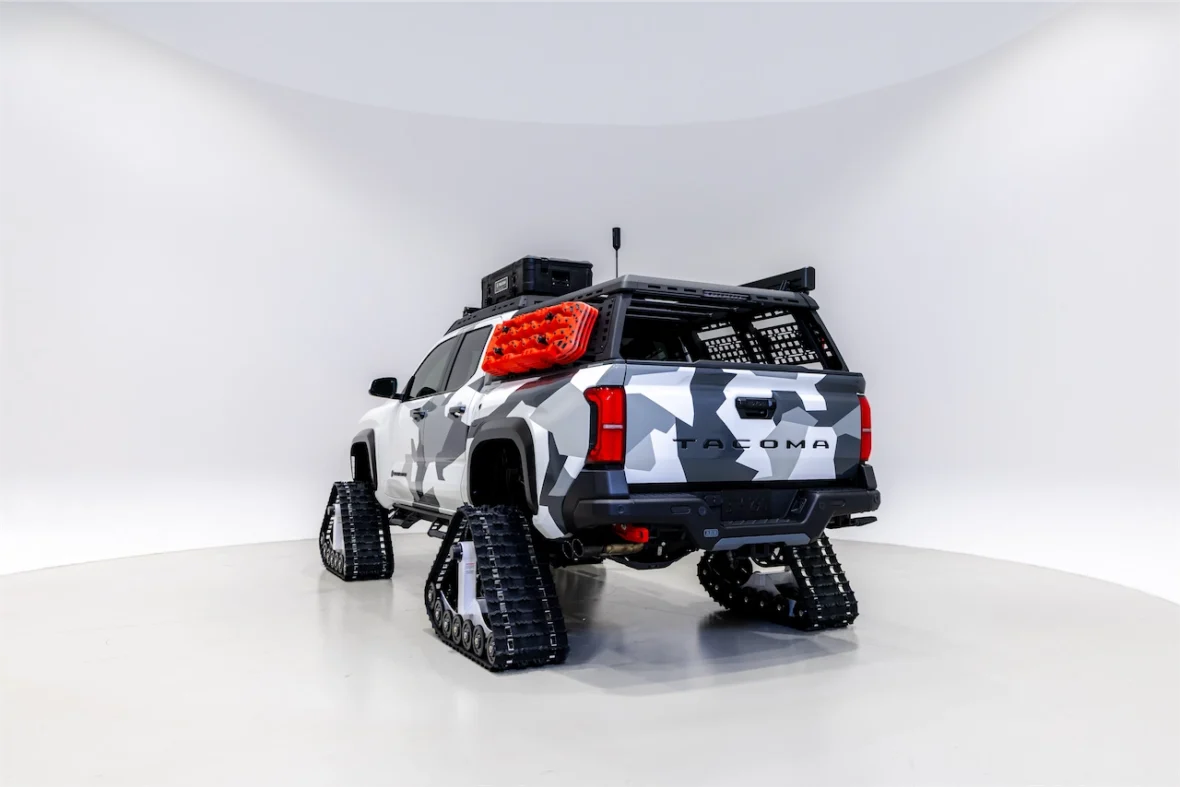
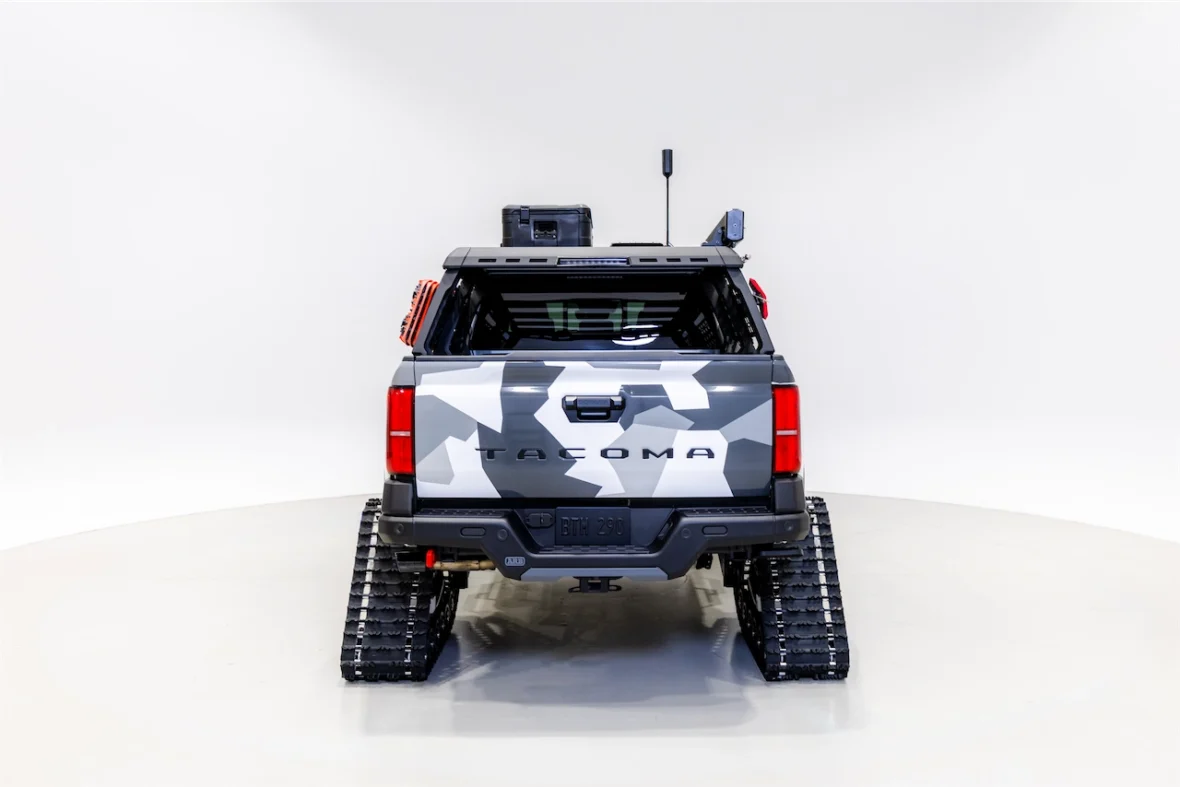
Tacoma Snowhunter Is Built for Narrow Winter Trails
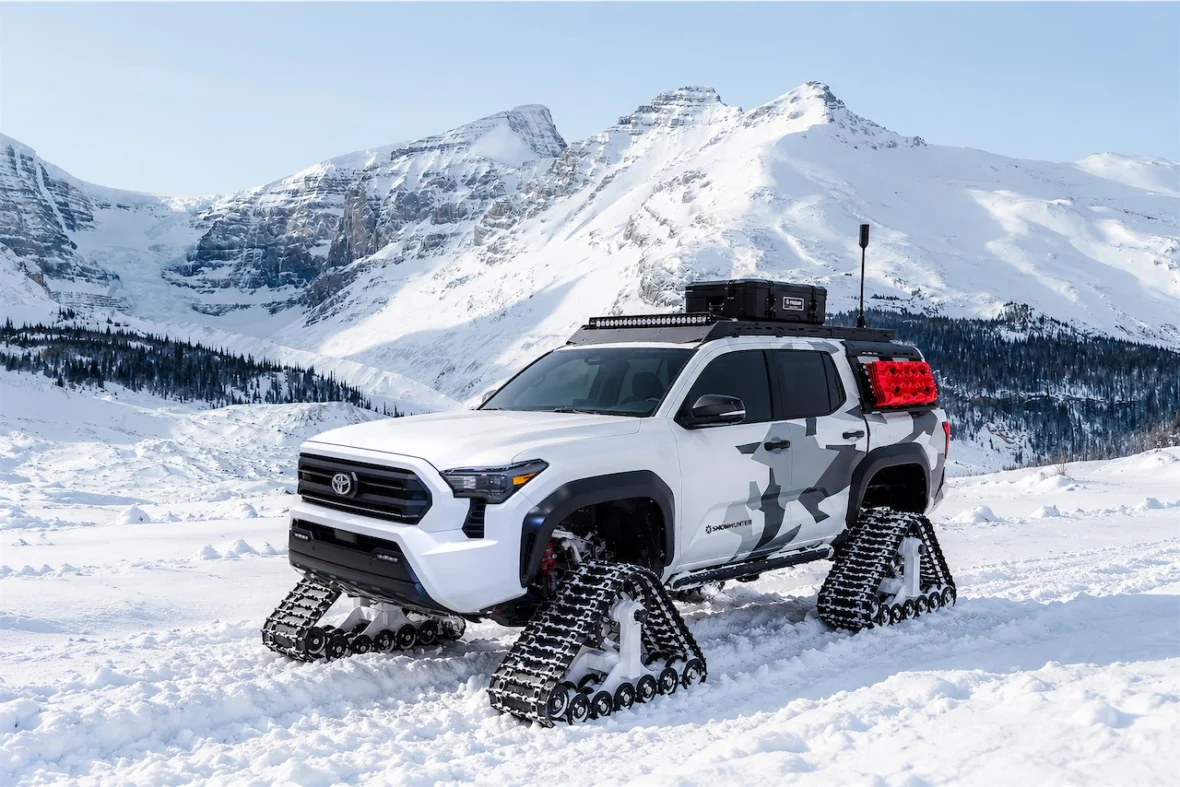
Where the Tundra emphasizes carrying equipment and establishing a basecamp, the Tacoma Snowhunter focuses on maneuverability and self-supported exploration.
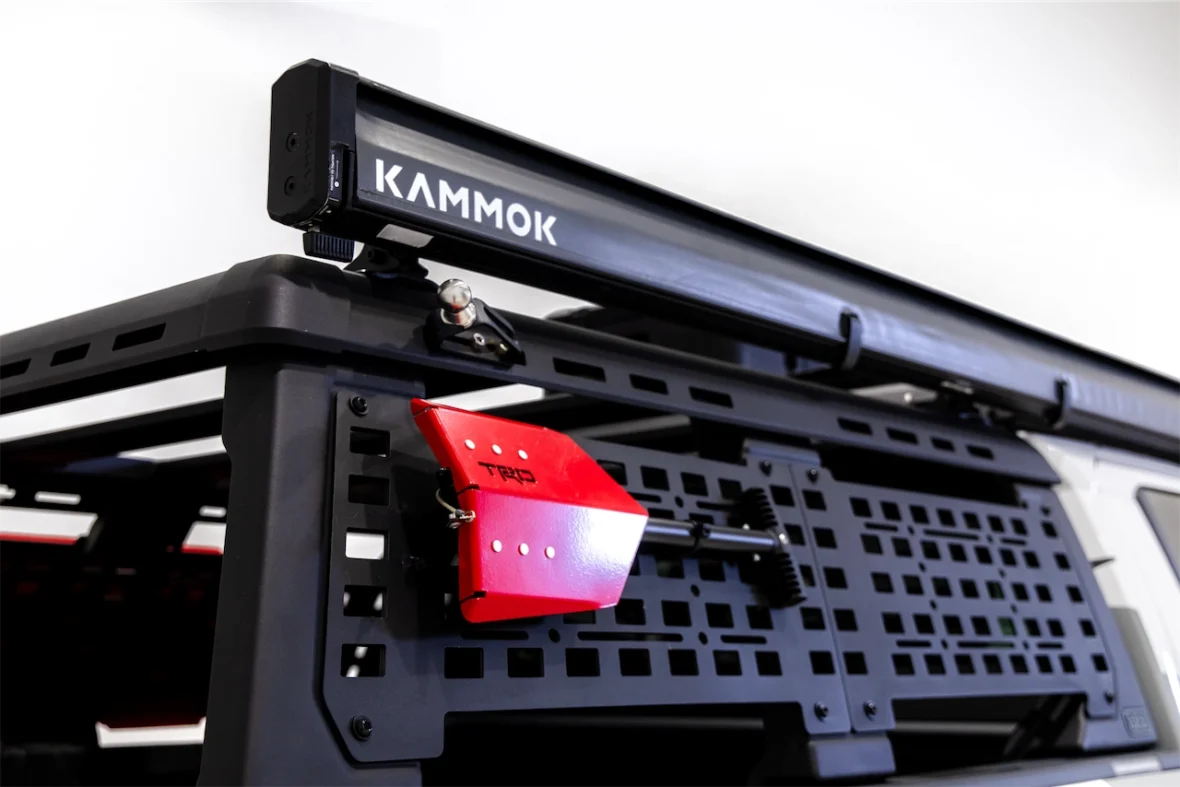
Toyota equips its midsize pickup with a roof rack, a full-length bed rack featuring MOLLE accessory panels, an awning, additional cargo storage, recovery equipment, and bed lighting.
The idea is to create a smaller expedition vehicle capable of navigating tighter trails and changing winter conditions.
There’s something particularly appealing about the Tacoma in this configuration. Its smaller dimensions could make it a more manageable choice on narrow routes. Meanwhile, the bed keeps wet recovery equipment and other outdoor gear separate from the cabin.
The four snow tracks also change the truck’s footprint considerably. However, Toyota hasn’t provided specific dimensions or performance figures for the conversion.
4Runner and Land Cruiser Take Different Approaches to Snow
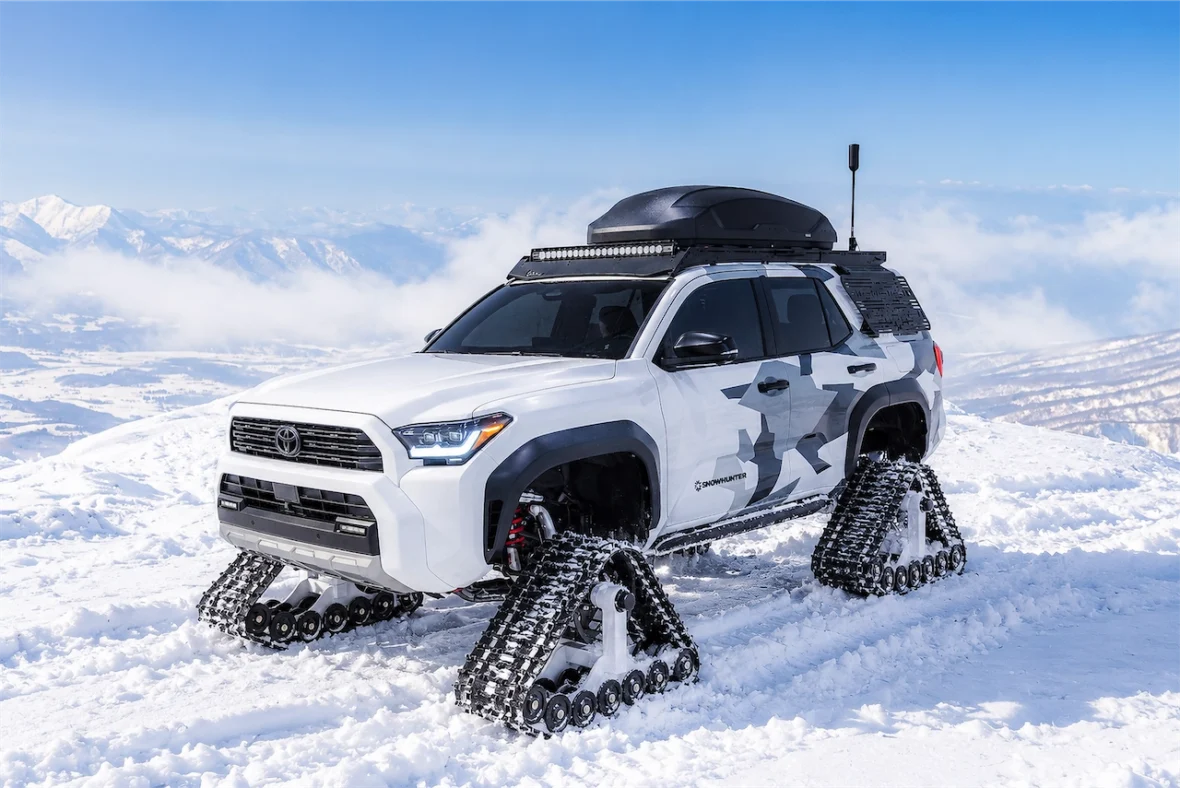
Toyota’s two more traditional off-road SUVs, the 4Runner and Land Cruiser, are also joining the Snowhunter family. However, each gets a slightly different equipment package.
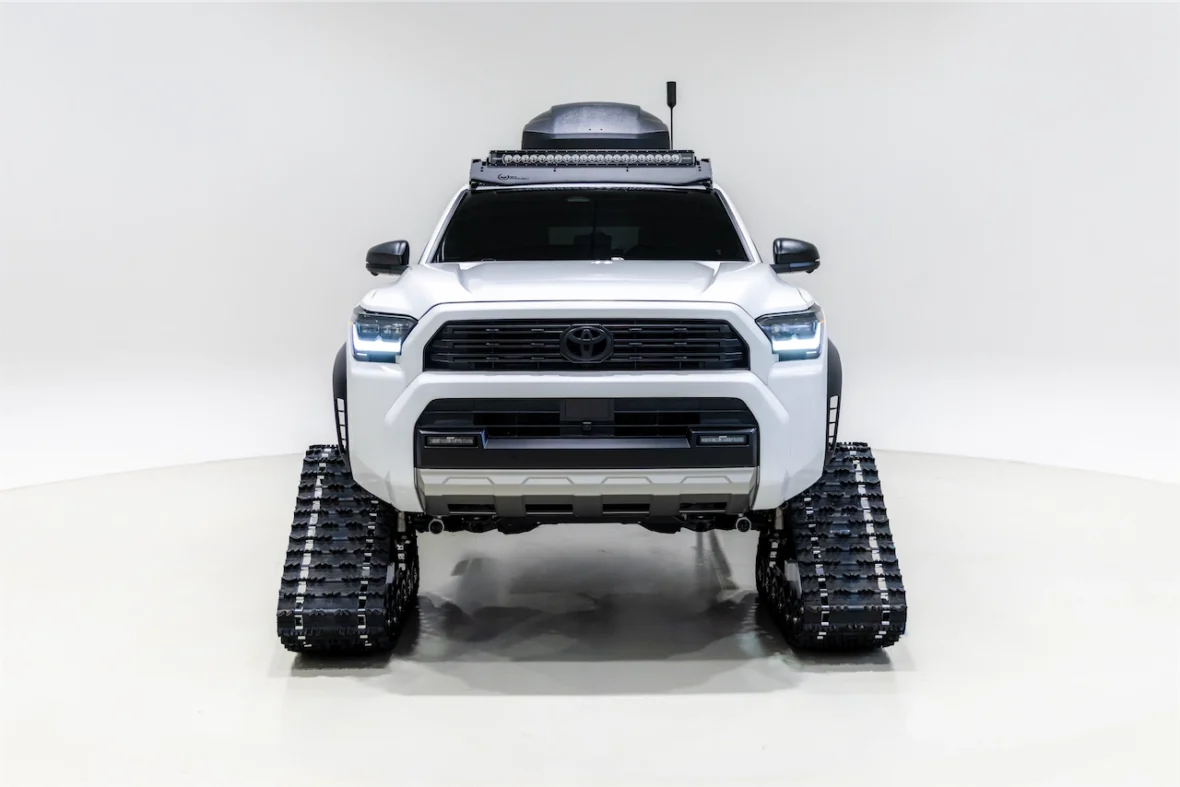
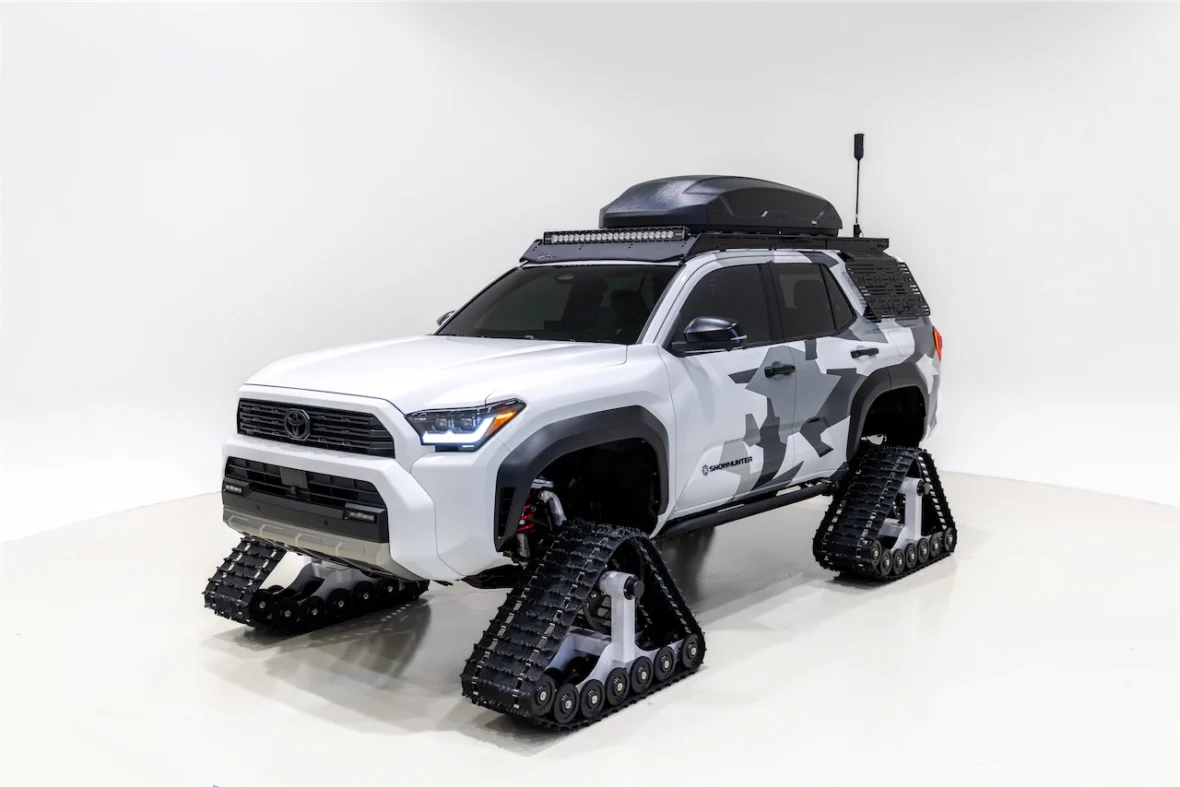
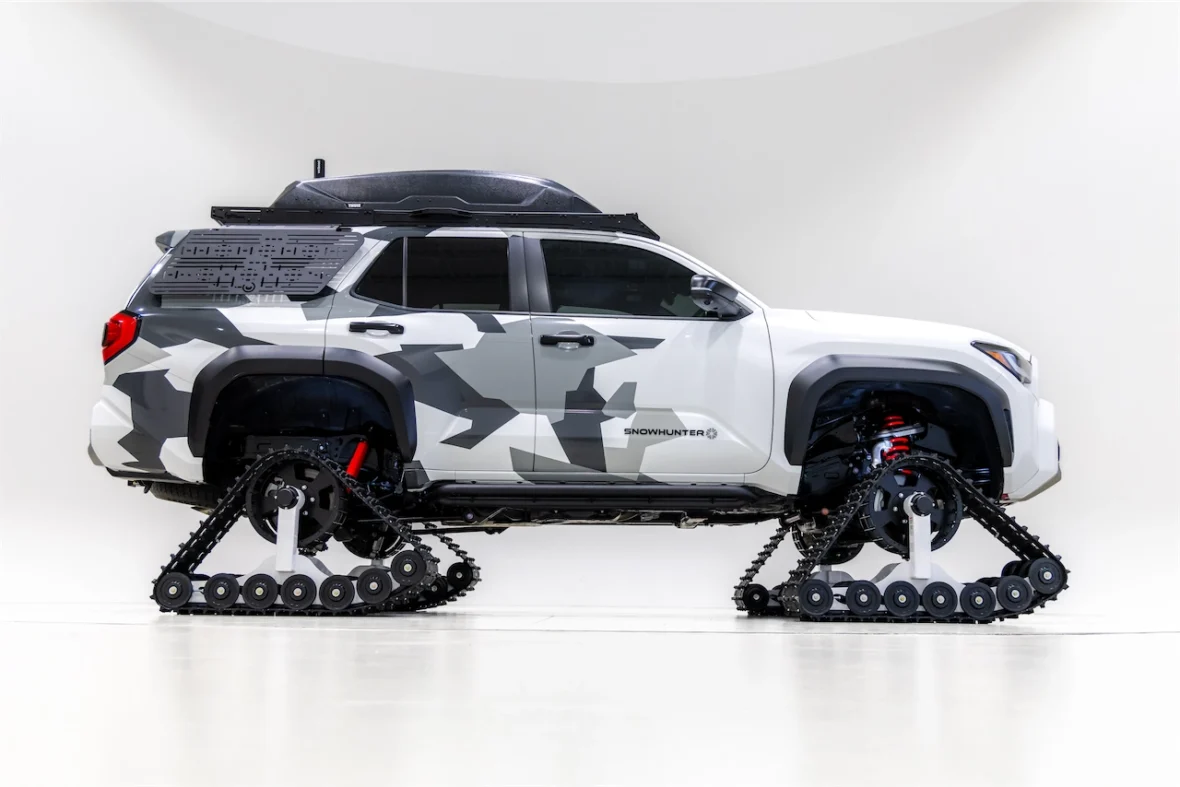
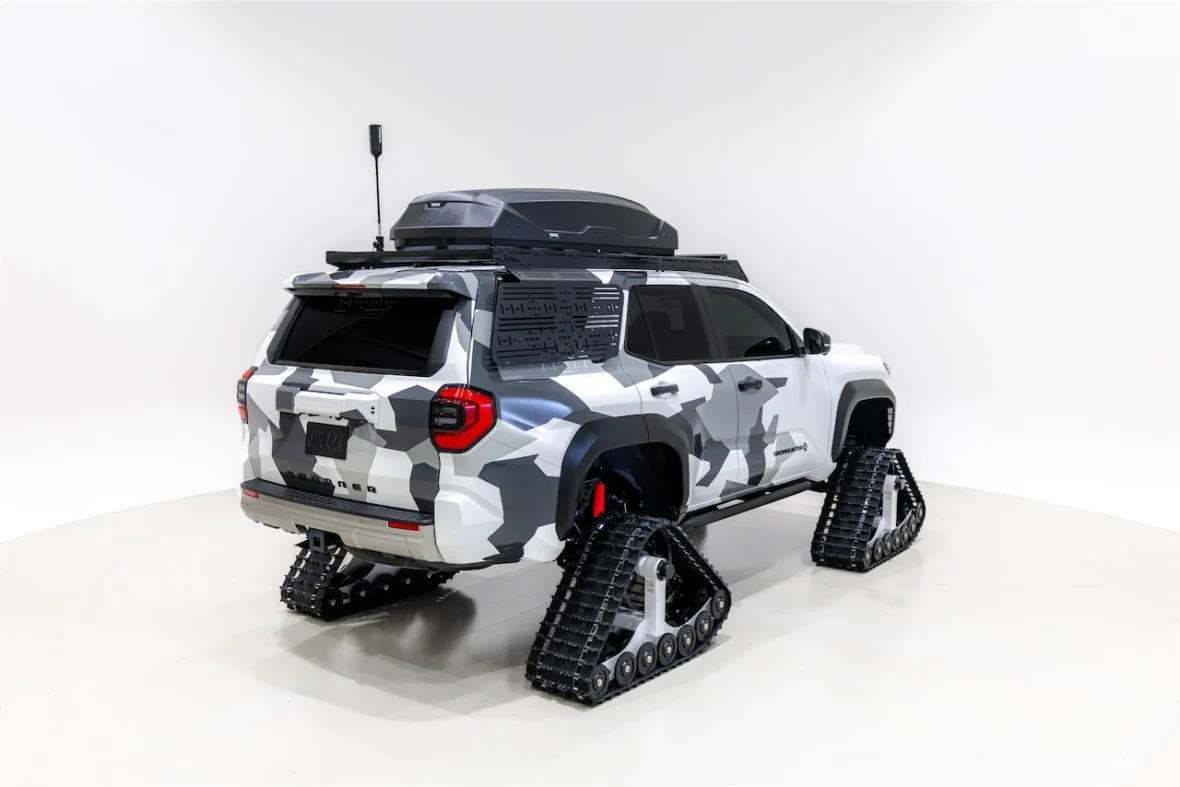
The 4Runner Snowhunter receives Toyota Genuine rock rails, a Prinsu roof rack with accessory panels, and a Thule Pulse 2 cargo box.
That equipment emphasizes storage and body protection, something particularly useful when traveling into remote areas where supplies and recovery equipment become necessities.
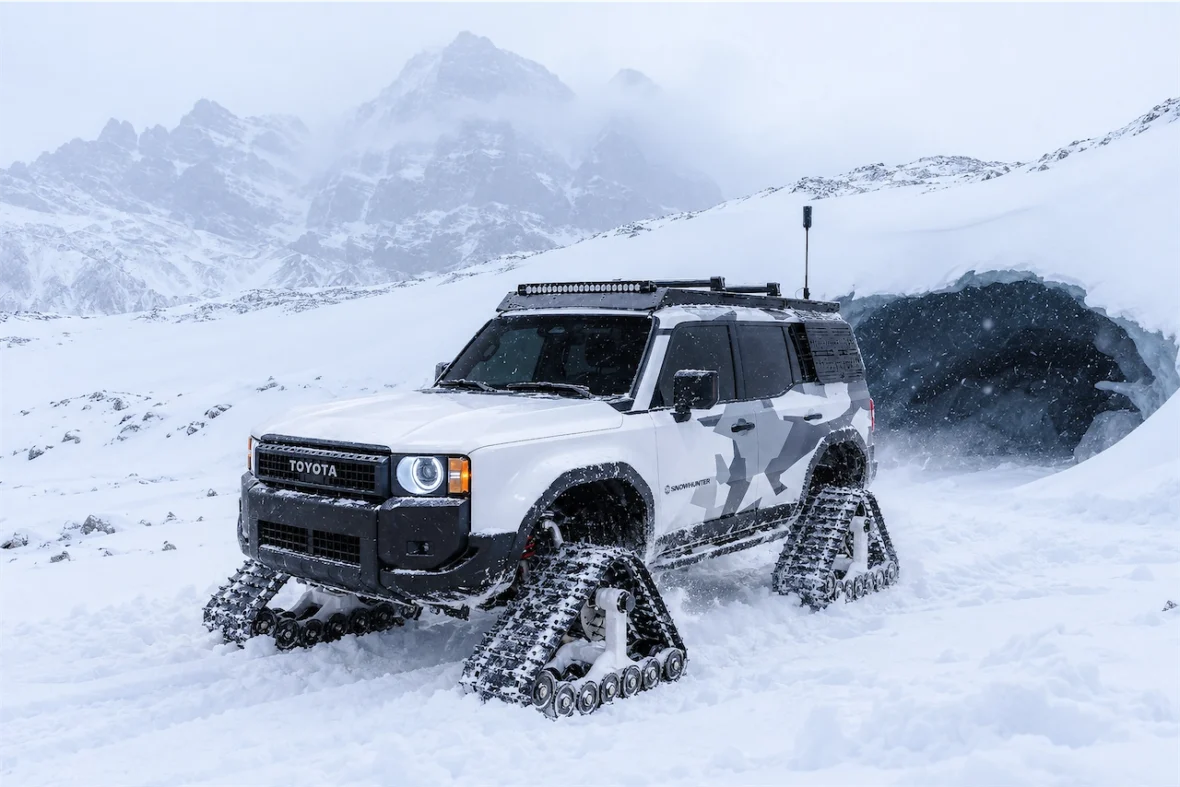
The Land Cruiser Snowhunter takes a similar approach but leans more heavily into its established reputation for long-distance exploration.
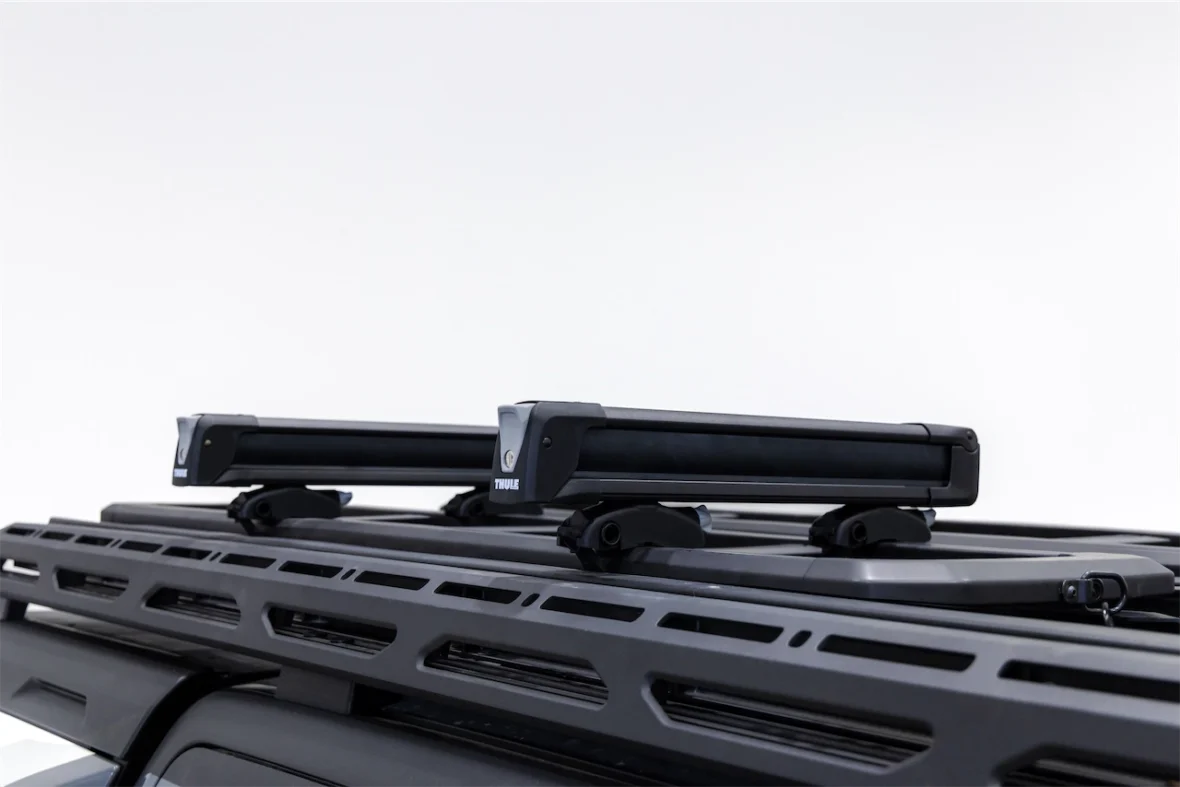
Toyota equips the Land Cruiser with rock rails, skid plates, a Prinsu roof rack with accessory panels, and a Thule SnowPack ski rack.
Both vehicles benefit from enclosed cargo areas, which could be particularly useful when traveling with passengers and equipment in extreme winter conditions. However, both also sacrifice the practicality of conventional tires in favor of the Snowhunter track systems.
Toyota’s announcement also leaves out how the tracks affect fuel economy, top speed, or the existing drivetrain systems. Those details would help establish how useful these concepts might be beyond their appearances.
Sequoia Snowhunter Might Be the Ultimate Family Snow Vehicle
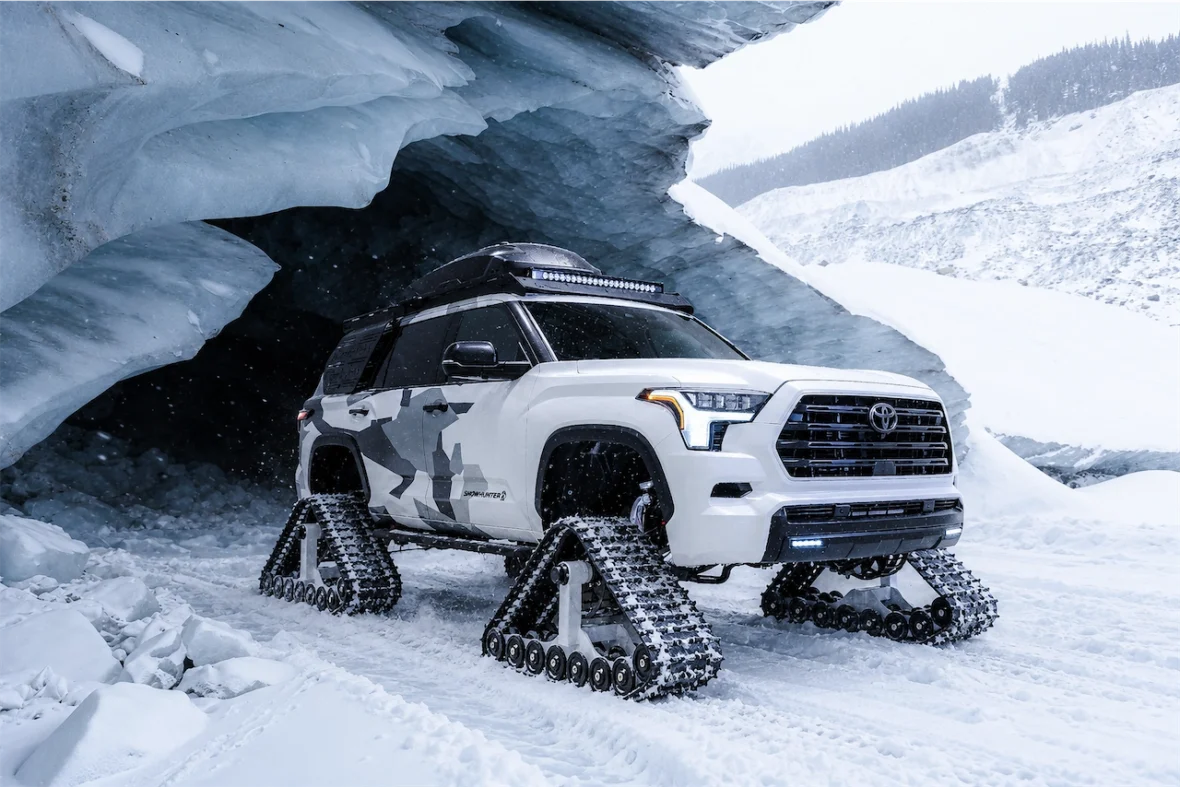
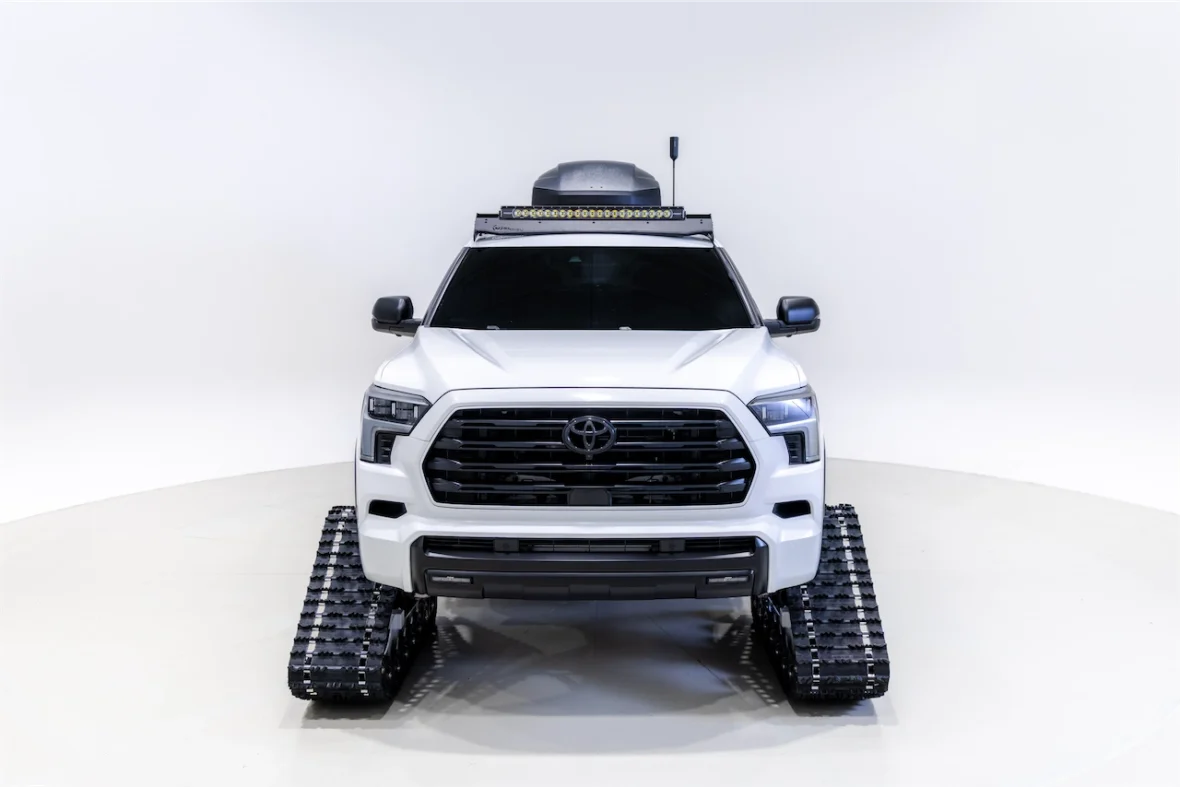
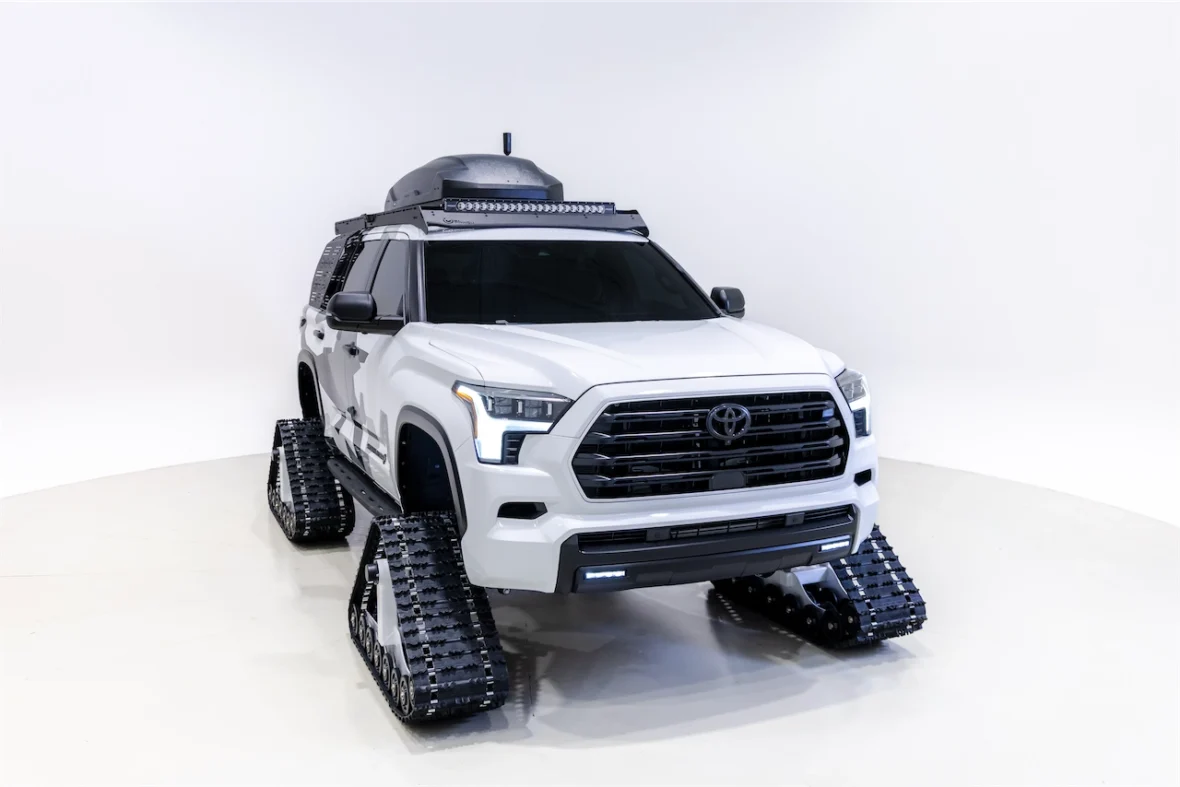
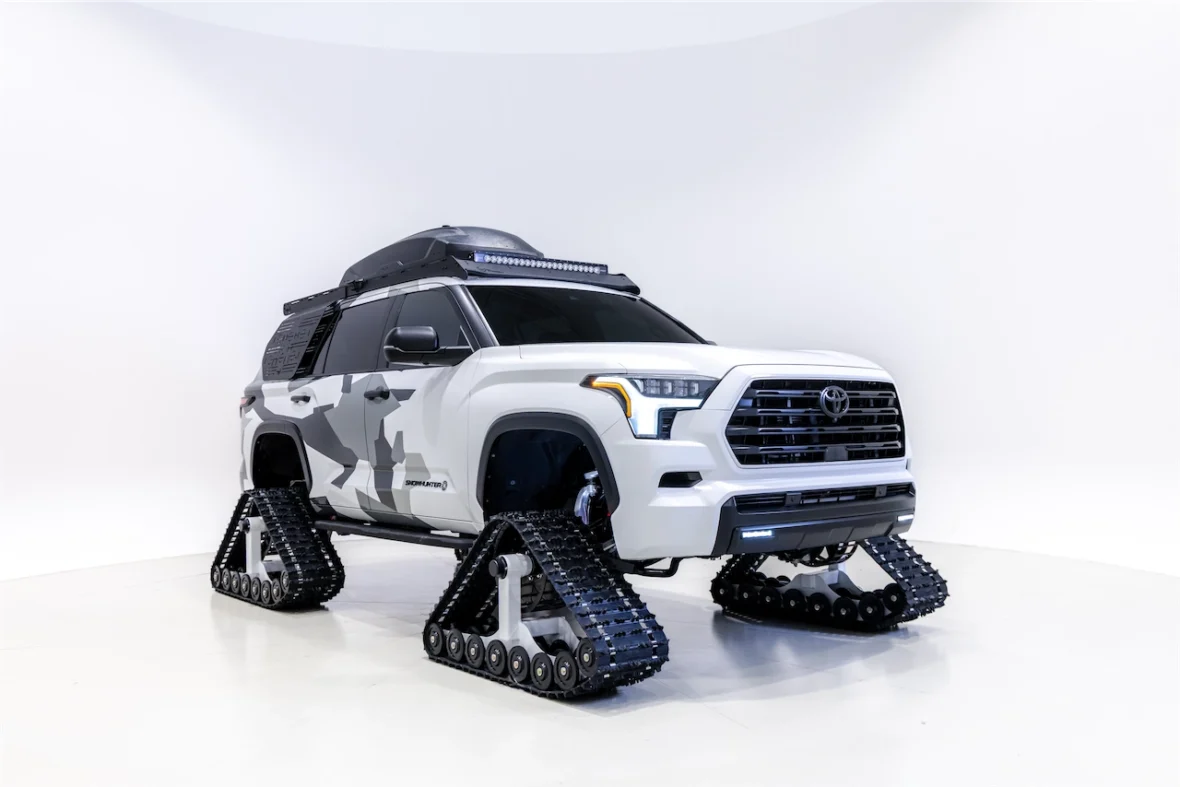
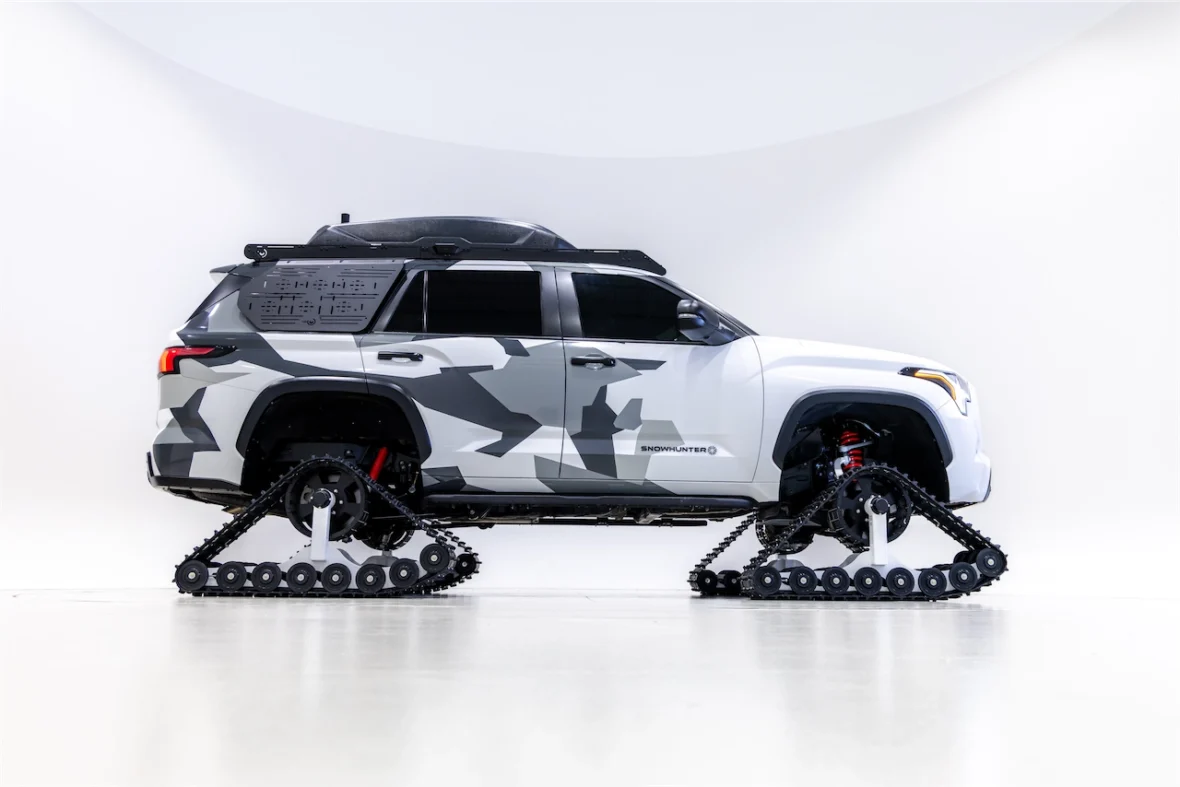
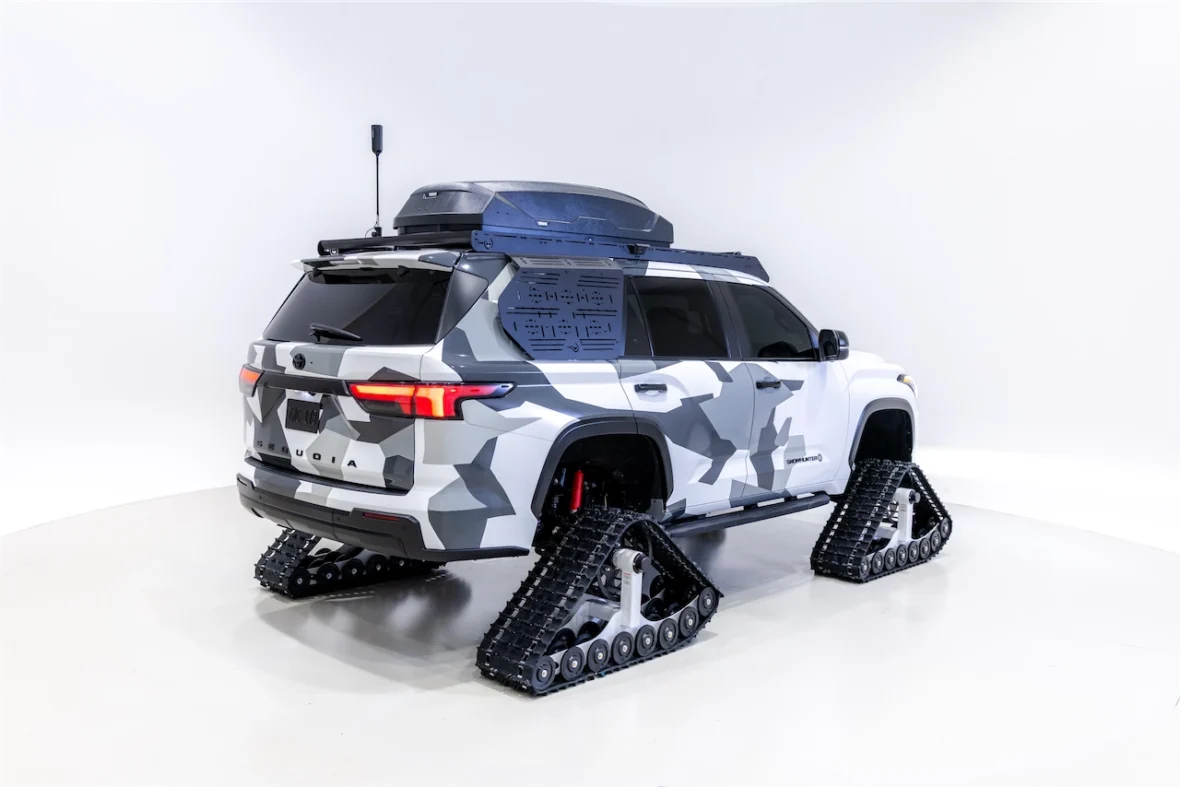
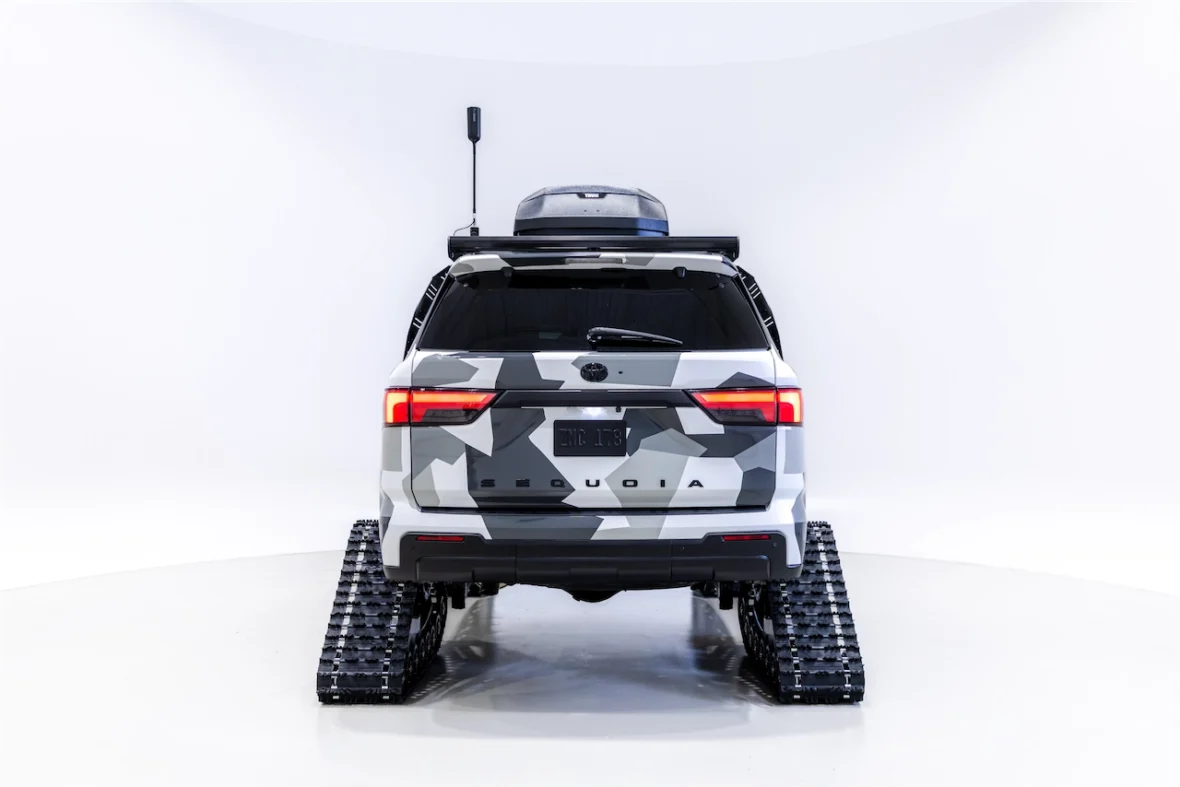
The fifth vehicle in Toyota’s Snowhunter collection is the Sequoia, which brings three-row SUV practicality to the winter expedition concept.
The Sequoia Snowhunter features a TRD front skid plate, Toyota Genuine cast aluminum running boards, a Prinsu roof rack with accessory panels, and a Thule Pulse 2 cargo box.
Unlike the Tacoma or Tundra, the Sequoia combines enclosed passenger space with the ability to carry a larger group into the backcountry.
That’s a compelling proposition for families who enjoy outdoor adventures. The additional seating and enclosed cargo area provide a different kind of utility than the pickups. Granted, the massive track systems make this particular Sequoia a little less practical for school pickup duty.
Toyota positions the Sequoia as a vehicle capable of supporting everything from family trips to remote winter basecamps. In concept form, it certainly looks the part.
Could Toyota Actually Sell a Snowhunter?
Here’s where things get interesting. Toyota already offers serious off-road hardware through its TRD lineup, but the Snowhunter concepts take that capability into a much more specialized environment.
Replacing conventional wheels with snow tracks changes far more than a vehicle’s appearance. Such conversions can introduce additional drivetrain loads, alter steering and braking behavior, and place different demands on suspension components.
Toyota hasn’t released performance figures for these vehicles or suggested that a production Snowhunter package is on the way.
In fact, the company specifically warns that these are modified prototypes featuring components that may not be available through Toyota. Some modifications could affect vehicle safety, void warranty coverage, or prevent the vehicles from being street legal.
That makes these five vehicles primarily an exercise in showcasing the possibilities of Toyota’s existing truck and SUV platforms.
The TrailLift Rack Is the Real Takeaway
Still, there are some ideas worth watching, particularly the Tundra’s adjustable TrailLift Pro rack system. Unlike the snow tracks, that type of equipment could offer real-world benefits to a much broader group of pickup owners.
For now, the five Snowhunter concepts are headed to the 2026 SEMA Show. There, Toyota will demonstrate what happens when its most capable vehicles are built for a winter adventure instead of a conventional off-road trail.
Personally, I’d be most interested in seeing how the Tacoma and Sequoia perform in actual deep snow. One emphasizes maneuverability, while the other offers the space and utility a family might need for an extended winter getaway.
Which one would you take into the mountains?