
Your New Truck Barely Fits in the Garage: How to Plan Storage Around a Full-Size Pickup

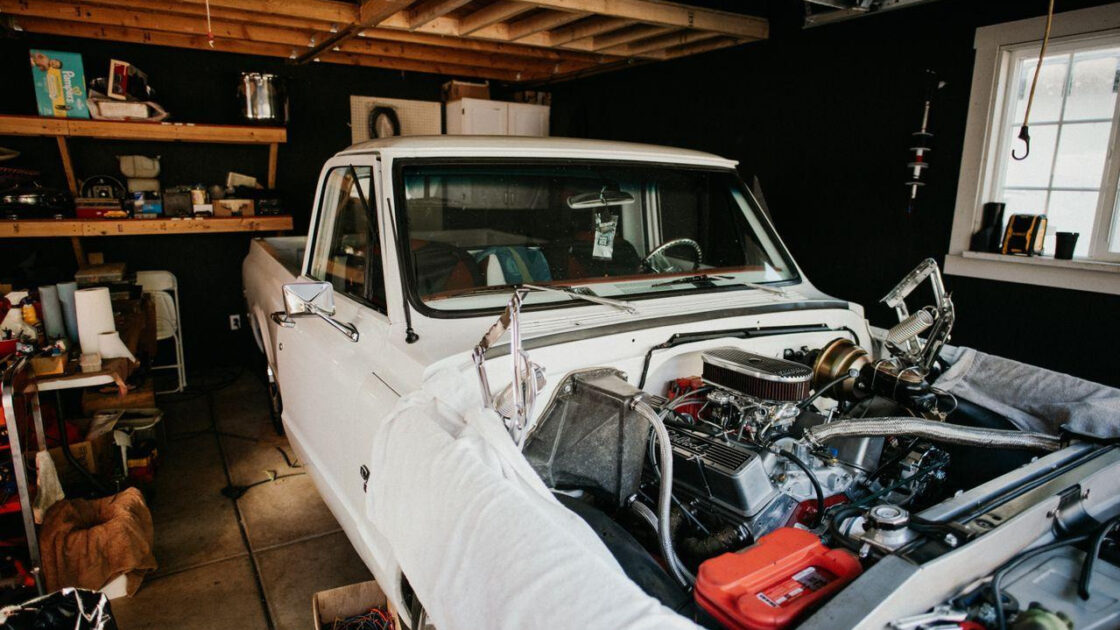
Photo by dumitru B on Unsplash
The day you bring home a new F-150, you may find your shelving, workbench, and recycling bins have no place to go. The solution is typically a larger garage. A storage plan centered on the truck’s actual size, with shelves, racks, and cabinets positioned out of the vehicle’s way.
Start With Real Measurements
Manufacturer specifications are a good starting point, but they don’t account for your trailer hitch, aftermarket bumper, or extended mirrors. A Ford F-150 SuperCrew is approximately 232 inches long with a 5.5-foot bed; a ball mount can extend that to more than 240 inches. On most 1/2 ton trucks, width with mirrors out is nearly 8 feet. Take a tape measure to your own vehicle and write down four numbers: overall length, width with mirrors, roof height, and the height of the hood at its front edge.
This is the number people forget more than any other. The height of the hood on a modern full-size pickup determines whether you can mount cabinets on the front wall and still pull the pickup completely into the garage. Roof height is another factor. A stock truck typically fits through a 7-foot door; a 2-inch leveling kit and roof rack can quickly change that.
After you’ve finalized the numbers, park the truck where you usually do that and outline it on the floor with painter’s tape. Open both front doors completely and make note that’s the space that can’t be filled with storage. Crew cab doors should open about 3 feet to let an adult get out comfortably, and there is no room for storage.
The space outside of the tape is the space you can use for storage. You might have 12 to 18 inches of space free along the front wall in a 20′ x 20′ 2-car garage with one truck and one sedan. That can increase to 3 or 4 feet in a 24′ x 24′ garage. The tape outline will clearly show what you’re dealing with before you spend any money.
Work Out Where Storage Can Actually Go
The bumper is the first casualty when a long truck arrives, and the wall in front of the bumper is typically the victim. The floor-standing shelves that are 18 or 24 inches deep won’t fit any longer. Above hood height, wall-mounted cabinets will. If the hood is 48″ and cabinets are to be installed at 54″ or above, the truck nose can slide underneath.
If you go below that line, try to keep it shallow. Hand tools, extension cords, and shop vac hose are mounted in a pegboard or slatwall panel to a depth of 4-6”. A laser parking guide attached to the ceiling or a wheel stop helps you stop in the same spot each time, ensuring that the bumper doesn’t hit the cabinets.
Most of your daily storage should go in your side walls. 12″ deep shelving units can be placed along most walls and will not obstruct a door, and can accommodate paint cans, car care products, and boxed seasonal items with ease. Use deeper 24-inch units only behind the tailgate, where no doors will be opened.
Brands such as Gladiator and Proslat are popular choices for this zone, as hooks and baskets can be swapped out as needs change. Hang bikes, ladders, and lawn tools vertically and keep them near the wall. Store heavier objects at chest height and lighter objects overhead so you’re not lifting a 40-pound bag of salt over your head.
Choose Equipment That Moves or Folds
It’s hard to justify fixed work benches when a truck occupies much of the floor. A fold-down bench mounted to the wall provides workspace when the truck is operating and folds down when parked. Larger jobs can be rolled into the empty bay or onto the driveway with a rolling tool cabinet for mechanics.
Tight garages have several options, including:
- Work benches that fold down and have locking brackets, usually 5-6 feet wide
- Locking casters on rolling tool chests
- Wall-mounted folding ladders and sawhorses
- Clear-sided stackable bins to see contents without opening them
Each piece should be chosen for how little space it takes up when stored, not how much it holds when open.
Use The Ceiling Carefully
Overhead Racks and Their Limits
In a small garage, a ceiling rack provides storage without taking up floor space. A typical 4-by-8-foot rack can support 400 to 600 pounds and can be lowered anywhere from 18 to 45 inches from the ceiling. However, you have about 19 inches to work with, not to mention the garage door track and opener rail, with an 8-foot ceiling and 77-inch truck roof.
Place racks above the hood area or next to the vehicle (not underneath the cab). Make sure the rack is secured to ceiling joists, not drywall. Other items you can store and use a few times a year, such as holiday decorations, camping supplies, and extra tires, are good candidates.
Garage Door Clearance
When the door opens, its panels roll across the ceiling and occupy the first 8 to 10 feet of overhead space. All items attached to it will be hit. Pre-purchase: Fully open the door and measure from the ceiling down to the lowest part of the door and track.
A jackshaft opener attached to the side wall will free up the space in the middle of the ceiling, and a high-lift track conversion will lift the door’s path. Both cost more than a typical opener, so compare the cost to the space you would gain.
Protect the Paths You Walk Every Day
Remove, ignore, or step over storage that interferes with your path to the house door or trash containers. Maintain an unobstructed space of at least 30 inches clear between the truck and any shelving on the routes that you use regularly. It should be wide enough to carry grocery bags without turning sideways.
Be aware of the entry door to your home. There should be a landing at that door, and it’s where shoes, backpacks, and dog leashes are gathered, as many building codes state. A narrow bench with hooks above keeps that mess contained without crowding the truck.
Make the Plan Fit Your Routine
A full-size pickup doesn’t need to clear everything in your garage, but it does require you to plan by the inch rather than guess. Measure the truck you really have, tape it out on the floor, store items above the level of the truck hood or along the side walls, use the garage door path overhead, and keep clear walkways you use daily. Do it before you buy a single shelf, and your truck and tools will have somewhere to go.