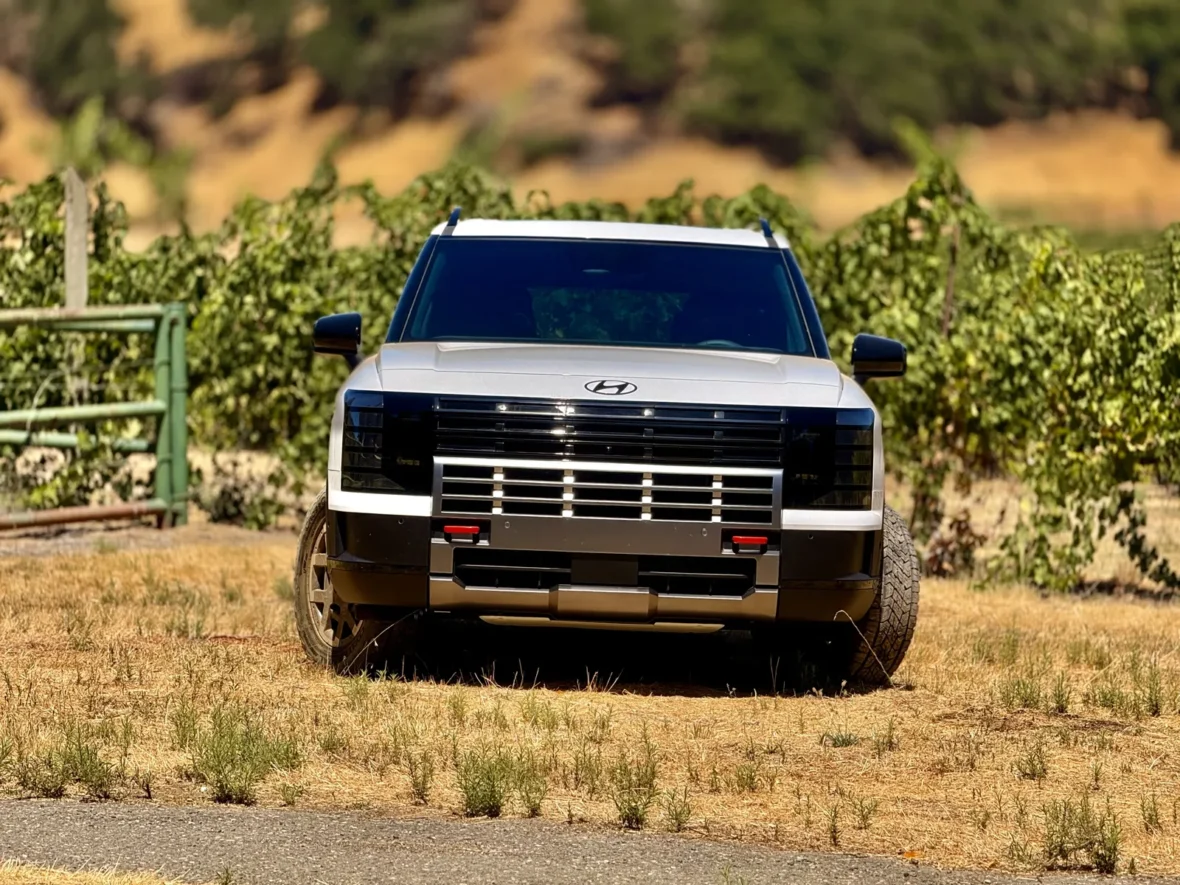
2026 Hyundai Palisade XRT PRO Off-Road: The Hardware Makes the Difference

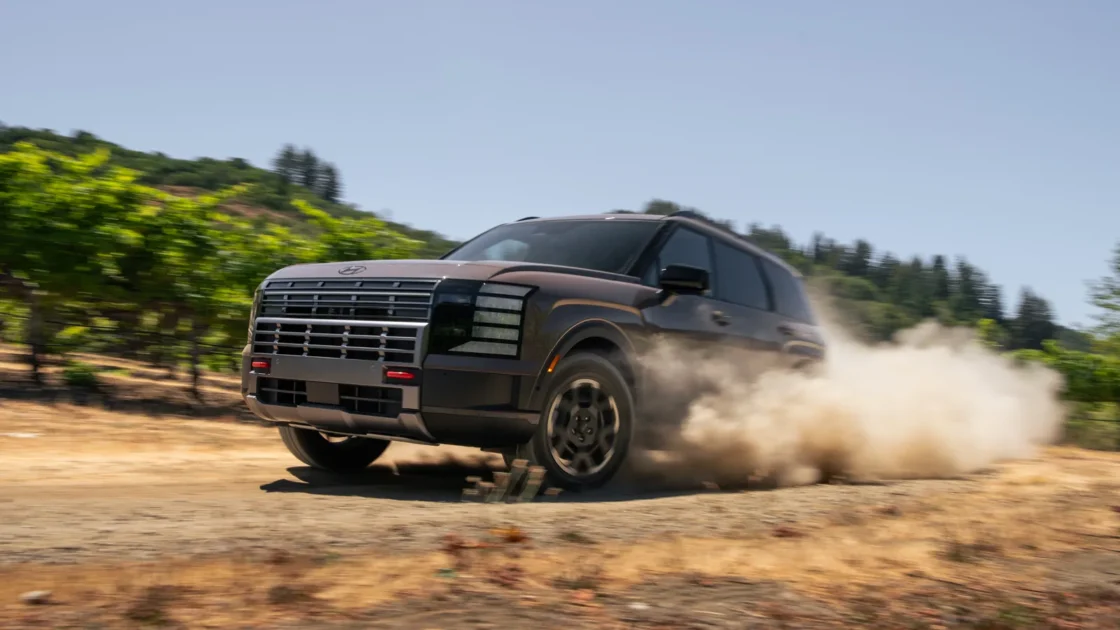
Minutes after running Hyundai’s off-road course in the Santa Fe XRT, I climbed into the 2026 Hyundai Palisade XRT PRO and ran the same trails. The difference was immediate. Where the Santa Fe spun a tire or two, the big three-row Palisade simply walked up and over.
In Hyundai’s world, XRT stands for Extreme Rugged Terrain, and the Palisade XRT PRO is the third generation of what that means. Here’s how much the PRO hardware matters on a real course in southern Missouri, plus the one thing I’d change right away.
What Makes the Palisade XRT PRO Different

To start, Hyundai now describes XRT in three stages. The first was an appearance package. The second, found on models like the Santa Cruz XRT and Santa Fe XRT, added all-terrain tires and real capability. XRT PRO, the third, finally brings genuine off-road hardware.
Specifically, on the Palisade, that means:
- A rear electronic limited-slip differential (e-LSD)
- HTRAC all-wheel drive (AWD) with Snow, Mud, and Sand terrain modes
- Downhill Brake Control
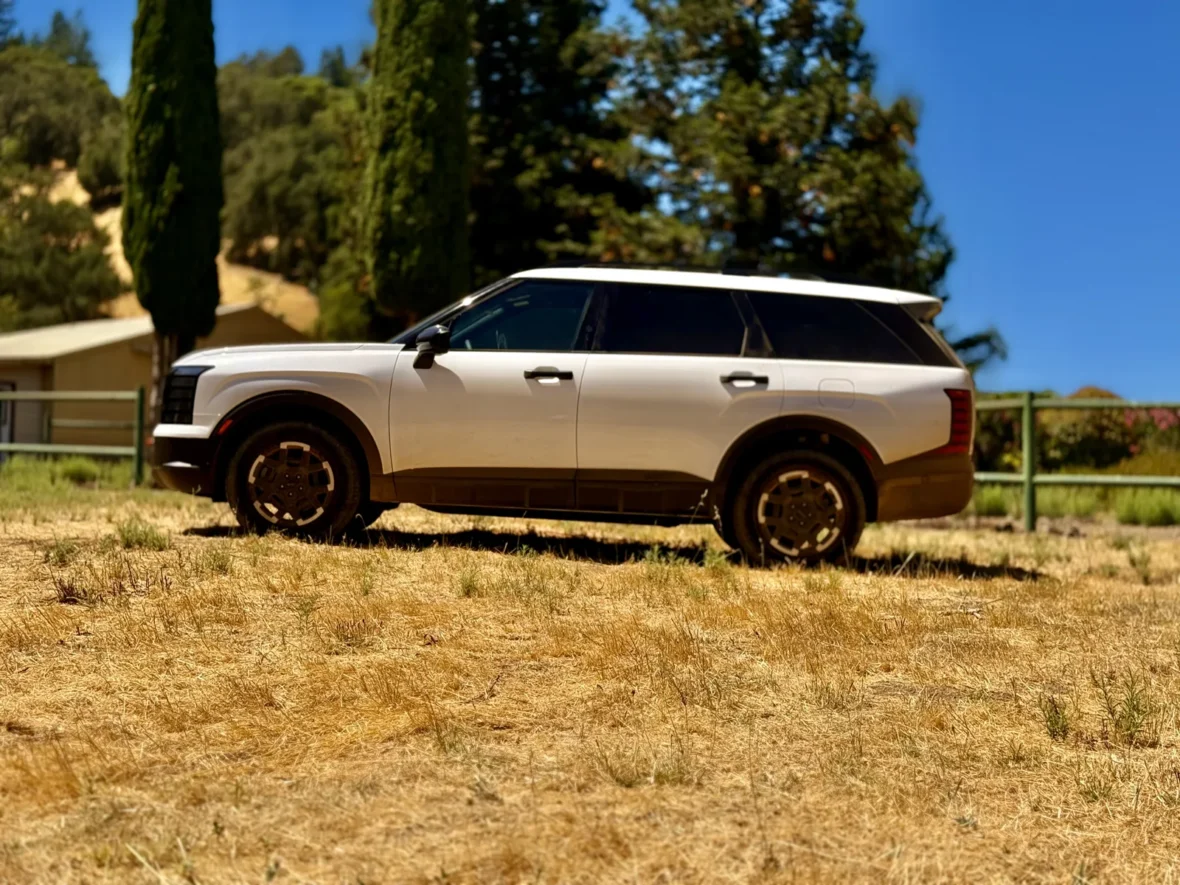
- 18-inch alloy wheels with all-terrain tires
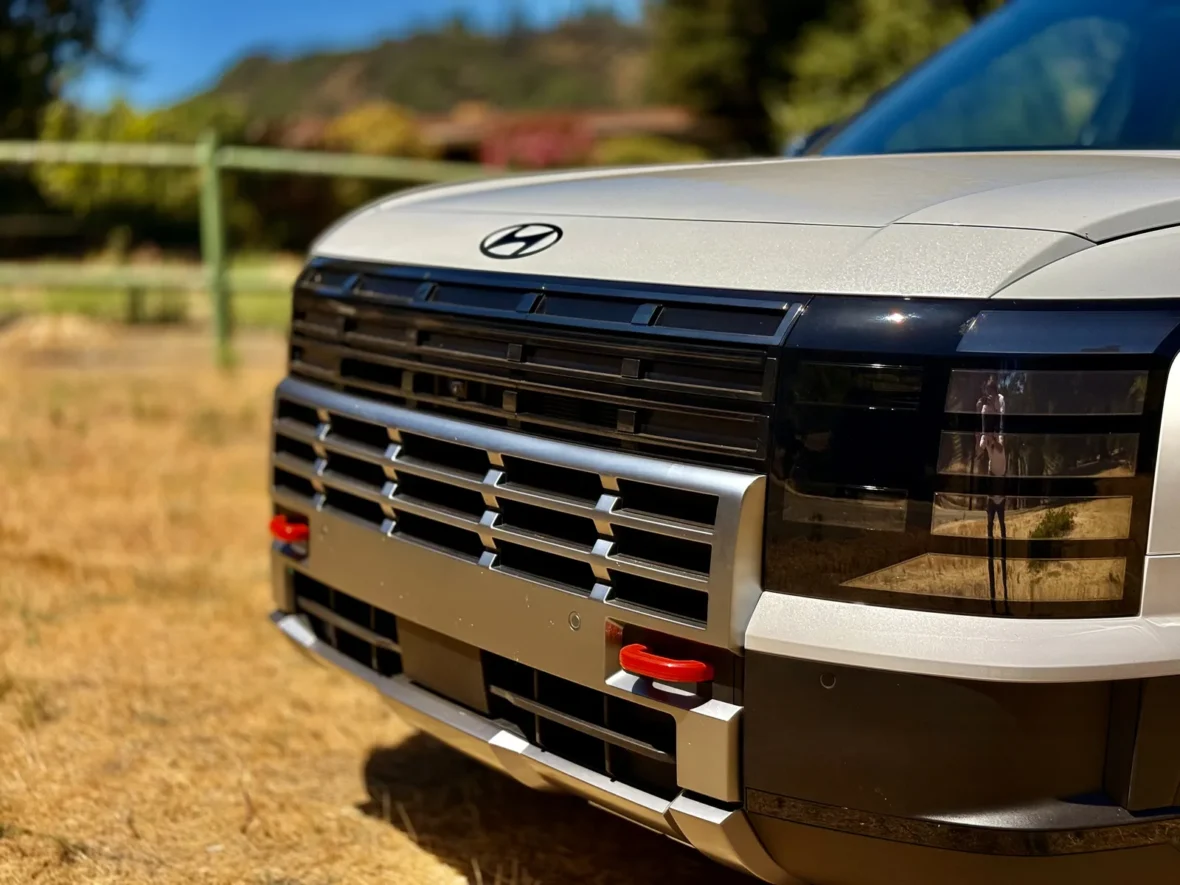
- Canyon Red front and rear recovery hooks
- An XRT-specific bumper and grille with black accents
- A factory-installed tow hitch rated for 5,000 pounds
Palisade XRT PRO Specs and Off-Road Numbers

First, under the hood, the Palisade XRT PRO uses a 3.5-liter V6 making 287 horsepower, paired with an eight-speed automatic. More importantly for off-roading, it sits higher and clears more than a standard Palisade. Here’s how the numbers compare:
| Measurement | Palisade | Palisade XRT PRO | Santa Fe XRT |
|---|---|---|---|
| Approach Angle | 18.6° | 20.5° | 19.3° |
| Departure Angle | 21.1° | 22.4° | 21.8° |
| Ground Clearance | 7.4 inches | 8.4 inches | 8.3 inches |
| Rear Limited-Slip Differential | No | Yes | No |
| Surround View Cameras | Varies by trim | Yes | No |
Cameras and Off-Road Screens Finally Arrive

Right away, the first thing I noticed inside was information. The Palisade XRT PRO gets a fully digital gauge cluster, a first for XRT, plus dedicated off-road pages on the center screen. You get pitch and roll, elevation, a compass, and oil, transmission, and engine temperatures, along with a ground view camera that shows what is under the front of the vehicle.
Better yet, the XRT PRO gets true 360-degree cameras, which matters in a vehicle this big. In the Santa Fe XRT, I had to make do with only the backup camera, so I was relieved to see my tire placement and front corners here.
How the Palisade XRT PRO Handled the Course

Simply put, the PRO hardware made the course look easy. On one sandy hill climb that had the Santa Fe XRT working in normal mode, I switched the Palisade to Sand and it went over the crest without drama. Its extra ground clearance also helped over a series of bumps where the Santa Fe had tapped its underbody.
Next came a giant hole in the ground that tested approach, departure, and breakover angles all at once. The front parking sensors didn’t even chirp. Hyundai engineers told us the traction management system is now in its third generation, and it showed. Even with a wheel in the air on off-camber sections, I kept forward momentum, and I didn’t feel a bit of wheel slip. Meanwhile, Downhill Brake Control and ABS kept the descents calm.
Where the Palisade XRT PRO Comes Up Short

Still, my biggest gripe is with those cameras. Once you go faster than about 7 mph, the view shuts off, and it doesn’t come back until you drop to about 5 mph. On a course like this, that is too low a threshold. Something closer to 10 to 15 mph would be spot on. On top of that, the camera button sits far away on the dash, even though it’s a feature you’ll use more often than not. I’d move it closer to the driver’s knee.
Similarly, I kept wondering about underbody protection. As far as I could tell, there isn’t extra armor, and with this many rocks around, I’d want the oil pan and fuel tank better protected. Hyundai’s designers also told us the front corners are the most likely parts to get damaged, and trimming them back means fighting the engineering team over aerodynamics, fuel economy, and cabin noise. In other words, there’s still a balance the brand is figuring out.
Creature Comforts You Don’t Have to Give Up

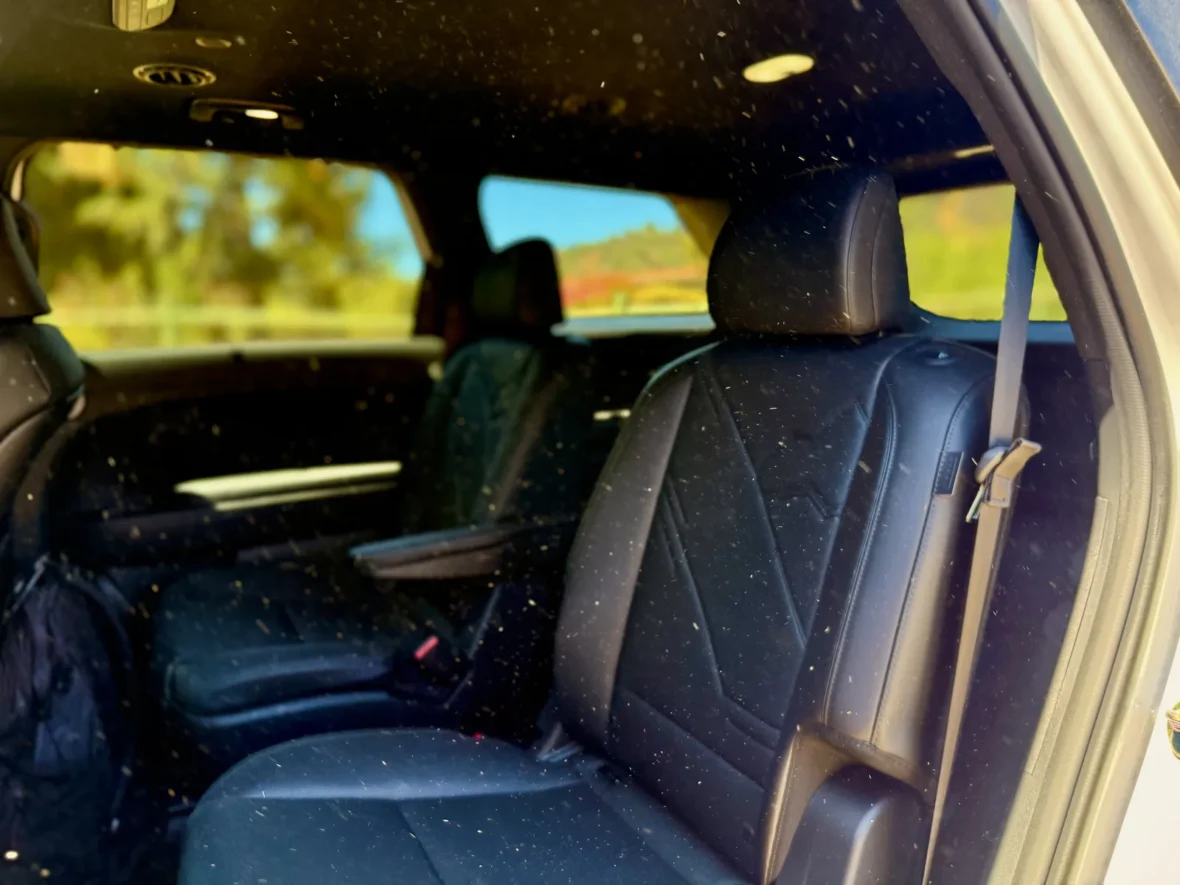
Unfortunately, too often, buying the off-road trim means giving up the nice stuff. Not here. Thankfully, the Palisade XRT PRO still gets heated and ventilated front seats, a heated steering wheel, multi-zone climate control, built-in rear sunshades, Bose 14-speaker audio, 100W USB charging ports, and a 115V power outlet. Believe me, a ventilated seat is a huge win when you’re sweating it out on the trail.
Our Take

Overall, the Palisade XRT PRO is an impressive package. The rear limited-slip differential and 360-degree cameras make it far more capable than the Santa Fe XRT, and it delivers more off-road ability than most three-row SUV buyers will ever use. If Hyundai lets the cameras stay on a little longer and adds more underbody protection, it would be even easier to recommend.
For more on how this generation came together, check out our earlier look at whether the 2026 Palisade XRT PRO is worth it and our first look at the 2027 Tucson XRT PRO. Want more off-road and family SUV coverage? Subscribe to GT: Garage Talk on YouTube and sign up for our newsletter using the form at the bottom of this page.