2027 Chevy Bolt RS: America’s Cheapest EV Has One BIG Dealbreaker

After a full week with the 2027 Chevy Bolt, I can tell you that America’s most affordable EV earns its title. It also comes with one catch that would keep me from signing the paperwork. Chevrolet gave this little electric crossover a fresh face, a decent 0- 60 punch, and a native Tesla-style charging port. Then it left off the one feature I rely on every single day. Let’s get into what works, what does not, and who should actually buy one.
A Handsome New Skin for the 2027 Chevy Bolt
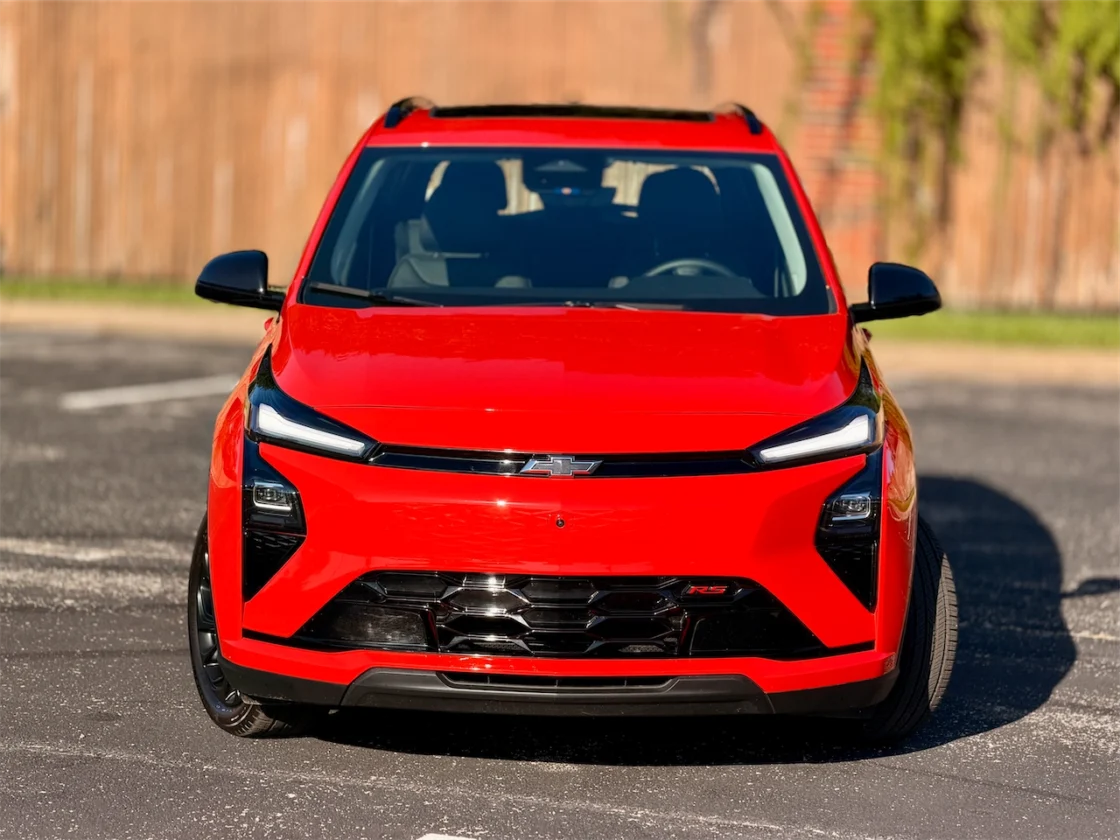
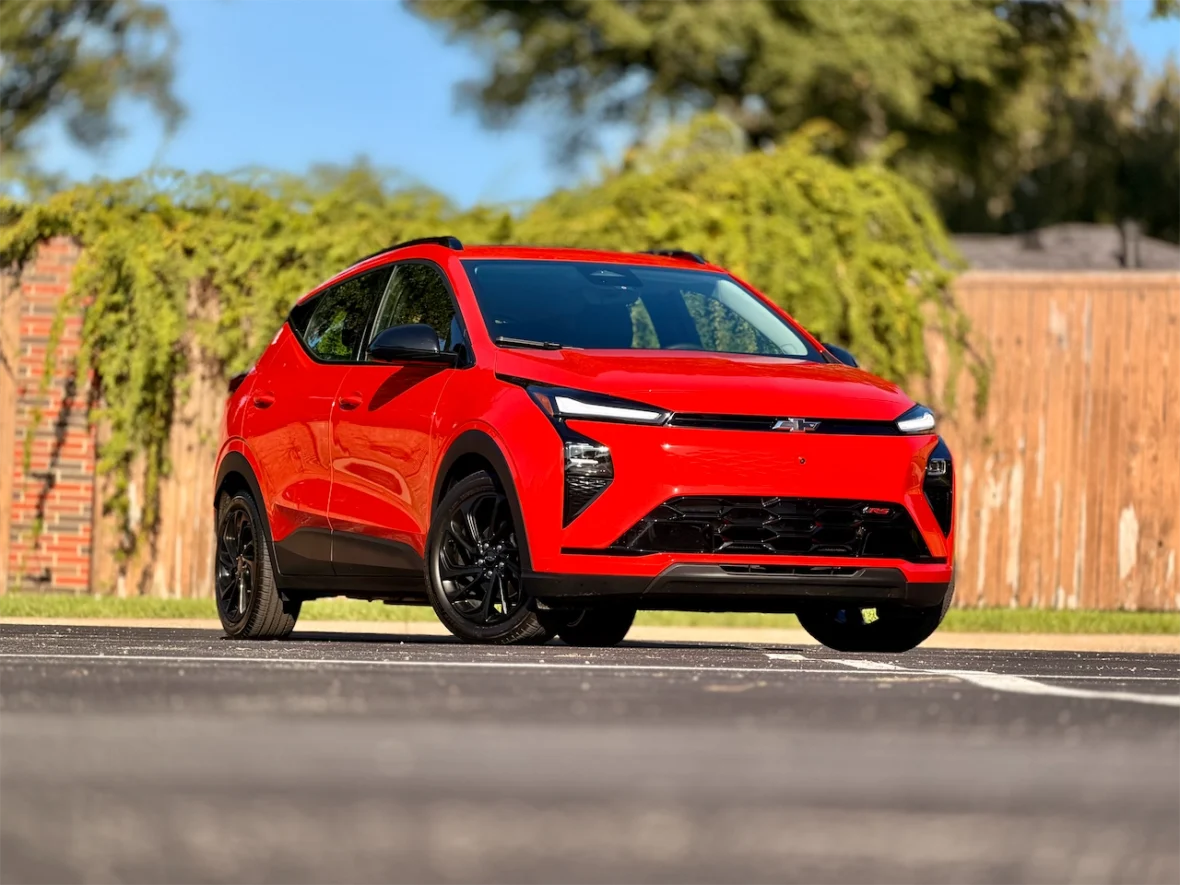
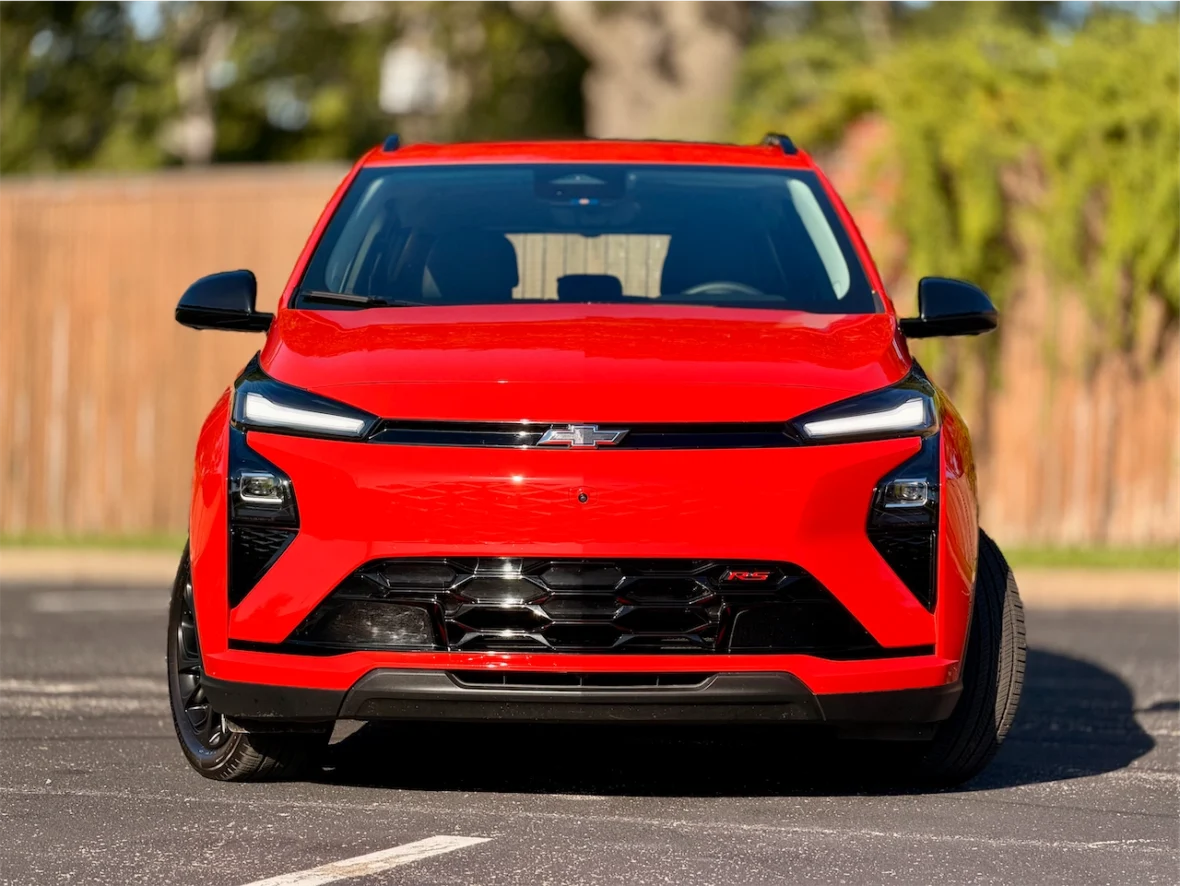
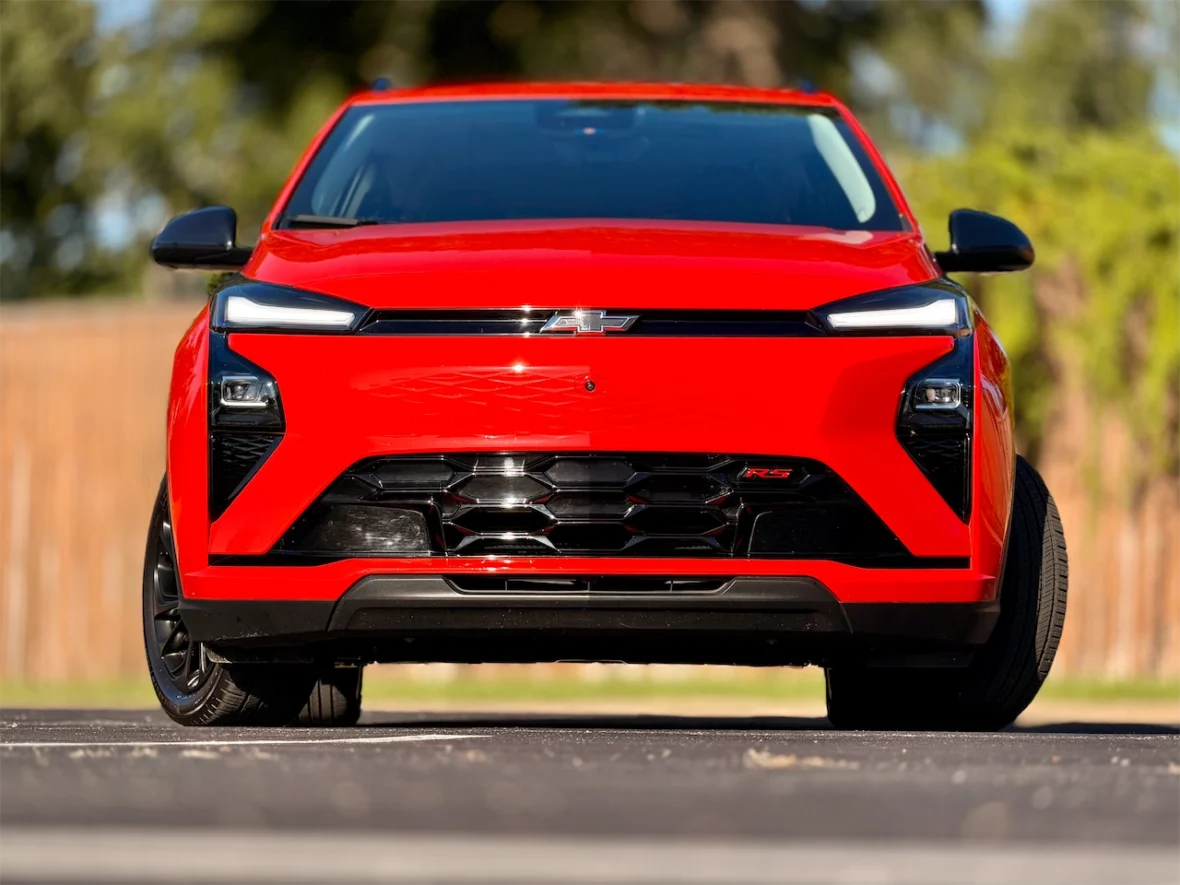
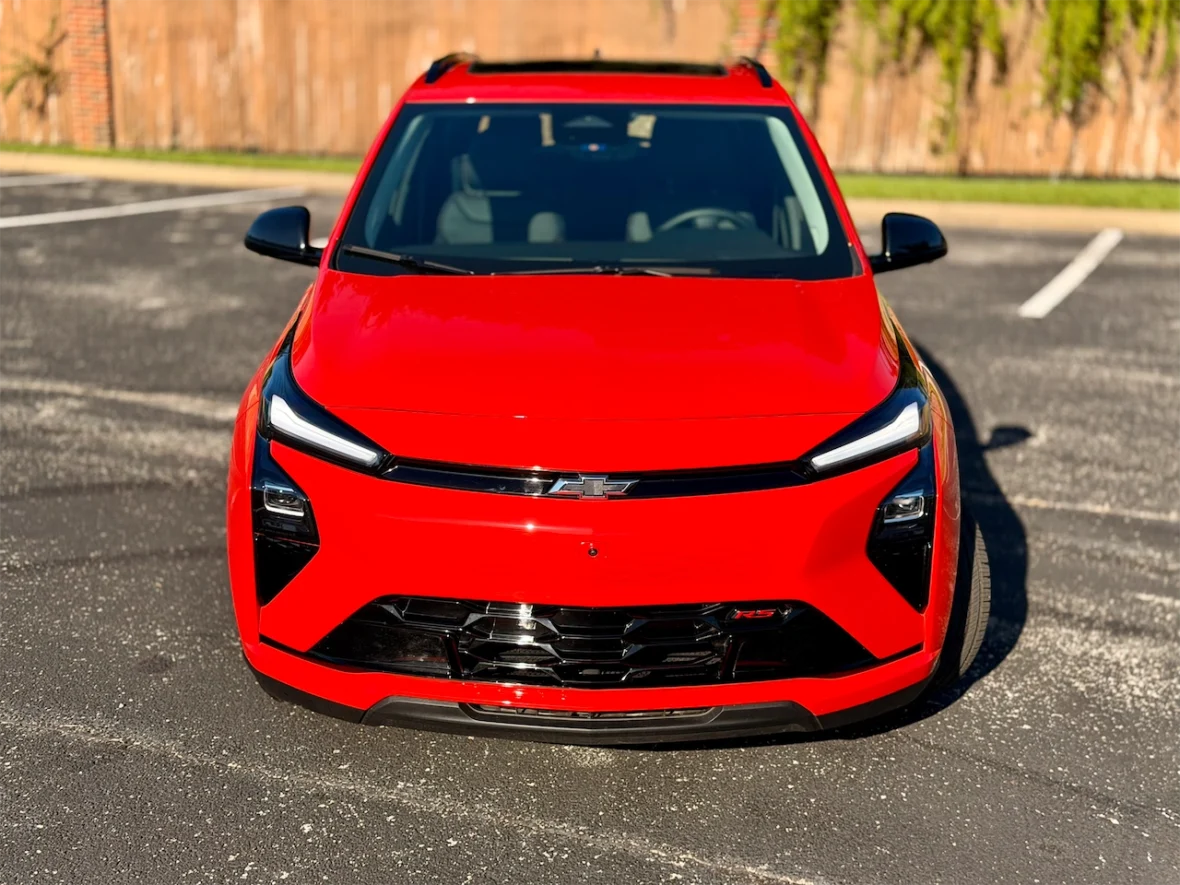
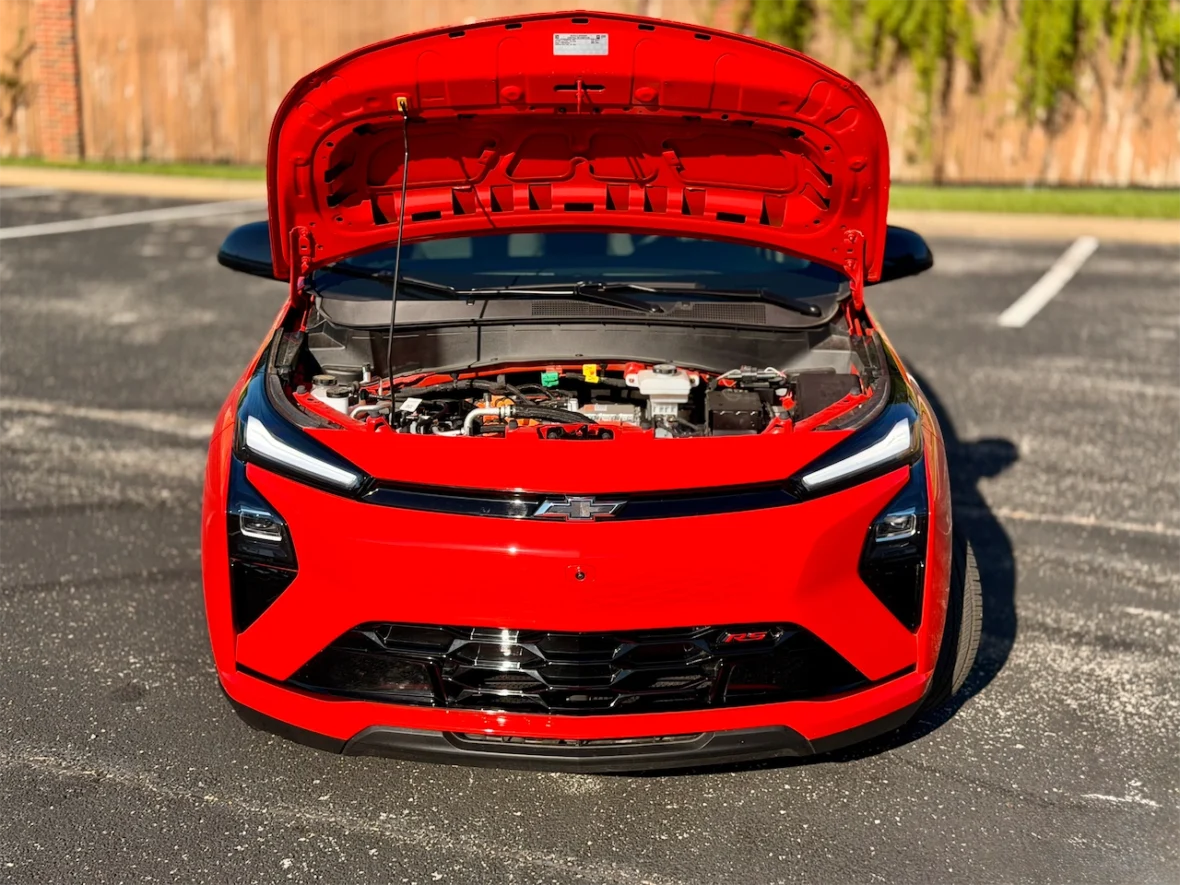
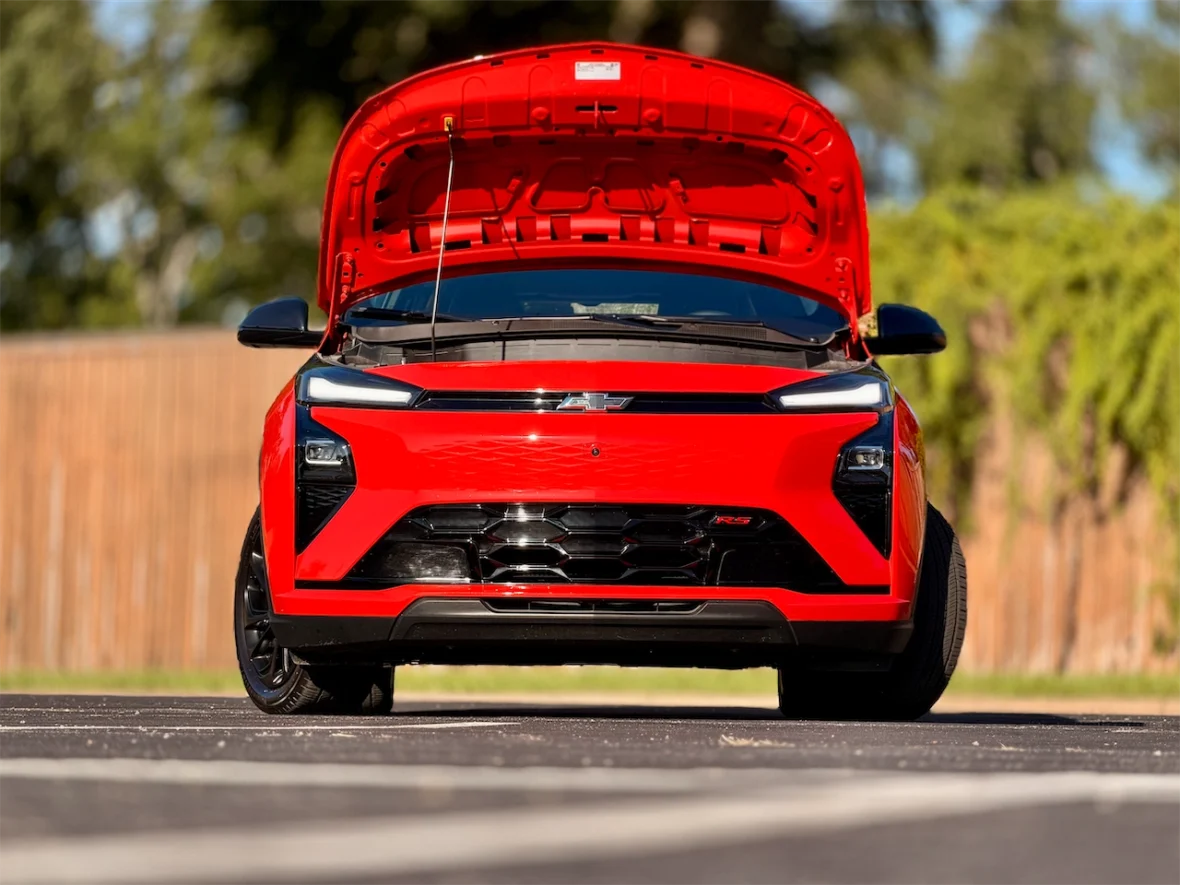
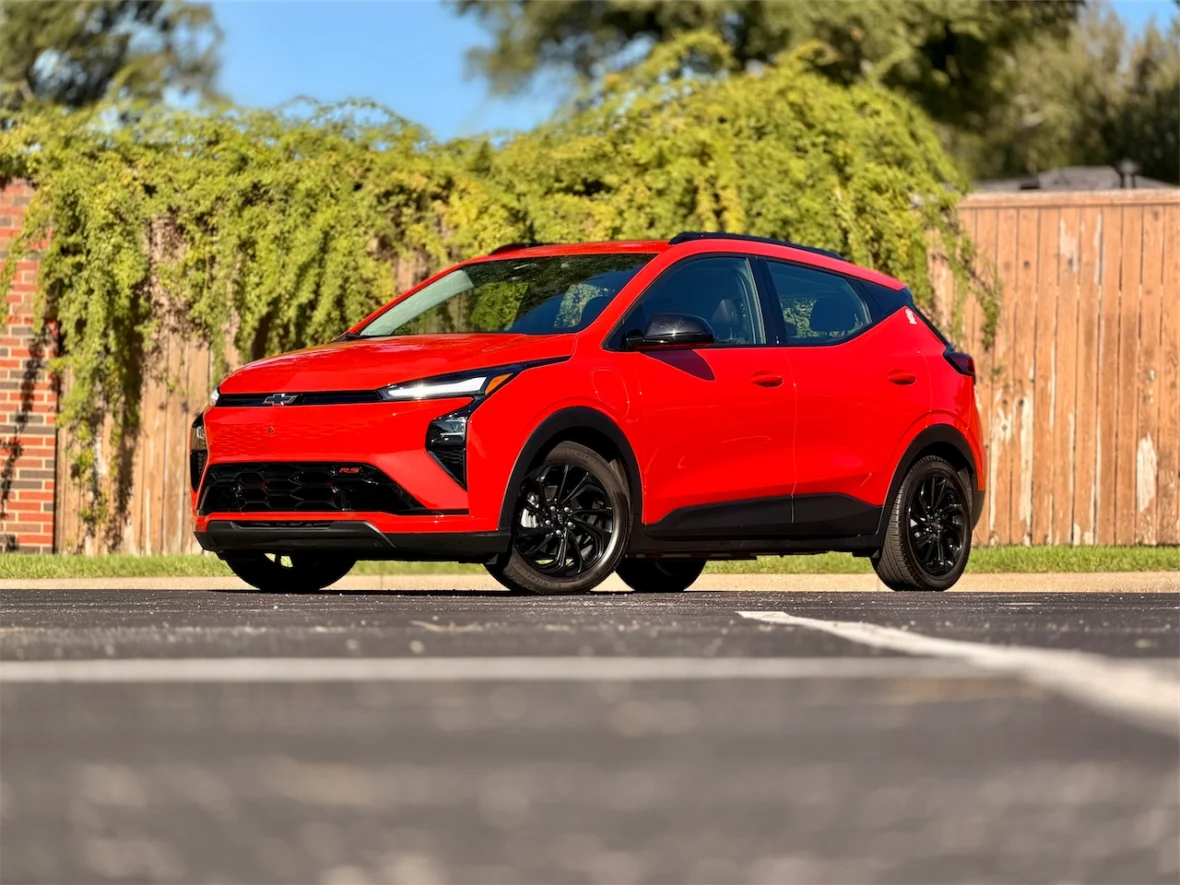
The 2027 Chevy Bolt looks a lot like its bigger siblings, and that is a good thing. The front end borrows heavily from the new Equinox EV, and it works. This is essentially a mid-cycle refresh since the skin is all new over the same bones underneath.
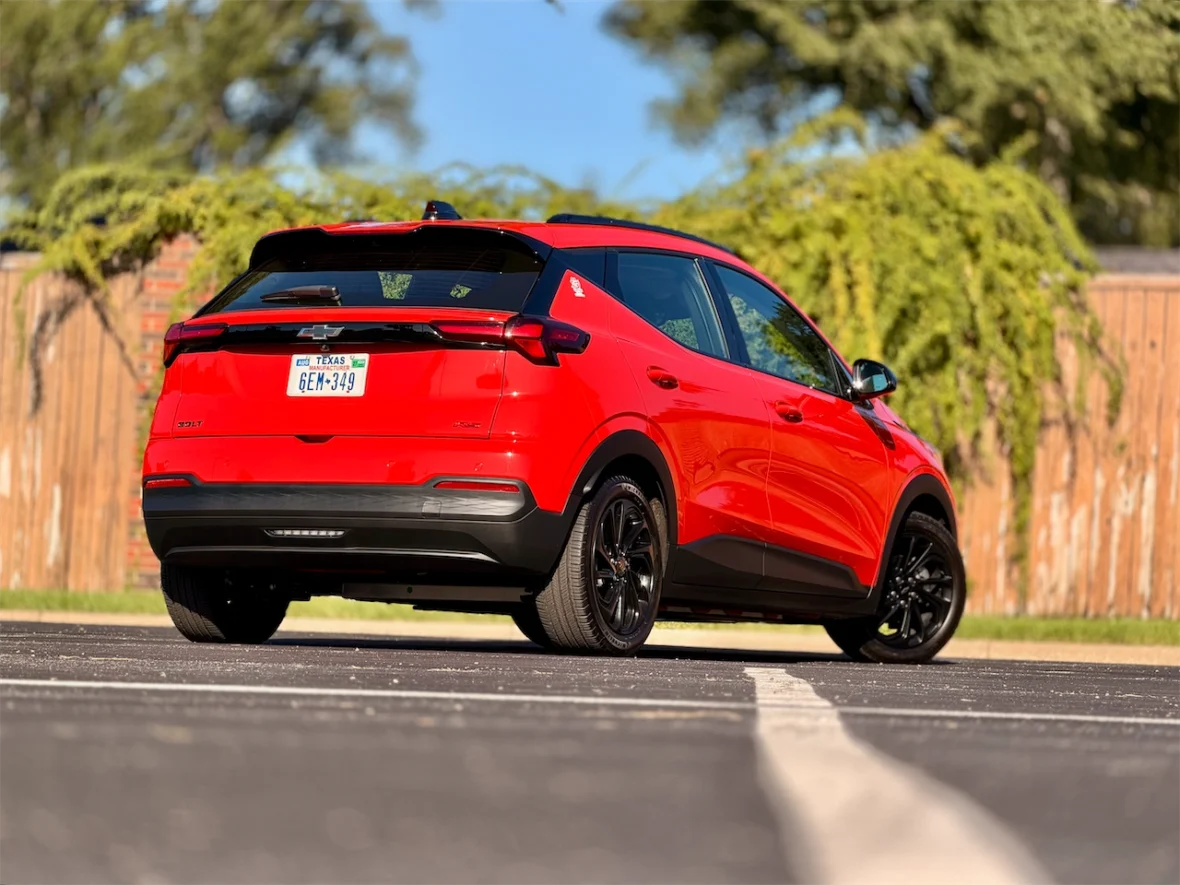
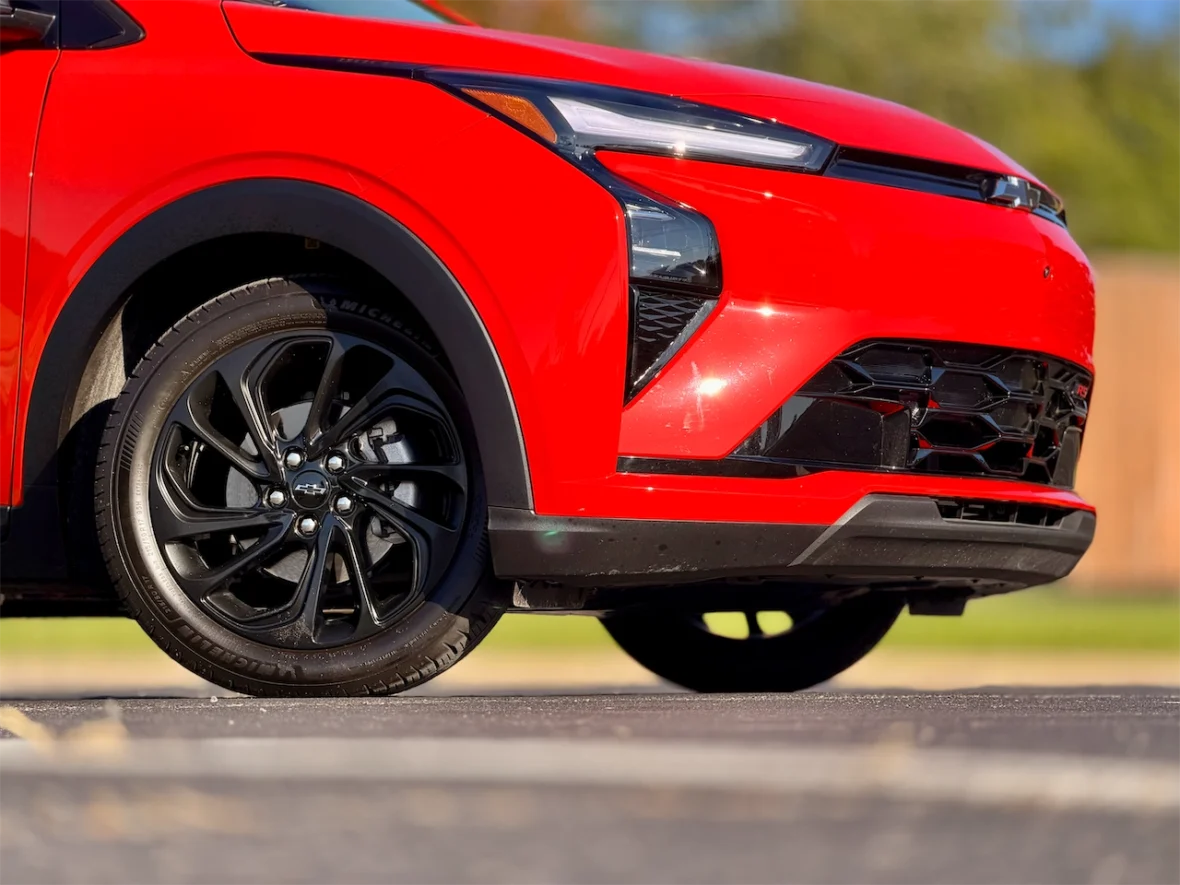
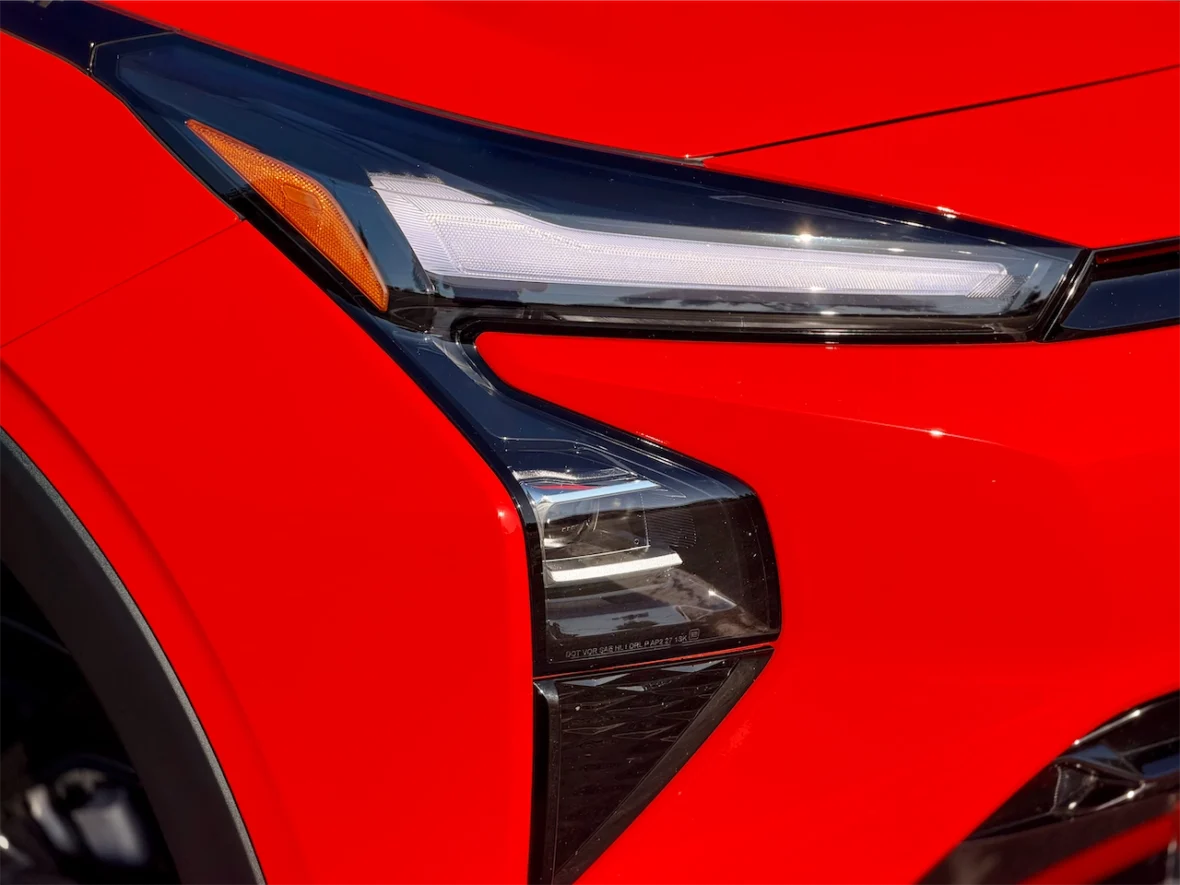
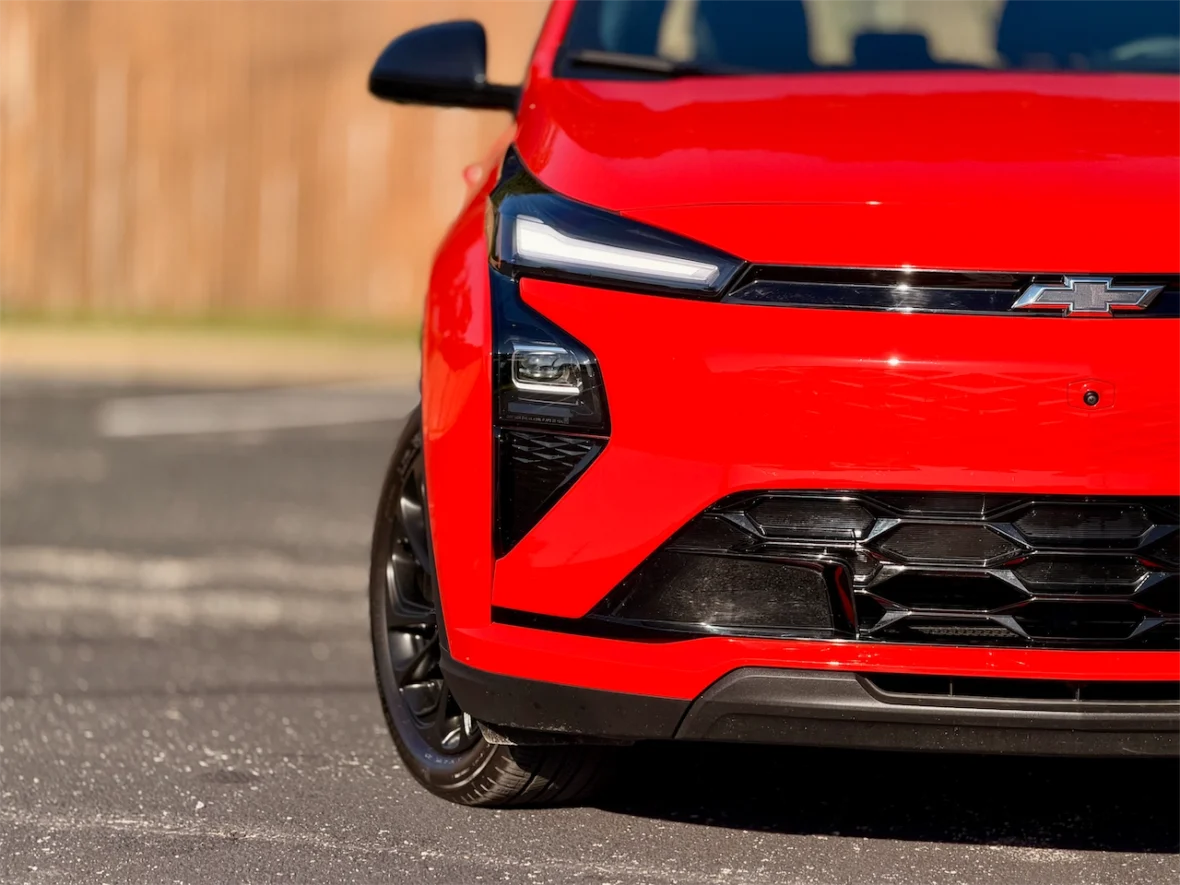
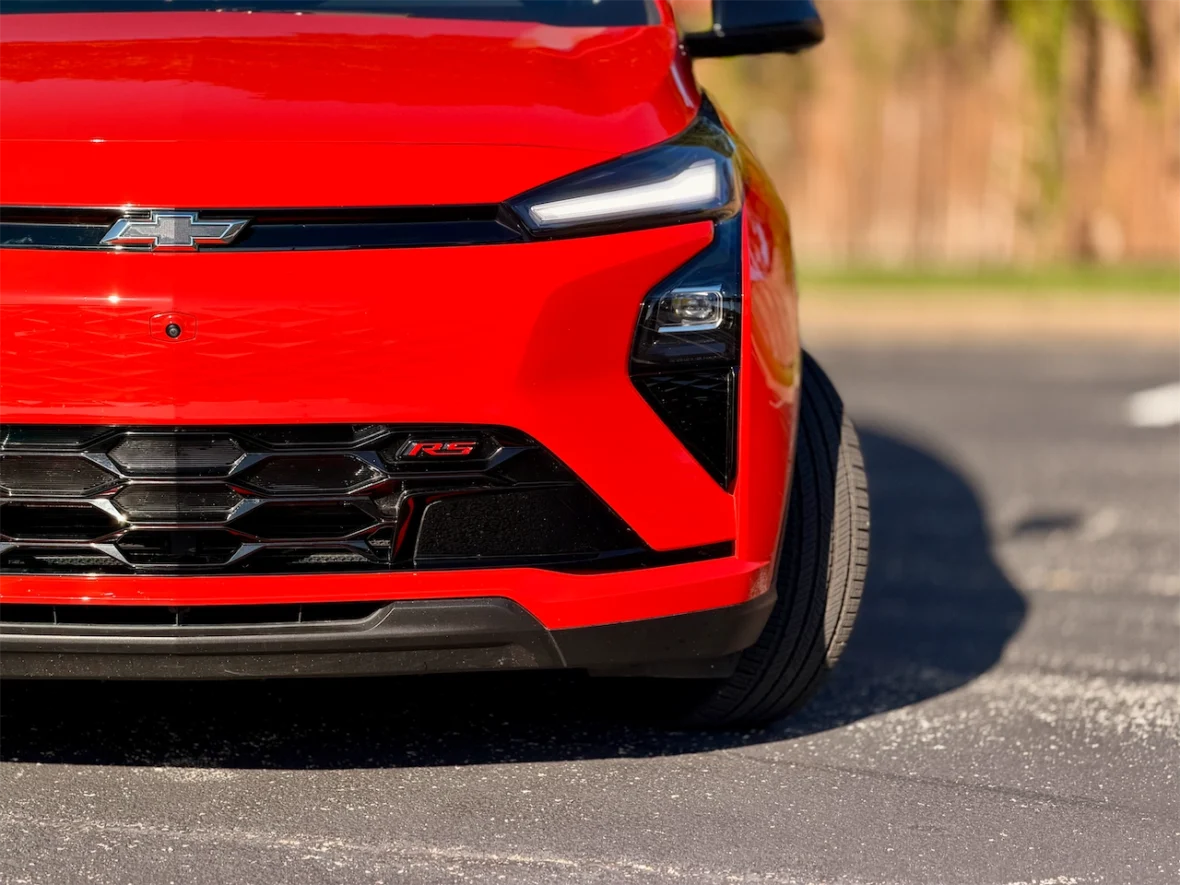
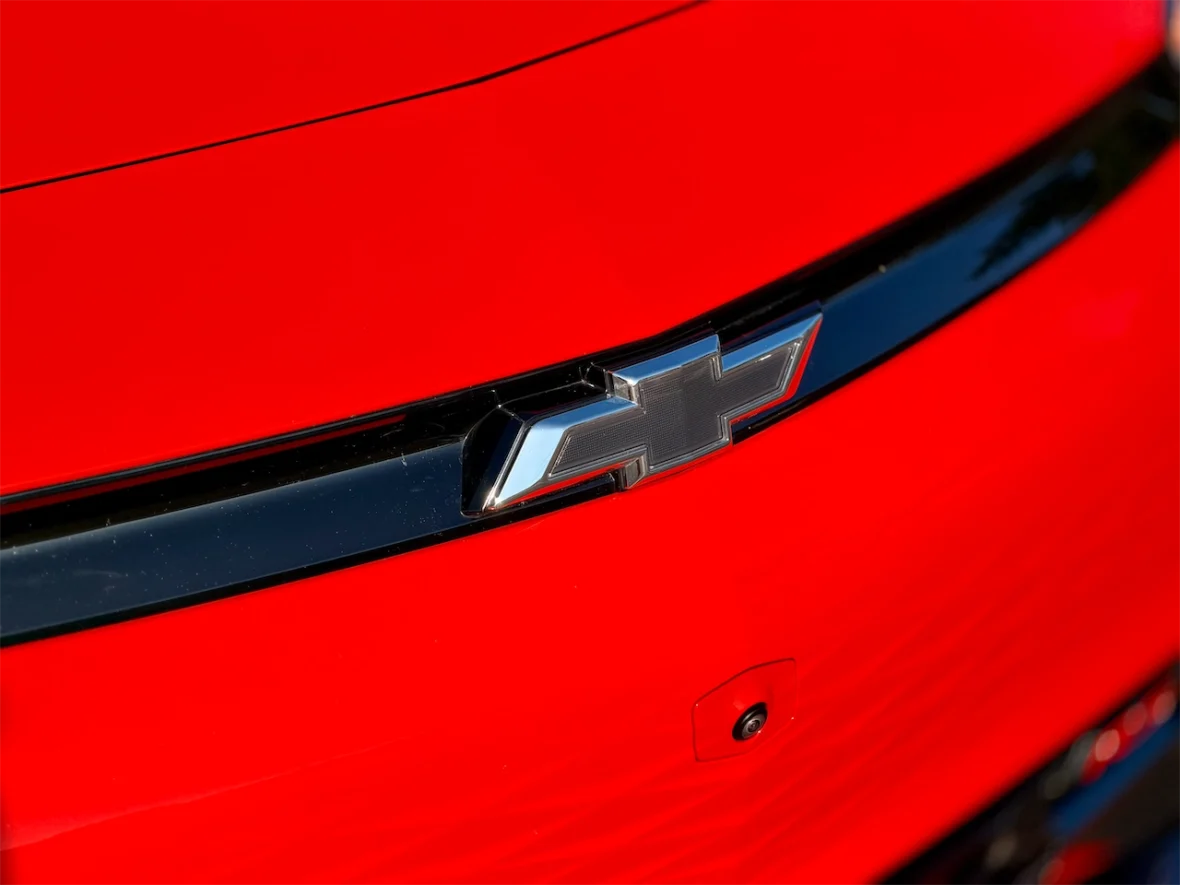
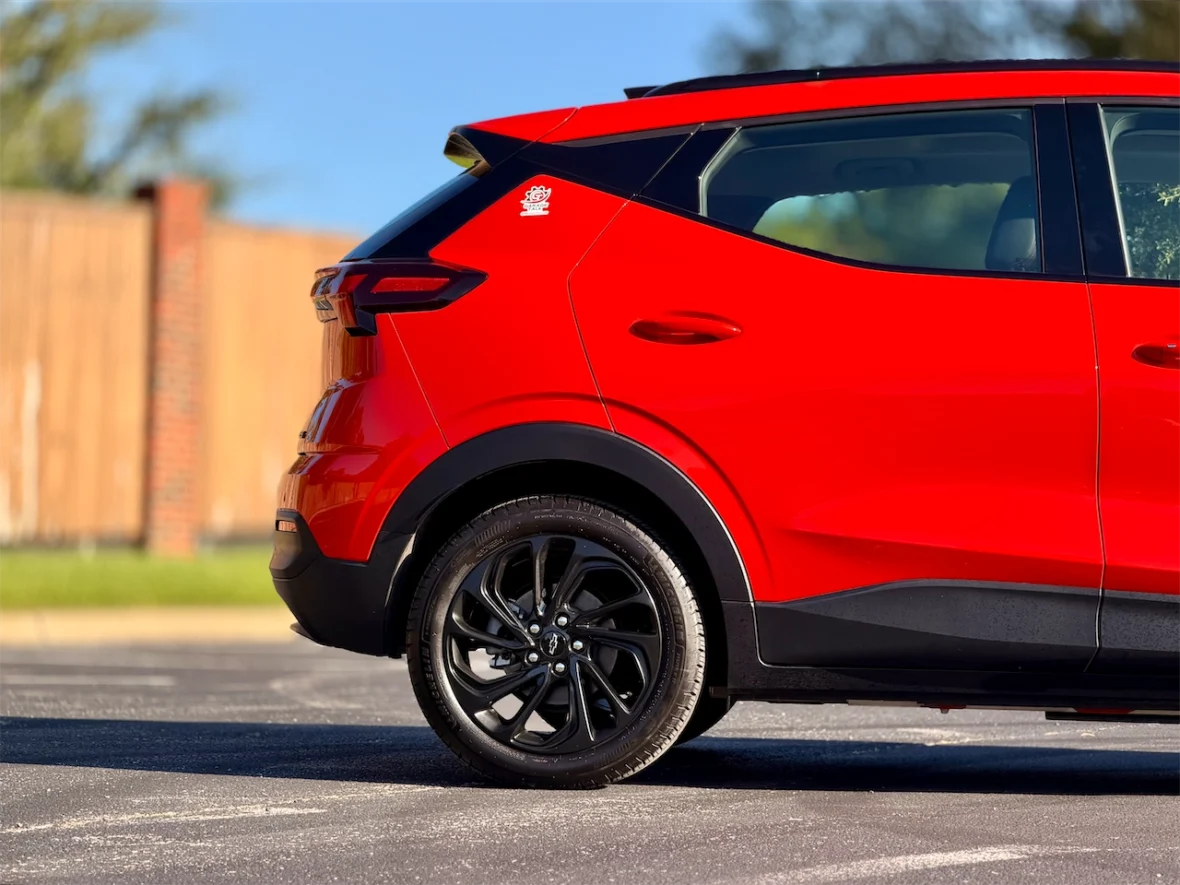
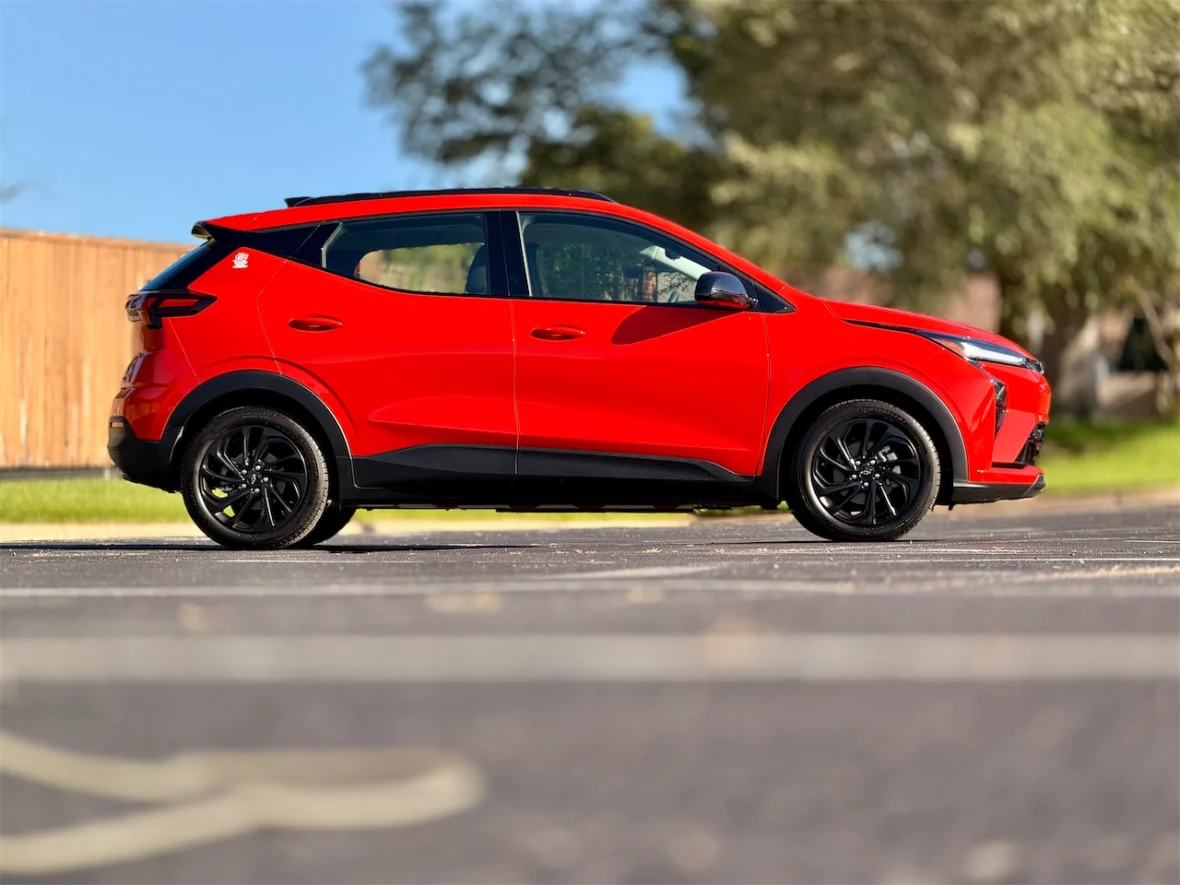
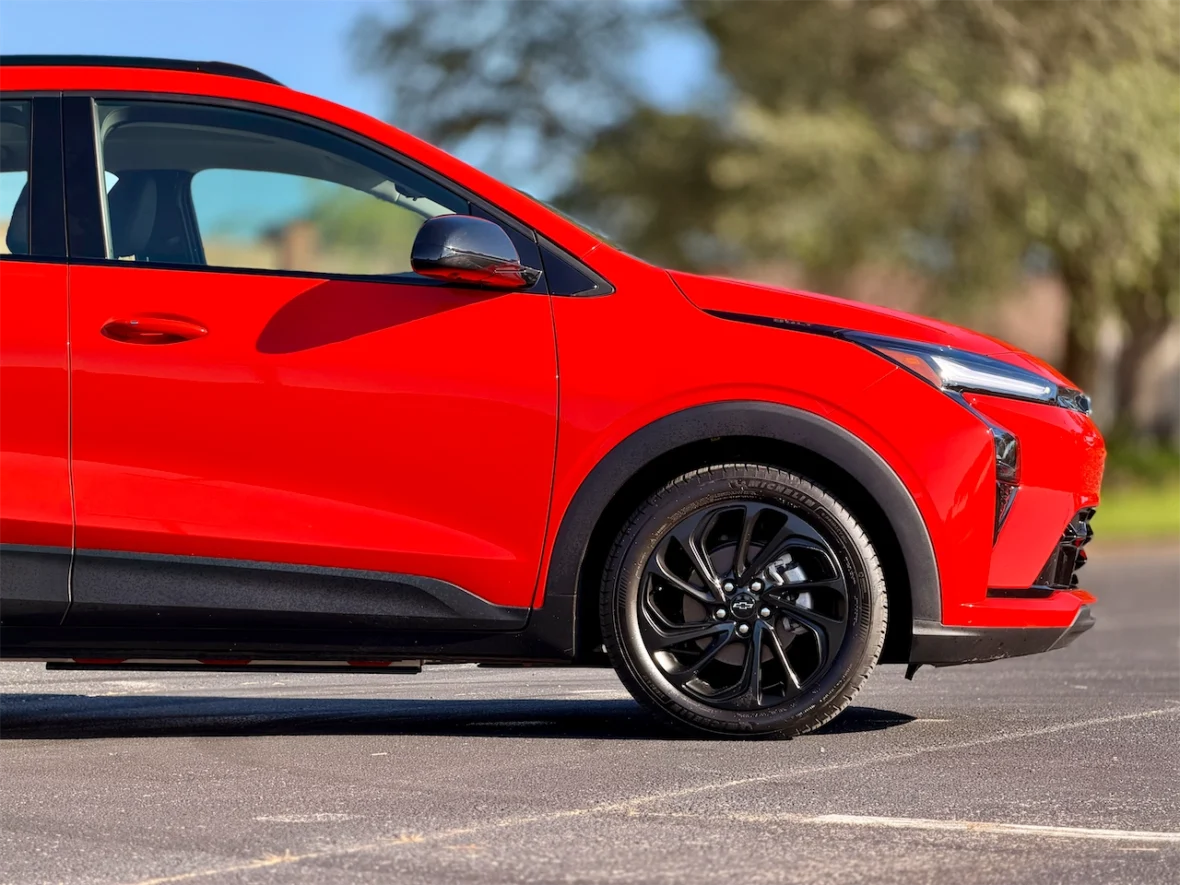
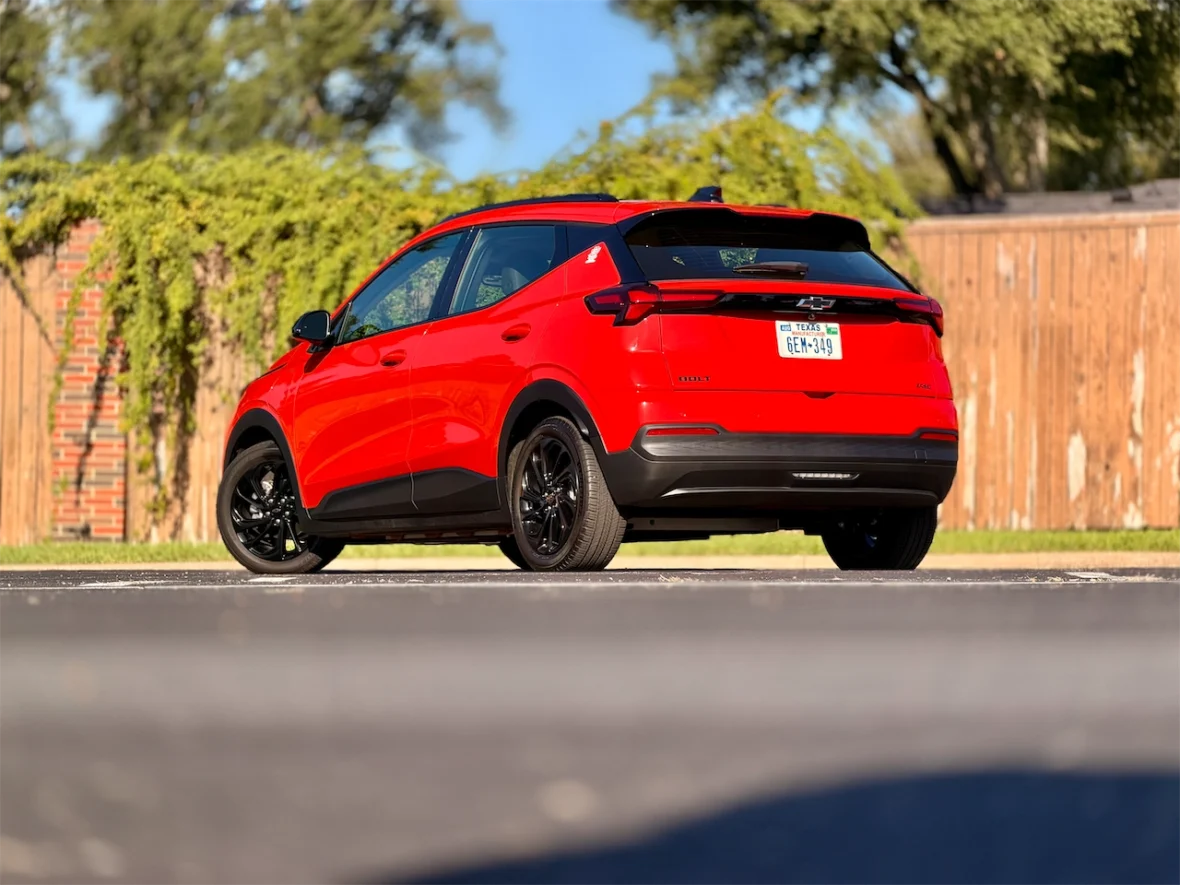
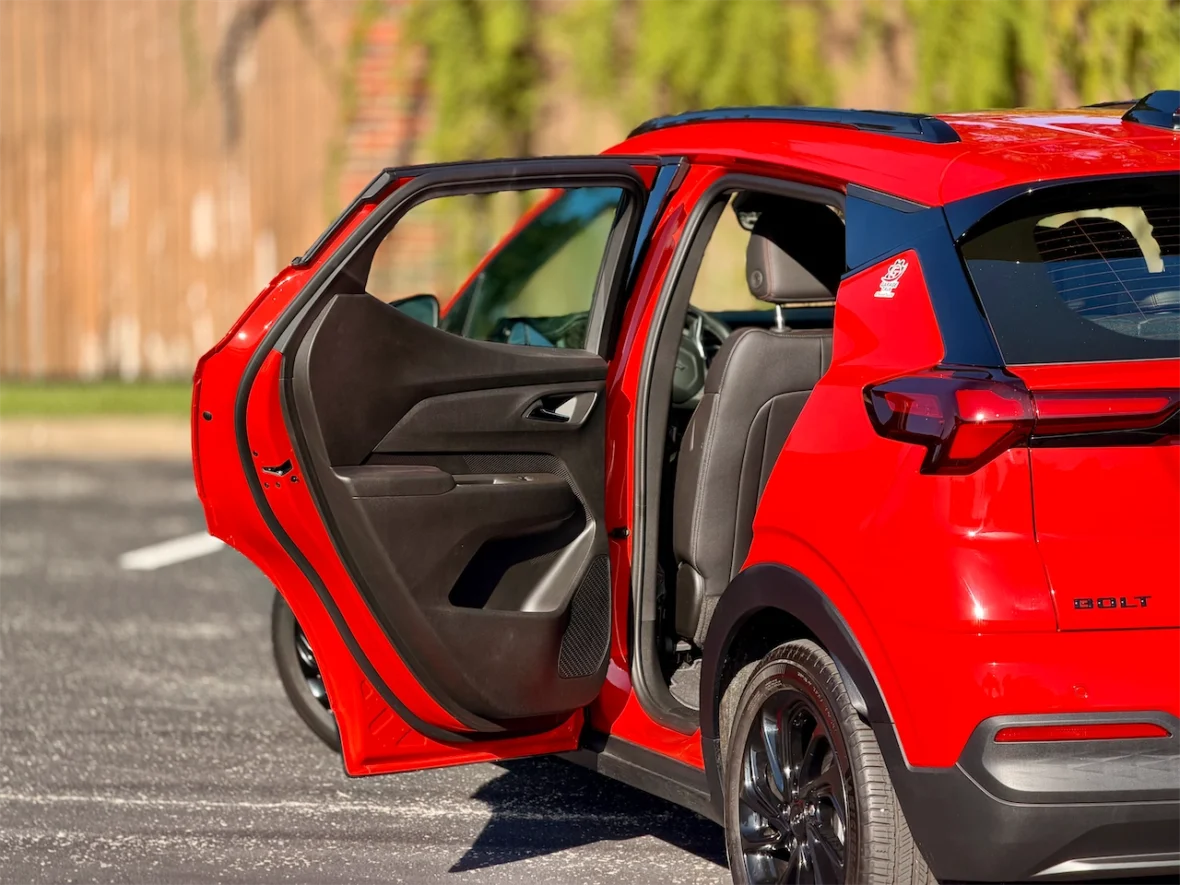
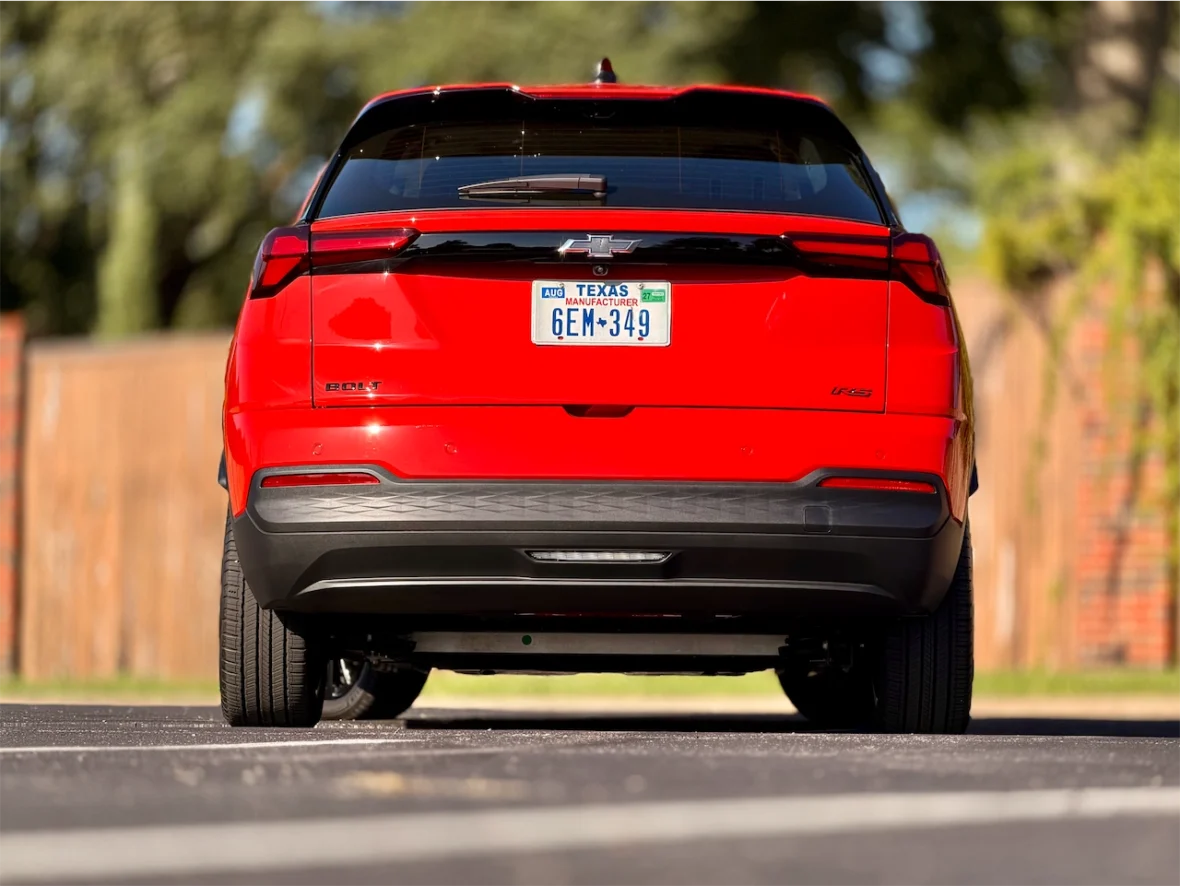
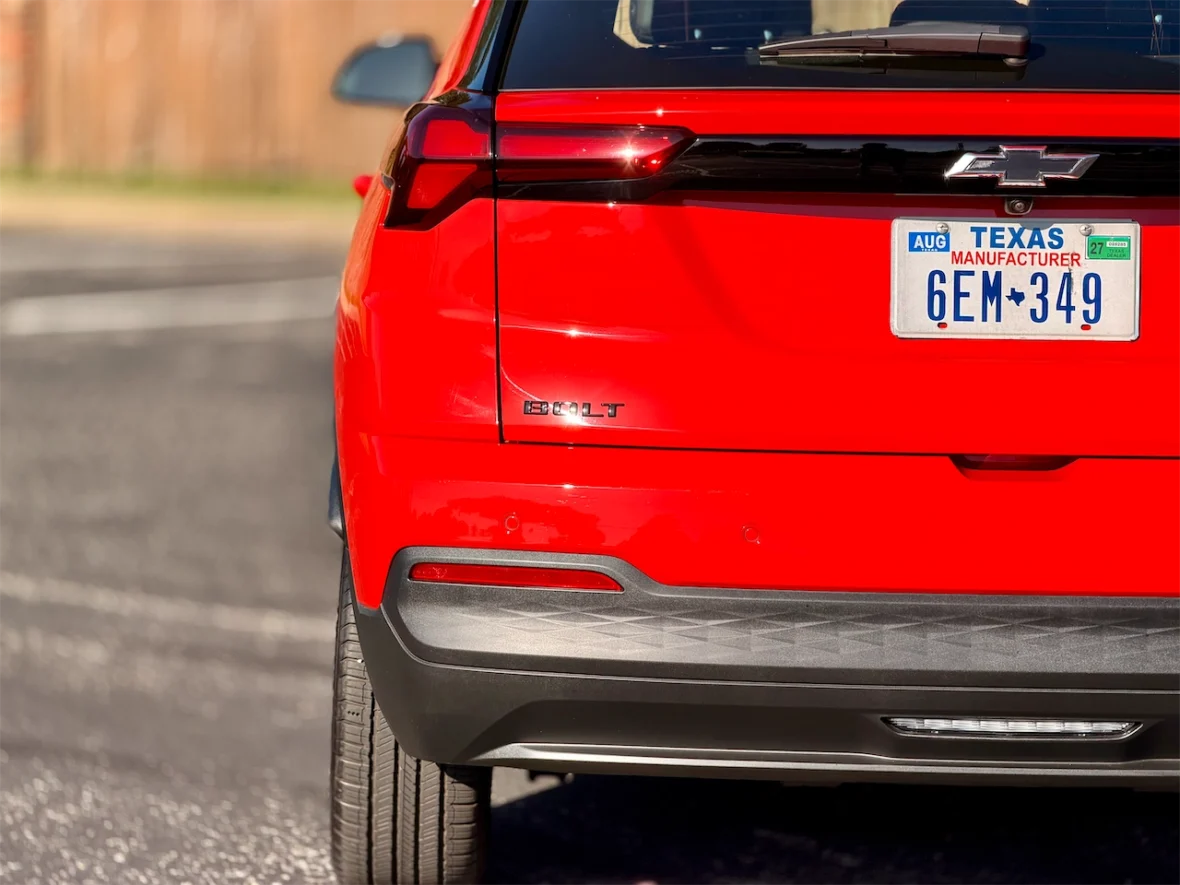
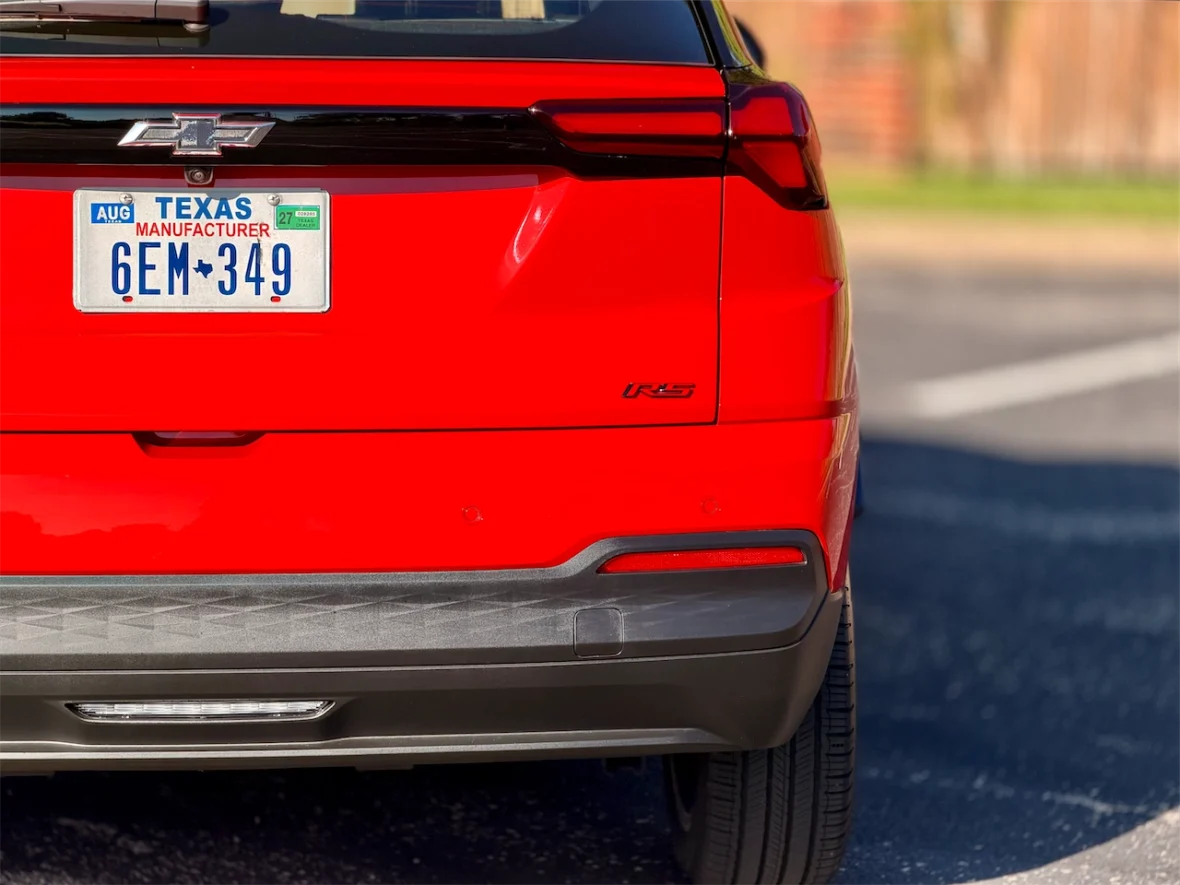
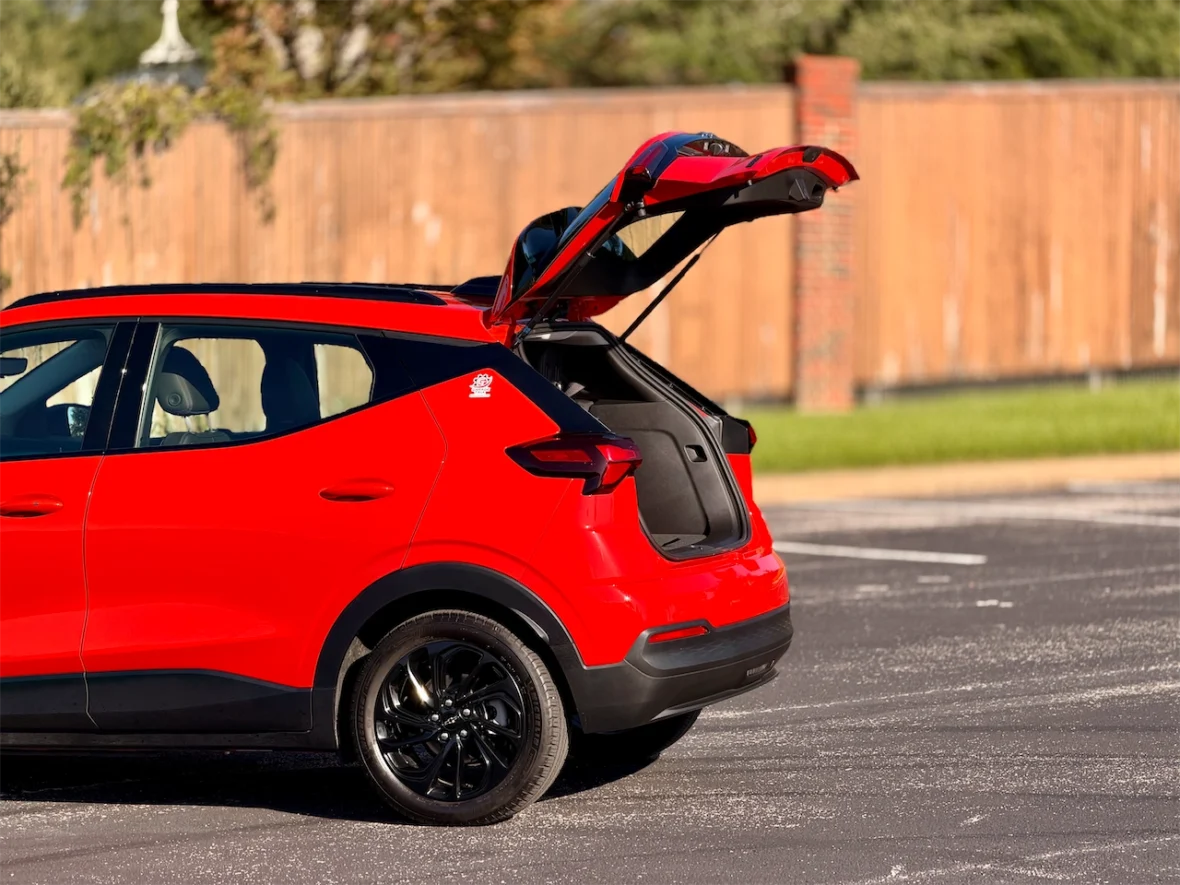
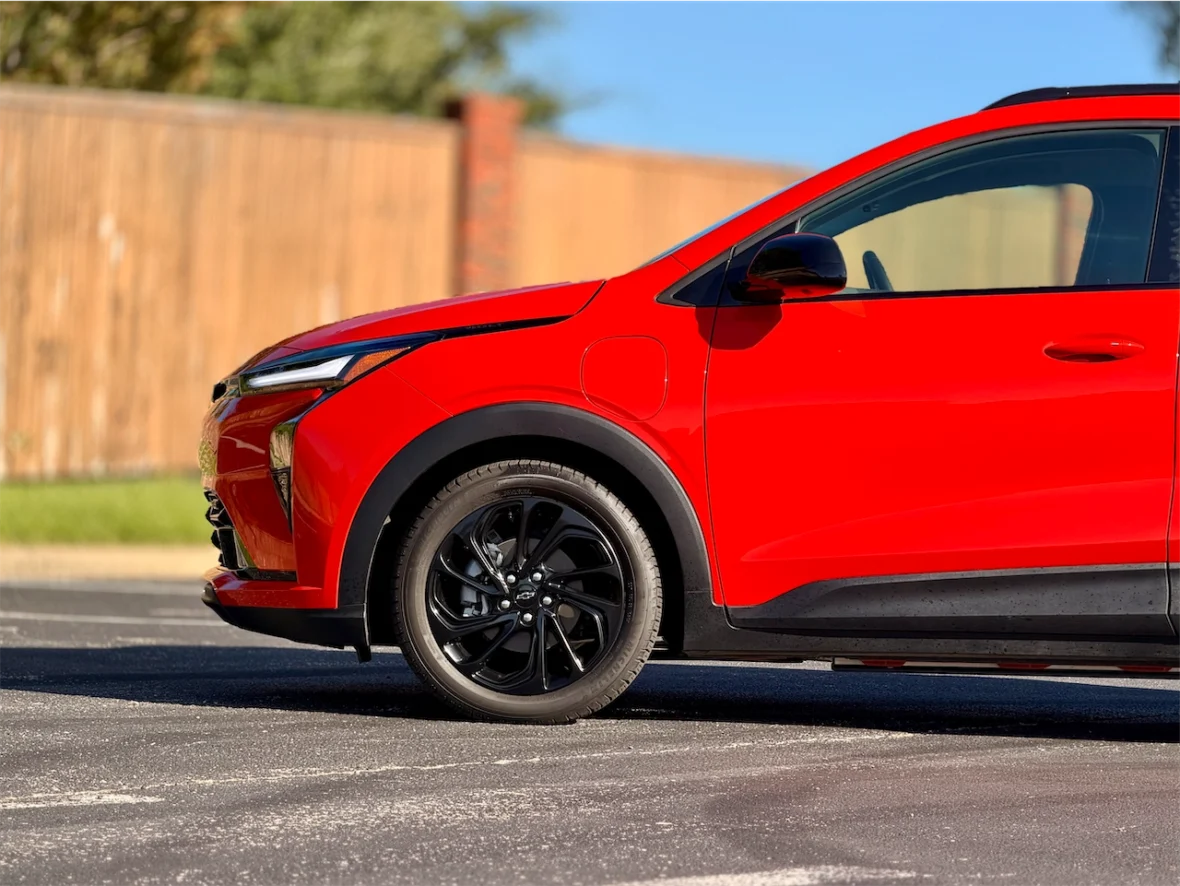
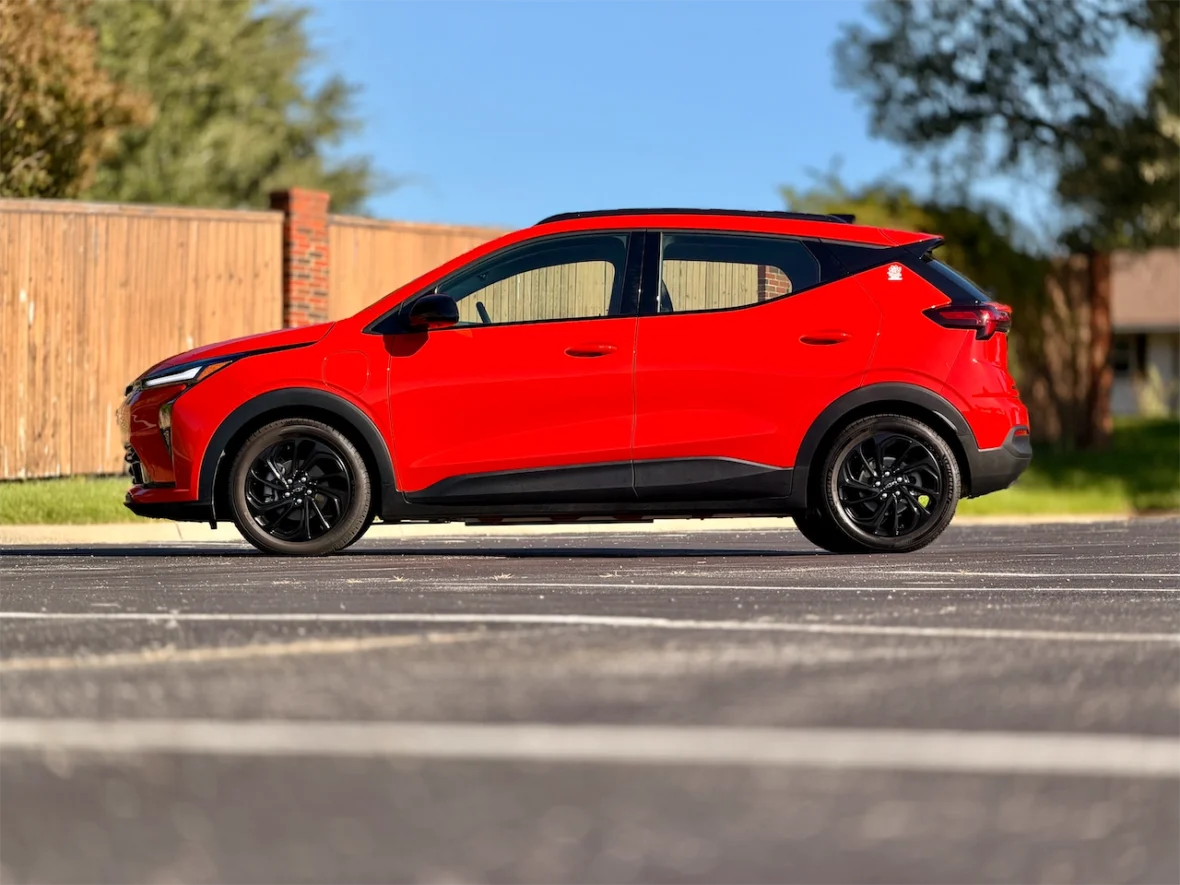
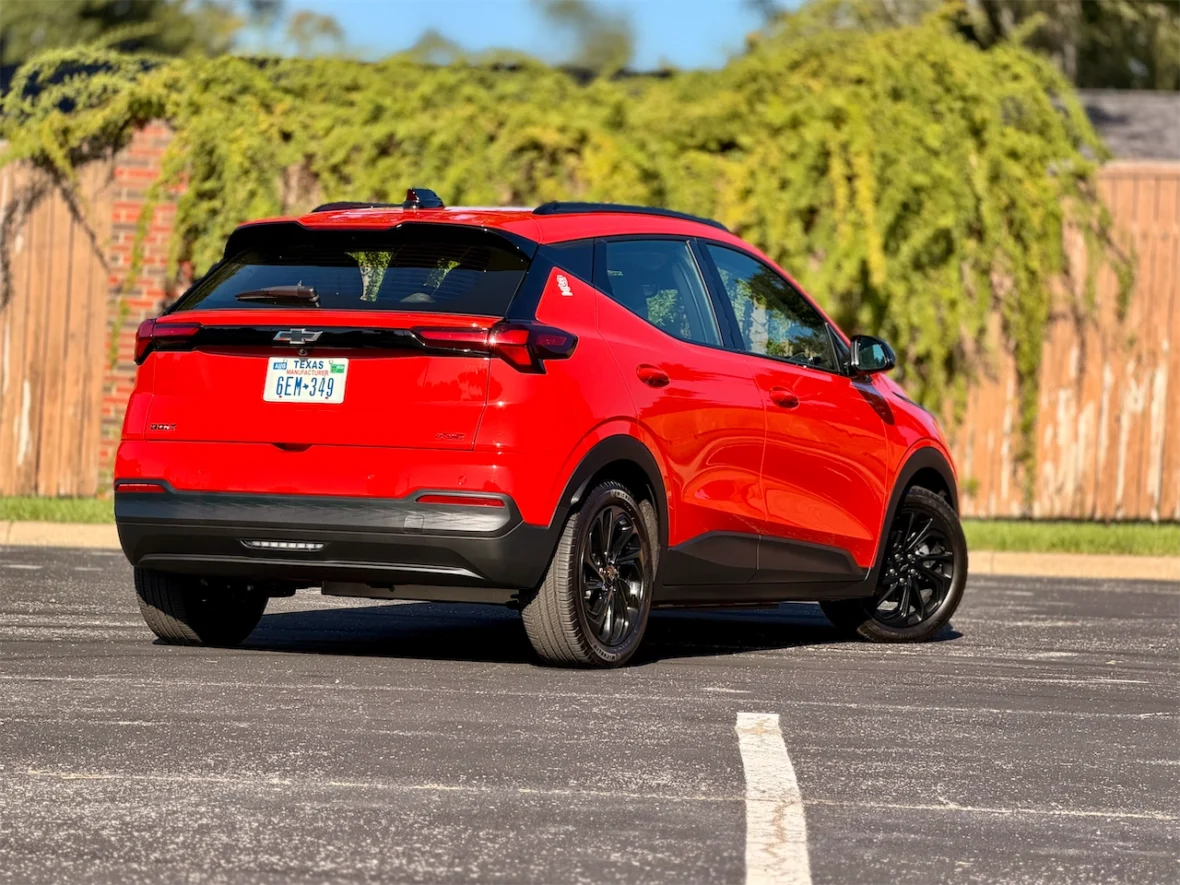
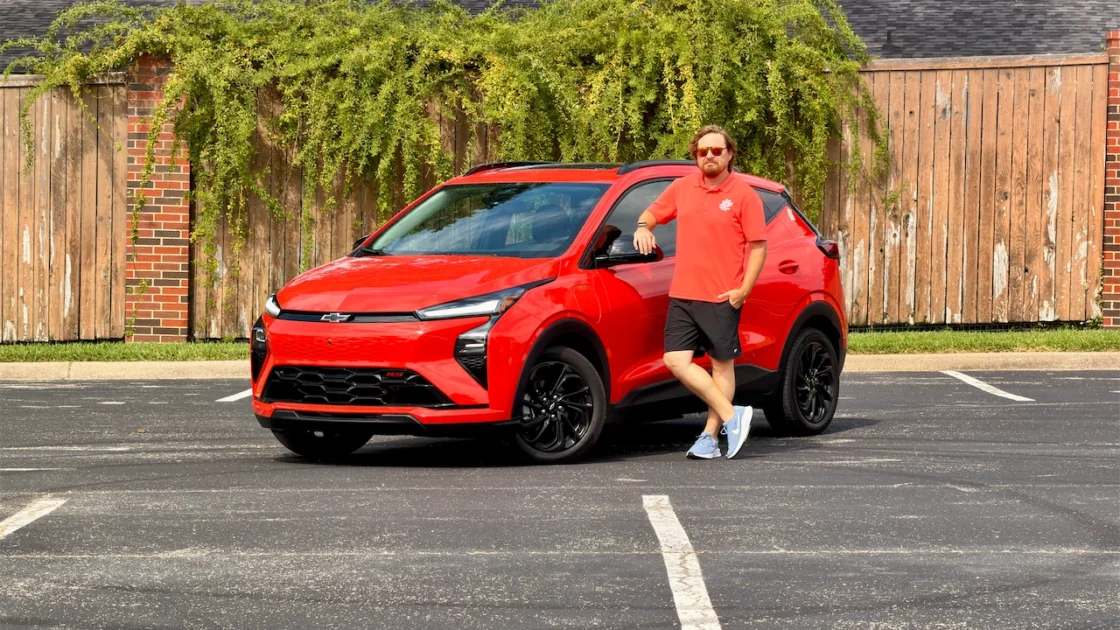
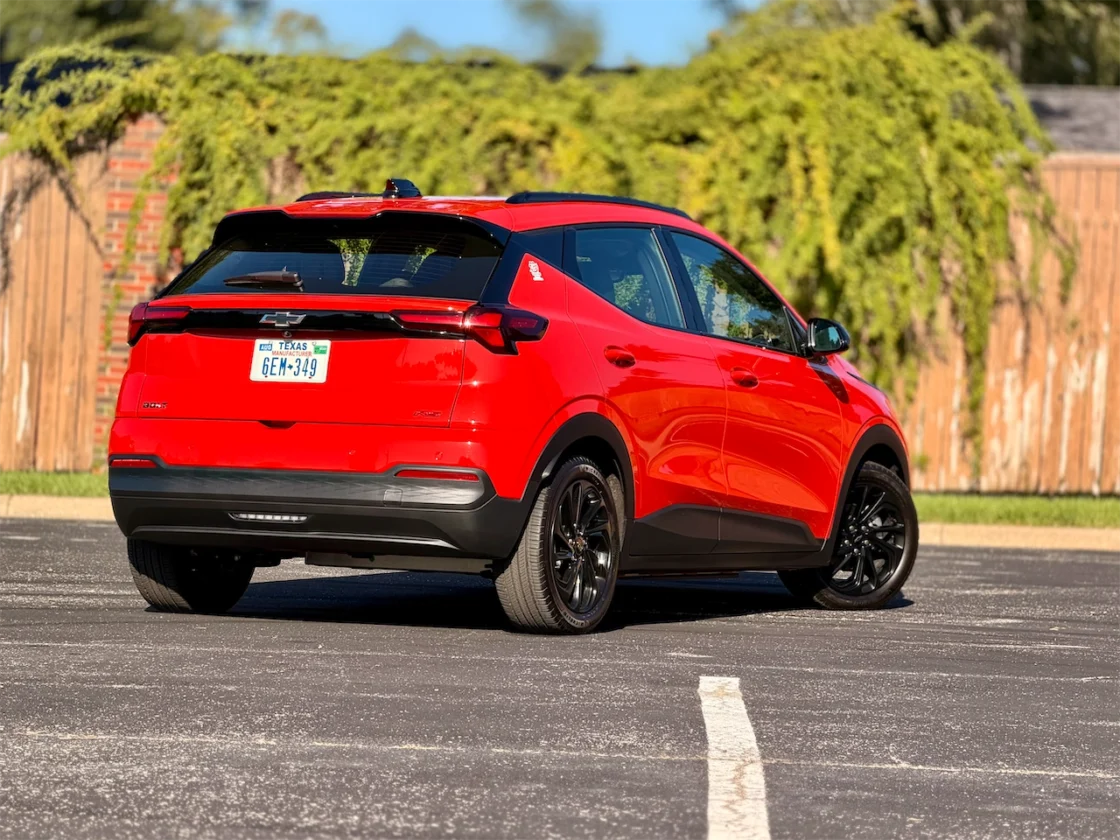
Notably, our tester wore Habanero Orange, a color that absolutely screams look at me. I happen to like it. The RS package adds a black bow tie and black trim all around, so the contrast against that orange is sharp. Full LED lighting front and rear helps too, because LEDs sip less power than old bulbs.
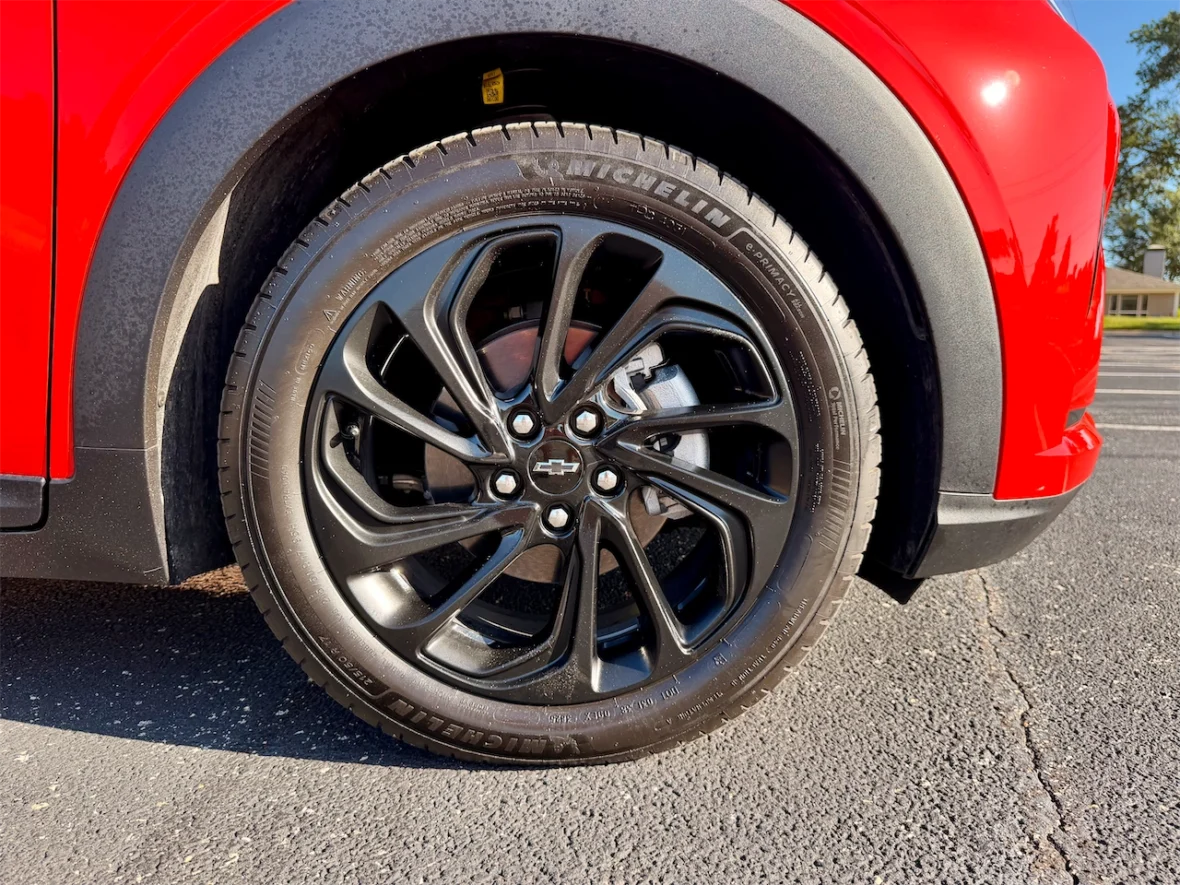
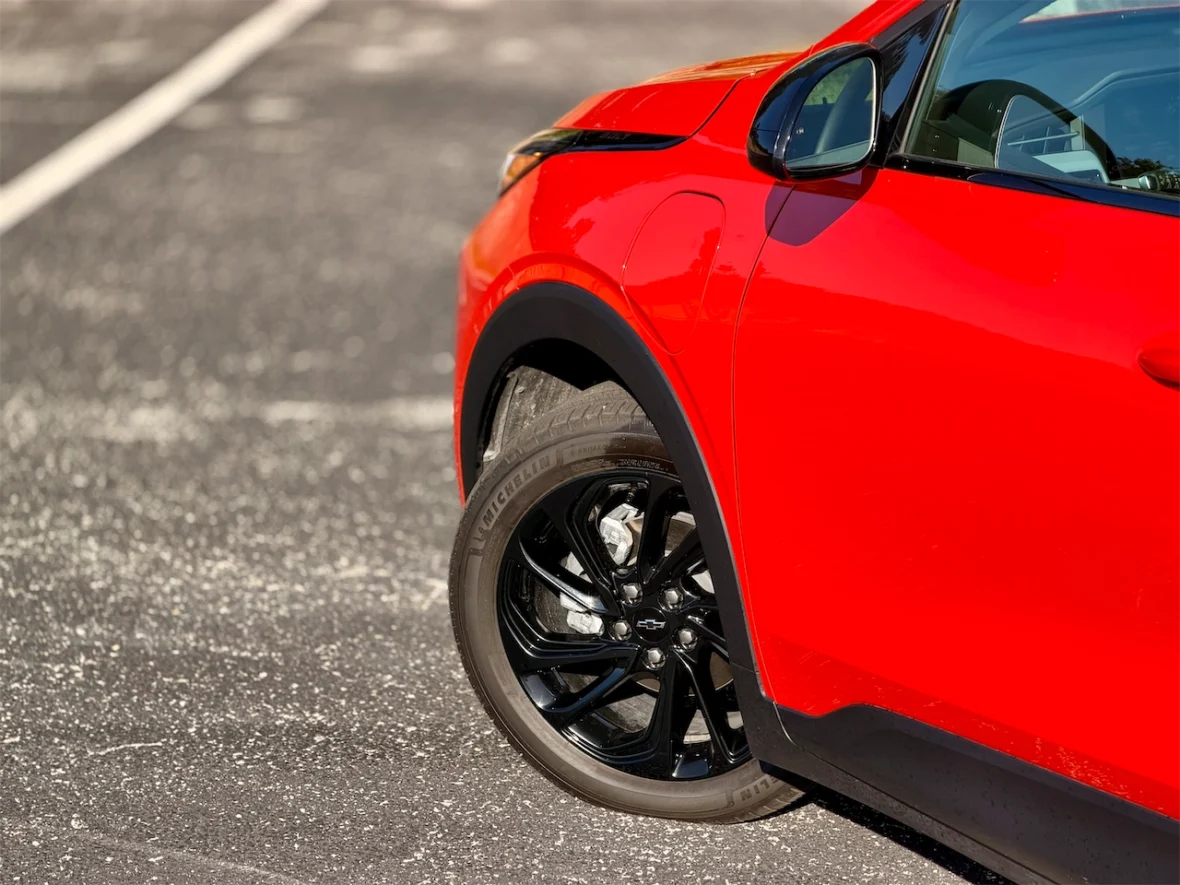
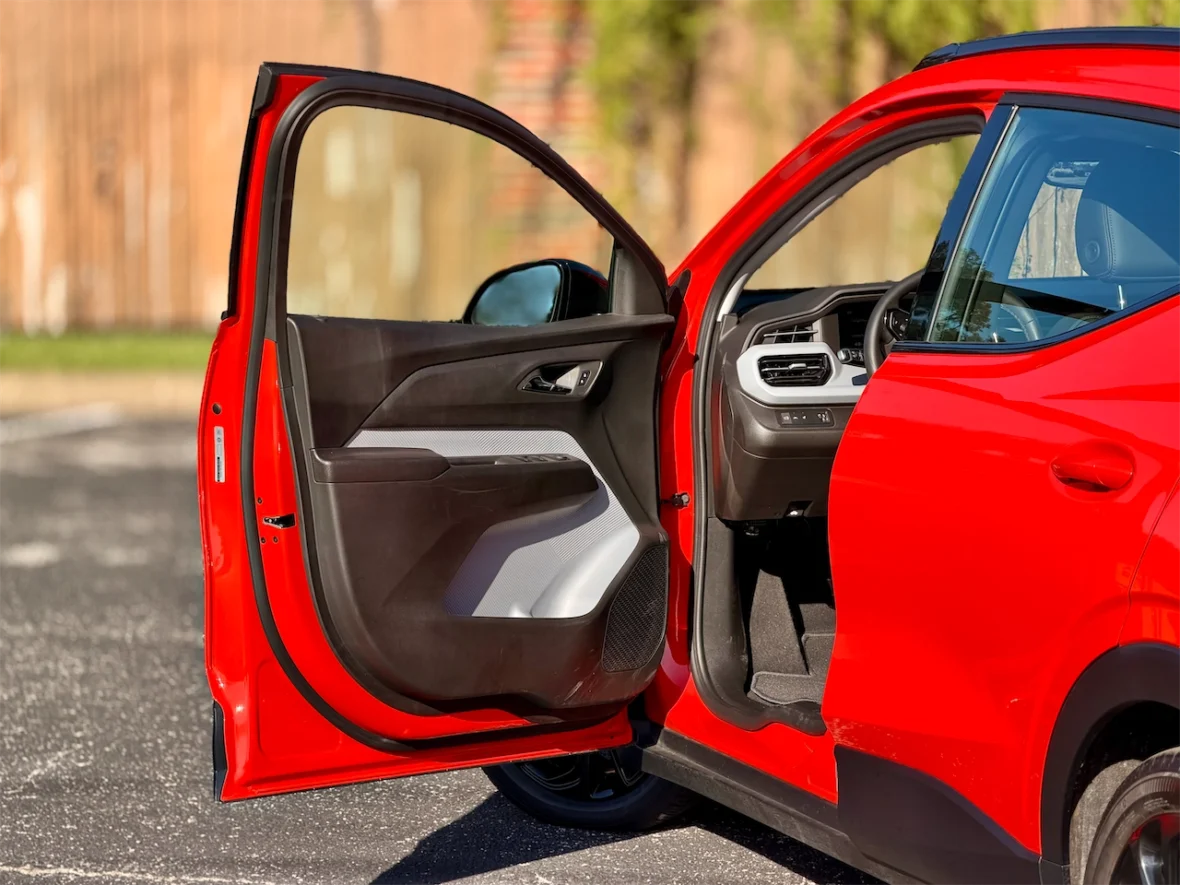
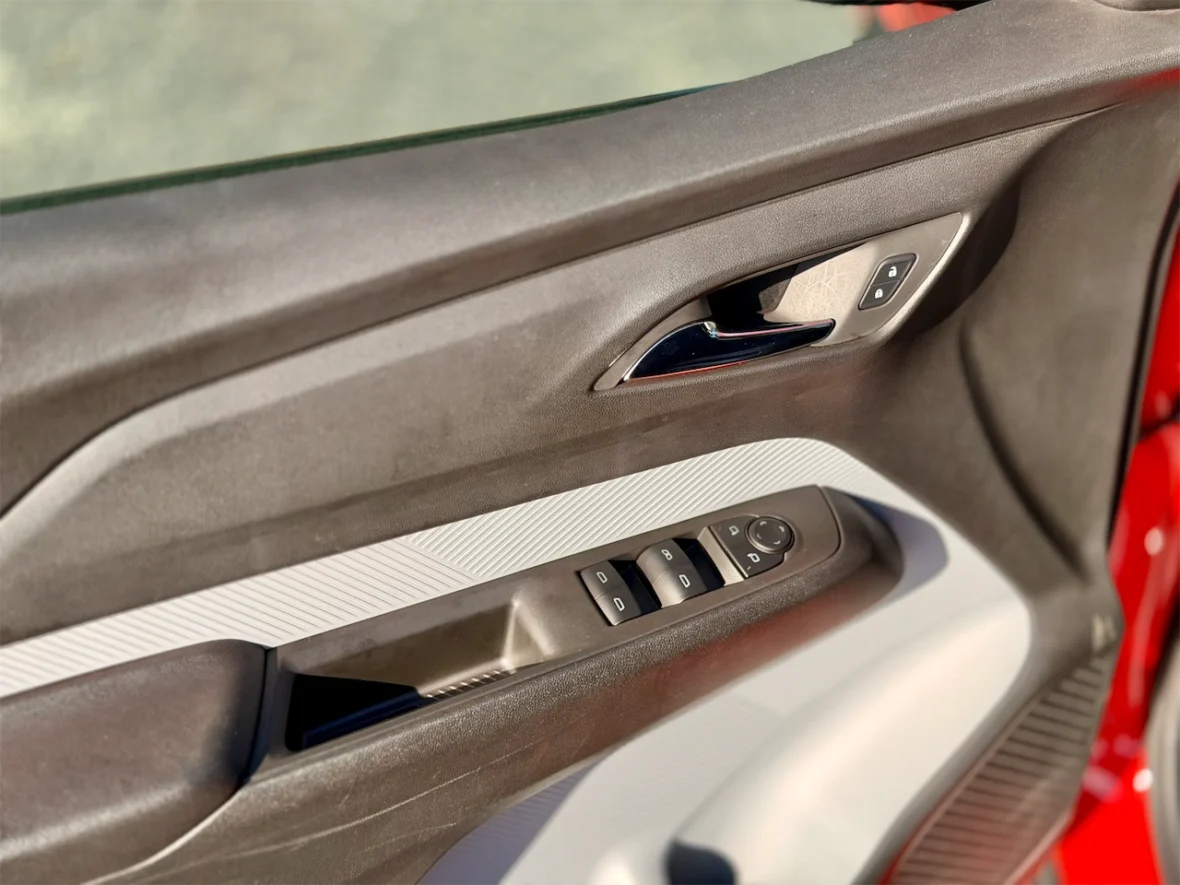
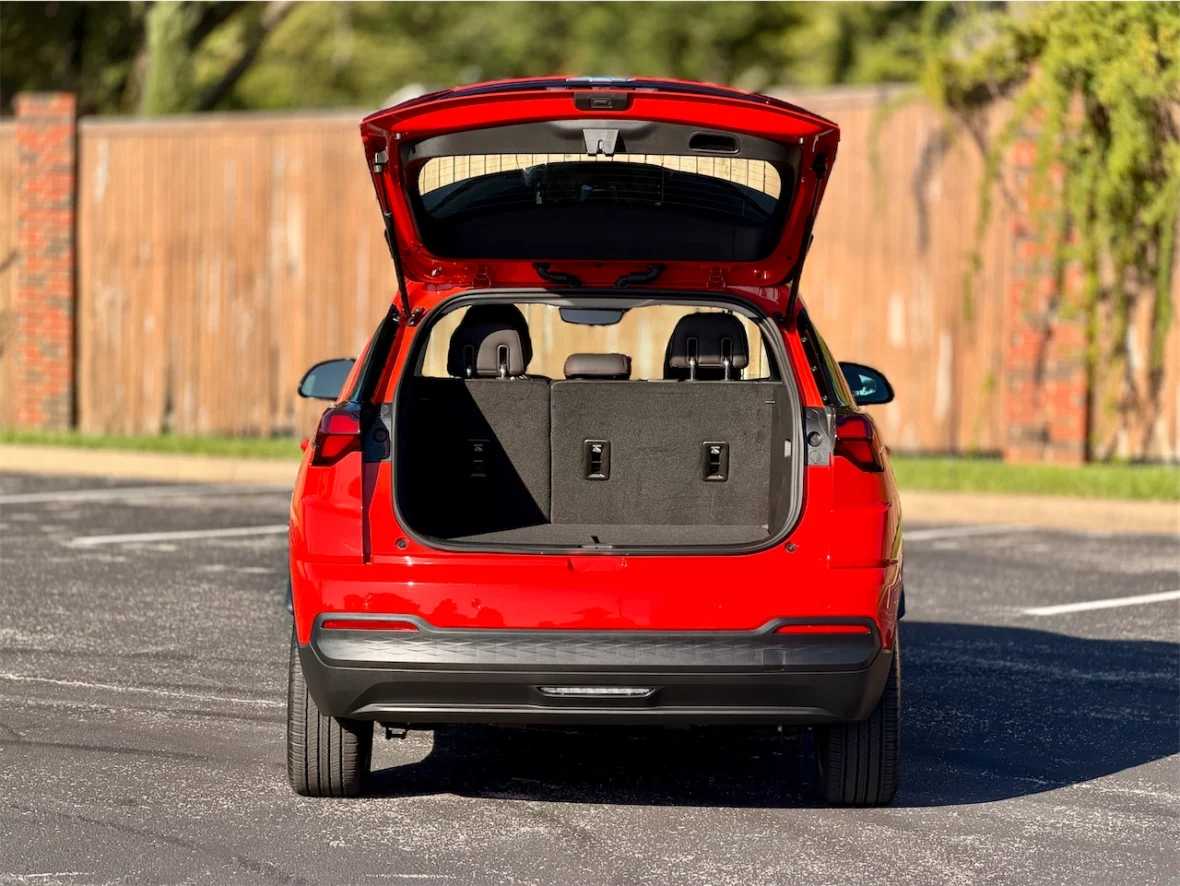
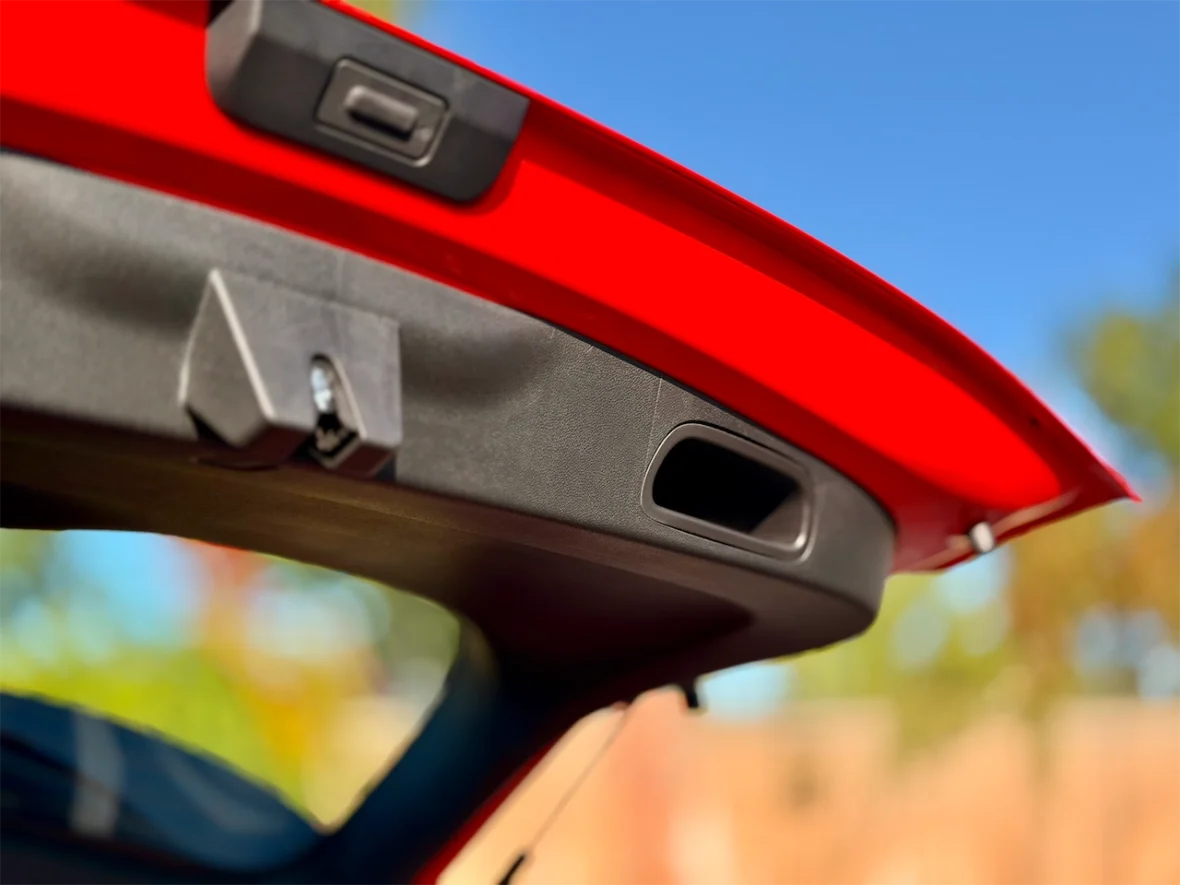
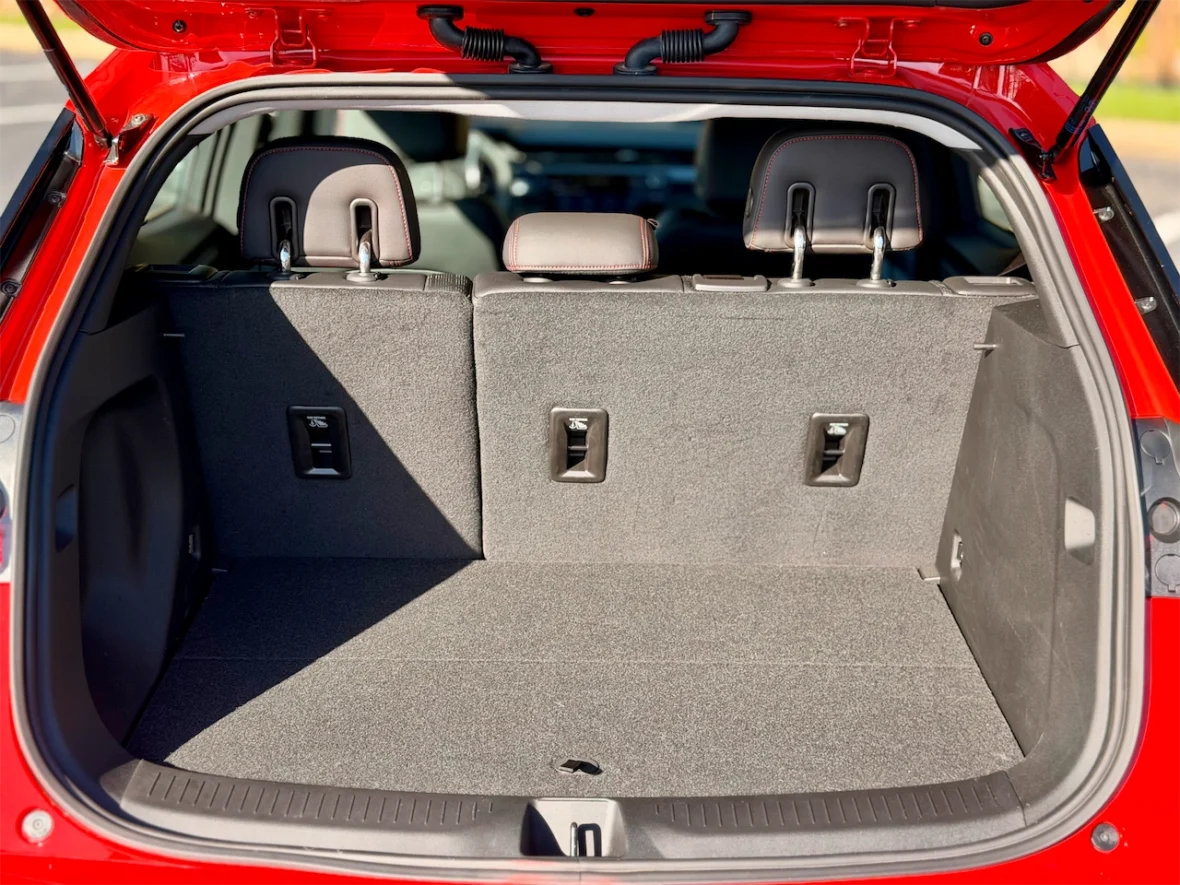
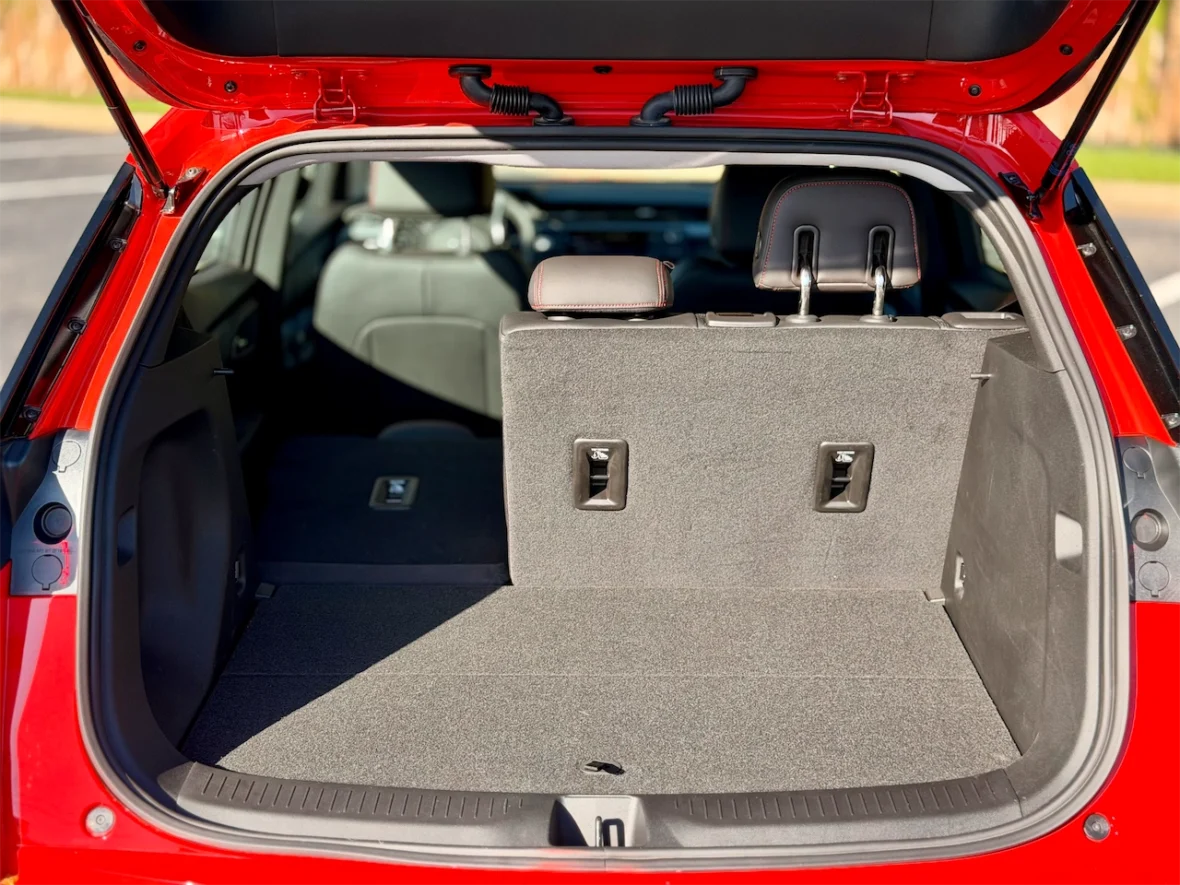
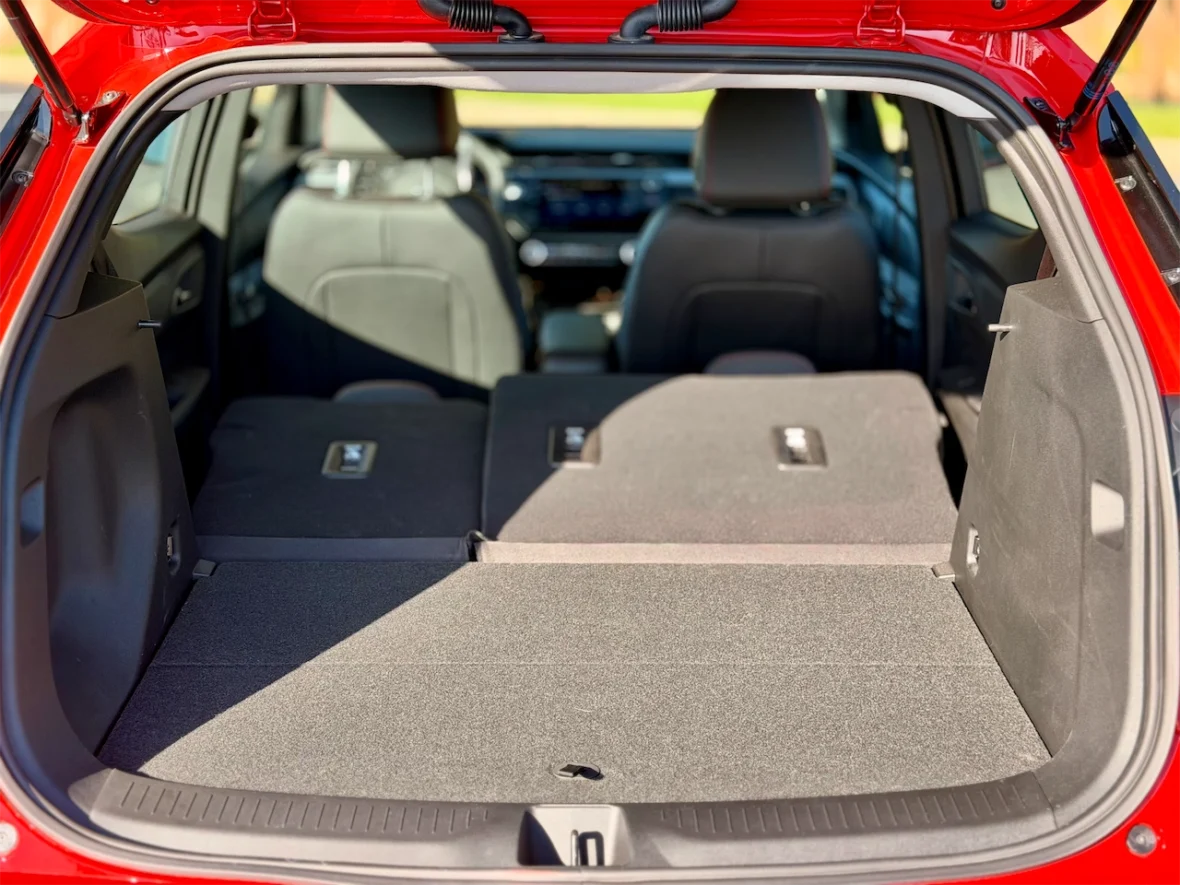
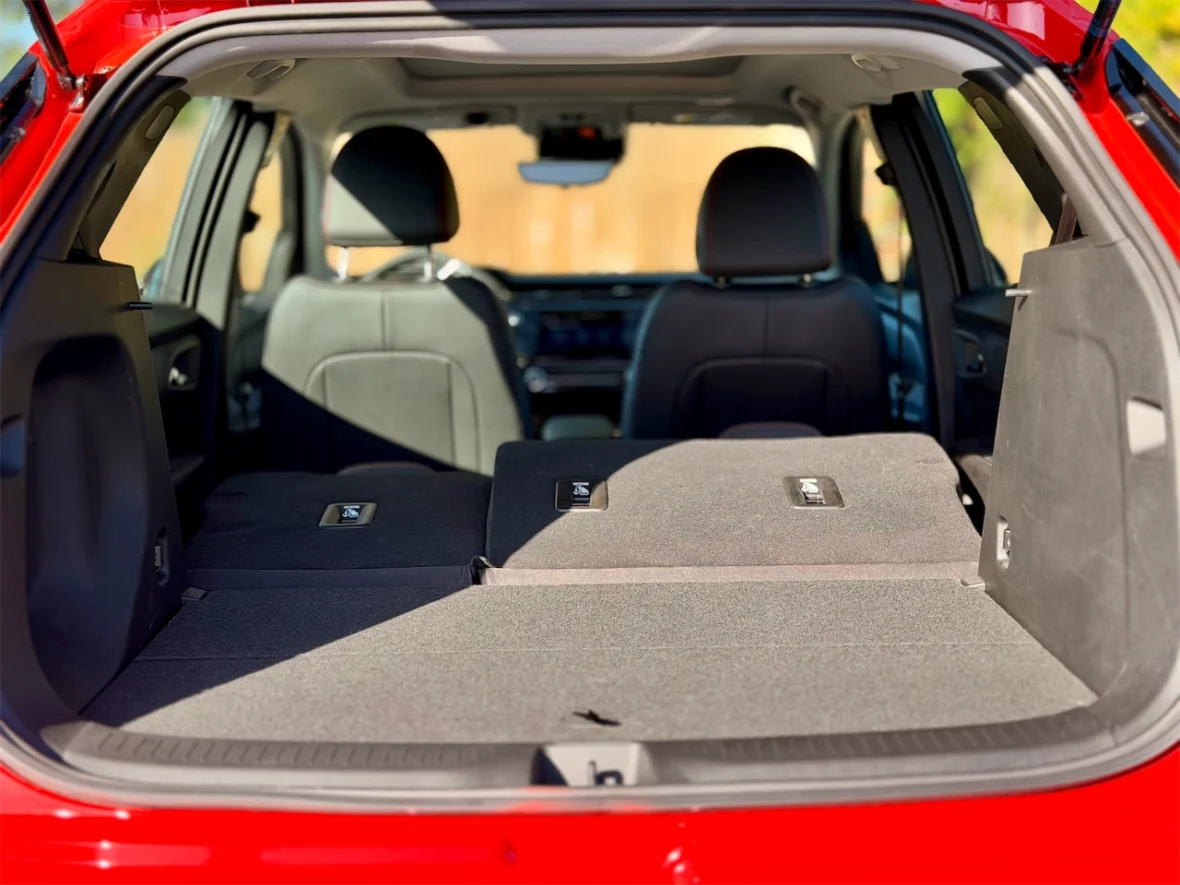
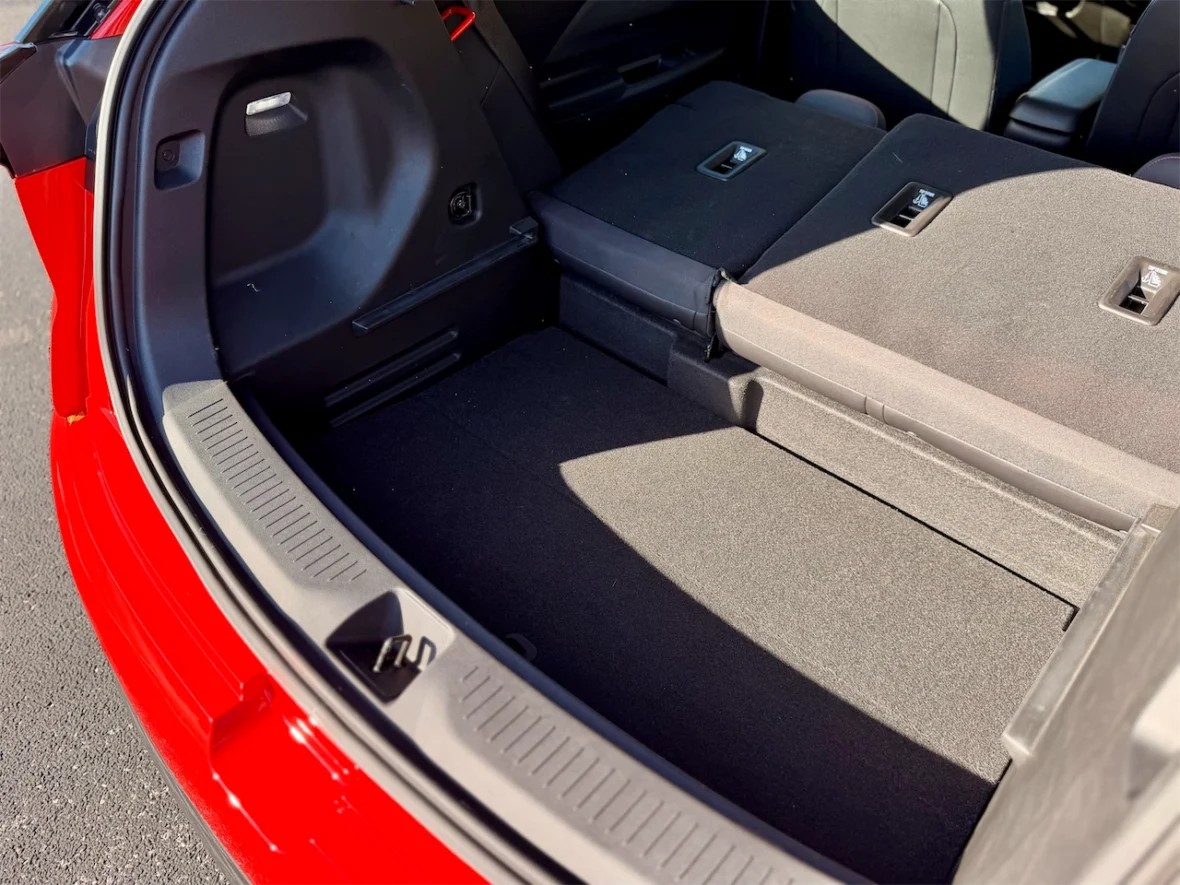
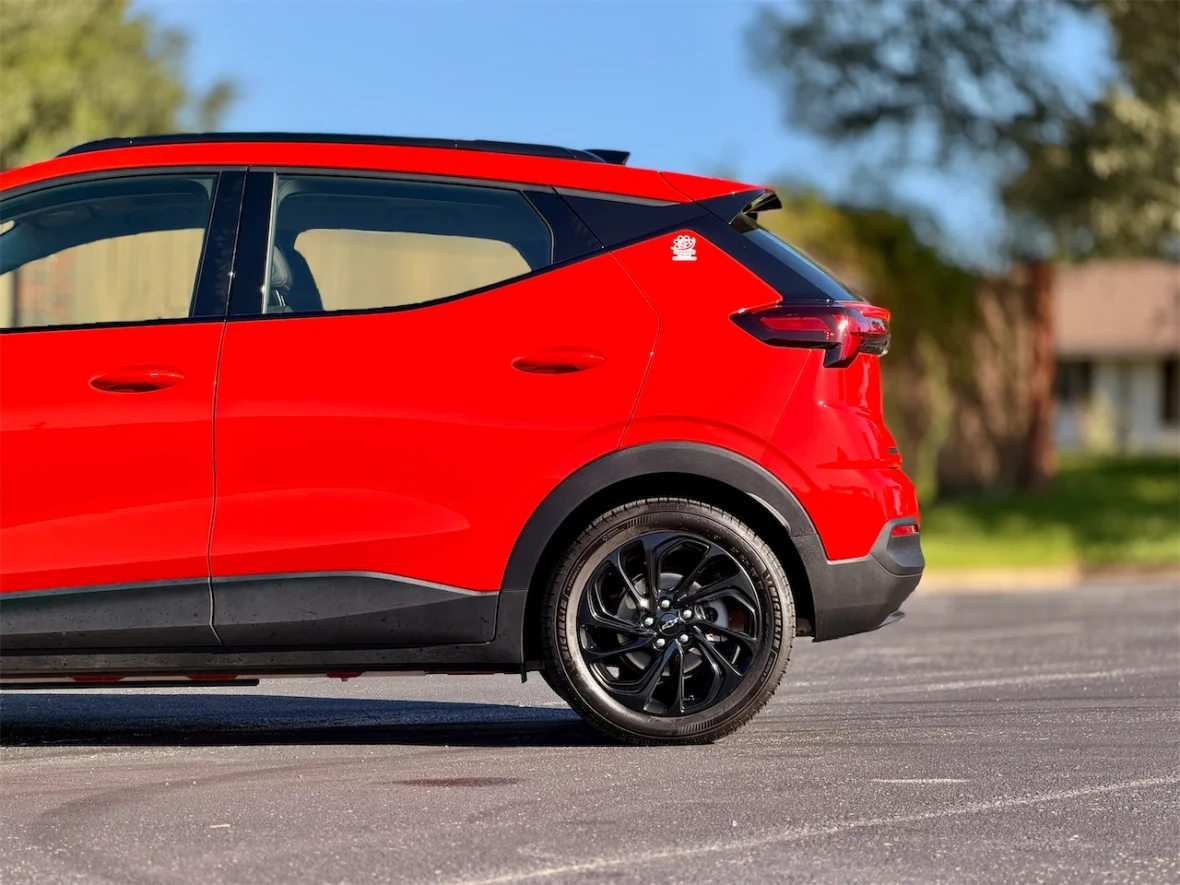
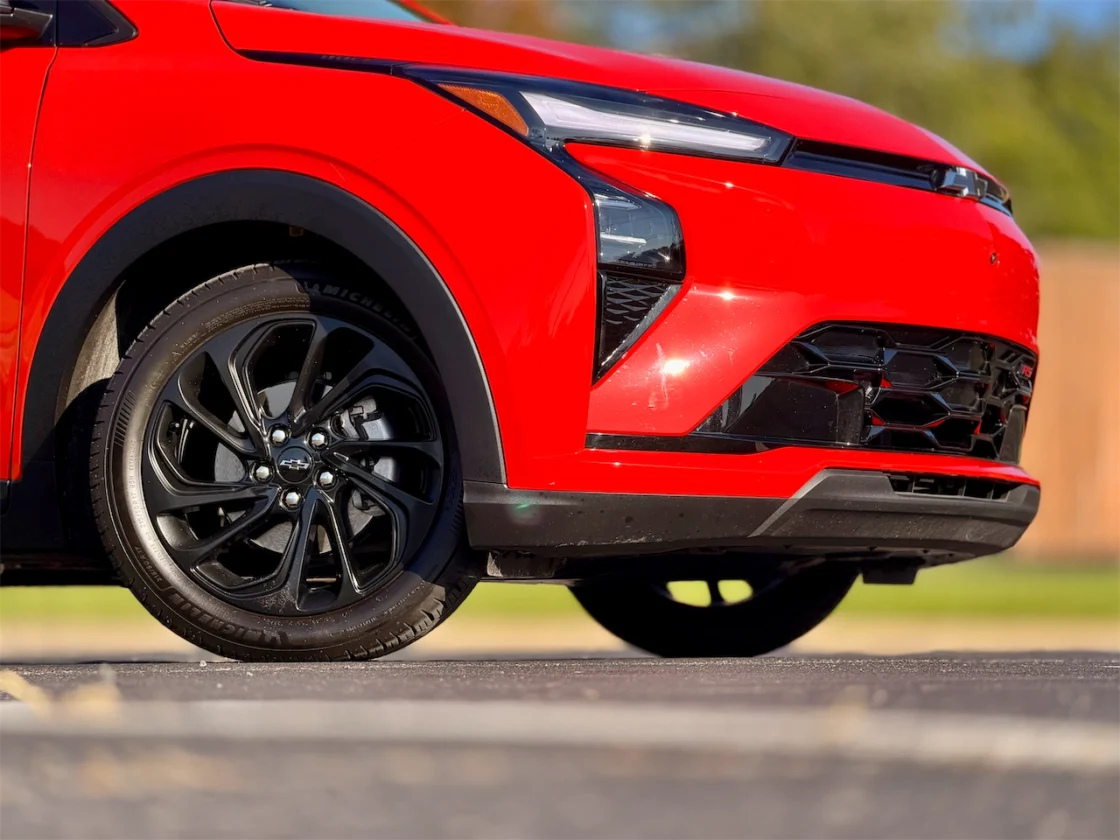
The RS also brings dark 17-inch wheels wrapped in 215/50R17 Michelin tires. From the side, little touches like the Bolt name splitting the hood and front fender keep things interesting. The floating roof design carries the blackout theme to the back, and body-color door handles get active-entry buttons up front. Around back, though, you get a manual liftgate, not a power one. That is one of the small sacrifices you make for the most affordable EV in the country. Overall, this is still a clean, tidy package, and it is easily the best-looking Bolt yet.
How Quick Is the 2027 Chevy Bolt?
Part of how Chevrolet keeps the 2027 Chevy Bolt so affordable sits under the floor. Instead of the newer, pricier Ultium platform, the Bolt uses a proven 65-kWh lithium iron phosphate battery. One electric motor drives the front wheels, and it makes 210 horsepower and 169 lb-ft of torque.
That may not sound like much, but EV torque arrives instantly. So I brake-torqued it in Sport mode and went from 0 to 60 in 6.36 seconds on a slight downhill. Uphill in the other direction, it slowed to 7.10 seconds. A normal, no-drama launch split the difference at 6.68 seconds. For a $35k economy EV, that is genuinely respectable.
What impressed me most was traction. There is almost no wheel spin off the line, even on my quickest acceleration runs. The Bolt swells into its power rather than ripping away, and it modulates grip quite well.
You also get drive modes buried in the touchscreen: Normal, Sport, Snow and Ice, and a custom My Mode. Better yet, the Bolt remembers you were in Sport after you shut it off and climb back in. Little wins like that add up.
Real-World Range and Tesla-Style Charging
To begin, Chevrolet claims 262 miles of EPA range, and the window sticker lists 120 MPGe combined. In the real world, though, expect closer to 3 miles per kWh. Over 225 miles of mixed driving, that is exactly what I averaged. Do the math on a 65-kWh pack and you land around 195 miles per charge.
Around town on short trips, I saw better than 4 miles per kWh. On the highway, you will see less, and long road trips only make it tougher. Fast chargers typically taper off near 80%, so your usable road-trip range shrinks further. That is the trade-off with an affordable EV, something I feel all potential owners should calculate when deciding if the Bolt is a fit for their lives.
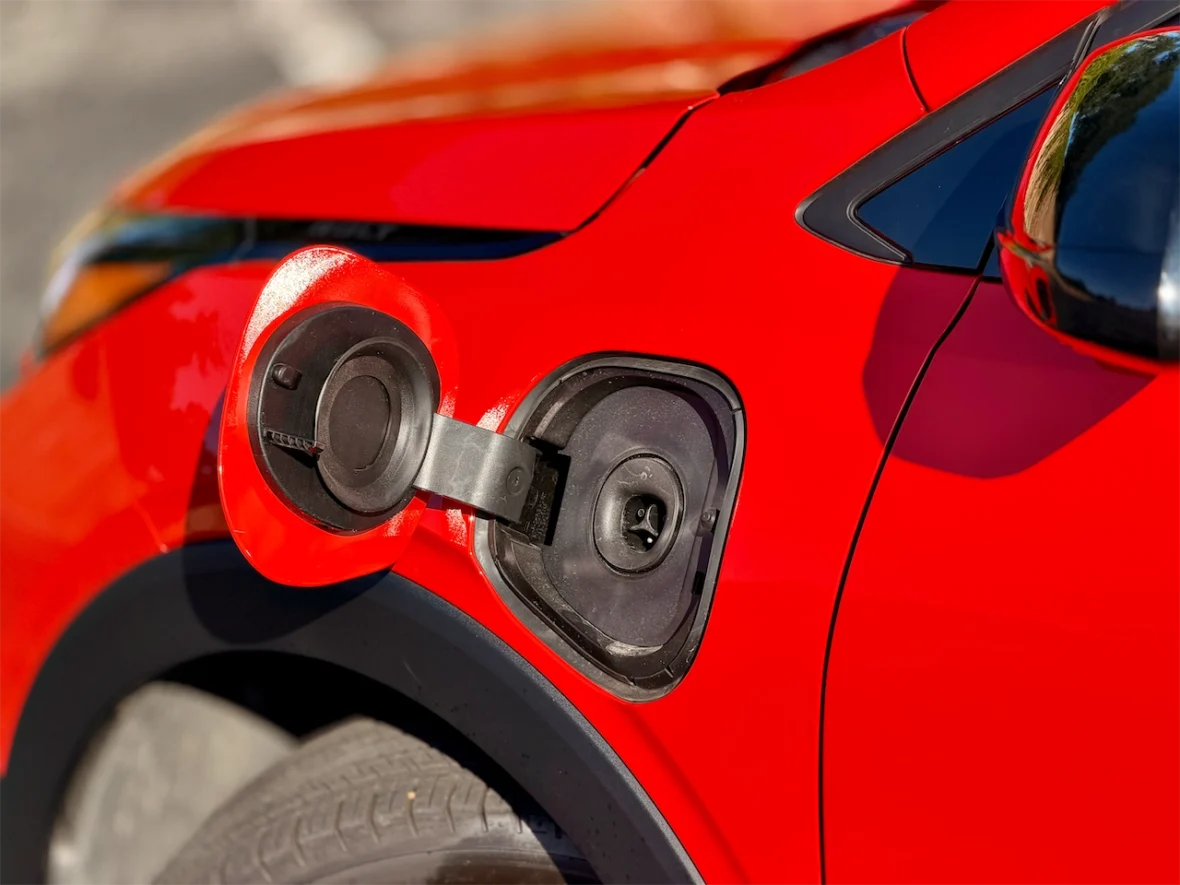
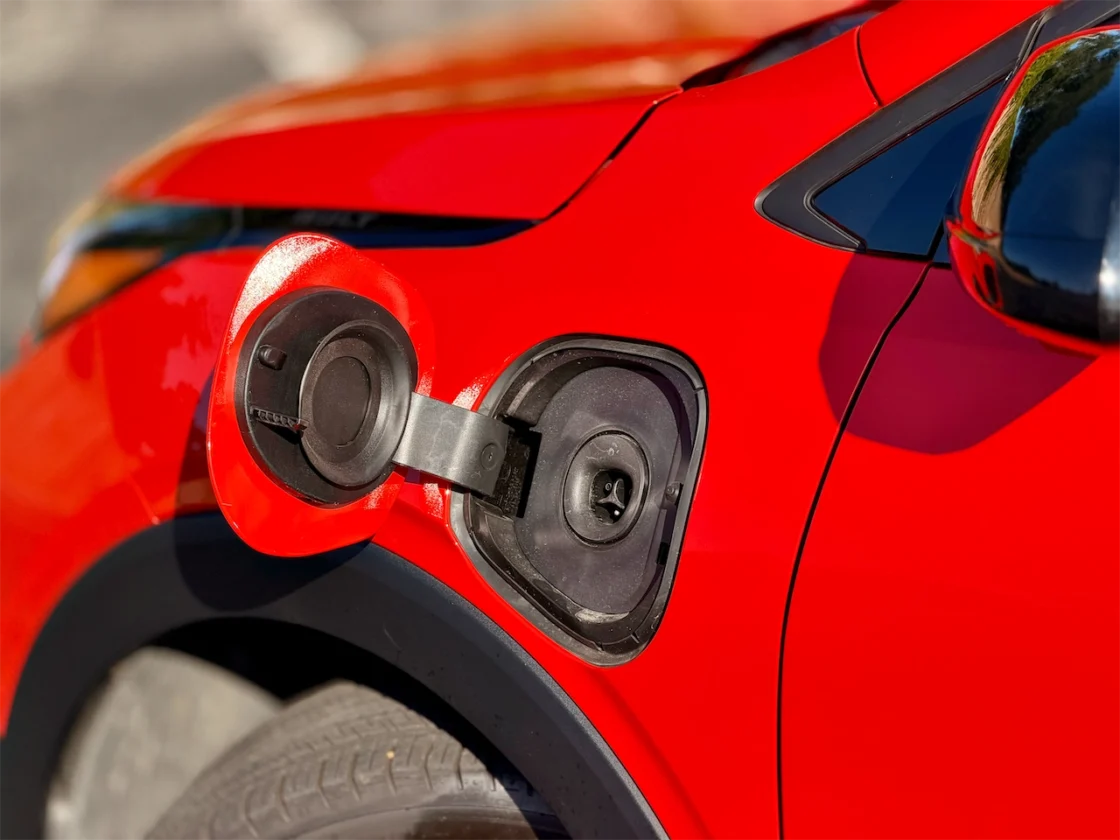
Charging, on the other hand, is where the Bolt shines. This is the first General Motors vehicle with a native NACS port, the same plug Tesla uses. So you can pull into the many Tesla stations across the country without an adapter. Need a CCS station instead? An adapter handles that too. With a 65-kWh battery, DC fast charging from 10 to 80% takes about 25 minutes.
If home charging is part of your plan, the right charger takes the public-network guesswork out of the equation. Huge thanks to Lectron for supporting the channel: you can get your Lectron EV charger here.
Driving America’s Most Affordable EV Every Day
Behind the wheel, the 2027 Chevy Bolt drives better than its tiny footprint suggests. The stretched wheelbase and the low-mounted battery give it the composed ride of a bigger vehicle. In addition, steering is easy and predictable, and power builds in a smooth, linear line.
The brakes never leave you wanting, mostly because there is not much mass to slow down. Regenerative braking does most of the work, which should mean longer brake life than a gas Chevy Trax. Even with one-pedal driving switched off, a gentle coast still claws back 6 or 7 kilowatts.
One-pedal driving itself offers Off, Normal, and High. On High, it feels like a rubber band is yanking you back. If drivers do not know how to modulate the accelerator pedal, it is strong enough to make passengers queasy. Normal is also a touch strong for my taste, so I mostly left it off. Honestly, I wish Chevrolet used steering-wheel paddles the way Hyundai and Kia do. Digging through a menu to adjust regen feels clunky.
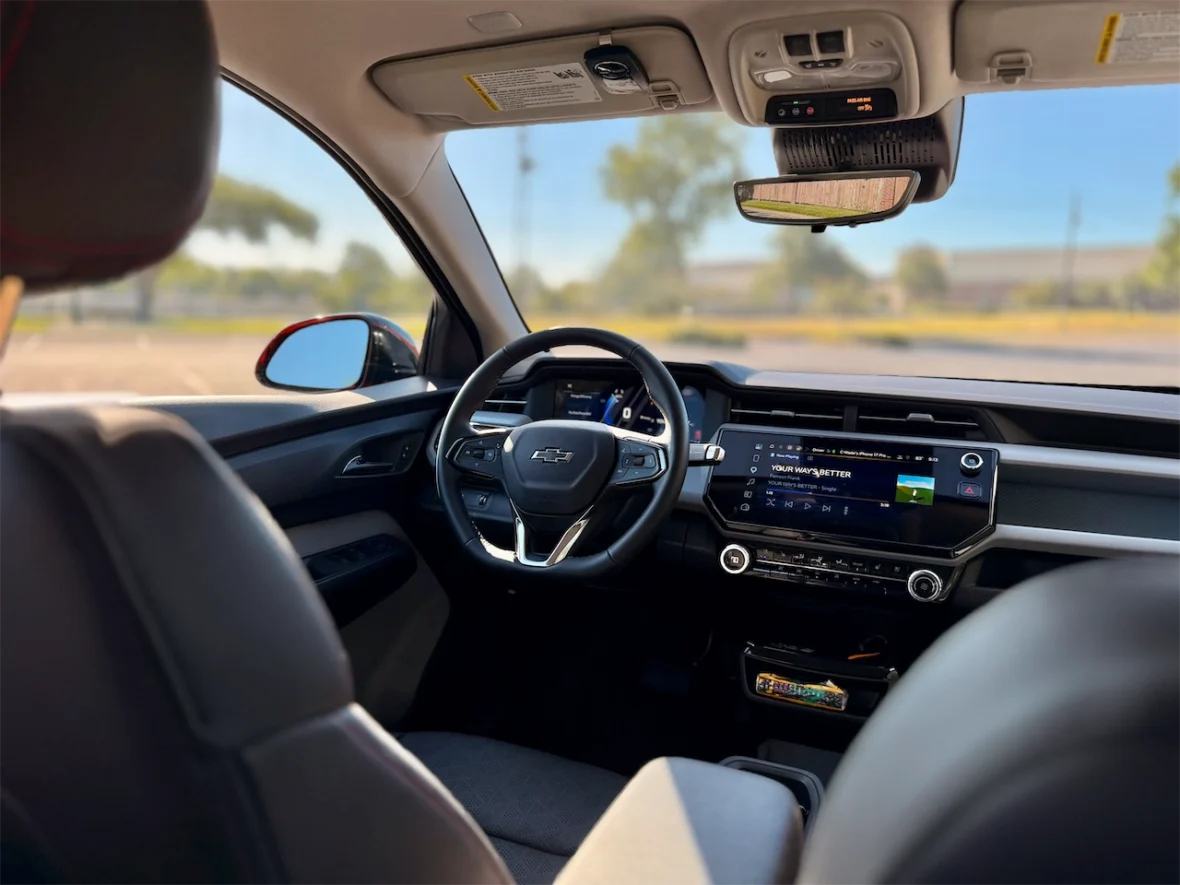
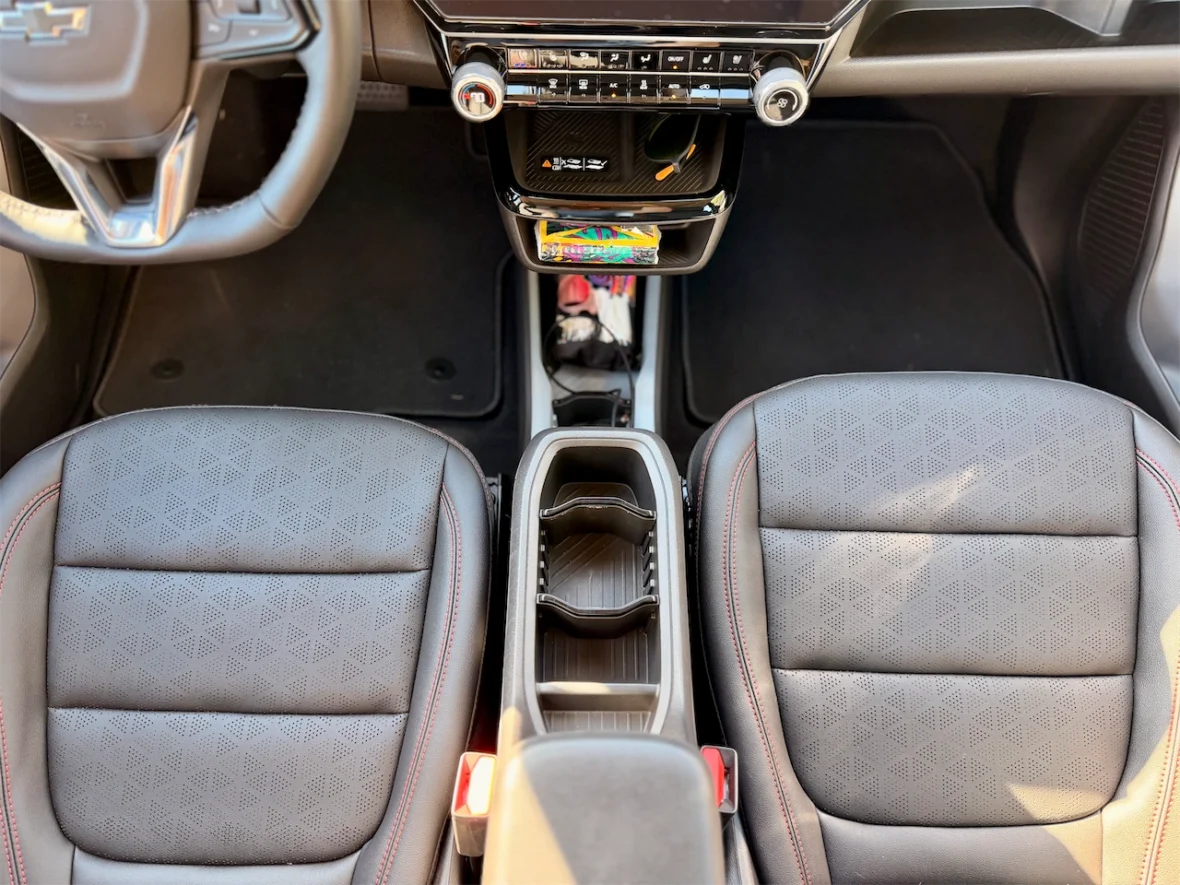
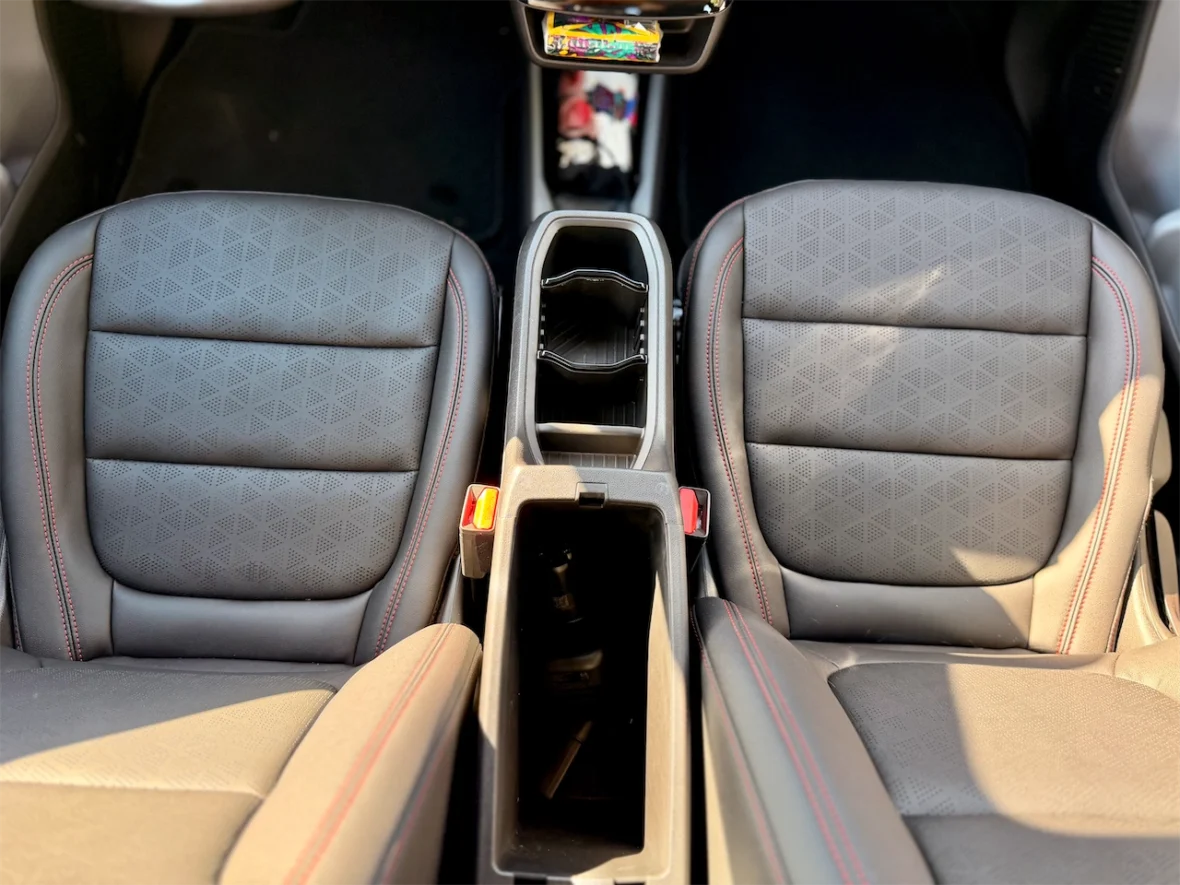
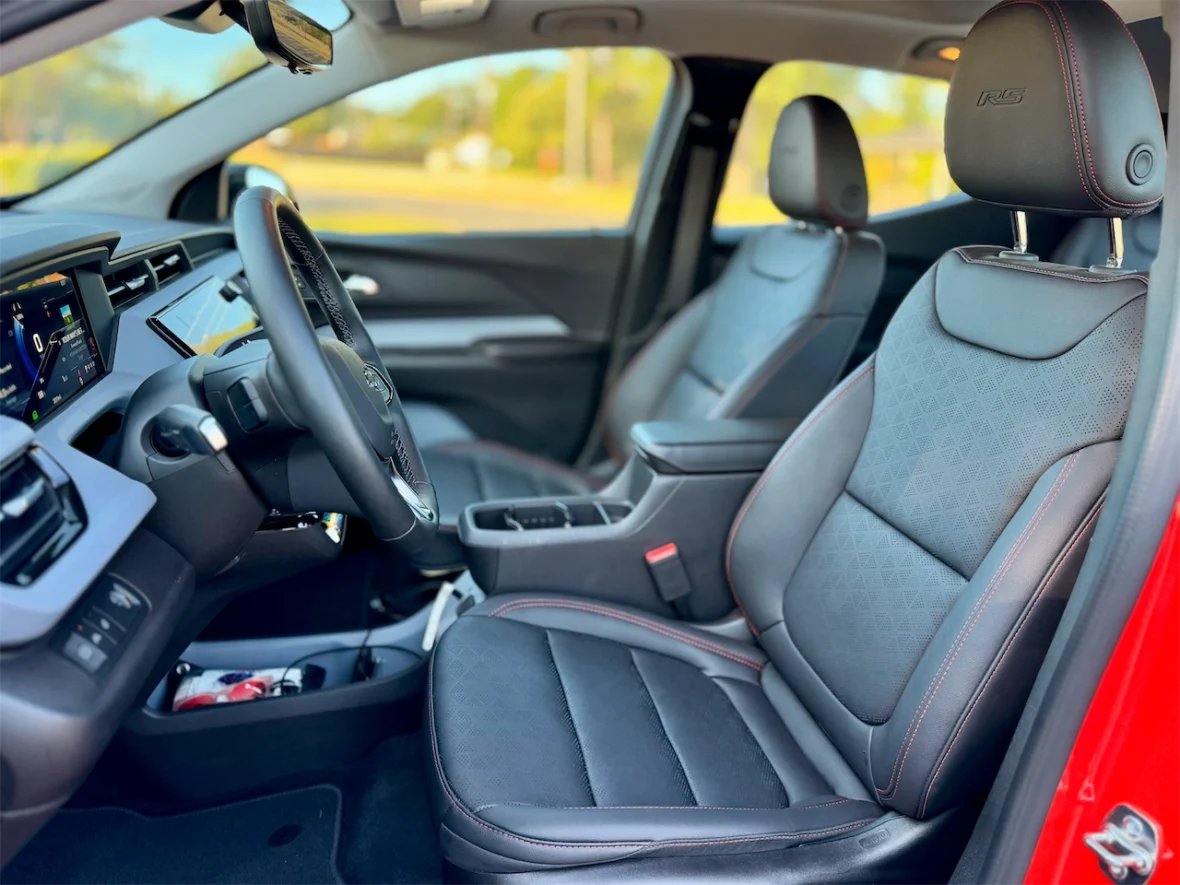
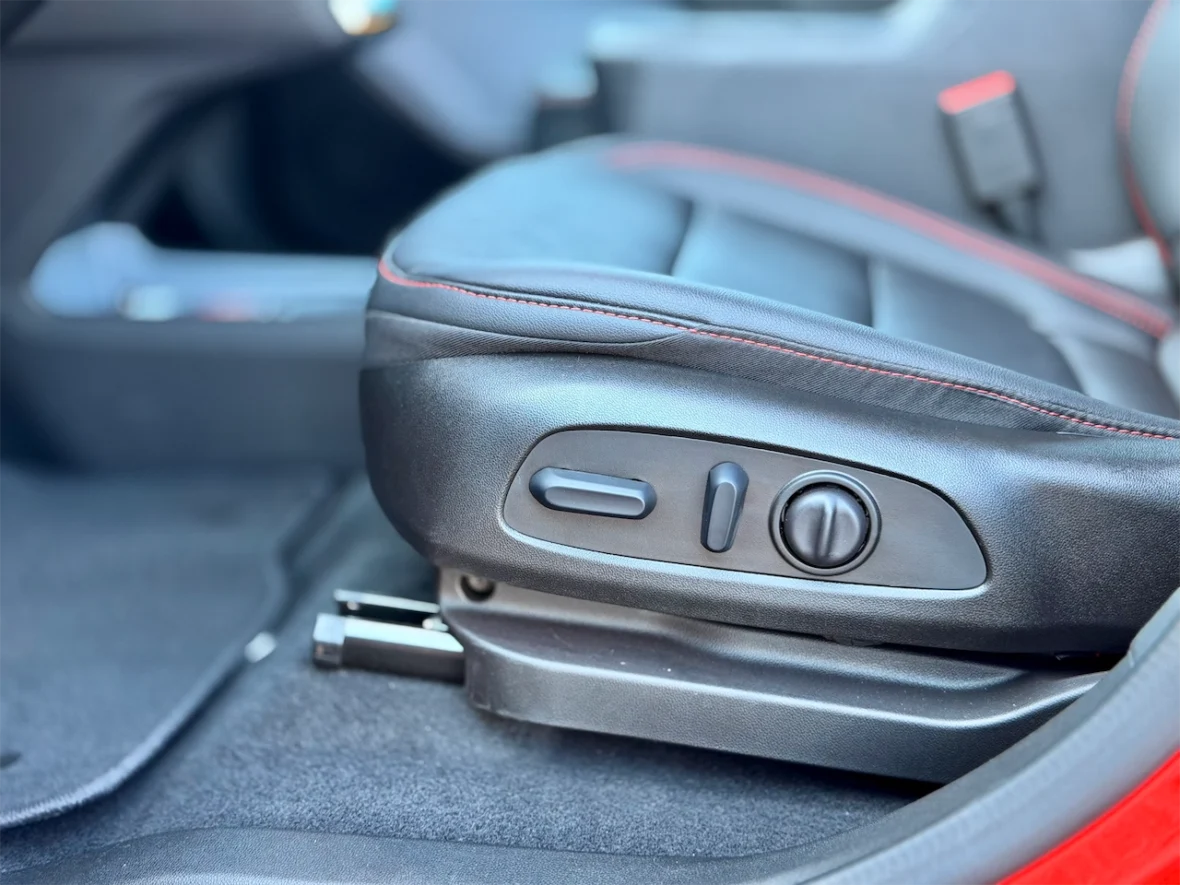
My biggest daily gripe is the driver’s seat. It is power-adjustable with two-way lumbar, yet it has no memory function. Being 5-foot-10 with a five-foot wife swapping in and out, I had to hunt for my position every single time. At least visibility is good, because the rear-view camera mirror rescues you from that tiny back window.
The One Feature That Would Stop Me From Buying
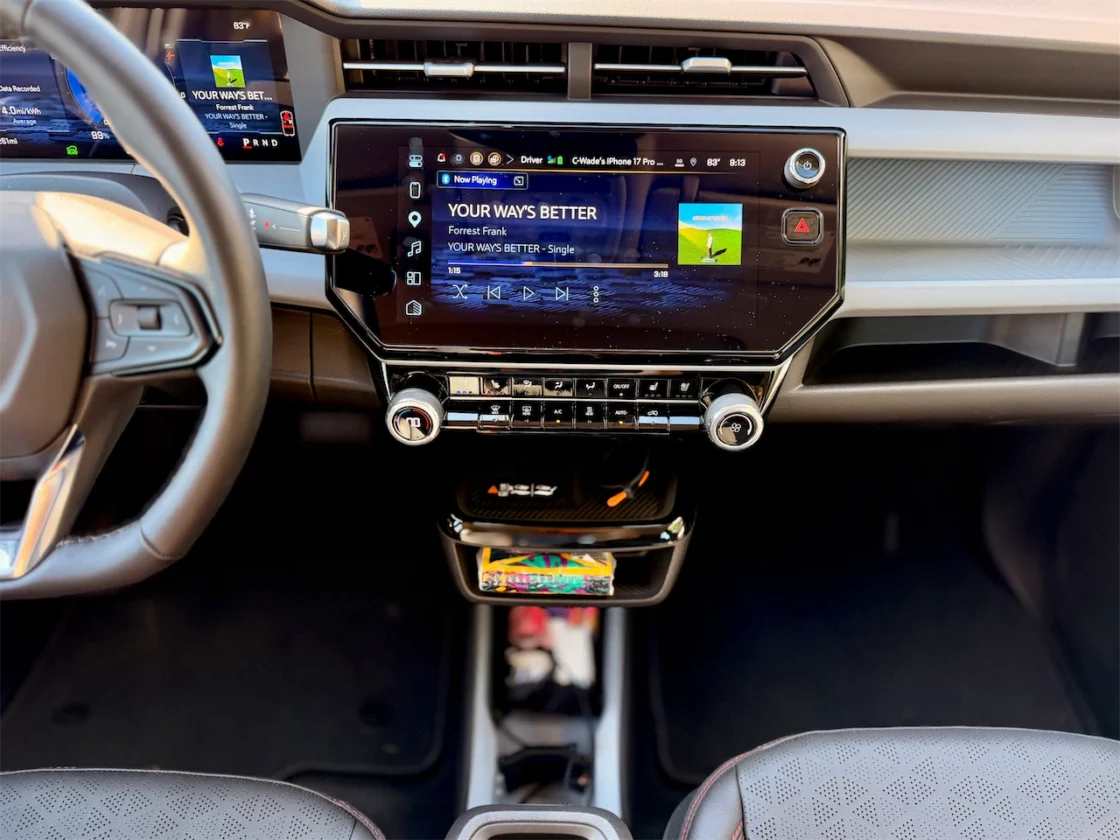
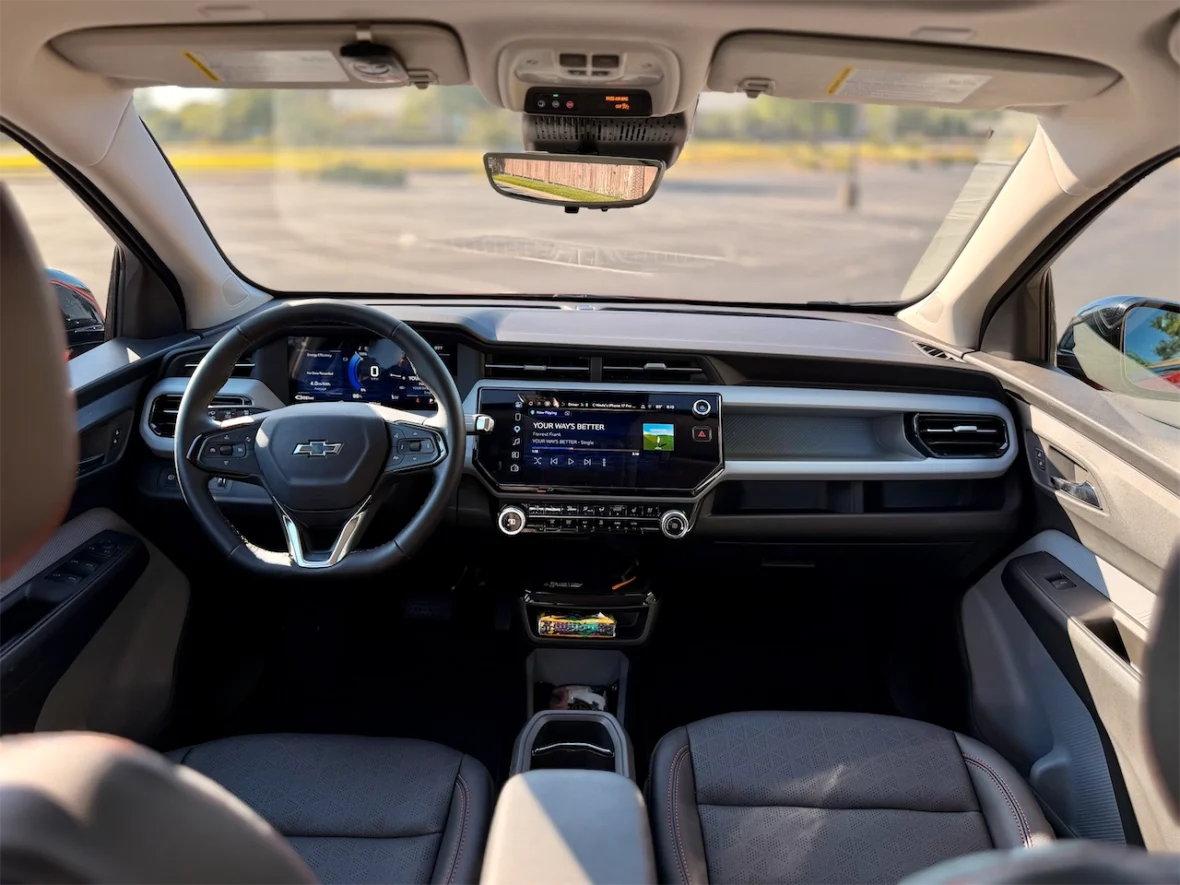
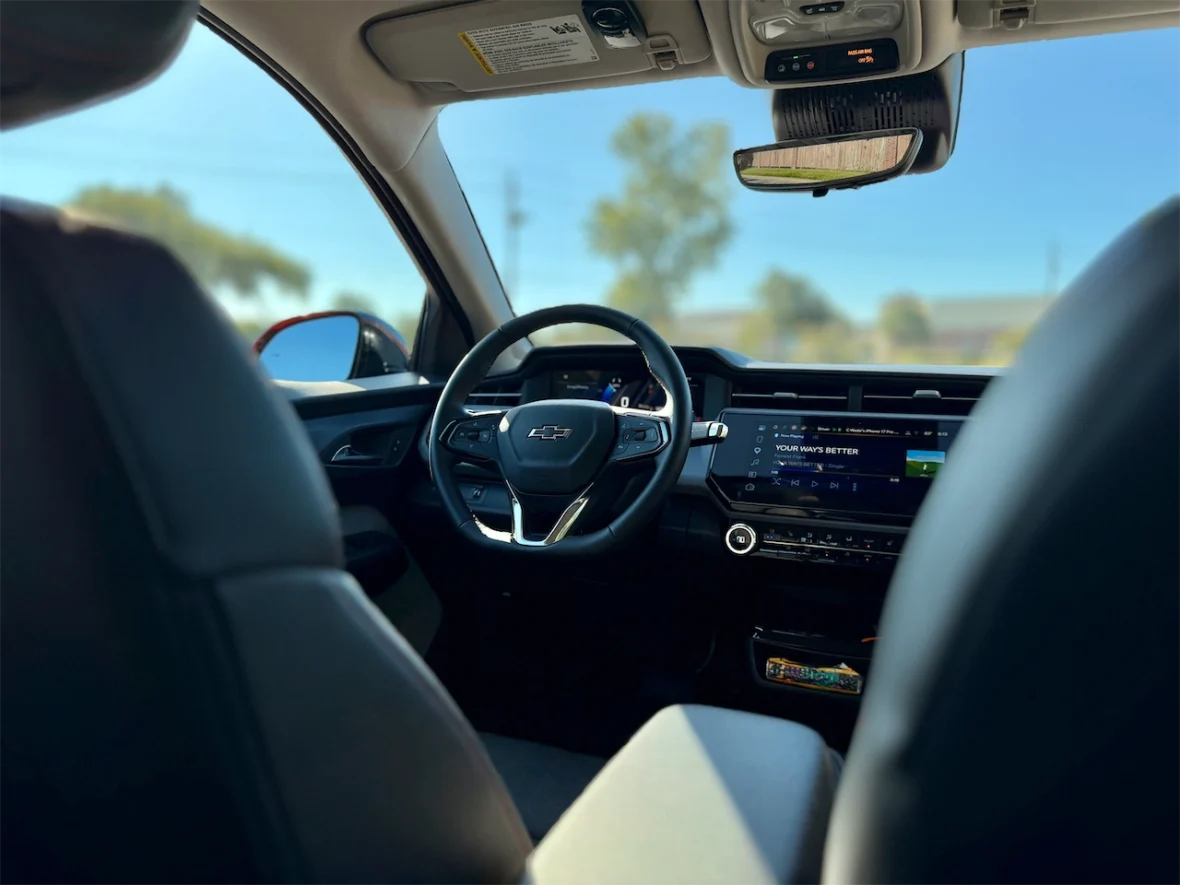
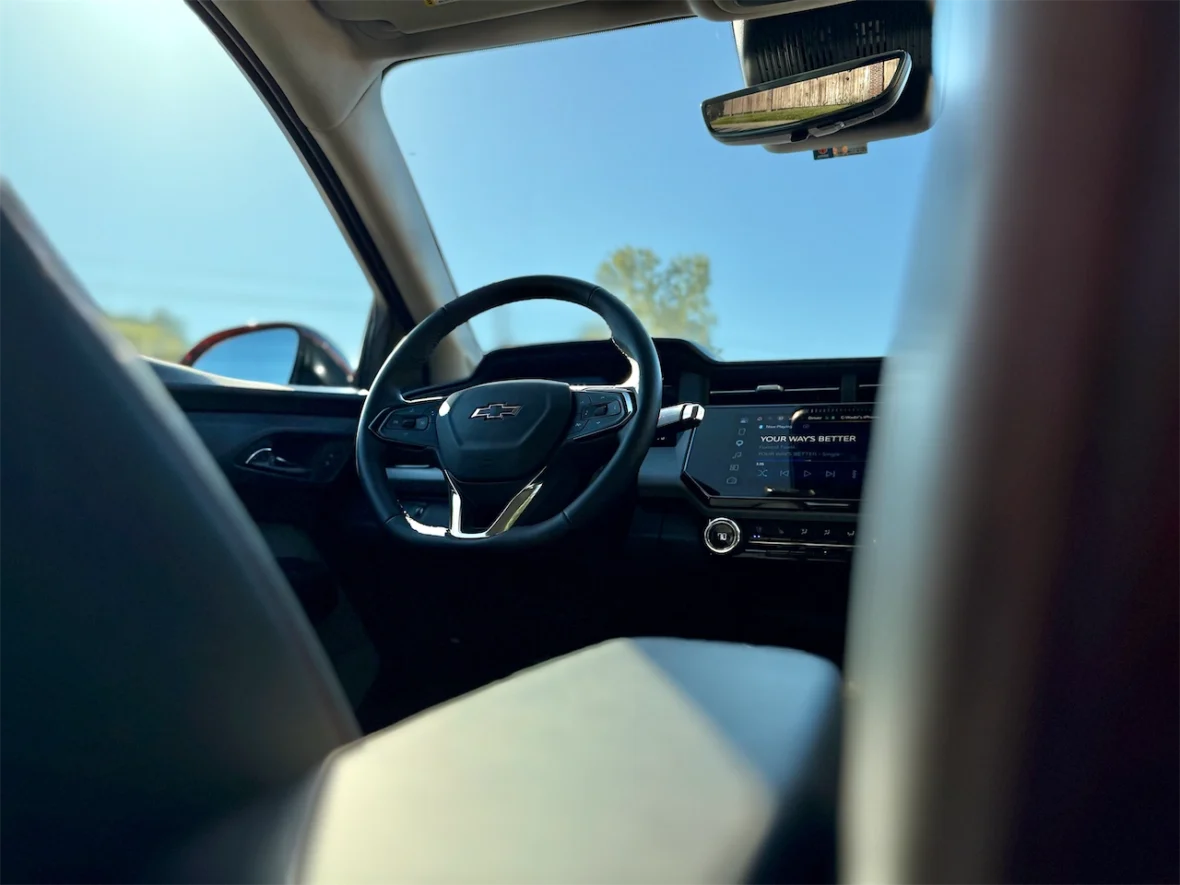
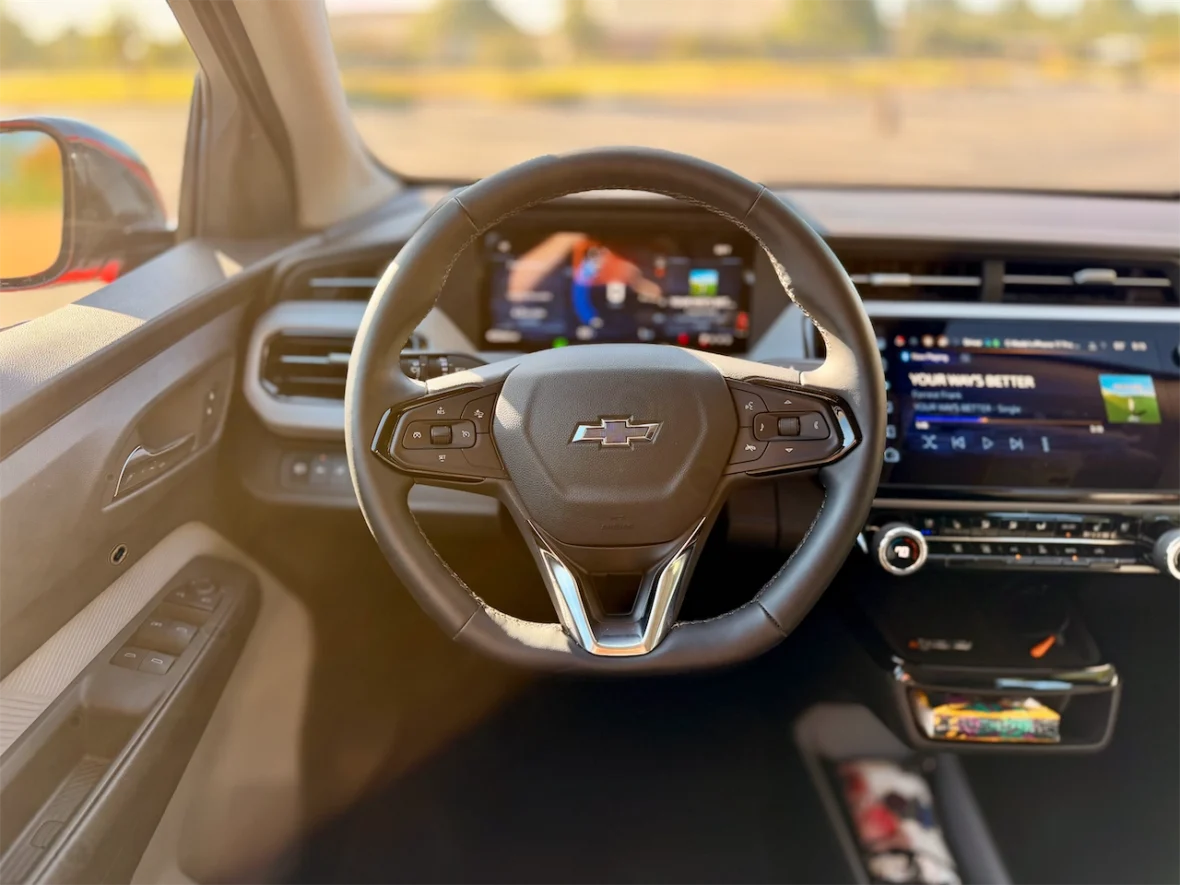
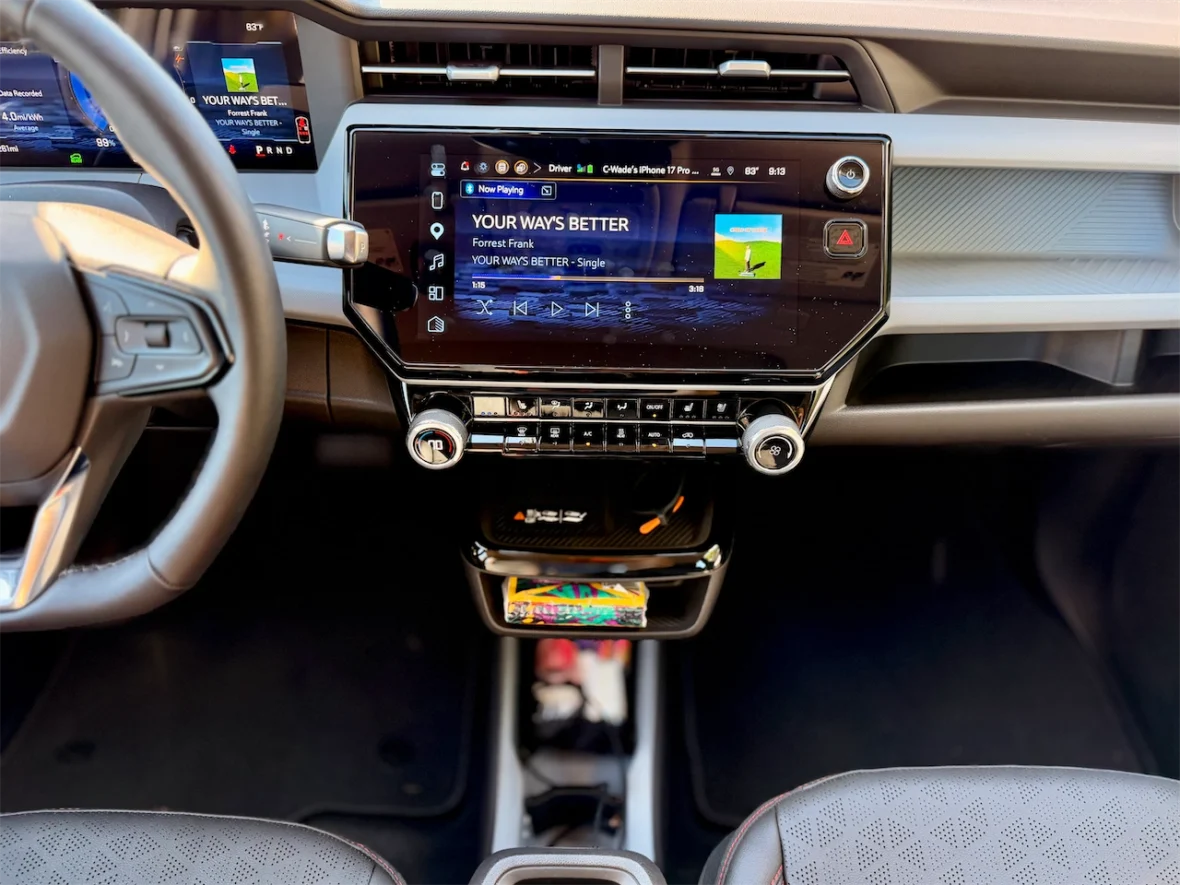
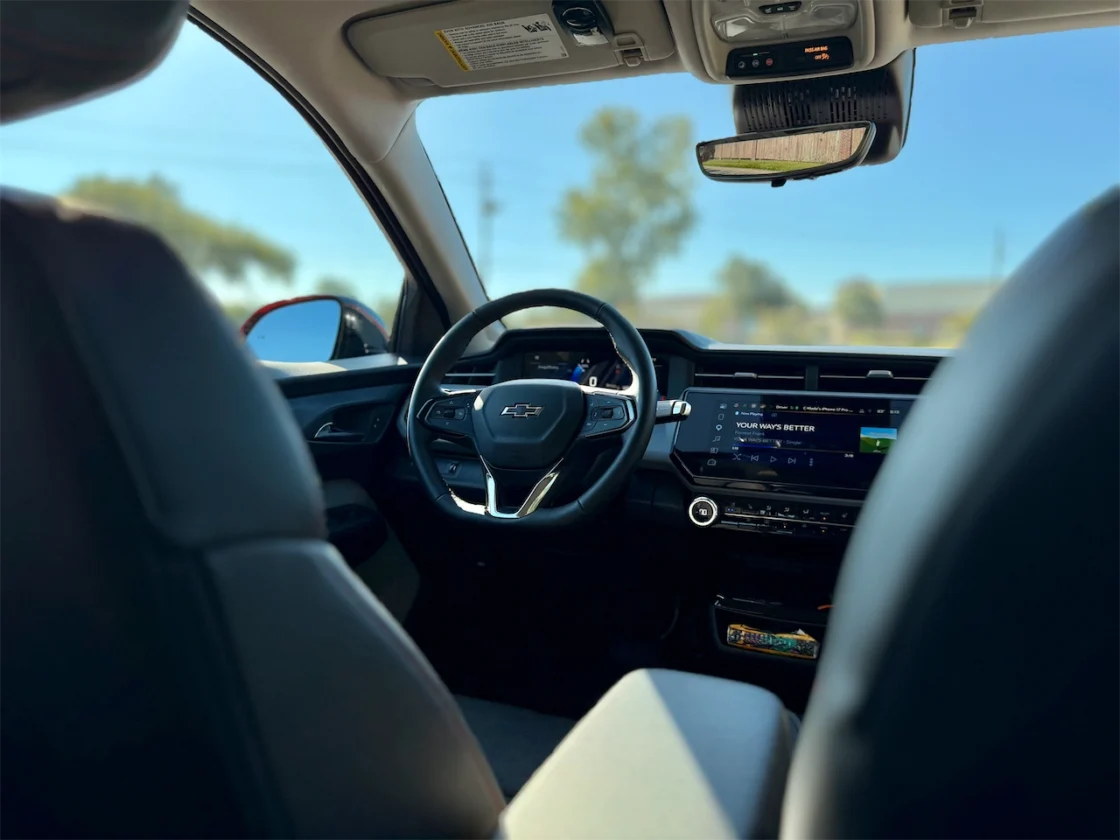
Here is the catch I promised. The 2027 Chevy Bolt has no Apple CarPlay or Android Auto. None. General Motors dropped phone projection on its EVs and leaned entirely on Google built-in.
Of course, GM claims this helps with route planning and battery estimates. Fair enough, if you live in Google Maps. I do not. I use Waze and Apple Maps, and the built-in apps simply cannot match the phone experience.
The Apple Music app, downloaded through the Google Play Store, has improved. Still, it is clumsy. Scroll through your library, and the layout feels foreign. Worse, once you reach about 10 mph, the system limits scrolling for driver and passenger alike. A co-pilot cannot even change the playlist. Voice control stumbled too, pulling up the wrong playlist or refusing outright.
For me, that is a dealbreaker. The good news? General Motors has started walking it back and promised phone projection returns on the 2027 Chevrolet Silverado. So maybe the company is finally listening.
Bolt vs. Chevy Trax: Making the Case
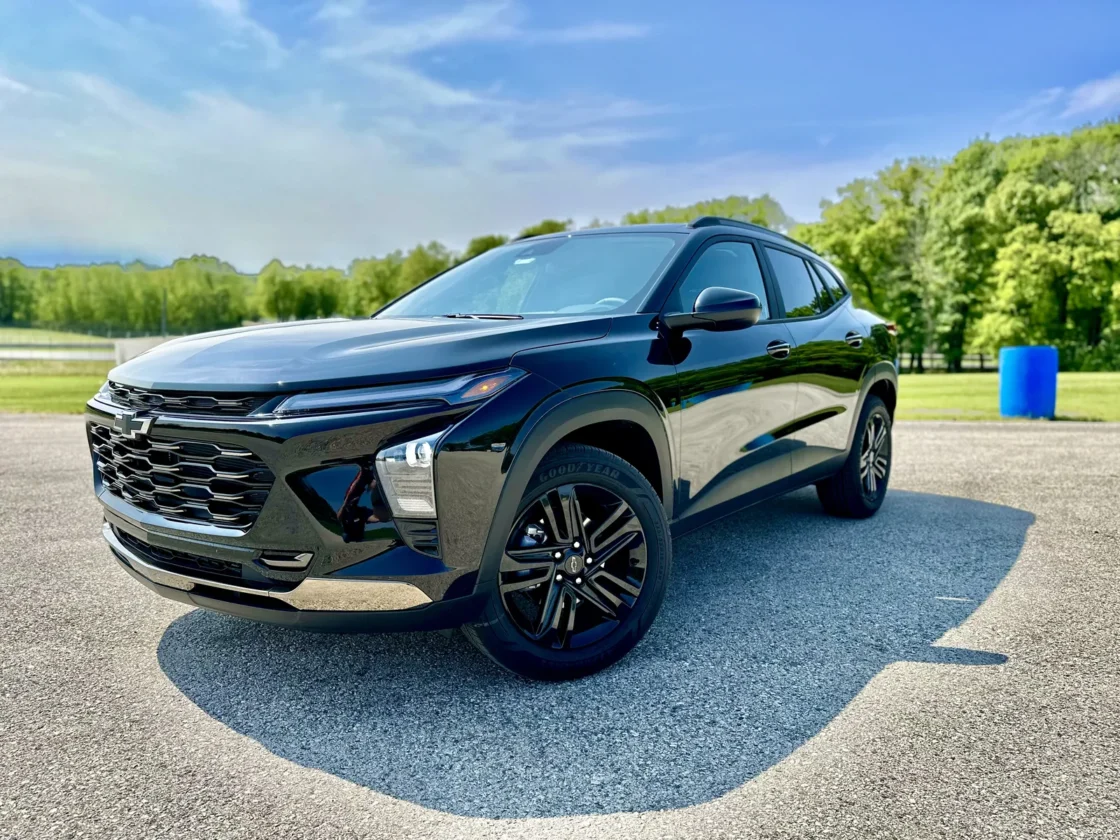
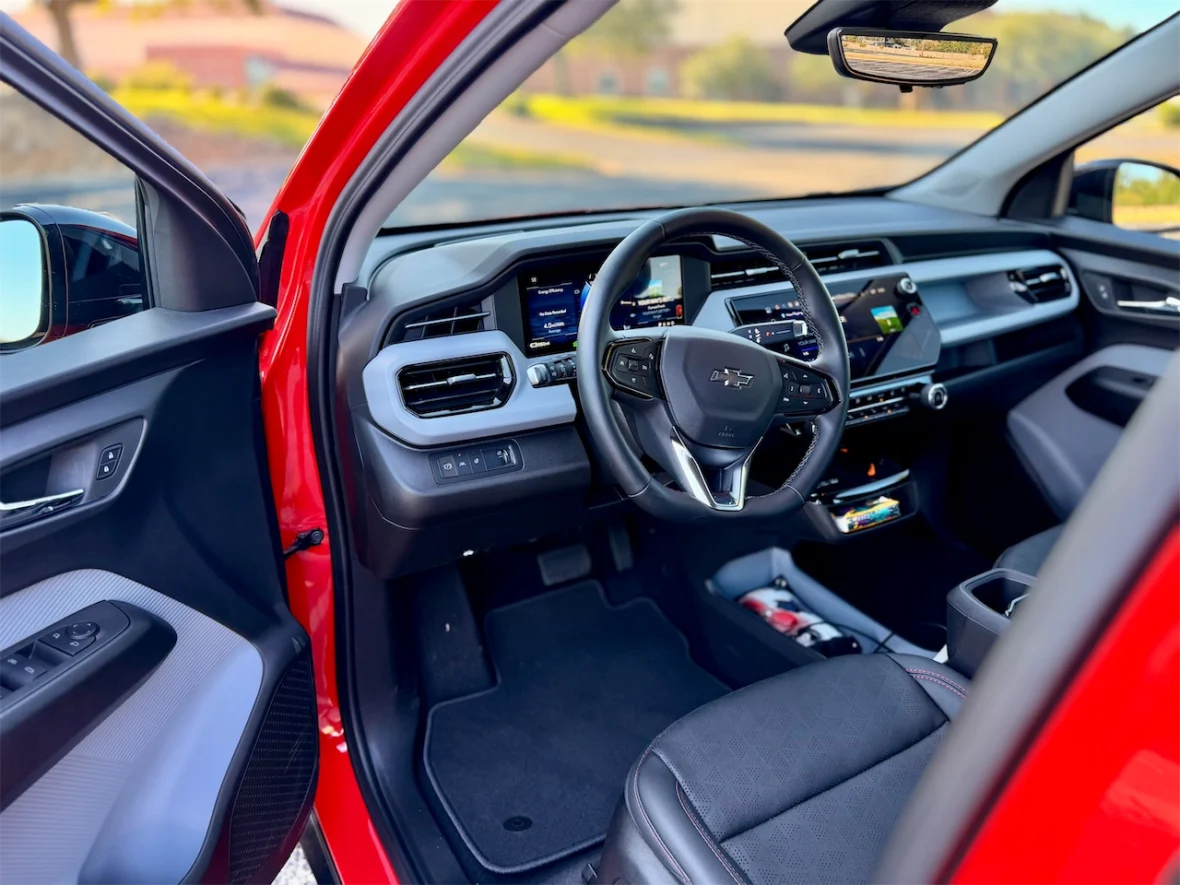
Inside its own showroom, the Bolt’s real rival is the gas-powered Chevy Trax. For instance, the two share plenty: the same hard plastics, the same basic steering wheel, the same budget-friendly vibe. But the Bolt offers extras the Trax simply cannot.
First, ventilated seats are one. Available Super Cruise hands-free driving is another, which is remarkable at this price. Even without Super Cruise, our tester included GM’s Safety Alert Seat, which buzzes to get your attention. The Trax does not offer that at all.
Yes, the Bolt starts higher, at $31,600 versus a loaded Trax at around $27,000. Over time, though, the math shifts, because there are no oil changes and regenerative braking stretches brake life in the Bolt. For a Trax shopper ready to try an EV, the Bolt makes a strong first-vehicle case. If squeezing out every mile matters more than going electric, an efficient option like the 2026 Hyundai Elantra Hybrid is also worth a look.
The Verdict on the 2027 Chevy Bolt
So where does that leave us? At an as-tested price of $35,941, the 2027 Chevy Bolt delivers a lot. For example, you get heated and ventilated front seats, a wireless charger, a whisper-quiet panoramic sunroof, and available hands-free driving. That sunroof alone runs nearly $1,500, so skipping it is an easy way to save.
The trade-offs are real. The cabin uses a lot of hard plastic, road noise creeps in over rough pavement, and range lands short of the 262-mile claim. None of that is a deal-ender by itself.
The missing CarPlay is. I would personally pass on an otherwise excellent value for that one reason. So here is my plea: General Motors, give buyers the choice and put phone projection back in your EVs. Do that, and the Bolt goes from hard to ignore to easy to buy.
2027 Chevrolet Bolt RS FWD Specs

Powertrain
- Single Permanent-Magnet Electric Drive Motor
- 210 Horsepower
- 169 lb-ft of Torque
- 65-kWh Lithium Iron Phosphate (LFP) Battery
- Front-Wheel Drive (FWD)
Performance (GT: Garage Talk Tested)
- 0 to 60 MPH in 6.36 Seconds (Sport, Brake-Torqued, Downhill)
- 0 to 60 MPH in 6.68 Seconds (Normal Launch)
- 0 to 60 MPH in 7.10 Seconds (Uphill)
Drivetrain
- Front-Wheel Drive
- One-Pedal Driving (Off, Normal, High)
- Drive Modes: Normal, Sport, Snow and Ice, My Mode
Wheels & Tires
- 17-inch Black-Painted Aluminum Wheels (RS)
- 215/50R17 Michelin Tires
Exterior
- RS-Unique Front Grille and RS Badging
- Gloss Black Roof Rails
- Habanero Orange Exterior Paint
- Full LED Exterior Lighting
- Dual-Panel Power Sunroof (Optional)
- RainSense Automatic Wipers (Technology Package)
- Manual Rear Liftgate
Interior & Seating
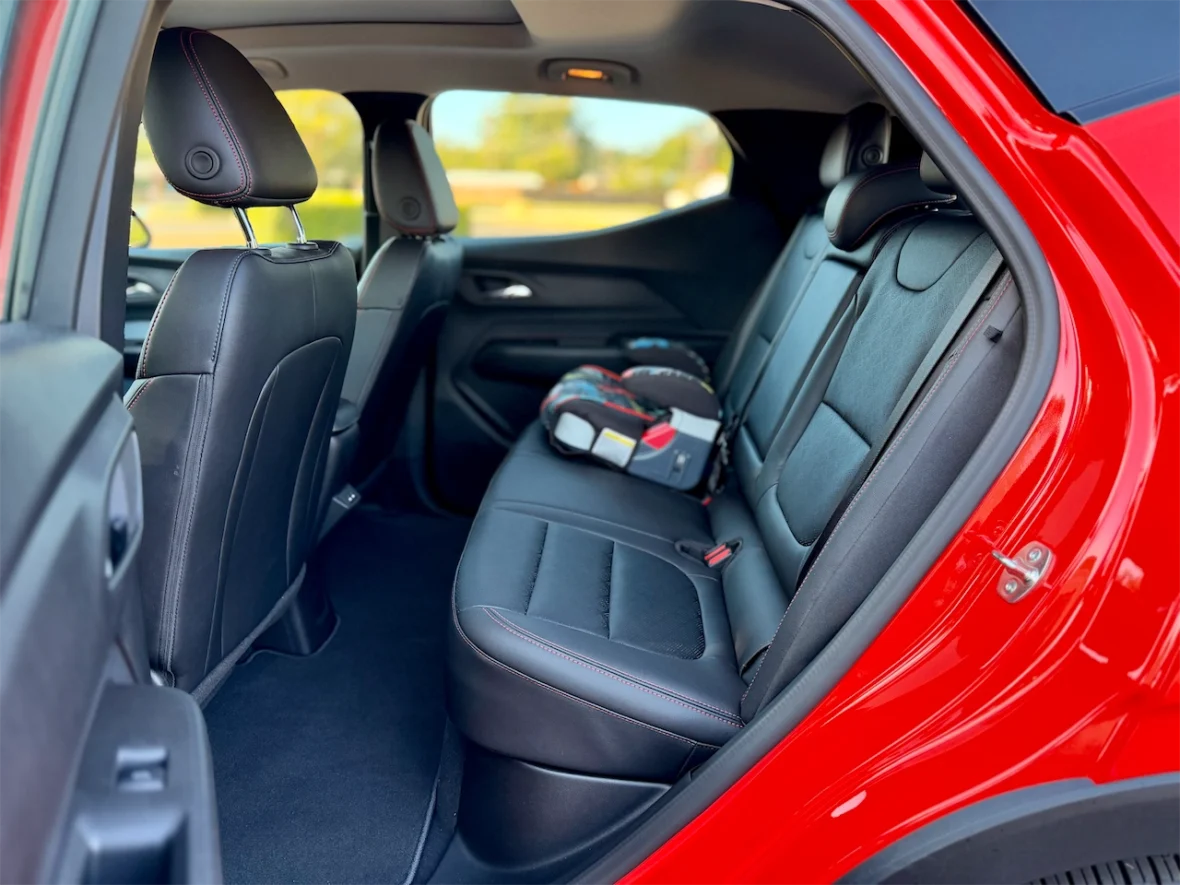
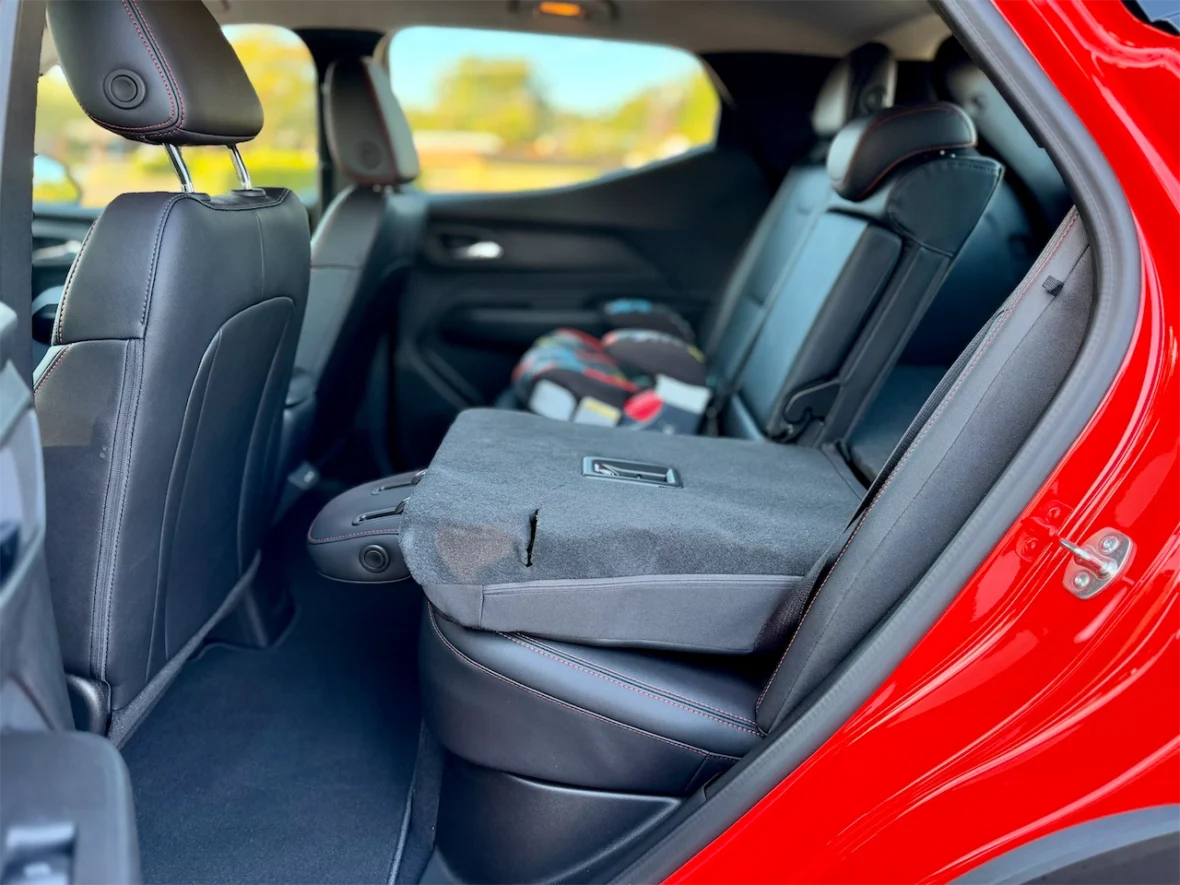
- Seating for Five
- Black Evotex Seating with Red Stitching (RS)
- Heated and Ventilated Front Seats
- Multi-Color Ambient Lighting
- Cabin Pre-Conditioning
- Power Driver Seat with Two-Way Lumbar (No Memory)
Technology & Infotainment
- 11.3-inch Diagonal Center Touchscreen with Google Built-In
- 11-inch Diagonal Driver Information Display
- No Apple CarPlay or Android Auto
- Wireless Phone Charging (Technology Package)
- Rear Camera Mirror (Technology Package)
- HD Surround Vision (Technology Package)
Driver Assistance & Safety
- More Than 20 Standard Safety and Driver-Assistance Features, Including:
- Adaptive Cruise Control
- Front Pedestrian Braking
- Intersection Automatic Emergency Braking
- Lane Keep Assist with Lane Departure Warning
- Blind Zone Steering Assist
- Rear Cross Traffic Alert with Braking
- Rear Automatic Braking
- Side Bicyclist Alert
- Safety Alert Seat
- IntelliBeam Automatic High Beams
- Rear Park Assist
- Rear Seat Reminder
- Tire Pressure Monitoring System
- Traffic Sign Recognition (Technology Package)
- Available Super Cruise Hands-Free Driving
Range & Charging
- EPA Estimated Range: 262 Miles
- 120 MPGe Combined (134 City / 106 Highway)
- 3.6 Miles per kWh (EPA); About 3.0 Observed
- 28 kWh per 100 Miles
- 150 kW DC Fast-Charge Capable: 10-80% in About 25 Minutes
- 11.5 kW Level 2 (240V) Charging: About 40 Miles of Range per Hour
- Native NACS Charging Port
- Level 2 and Fast Charging Adapter Package (Optional)
- Vehicle-to-Home Capable (Bidirectional, with GM Energy Home System)
Warranty
- New Vehicle Limited (Bumper-to-Bumper): 3 Years/36,000 Miles
- Powertrain Limited: 5 Years/60,000 Miles
- Electric Propulsion Battery Limited: 8 Years/100,000 Miles
- Sheet Metal Corrosion: 3 Years/36,000 Miles
- Rust-Through Corrosion: 6 Years/100,000 Miles
- Complimentary First Scheduled Maintenance Visit
- 24/7 Roadside Assistance
Pricing & Colors
- Habanero Orange Exterior
- Black Evotex Interior with Red Stitching
- Base MSRP (Bolt RS): $31,600
- Technology Package: $1,195
- Level 2 and Fast Charging Adapter Package: $256
- Dual-Panel Power Sunroof: $1,495
- Destination Charge: $1,395
- Total Vehicle Price as Tested: $35,941