Genesis GV90 Hides Its B-Pillar and a Roll Cage to Keep Coach Doors Safe

Coach doors look incredible on a concept car, but they rarely make it to the showroom. The reason is one stubborn part: the B-pillar. Now Genesis has shared how GV90 safety holds up without one, and the answer is a clever mix of hidden steel, a concealed roll cage, and what it calls the world’s first roof airbag.
When we looked at the GV90 cabin earlier this week, the spotlight was on swivel seats and a heated wood floor. This time, Genesis is talking about the engineering you never see. For families shopping a three-row luxury SUV, that part may matter even more.
How the Neolun Arch Gate Opens Without a B-Pillar
The GV90 Neolun’s coach doors are called the Neolun Arch Gate. The front and rear doors open and close independently, with no conventional B-pillar in between. According to Genesis, that makes it the world’s first coach-door SUV to pull off that trick. We first saw the design when the GV90 debuted in August.
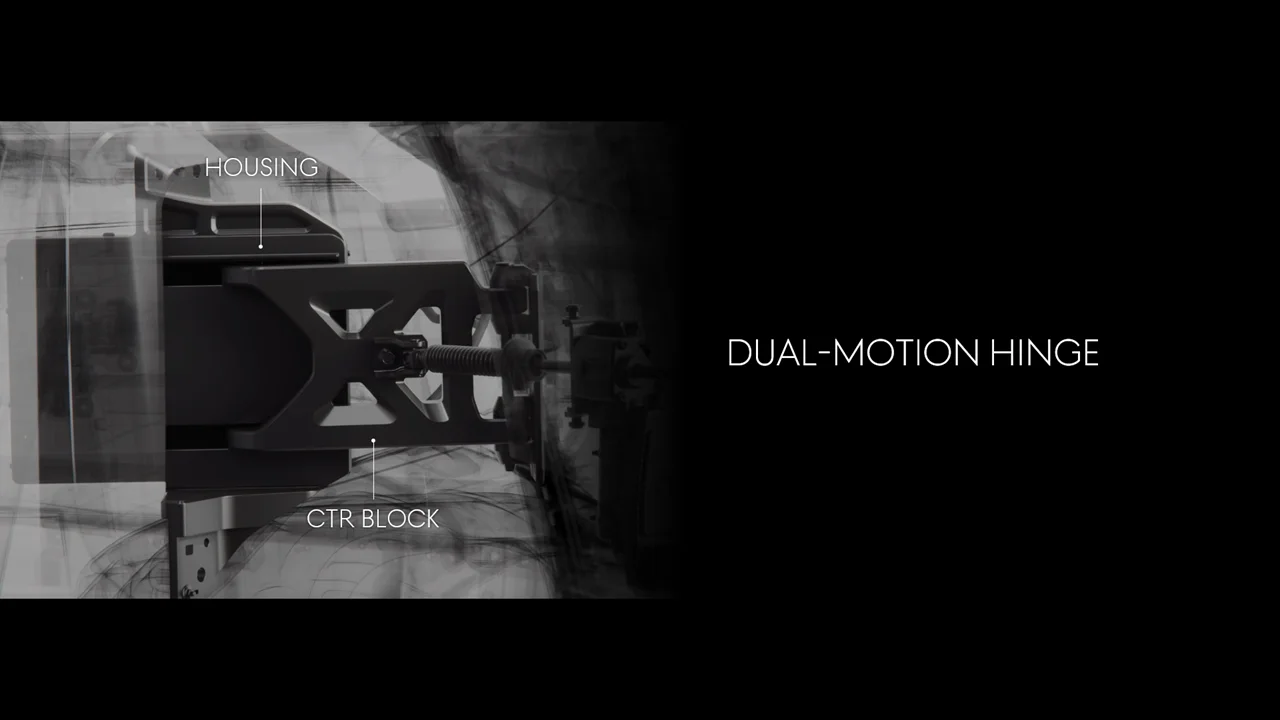
The secret is a dual-motion hinge on the rear doors. Each rear door first slides slightly outward and then rotates open, so it never interferes with the front door. That single hinge supports a rear door weighing nearly 70 kilograms, or roughly 154 pounds, without wobbling.
To make it work, Genesis used high-strength cast iron for the center block where the load concentrates. Meanwhile, an aluminum housing trims about 20% of the hinge’s weight. More than 500 ball bearings roll along the rail to keep the motion smooth.
A Hidden B-Pillar Lives Inside the Doors
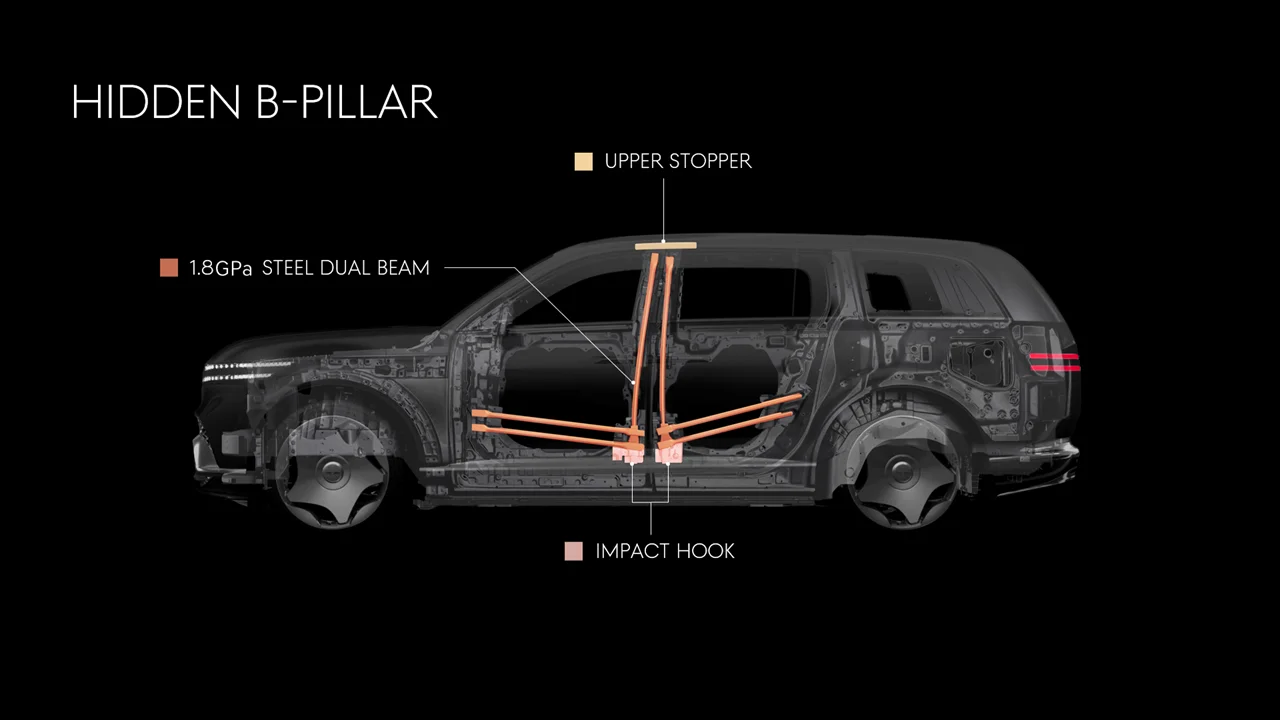
Rather than simply deleting the pillar, Genesis moved its job into the doors and body. Inside each door are dual beams of 1.8 GPa-rated ultra-high-strength steel. They cross in a vertical and horizontal pattern, and Genesis says it is the world’s first hidden B-pillar structure.
Once the doors close, four latches connect them to the body. An upper stopper and a lower impact hook back them up. Together, those parts spread and deflect the force of a side impact much like a traditional pillar would.
A Race Car Roll Cage You Will Never See
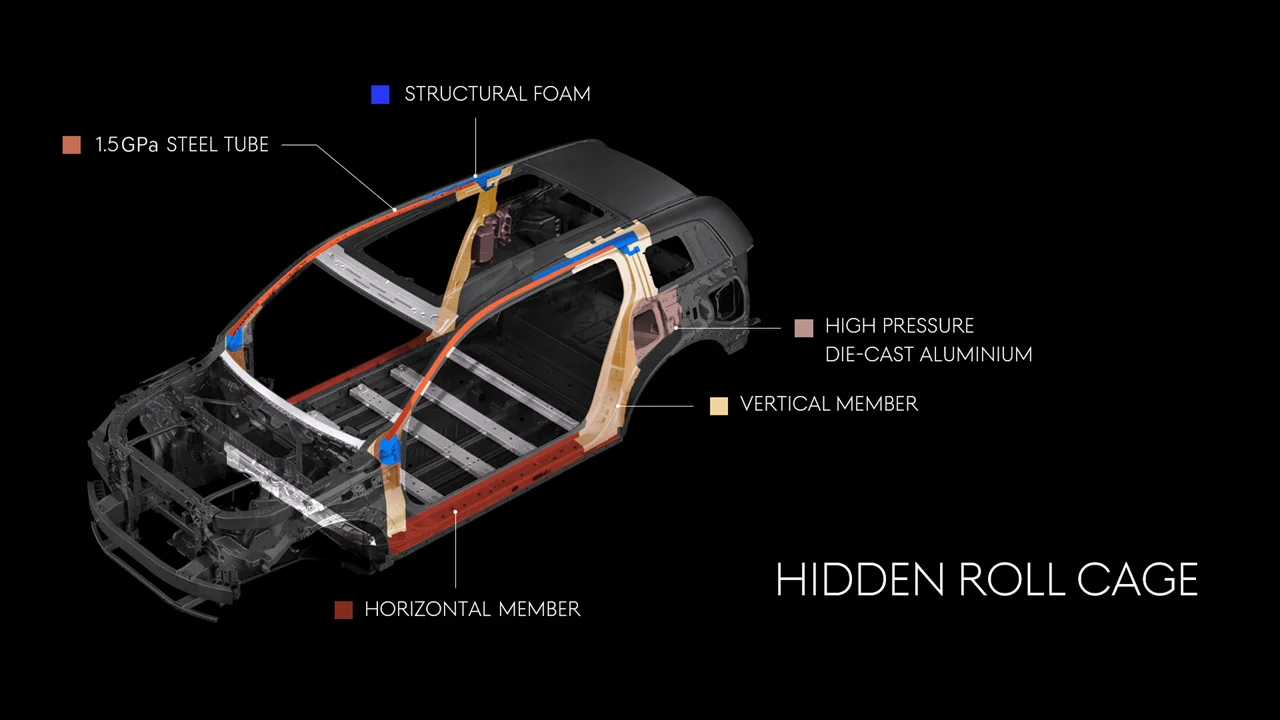
At the same time, Genesis raised the share of aluminum in the GV90’s body to 72%, up from 35% in previous models. Lighter metal usually means less rigidity, so the engineers borrowed an idea from motorsport.
Hidden within the body is a ring-shaped framework that wraps around the passenger space. It uses 1.5 GPa-rated ultra-high-strength steel tubes, high-rigidity structural foam, and horizontal and vertical members. In addition, large die-cast aluminum pieces reinforce key mounting points, including the joints for those heavy rear door hinges.
The payoff is real, according to in-house testing. Genesis says the Neolun has 12% more body rigidity than the standard GV90 with swing doors, while matching its crash performance.
The World’s First Roof Airbag
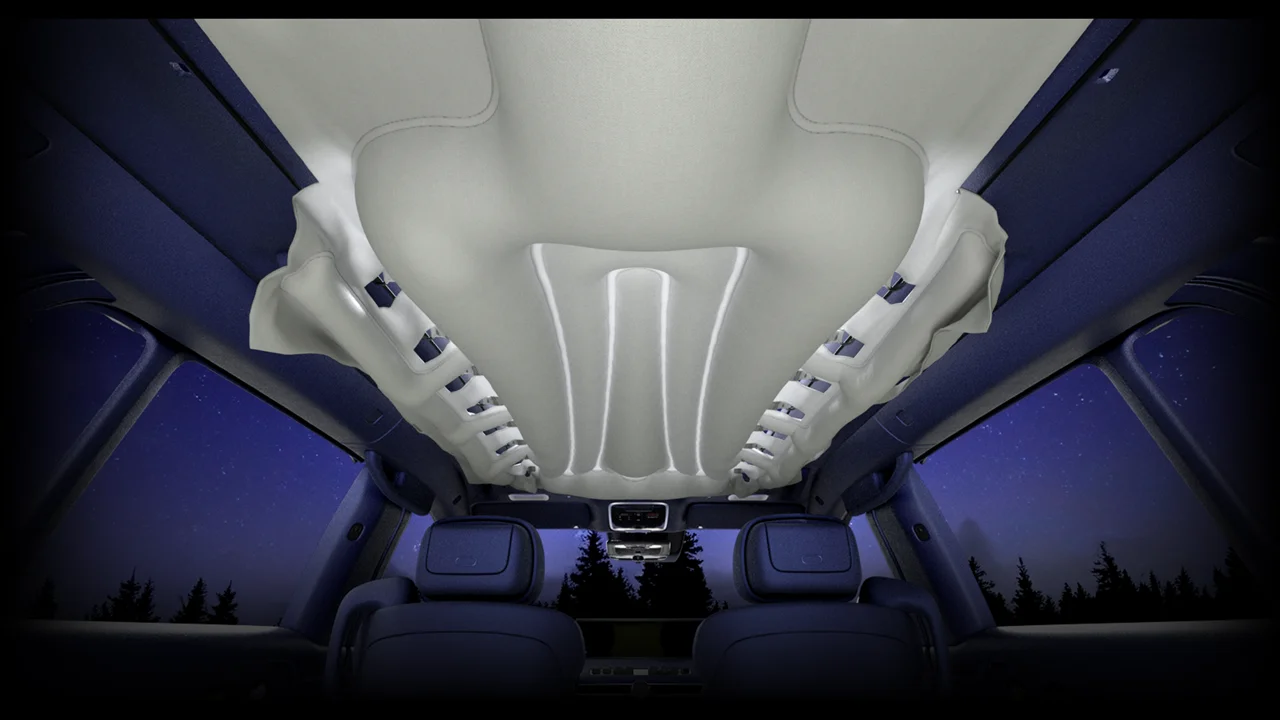
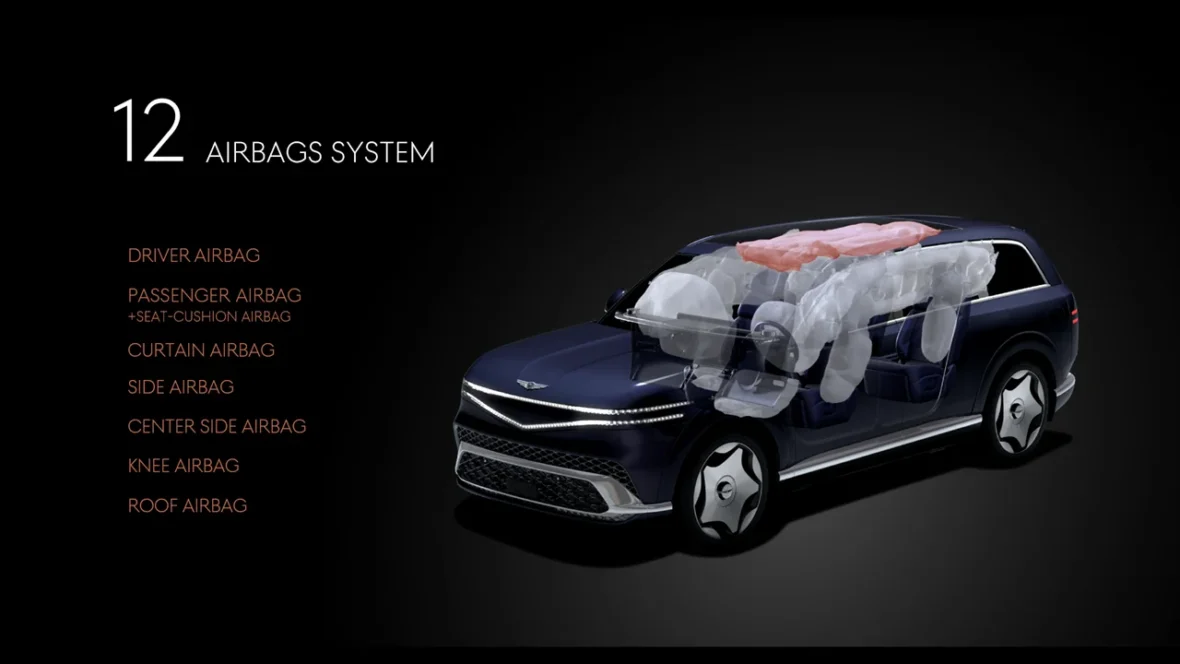
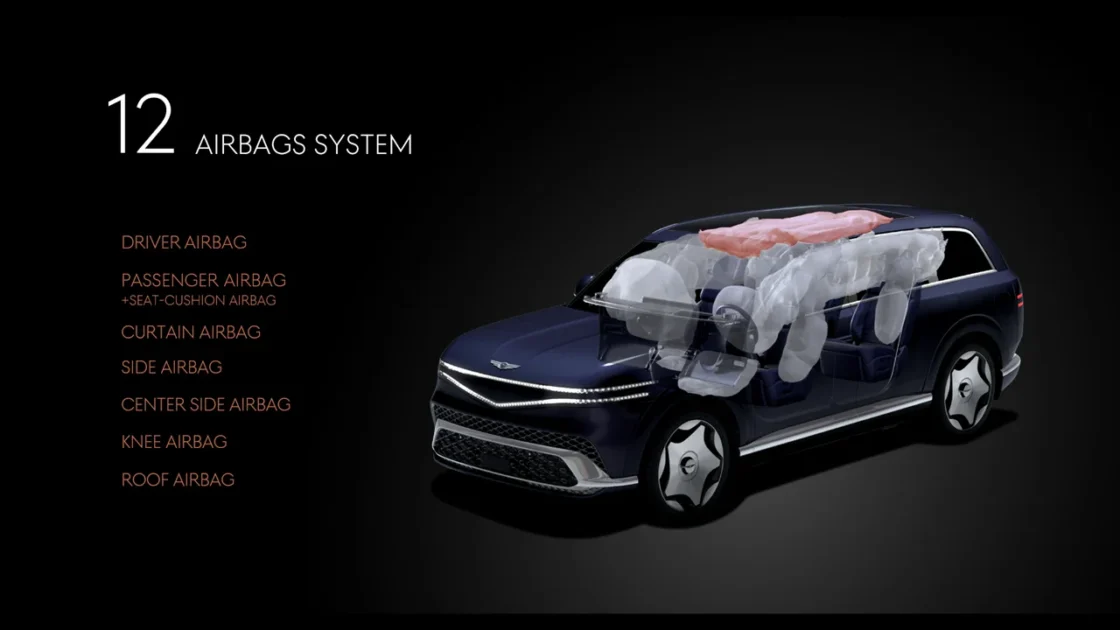
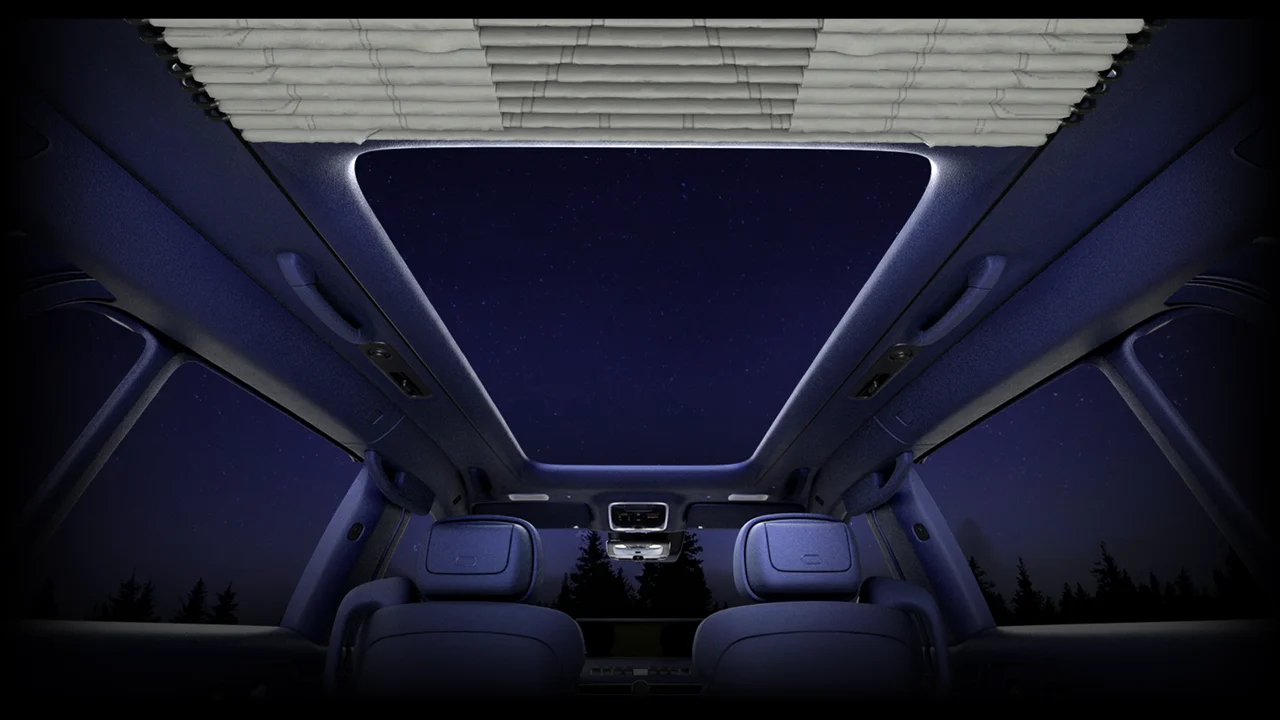
A strong body only helps if everyone stays inside it. That is why Genesis developed a roof airbag designed to cover the entire glass roof. When the GV90 detects a rollover, the airbag deploys forward from the rear of the cabin along wires mounted at the sides.
Genesis tested the system in lateral tilt rollovers and in ramp tests at 110 kilometers per hour, or about 68 mph. The goal is to help prevent occupant ejection and shield passengers from broken glass. It also cushions impacts against the roof.
Twelve Airbags, Including Some for Reclined Seats
Since 2021, Genesis says every new model it has launched has earned the top safety rating from the Insurance Institute for Highway Safety (IIHS). For the GV90, the team wanted to go beyond standardized testing. As a result, the roof airbag is part of a 12-airbag system.
That system includes a dual-depth front passenger airbag. It deploys in two stages based on how the passenger is sitting, so it still protects someone who is reclined. Seat cushion airbags keep occupants from sliding under the seatbelt.
Additionally, the first- and second-row side airbags offer expanded head coverage for reclined seatbacks. The curtain airbags reach all the way to the third row, which matters if your kids ride in the way back.
Roof Strength and Side Impact Numbers
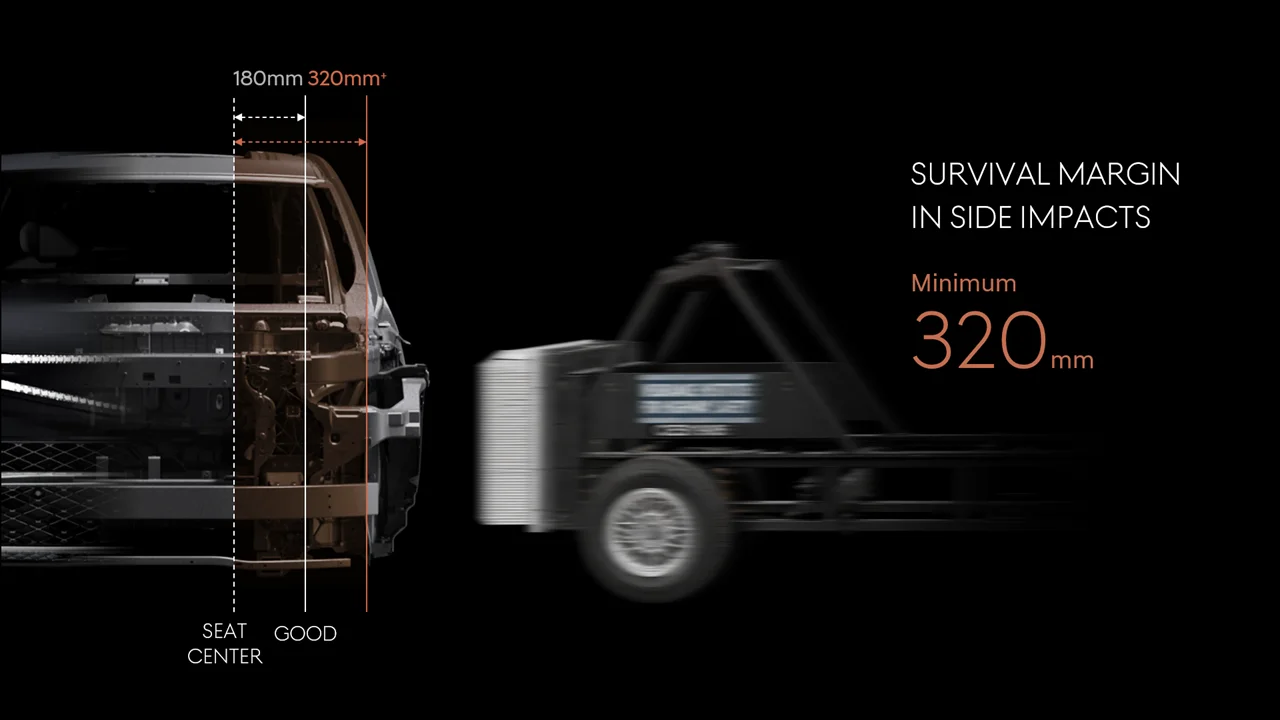
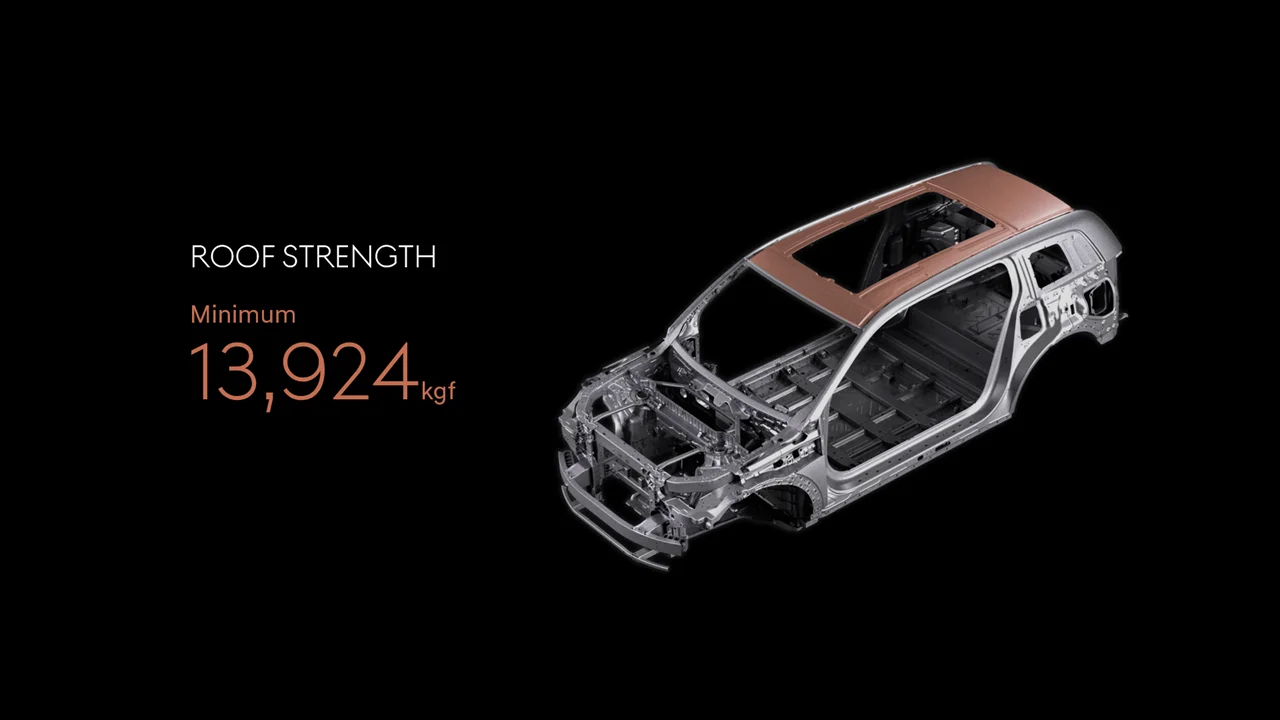
The structural numbers behind Genesis GV90 safety are stout, too. Genesis says the roof strength is 13,924 kilogram-force, or roughly 30,700 pounds of force. That helps maintain cabin space during a rollover.
In side-impact evaluations, the GV90 kept at least 320 millimeters (about 12.6 inches) of occupant survival space. For comparison, an “Excellent” rating requires 180 millimeters (about 7.1 inches).
Protecting the Battery in a Frontal Crash
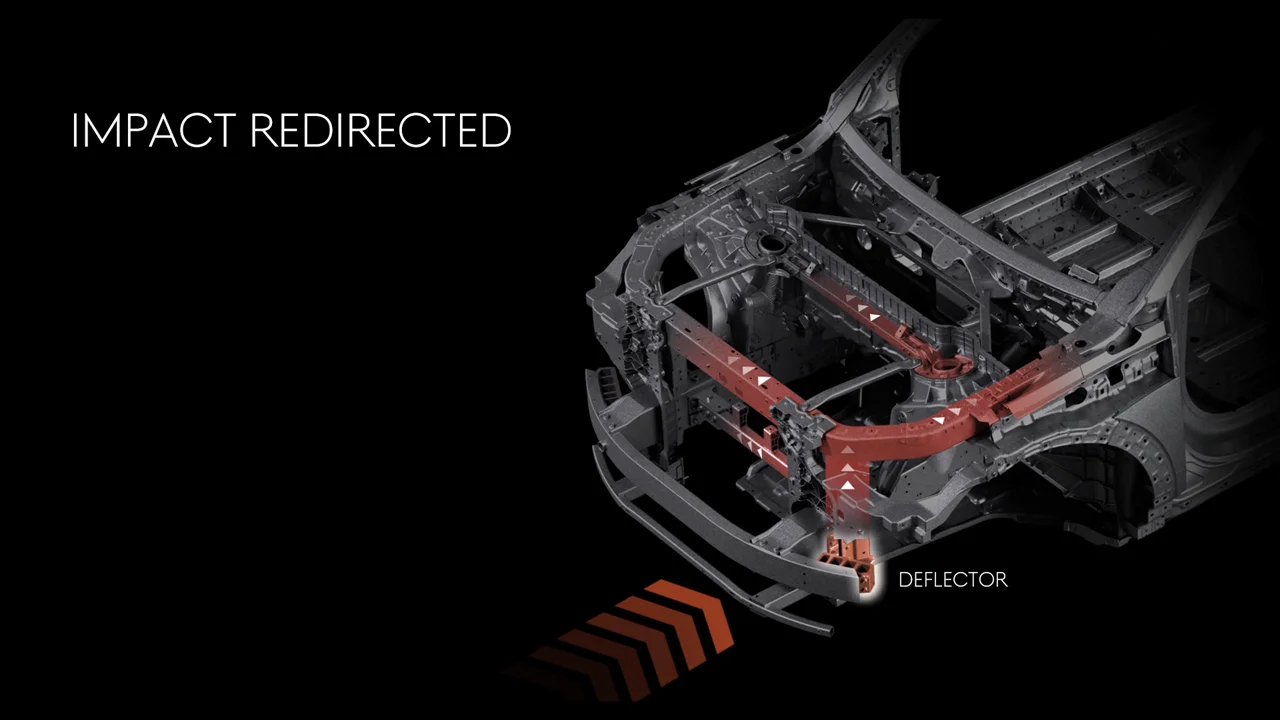
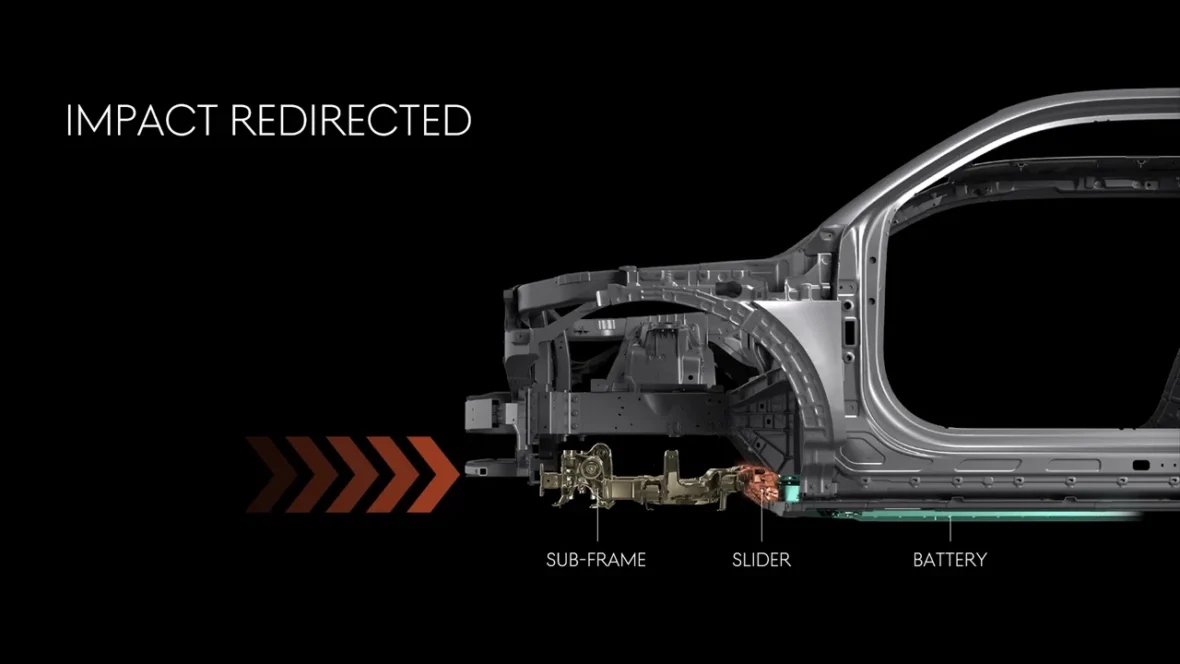
The GV90 rides on the Genesis-dedicated eMP platform and carries a 123.5-kWh battery pack. Because of that, engineers also focused on frontal crashes. In small-overlap collisions, front-mounted deflectors push impact forces sideways and help guide the SUV away from the obstacle.
In a high-speed frontal crash, a lower slider structure guides the heavy subframe and motor underneath the battery pack. A structural crossmember in front of the battery also protects it from curbs and road obstacles. Inside the pack, cell-to-cell thermal barriers help stop heat from spreading. Plus, a cloud-based Battery Management System (BMS) can warn drivers about potential issues in advance.
Genesis still has not shared U.S. pricing or trim details for the GV90. In the meantime, you can explore the current lineup on the Genesis USA website.
Our Take on the Genesis GV90
Coach doors make my inner gearhead grin, but my first question as a dad was simple: what happens in a side impact? Genesis clearly treated GV90 safety as part of the design, not an afterthought. Hiding the B-pillar inside the doors and tucking a roll cage into the body is the kind of clever engineering I love.
For me, the roof airbag is the headline. A huge glass roof is a big selling point in a family SUV, and Genesis is working hard to keep it from becoming a weak spot. We saw how seriously the brand takes luxury when we tested the Genesis GV80 Coupe, and the GV90 shows it takes safety just as seriously.
Still, these numbers come from Genesis’ own testing. I want to see how the GV90 performs once the IIHS gets its hands on one. As soon as pricing is out, we will share it, and I am still hoping to get a GV90 into the GT: Garage Talk® garage for a full test here in East Texas.
Want more automotive news like this? Sign up for our weekly newsletter using the form at the bottom of this page, and you’ll get the latest stories delivered to your inbox every Thursday morning.