Mercedes-Benz Is Selling a C 111 for the First Time, and It Packs a 345-Horsepower Wankel

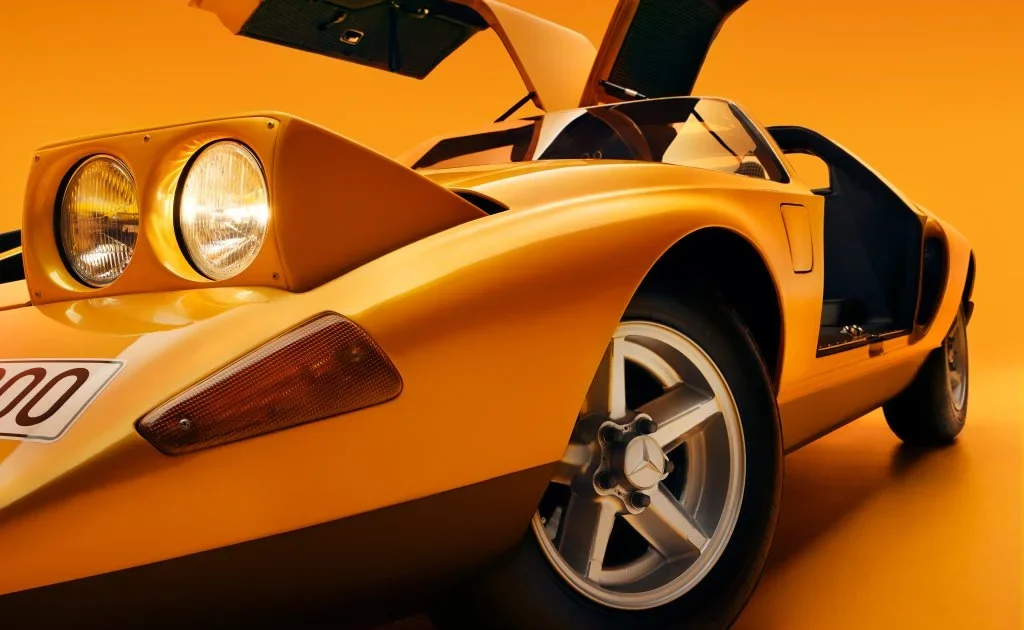
For more than 50 years, the Mercedes-Benz C 111 has been the supercar nobody could buy. That changes Feb. 3, 2027, when Mercedes-Benz will auction a C 111-II known internally as “Car 33” through RM Sotheby’s at the Palais du Louvre in Paris. It’s the first time the automaker has ever let one of these wedge-shaped, gullwing-door prototypes leave its collection.
If you’re hoping for a second chance, don’t hold your breath. Mercedes-Benz says it has contractually committed not to sell another C 111 for at least 25 years. Meanwhile, the proceeds from this sale will fund the “Mercedes-Benz Museum 2.0” project in Stuttgart, Germany.
Why the Mercedes-Benz C 111 Never Reached Showrooms
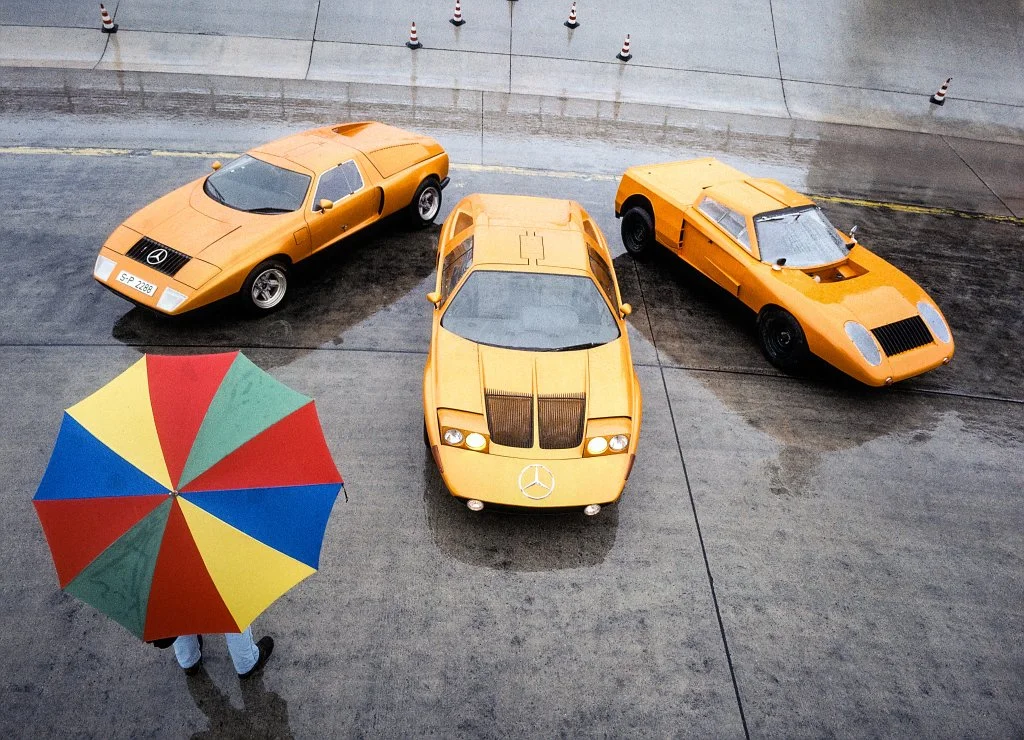
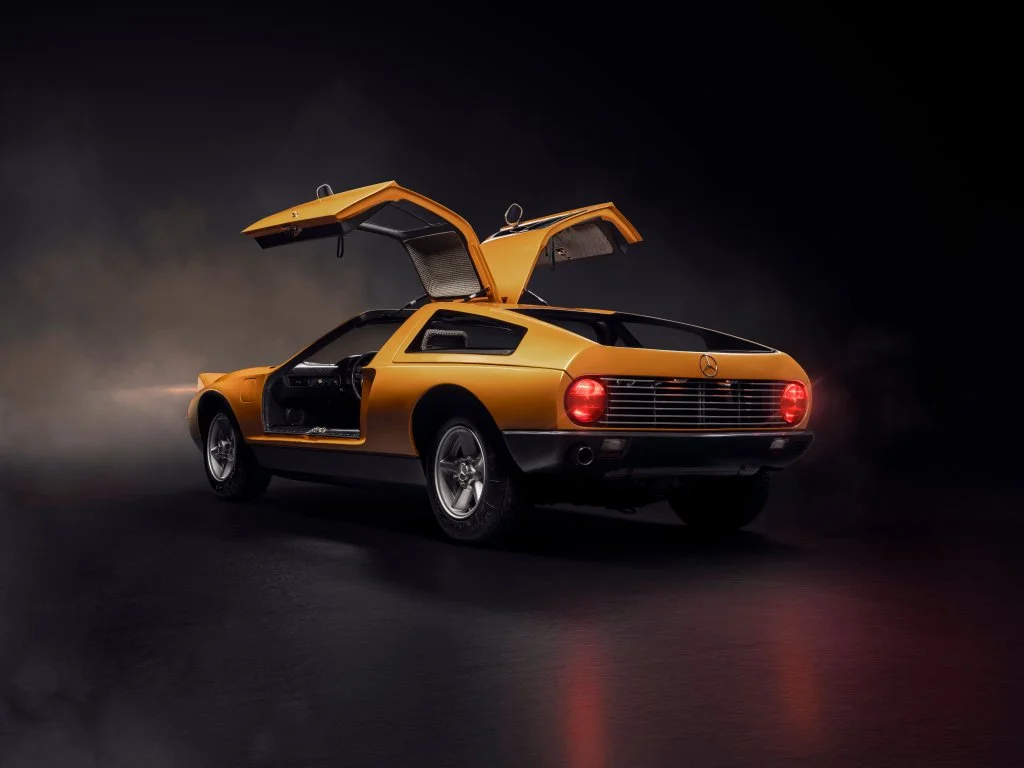
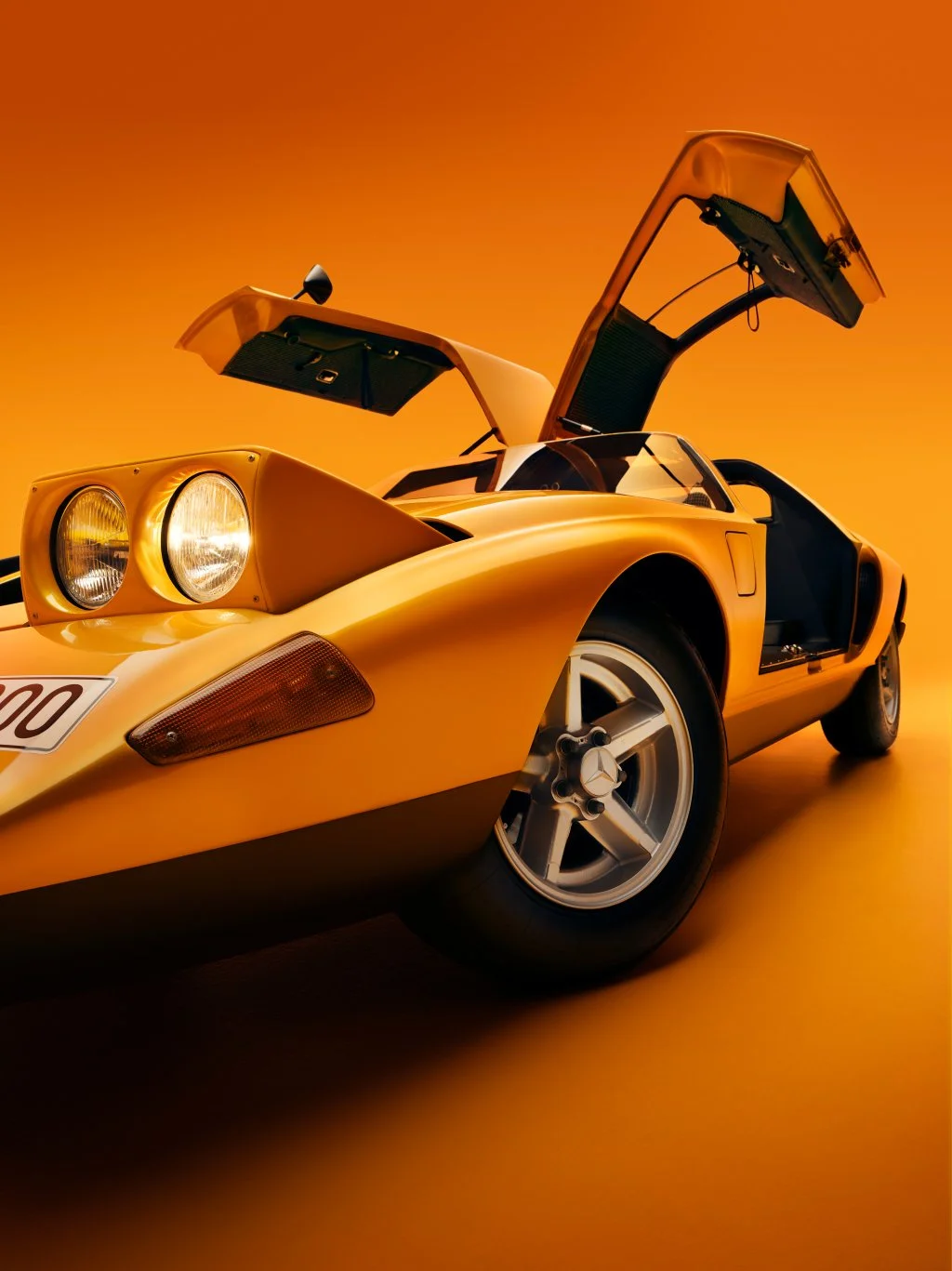
Mercedes-Benz unveiled the original C 111 at the 1969 Frankfurt Motor Show (IAA) as a rolling test bed. It had a mid-mounted engine, a glass-fiber-reinforced plastic body, and gullwing doors that tipped a hat to the legendary 300 SL Coupe from 1954. In short, it looked like the future.
The public agreed. According to Mercedes-Benz, some prospective buyers reportedly mailed blank checks to Stuttgart. Still, the C 111 never went into series production because new emissions standards, high production costs, and the 1973 oil crisis all worked against it. Even so, the project kept making history:
- The redesigned C 111-II debuted at the 1970 Geneva Motor Show with a more powerful four-rotor Wankel engine.
- In 1976, the diesel-powered C 111-II D set 16 records, including three world records, averaging 156.46 mph over 10,000 miles.
- The turbodiesel C 111-III followed in 1978 with more record runs.
- In 1979, the twin-turbo V8 C 111-IV set a circuit world record of 251.02 mph at Nardò, Italy.
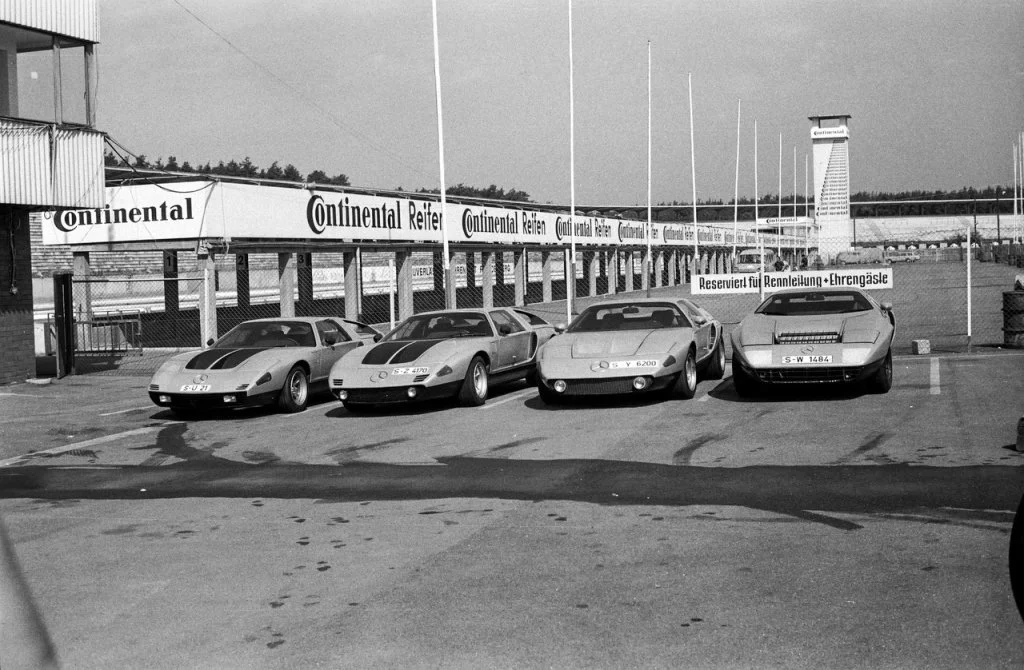
Only 17 C 111 vehicles were ever built. One was used for crash tests, three were dismantled in the 1970s, and Mercedes-Benz still owns the remaining 13. Until now, not a single one has left the company’s hands.
Meet Car 33, the C 111-II Headed to Auction
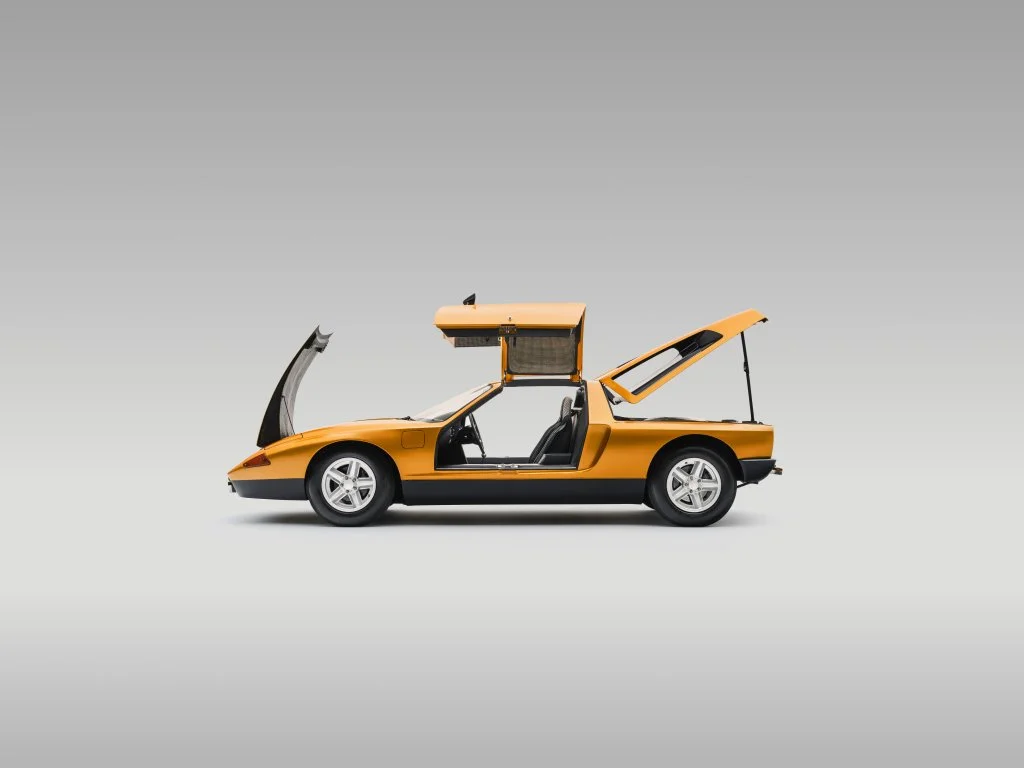
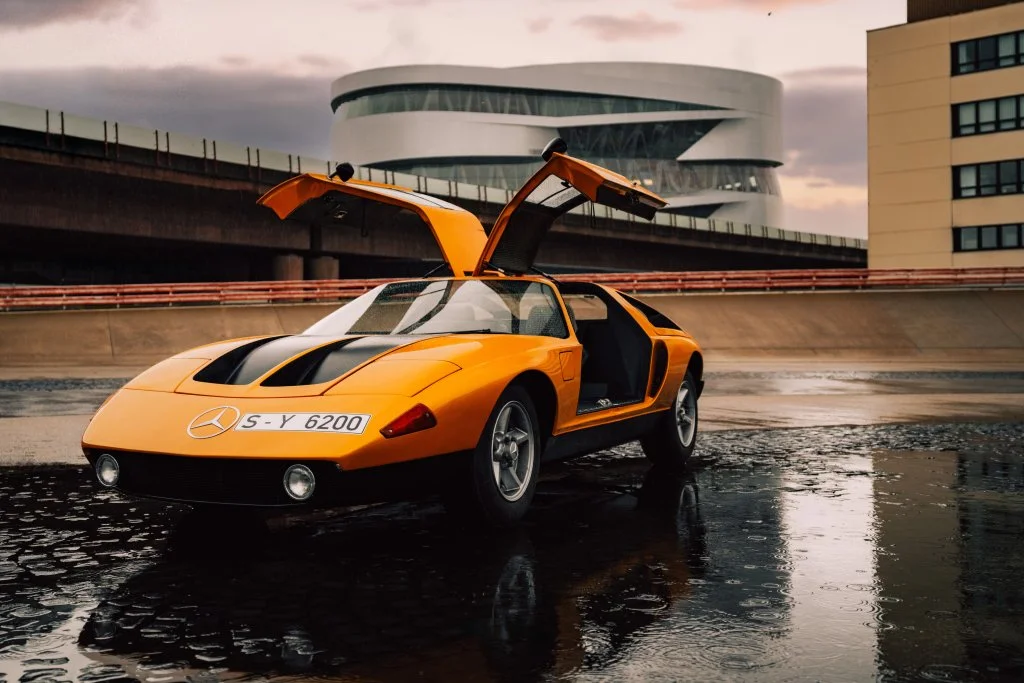
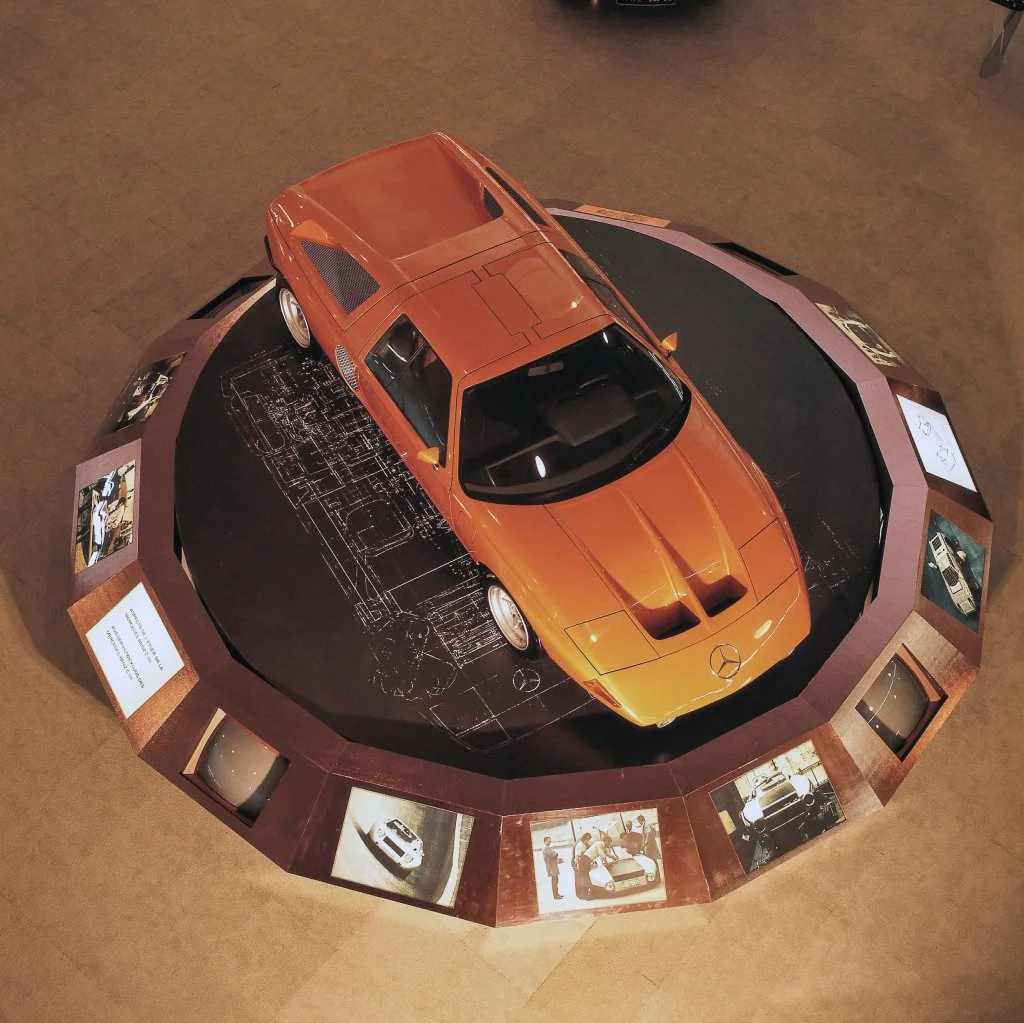
The car up for grabs is the third C 111-II ever produced, listed in the Mercedes-Benz Collection as Car 33. Construction started in March 1970, and it wears the signature “Weissherbst” paint that defines the C 111. Inside, it’s pure early 1970s cool:
- Sports seats with a gray-and-white houndstooth pattern
- A four-spoke safety steering wheel
- A vertically mounted Becker Europa radio
- Period-correct 8×15-inch light-alloy wheels
Car 33 also became an ambassador for the whole program. In 1971, famed conductor Herbert von Karajan got his look at the C 111 project through this very car on the Stuttgart test track. It joined the company’s vehicle collection in 1975 and has been on display in the Mercedes-Benz Museum since the museum opened in 2006.
Inside the Mercedes-Benz C 111’s 345-Horsepower Wankel
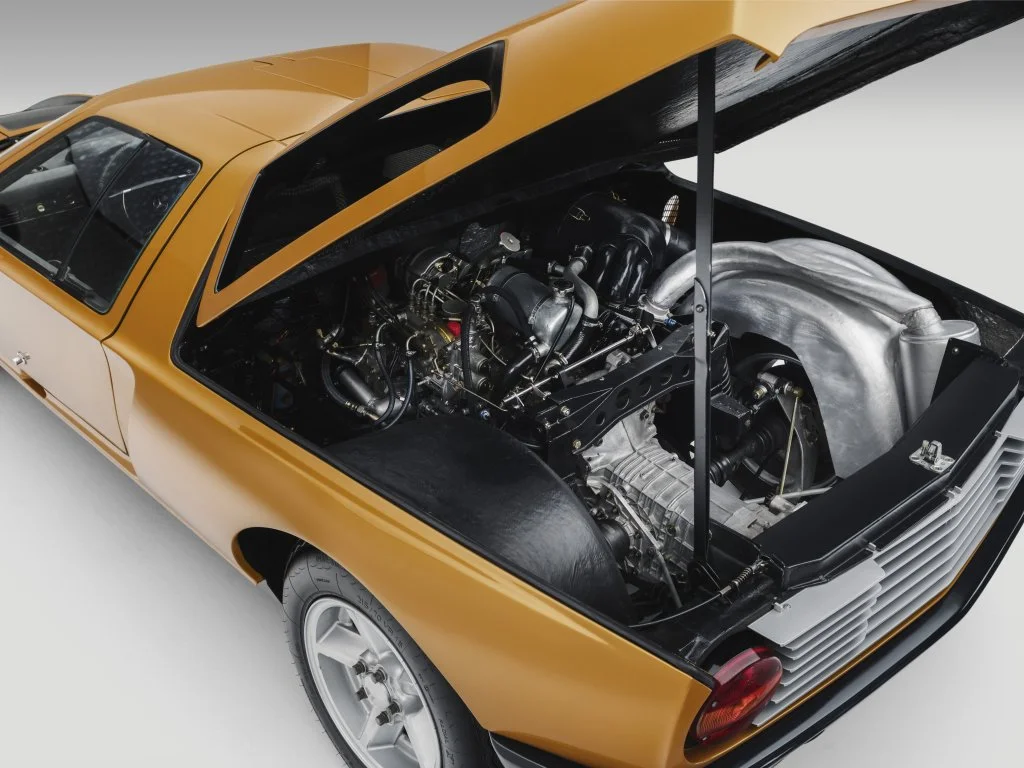
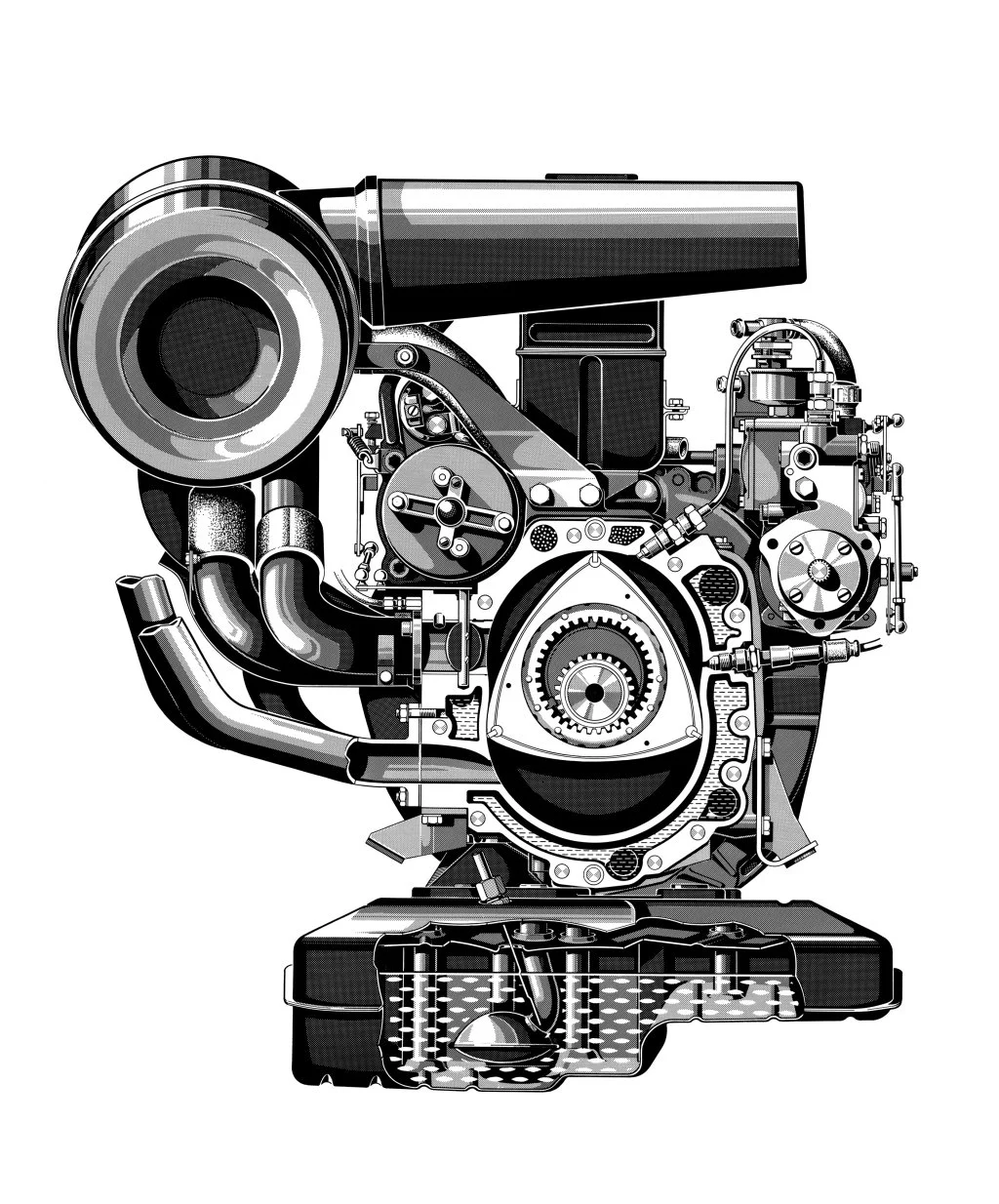
Car 33 received its engine in August 1970: a 2.4-liter four-rotor Wankel, type M 950 W 48, mounted in the middle of the car. At the time, rotary engines were cutting-edge technology, promising big power from a compact, lightweight, and smooth-running package. Mercedes-Benz says the 2,400 cc rotary is equivalent to a 4,800 cc piston engine.
Here’s what Car 33 brings to the table, based on its 1970 specifications:
- 345 horsepower at 7,700 RPM
- 289 lb-ft of torque from 4,000 to 5,500 RPM
- ZF five-speed manual transmission with a dual-disc clutch
- 0 to 62 mph in 4.8 seconds
- Top speed of 186 mph
- Curb weight of 2,734 pounds
That’s a remarkably light car, even by today’s standards. As a result, those performance numbers ranked among the most spectacular of the era.
From the Test Fleet to Pebble Beach
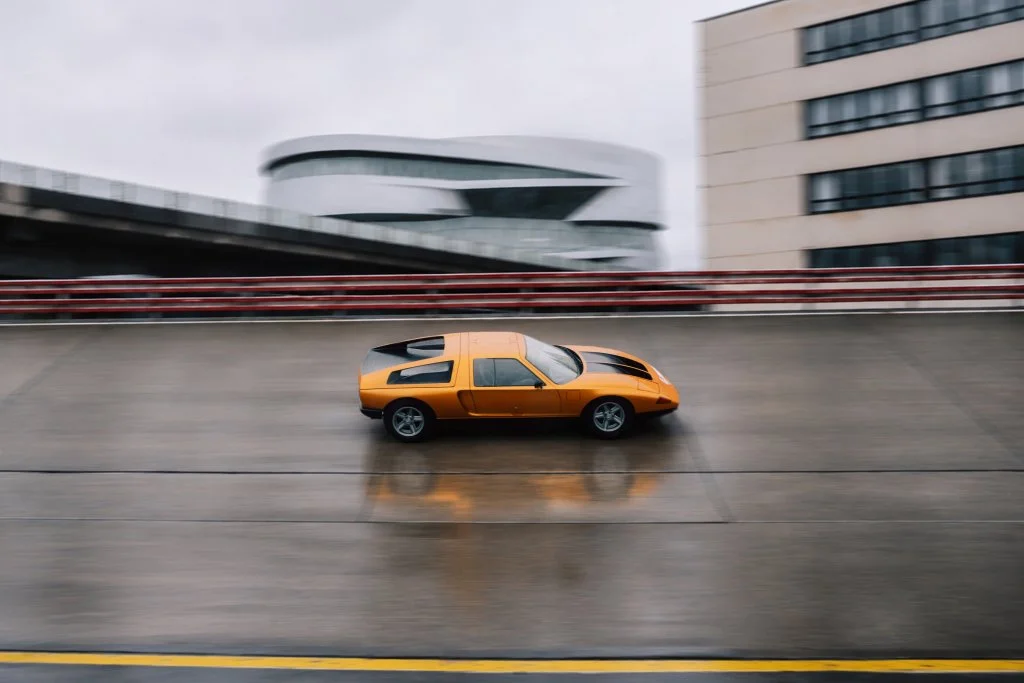
Wearing the license plate S-Y 6200, Car 33 joined the C 111 test fleet. Engineers used it to test a fluidic component that evenly drained its two side fuel tanks (30.6 gallons combined), take temperature readings in the rear trunk, and run test drives at the Hockenheimring. It even helped test an anti-lock braking system (ABS), although that function no longer works today.
In 2024, the Mercedes-Benz Classic Center in Fellbach, Germany, restored the car to running order. Technicians deliberately kept the original patina inside and out, overhauled the powertrain, and added a fire-extinguishing system in the engine compartment. Later that year, Car 33 sat on the famous lawn at the Pebble Beach Concours d’Elegance in California as part of a special exhibition of wedge-shaped concept cars and prototypes.
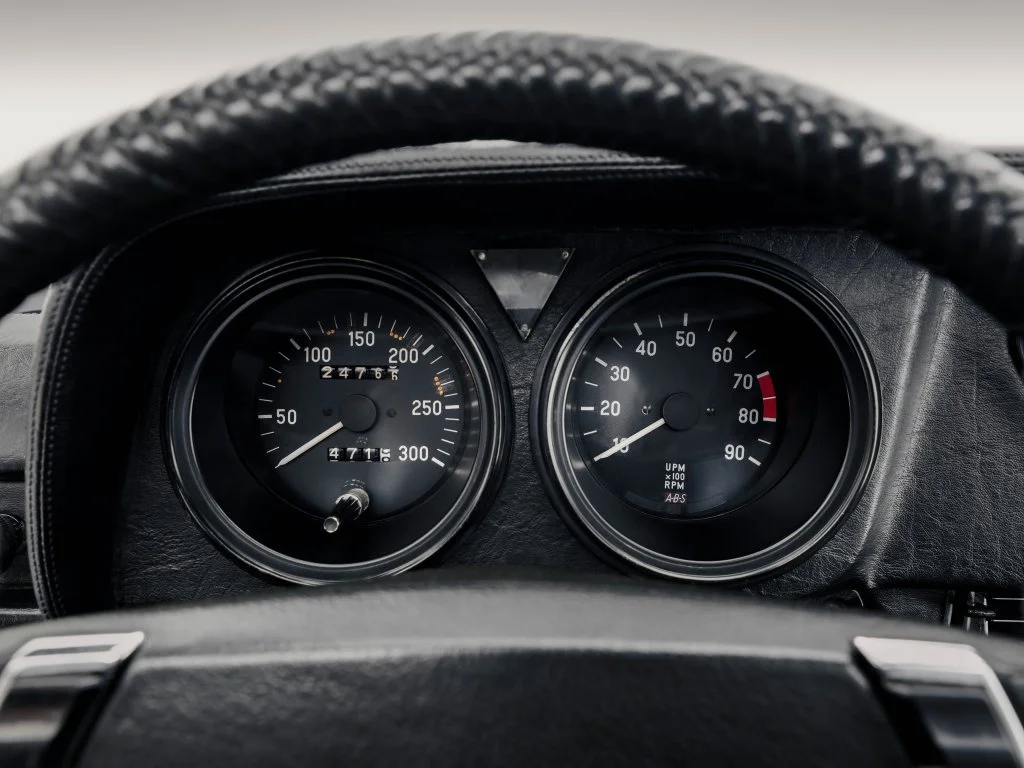
Better yet, it’s barely been driven. When Mercedes-Benz photographed it in October 2026, the odometer showed just 24,766 kilometers, or roughly 15,400 miles.
What Comes With the Car and How the Auction Works
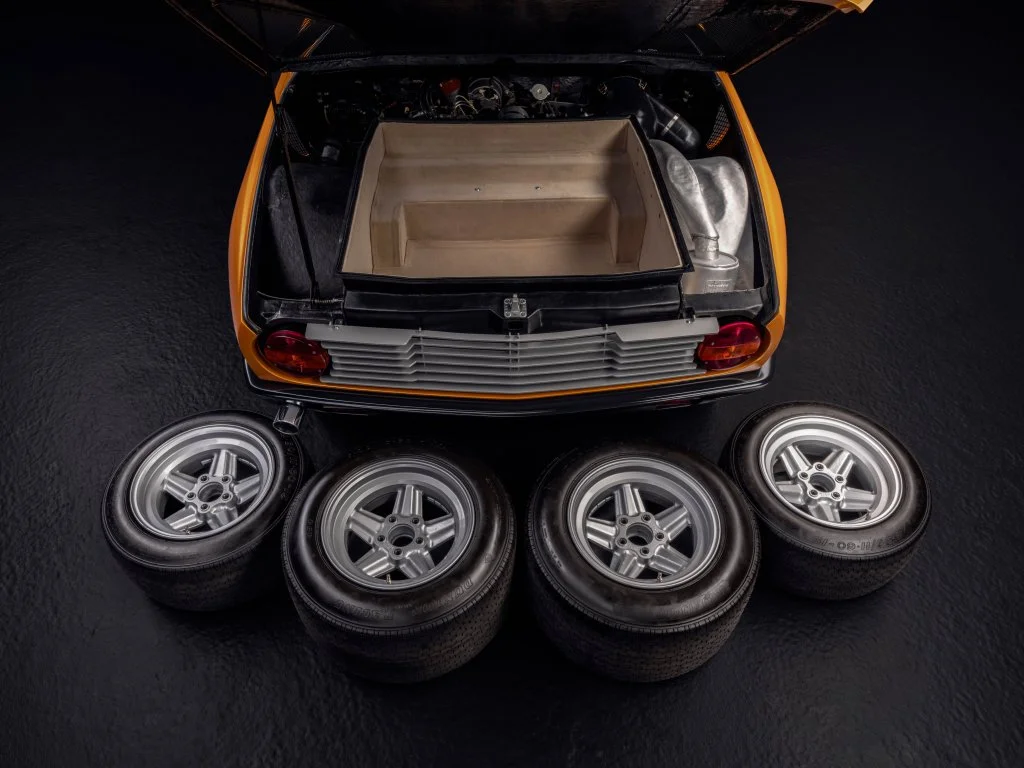
The winning bidder gets more than just the car. The lot includes:
- The removable rear trunk tub
- The road-going 8×15-inch light-alloy wheels
- The wide 10×15-inch and 13×15-inch magnesium wheels used on the racetrack in the 1970s
However, Mercedes-Benz says the magnesium wheels are now only suitable for display because of their age and condition.
The auction takes place Feb. 3, 2027, in the Salles du Carrousel at the Palais du Louvre, in parallel with the Retromobile Paris classic car show. Bidders must register in advance and can bid in person or by phone. You can follow the sale on the RM Sotheby’s website, and the Mercedes-Benz Classic Center lists bidder registration and pre-inspection details for serious buyers.
Mercedes-Benz did not announce an estimate. Still, the brand’s track record with RM Sotheby’s is eye-popping. The 1955 300 SLR Uhlenhaut Coupe sold for a record €135 million in 2022, and the W 196 R Streamliner brought €51,155,000 in 2025.
Where the Money Goes: Mercedes-Benz Museum 2.0
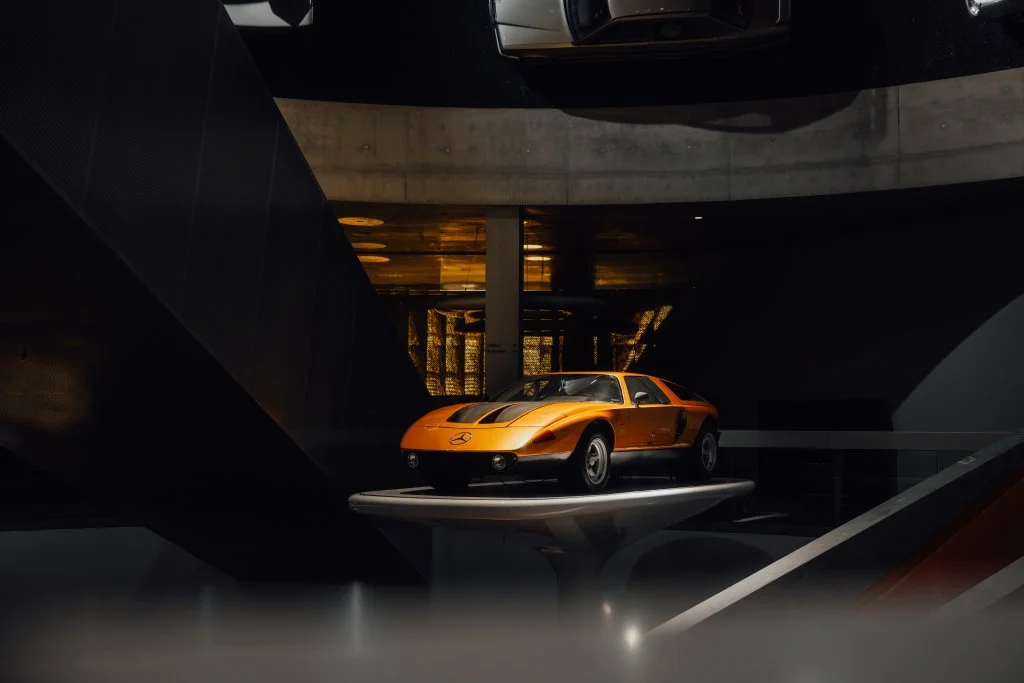
Proceeds from the sale go to “Mercedes-Benz Museum 2.0,” a plan to keep updating the Stuttgart museum and make it accessible worldwide. A key piece is a digital twin of the museum, developed with The Classic Car Trust and its Roarington platform, so fans can explore exhibits online from anywhere. Mercedes-Benz says the first results should be visible in 2027.
That’s good news for American fans who may never make it to Germany. In fact, a virtual museum tour sounds like a fun rainy-day field trip from our living room here in East Texas.
Our Take on the Mercedes-Benz C 111
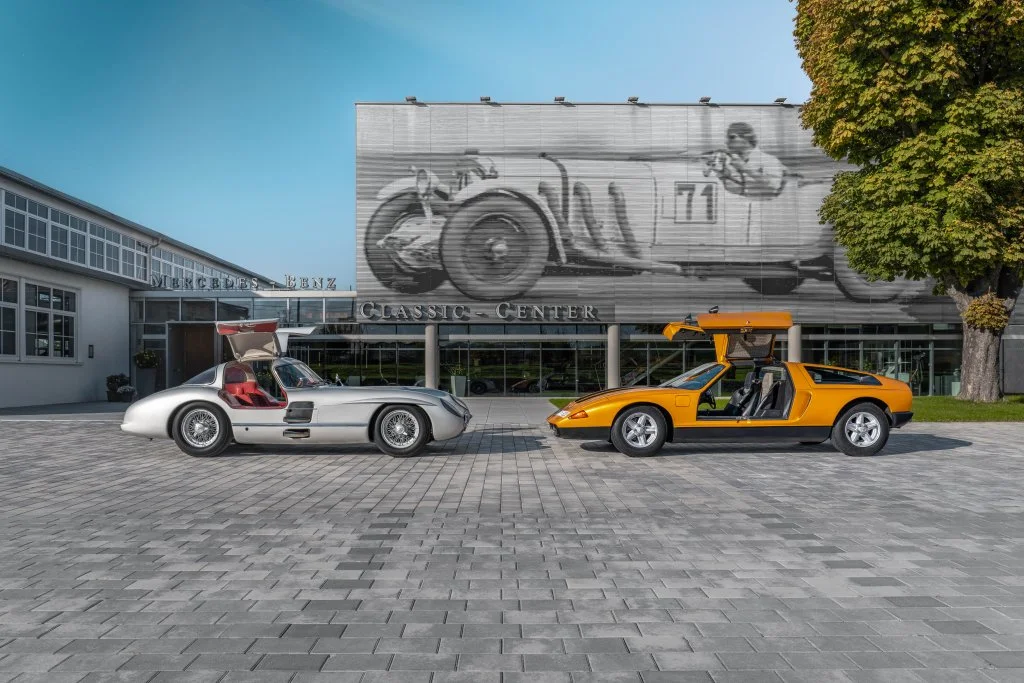
As a gearhead dad, I love this story. The C 111 is the ultimate “what if” car: a Wankel-powered, gullwing supercar that people were begging to buy in 1970, yet Mercedes-Benz never sold one. Now the company is finally letting one go, with a 25-year promise that it won’t happen again. That makes this one of the most significant classic car sales in years, and I am sure many will be watching the results closely.
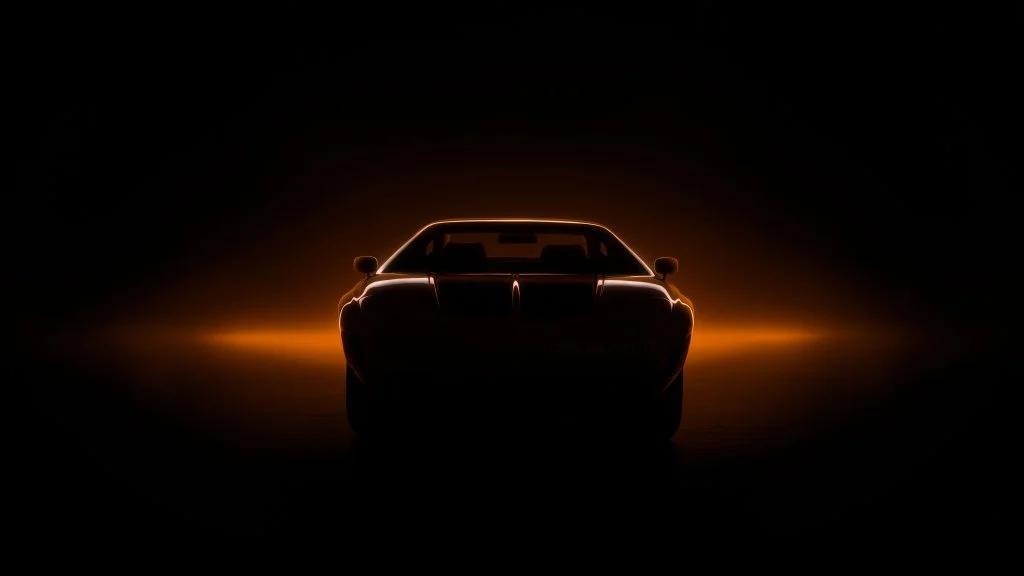
I also appreciate that the money goes back into preserving the brand’s history and opening it up to fans everywhere. Mercedes-Benz says the C 111 still inspires its designers, as the Vision One-Eleven concept shows. That performance DNA lives on in today’s lineup, too, from the 2024 Mercedes-AMG GLE 53 Coupe we tested to the 2023 Mercedes-AMG SL43, and the brand keeps pushing tech forward with features like its new hands-free highway assist.
None of us at GT: Garage Talk® will be raising a paddle in Paris. But if you want a modern piece of the three-pointed star, you can build your own on MBUSA.com.
Want more automotive news like this? Sign up for our weekly newsletter using the form at the bottom of this page to get the latest stories delivered to your inbox every Thursday morning.