Five Years In, Mustang Mach-E Batteries Still Average 92% Health

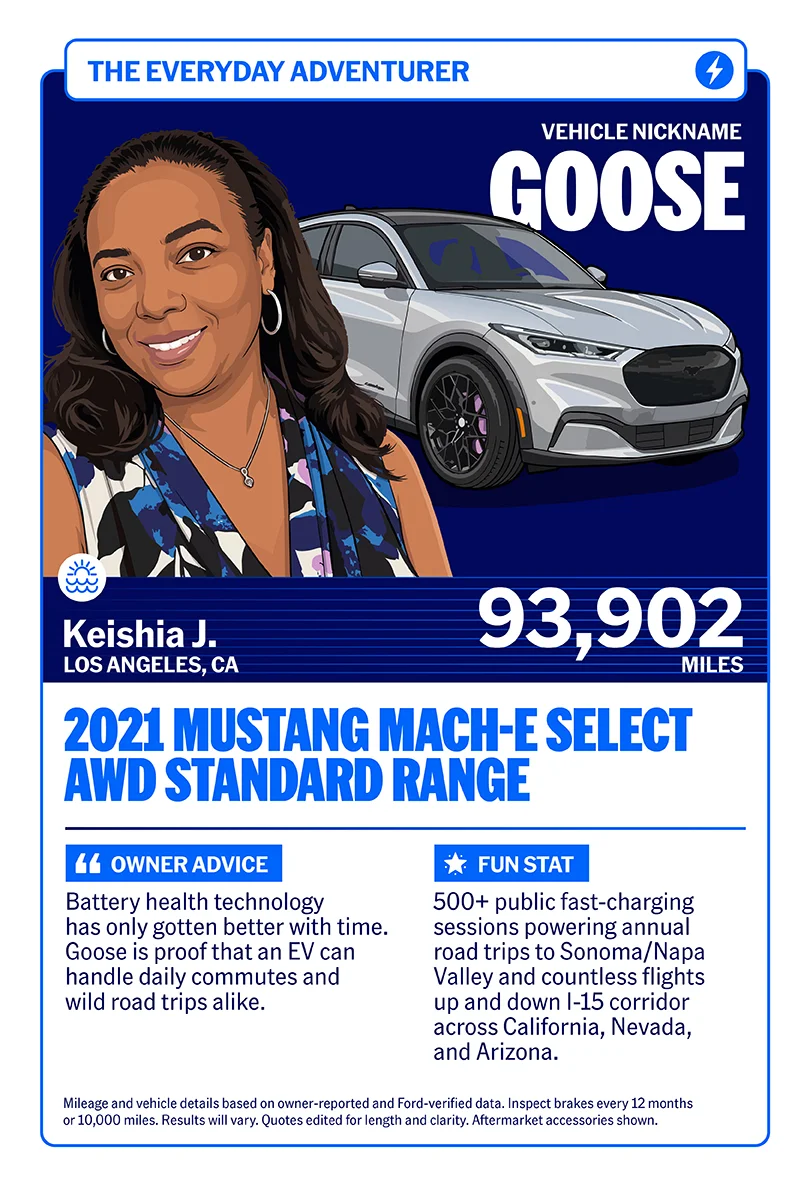
If battery life is the thing keeping you out of an electric SUV, Ford just brought receipts. After five years and more than two billion miles, the first wave of Mustang Mach-E owners is still averaging 92% battery health, according to new Ford data on the 2021 model year.
That is one of the biggest real-world looks yet at Mustang Mach-E battery health, and it gets at the question families ask us most about EVs. It is rarely about range anymore. Instead, it is whether the battery will still be worth something when the kids are a few grades older.
What Ford Found in the Class of 2021
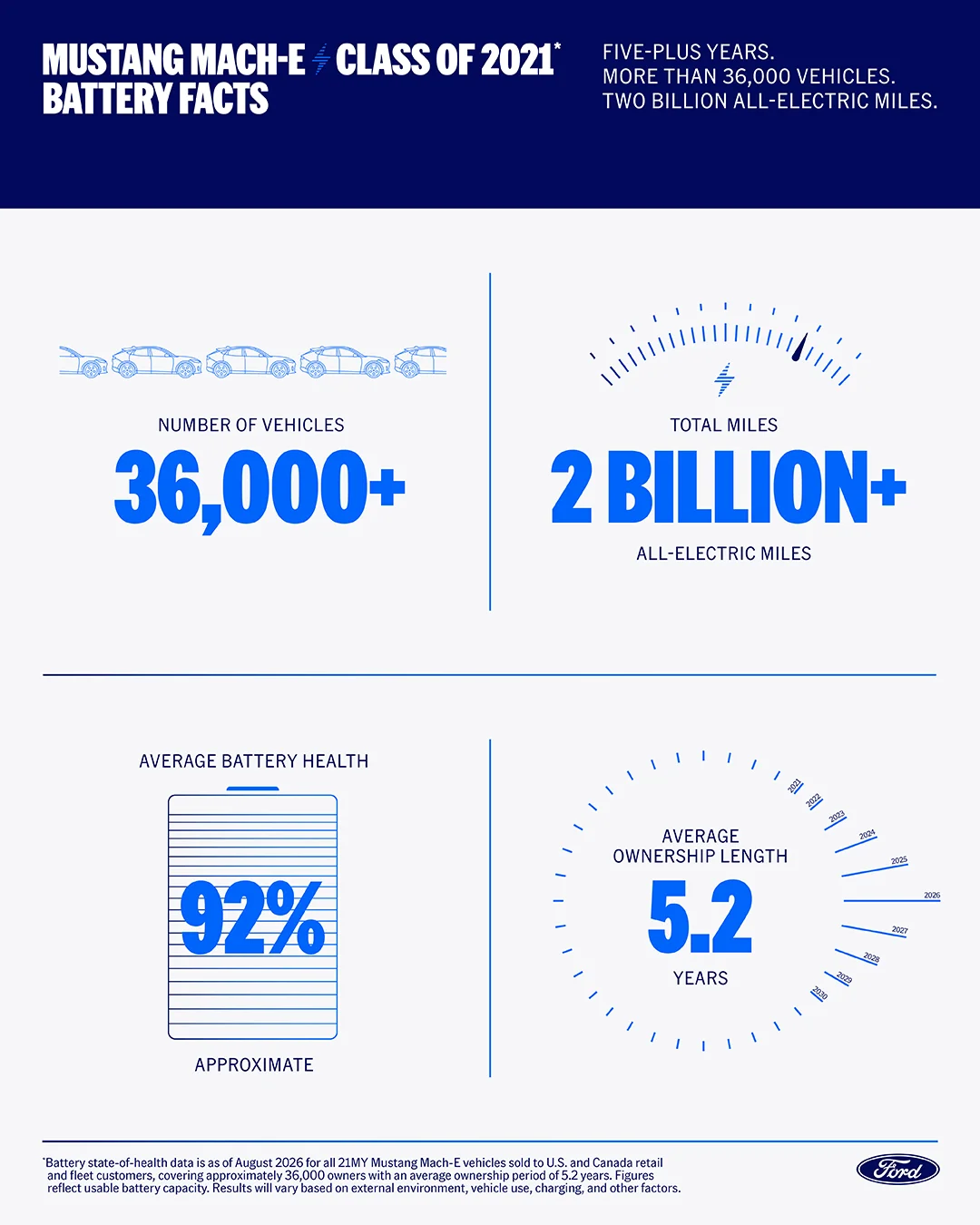
Ford pulled battery state-of-health data for the entire fleet of 2021 Mustang Mach-E SUVs, the first model year to reach customers. Kevin Vander Laan, Ford’s technical leader of high-voltage battery cells and systems, shared what the company found at the five-year mark:
- More than 36,000 vehicles
- Two billion all-electric miles across all 50 states and Canada
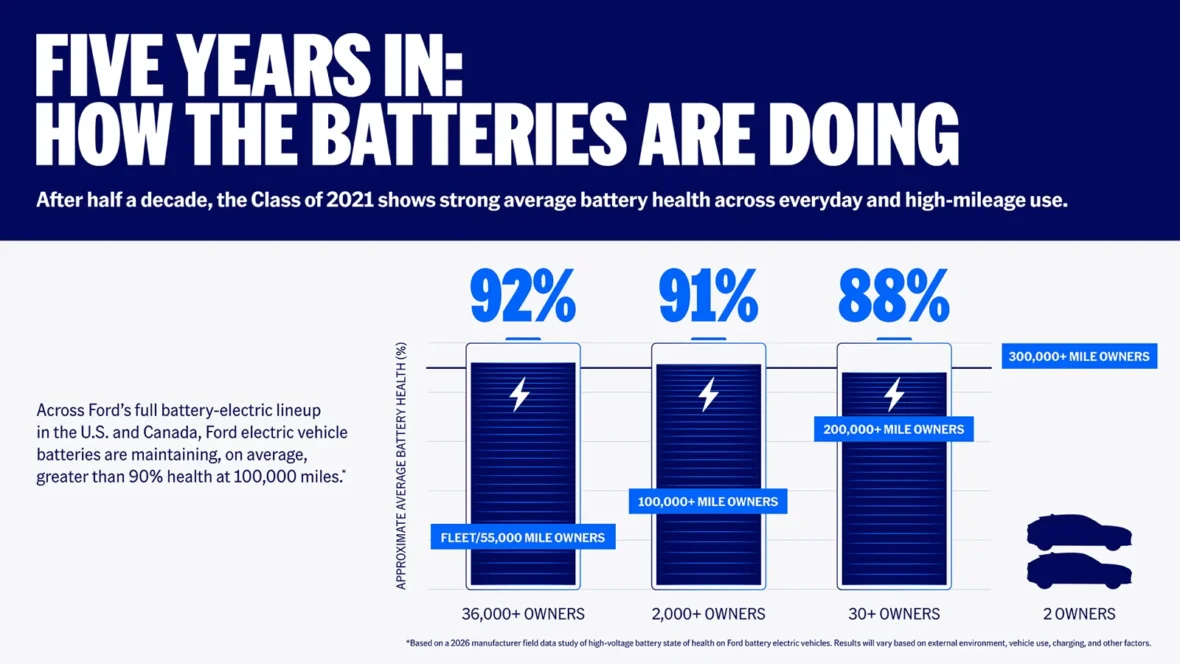
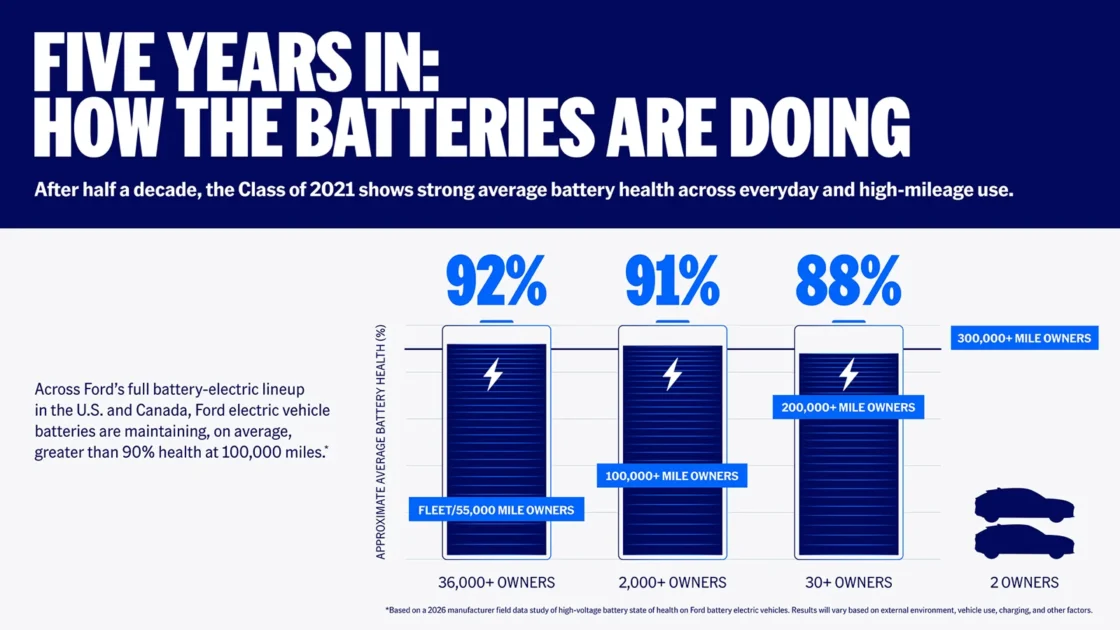
- Average battery health retained: 92%
- Average ownership period: 5.2 years
The spread is the more telling number. According to Ford, 95% of those vehicles fall between 87% and 97% battery health. In other words, a handful of great batteries are not hiding a pile of weak ones. Ford also notes the figures reflect usable battery capacity.
High-Mileage Owners Are Holding Up, Too
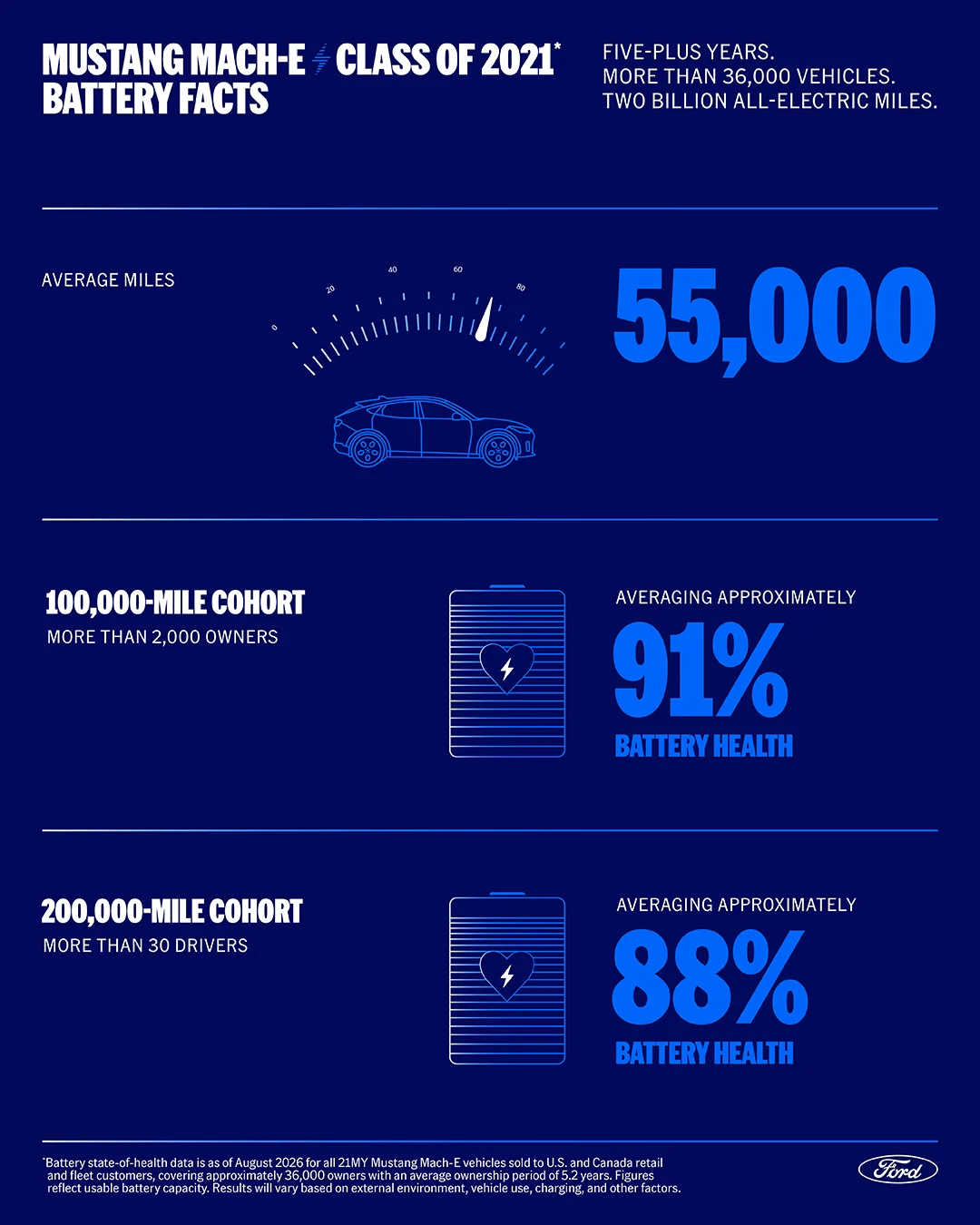
Commuters and road trippers are where batteries get tested hardest, so Ford broke out its high-mileage owners separately:
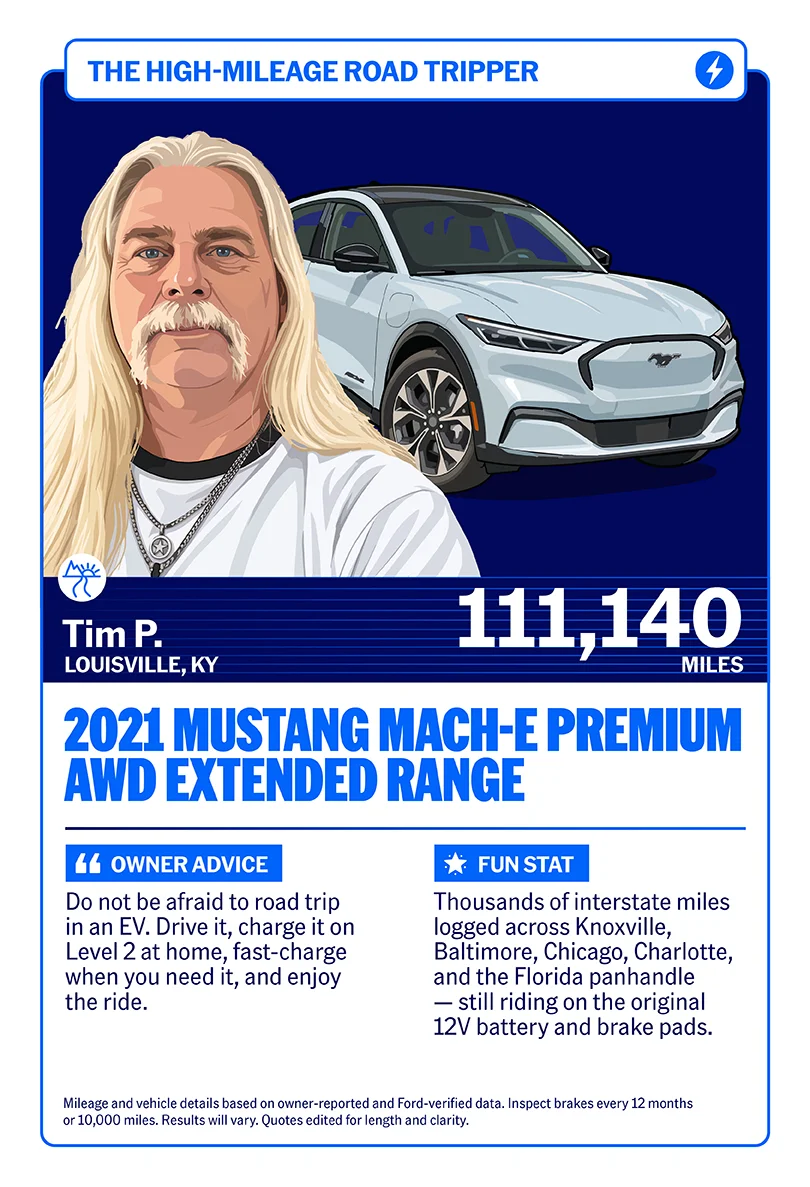
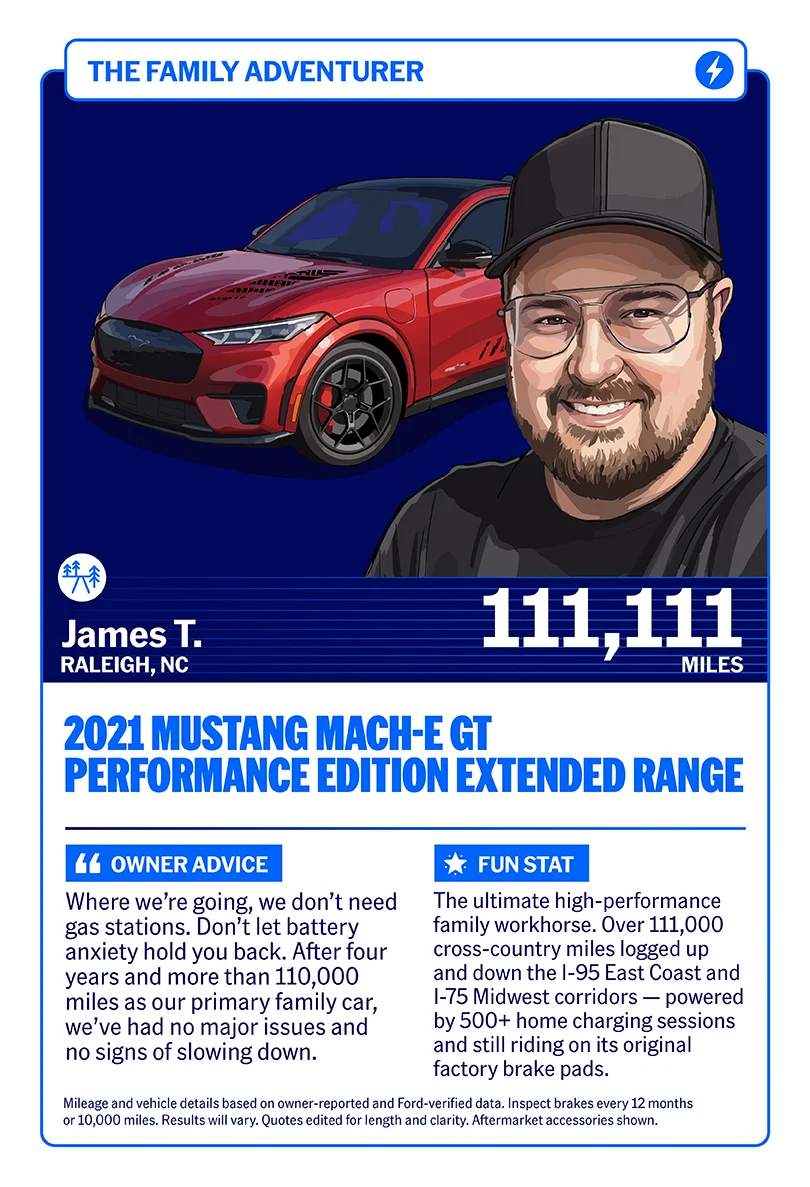
- More than 2,000 owners past 100,000 miles: better than 91% battery health on average
- More than 30 drivers past 200,000 miles: about 88% on average
Then there is David Blenkle, who has driven past 400,000 miles on the original battery in his 2022 Mustang Mach-E. Ford calls his mileage exceptional. Even so, the broader fleet data suggests his strong battery health is part of a pattern rather than a lucky outlier.
What It Means for Ford’s Other EVs
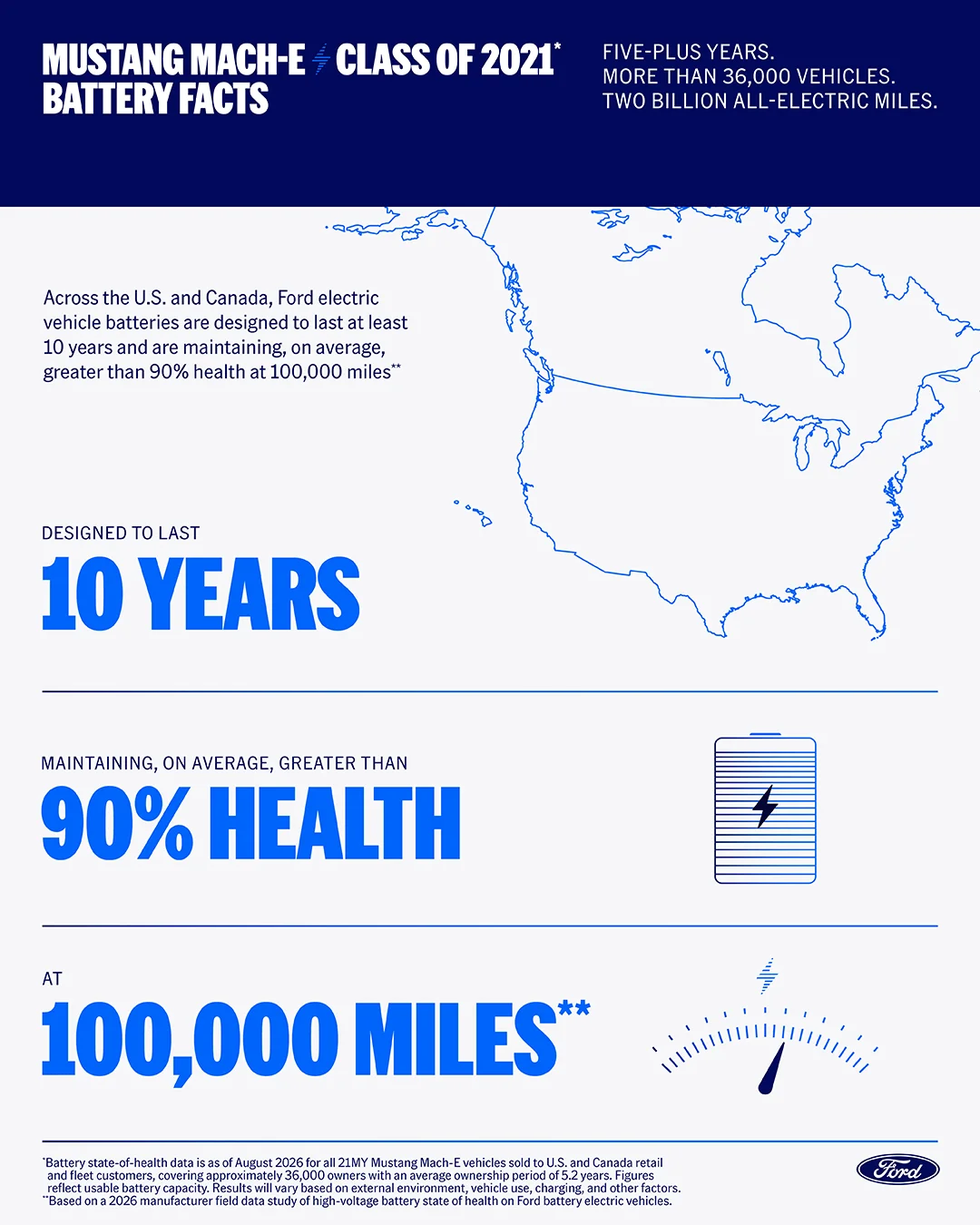
Ford says the pattern holds beyond the Mach-E. Across its full battery-electric lineup sold in the U.S. and Canada over the last five years, packs are designed to last at least 10 years and are averaging greater than 90% health at 100,000 miles.
That matters if you are shopping used, too. Battery condition is usually the biggest unknown on a pre-owned EV, and data like this makes a five-year-old Mach-E a lot less of a gamble. Ford also says this field data feeds directly into its Universal Electric Vehicle platform and the upcoming Fathom midsize electric truck, which we covered when Ford explained how the 2027 Ford Fathom could help power your home.
Three Charging Habits That Help Your Battery
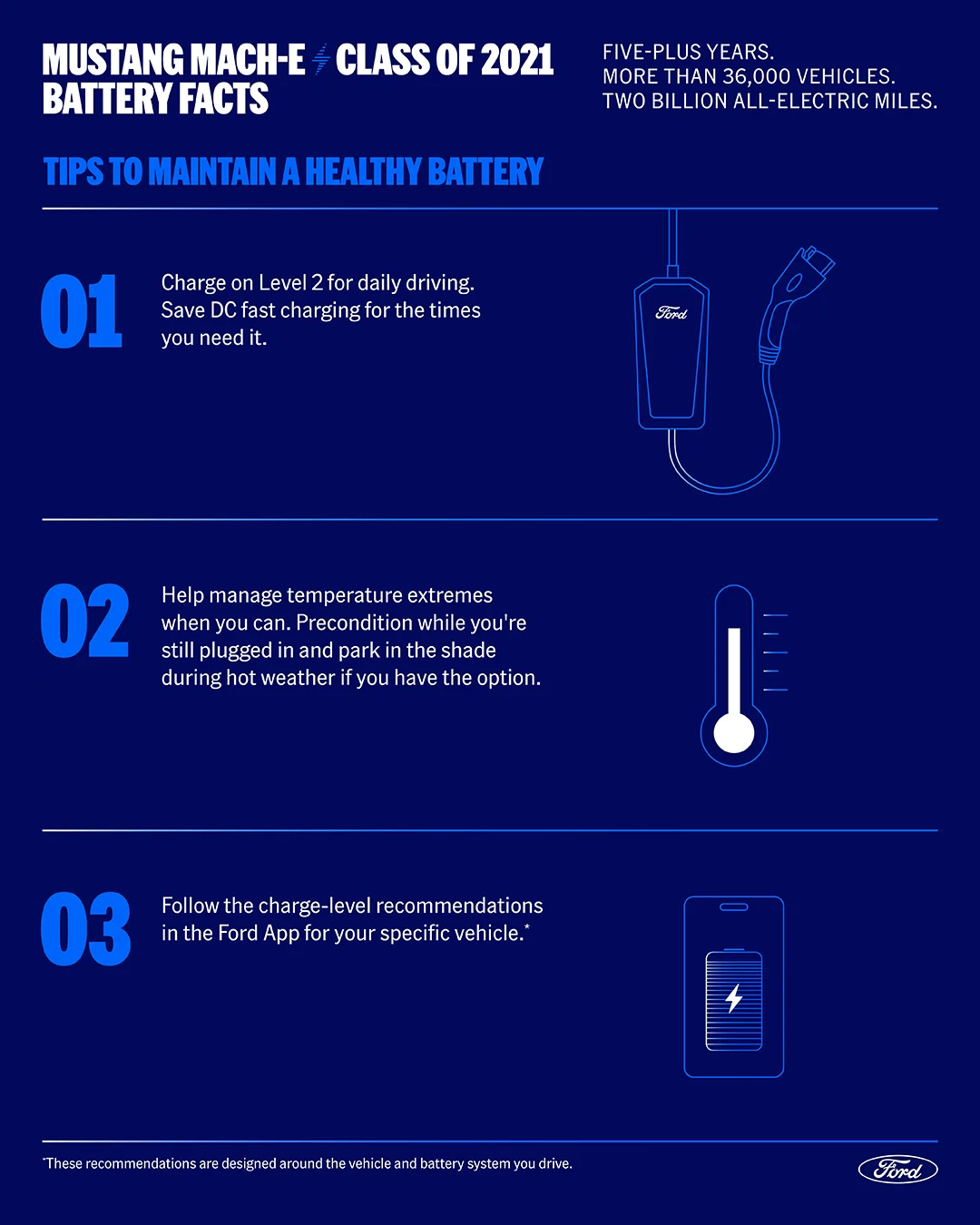
Fortunately, you do not need a chemistry degree to take care of an EV battery. Ford recommends three everyday habits:
- Charge on Level 2 at home for daily driving, and save DC fast charging for the days you need it.
- Help manage temperature extremes by preconditioning while still plugged in and parking in the shade in summer when you can.
- Follow the charge-level recommendations in the Ford App for your specific vehicle.
Here in East Texas, that shade tip is not optional from June through September.
For most families, a Level 2 charger at home is the single best upgrade you can make after buying an EV. If you are shopping for one, the Lectron EV charger is built for exactly that kind of everyday driveway charging.
Disclosure: Lectron is a GT: Garage Talk® partner, and the Lectron link above is an affiliate link. If you make a purchase through it, we may earn a small commission at no extra cost to you.
Why Charging Advice Differs by Battery Type
One detail is worth knowing before you copy a neighbor’s charging routine. The 2021 Mustang Mach-E SUVs in Ford’s study use NCM battery chemistry, where frequent full charges are generally not needed for daily use.
However, some newer Ford EV batteries use LFP chemistry, which benefits from an occasional charge to 100% to help the battery management system stay calibrated. As a result, the right habit depends on which battery your EV actually has, which is exactly why Ford points owners to the guidance in its app.
Our Take on the Mustang Mach-E

Battery anxiety is real, and I hear it from families all the time. One neighbor’s horror story or one influencer’s best case does not tell you much. On the other hand, 36,000 vehicles and two billion miles is a sample worth paying attention to.
A 92% average after five years, with high-mileage owners still near 90%, should make anyone shopping a used Mach-E feel a lot better. My one nitpick is that this is Ford reporting on its own product, so I would love to see independent data line up with it. Still, if you are cross-shopping a gas SUV and an electric one, battery longevity looks like less of a reason to walk away. If the newer, more adventurous version caught your eye, check out our look at the 2027 Mustang Mach-E Trail. You can build your own on Ford.com.
Want more automotive news like this? Sign up for our weekly newsletter using the form at the bottom of this page to get the latest stories delivered to your inbox every Thursday morning.