GM Ran 92,000 Virtual Crash Tests on the 2027 Chevrolet Silverado 1500

Before the 2027 Chevrolet Silverado 1500 ever hit a real barrier, GM had already crashed it tens of thousands of times on a computer. Engineers ran about 92,000 virtual crash tests on the new truck, and roughly 80% of its passive safety engineering work happened in the virtual world.
Physical crash tests still matter, and the Silverado went through several of them during development. However, GM says simulation now lets engineers explore far more possibilities, much earlier, so the real-world tests confirm what the team already expects.
Why GM Crashes Trucks on a Computer First
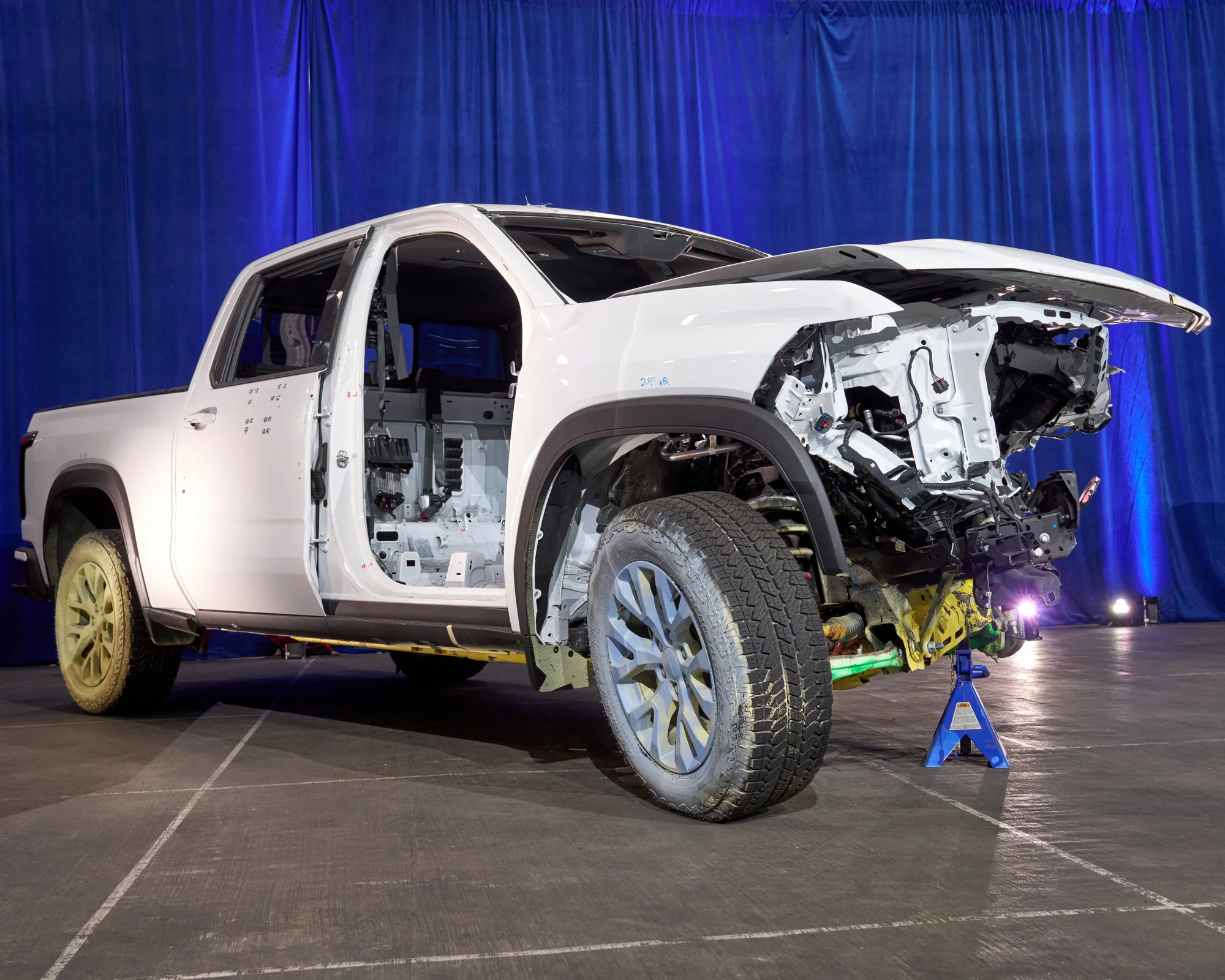
GM has a long history here. In the early 1930s, its engineers were the first in the industry to intentionally crash vehicles to study what happens in a collision. Today, the work starts with computer-aided design, computer-aided engineering, and simulation.
The reason is simple. Every physical crash test uses up a vehicle that cannot be reused, and each one takes time. Virtual testing lets engineers evaluate more crash types, occupant sizes, and seating positions, then change the design in weeks rather than months, according to GM safety leadership.
Inside the 40% Frontal Overlap Test
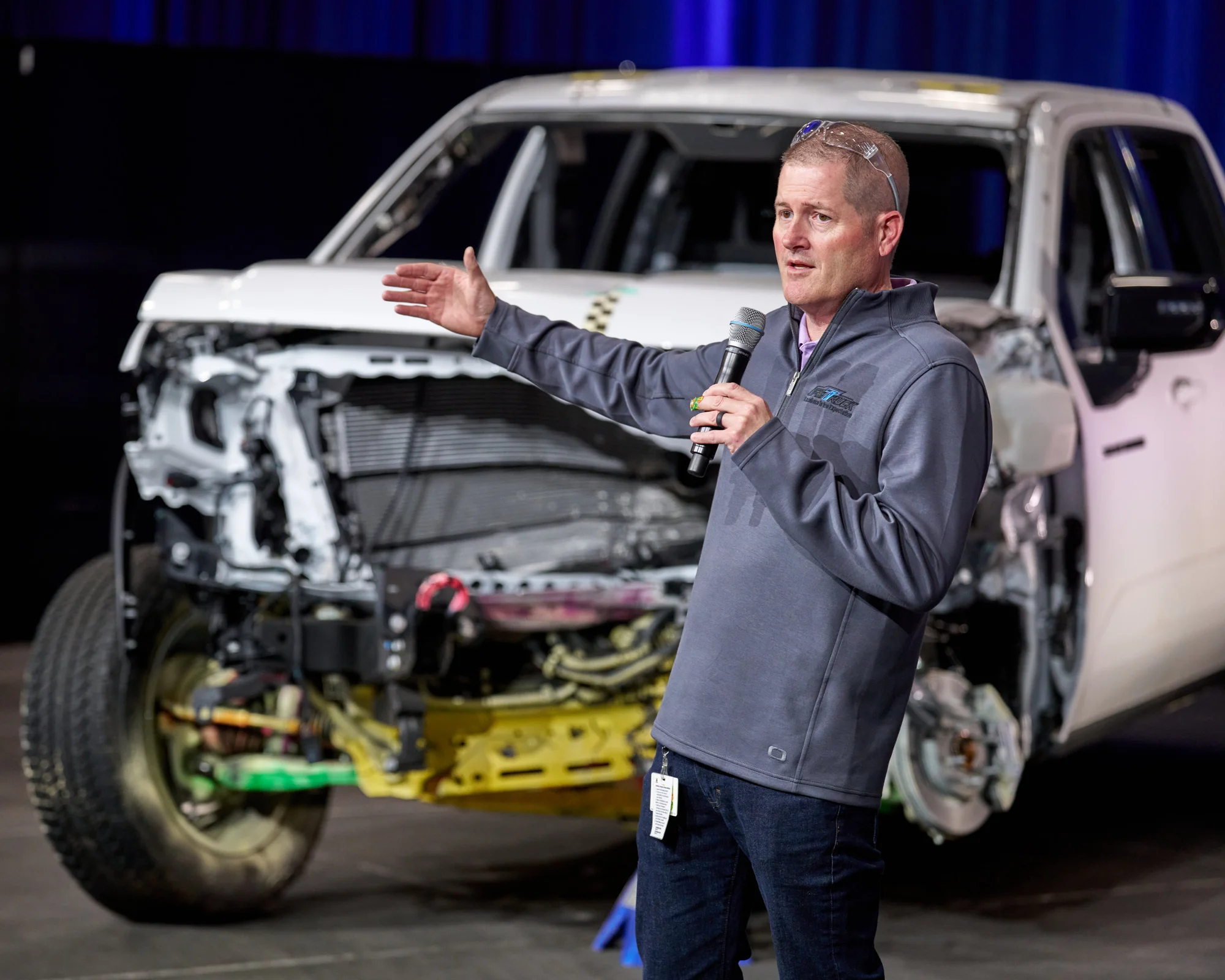
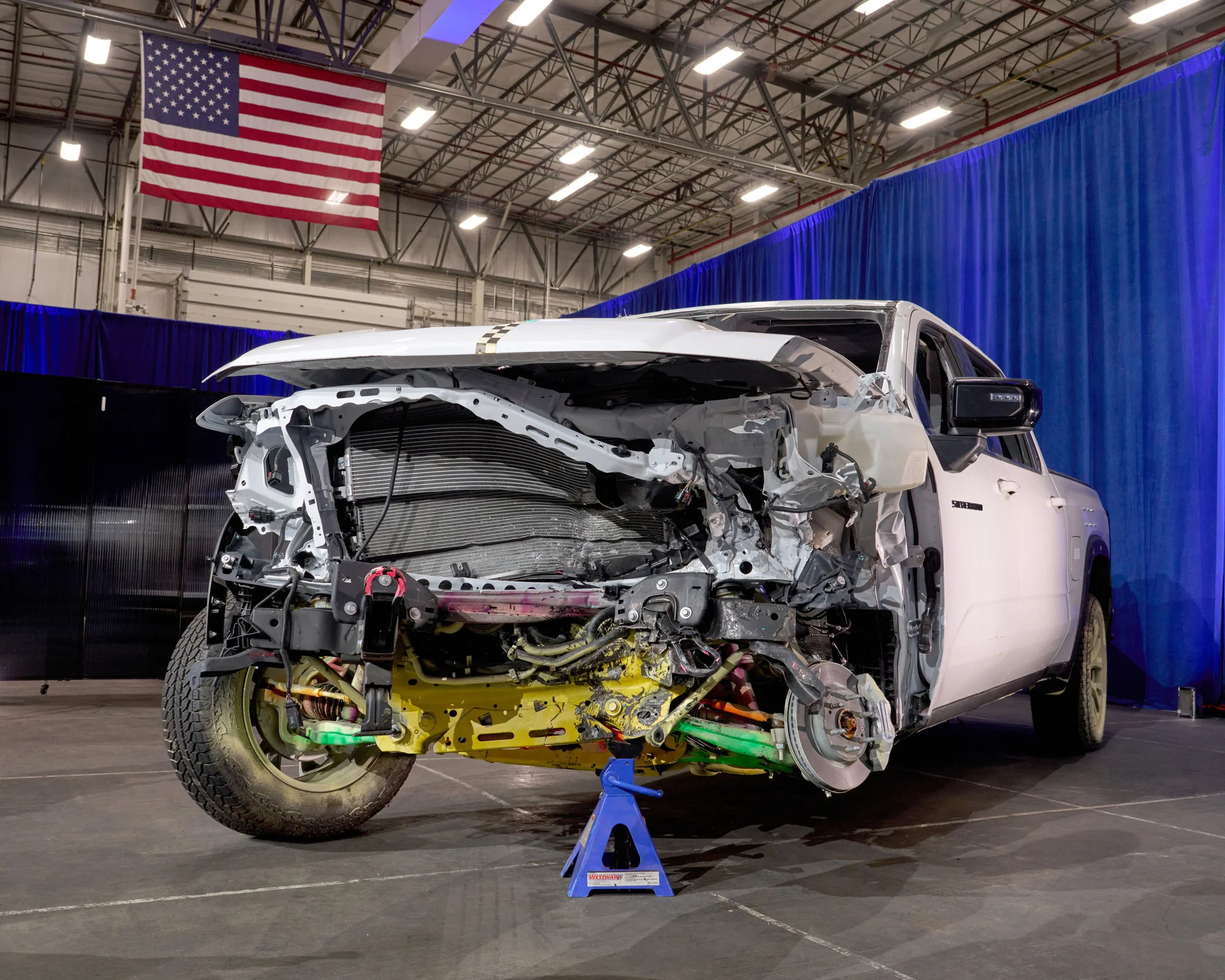
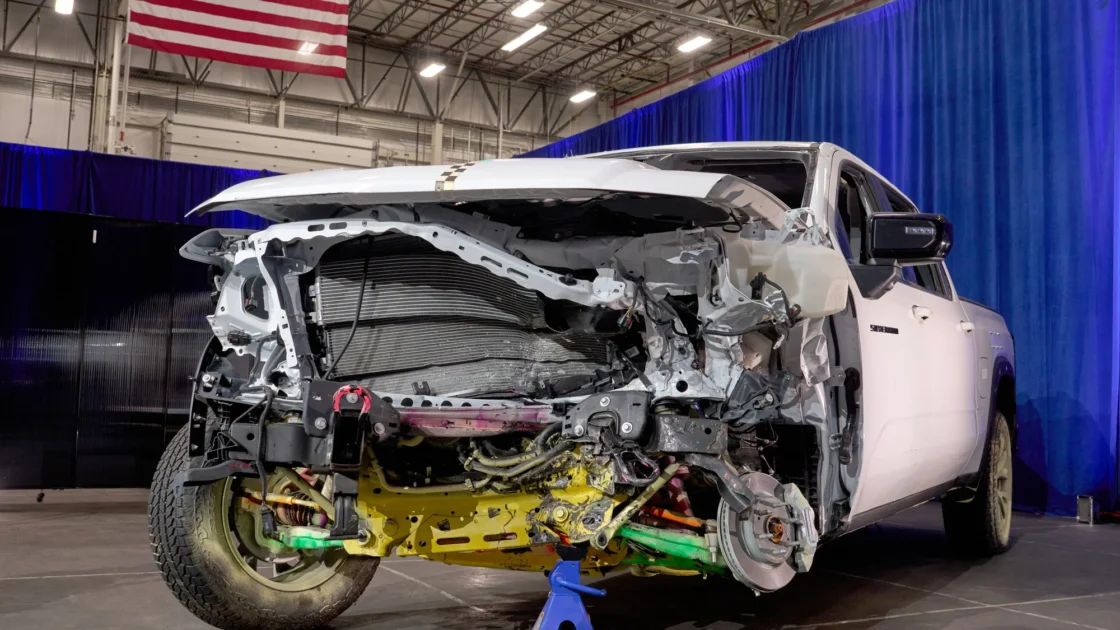
One of the toughest tests is the 40% frontal overlap. Here, the truck hits a barrier with 40% of its front width on the driver’s side. For this Silverado test, the setup included:
- An impact speed of 40 MPH
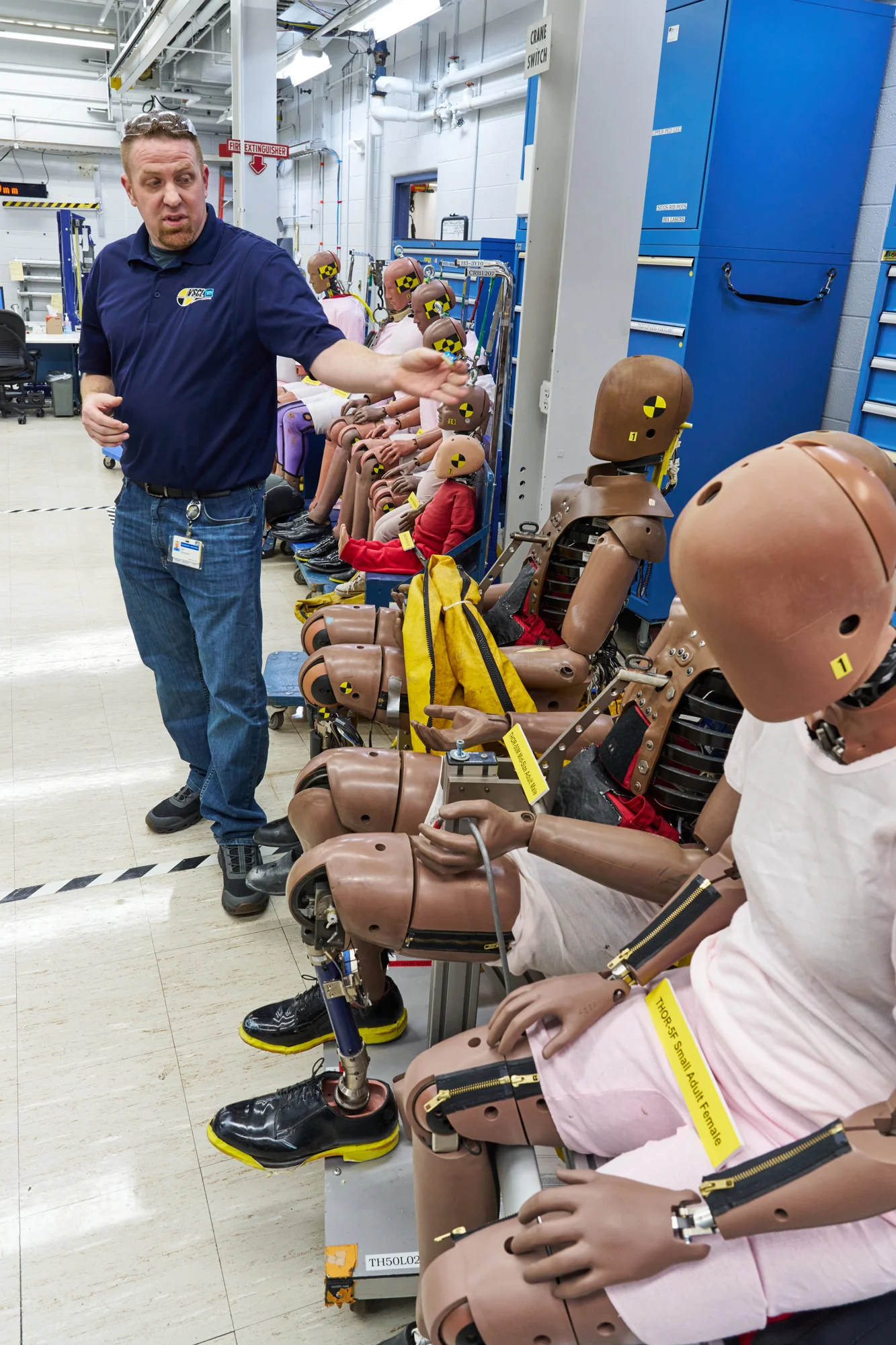
- A 50th percentile male dummy in the driver’s seat
- A 5th percentile female dummy in the second row, directly behind the driver
For that single test, GM’s Global Safety Product Integration (GSPI) team studied hundreds of virtual variations in how the truck’s structure and its restraint system, like airbags and seat belts, would perform. Those studies helped shape the final design.
Small Details Make a Big Difference

A physical test shows how one specific truck performs. In contrast, virtual variation analysis lets engineers change small details and see what happens. That can include:
- The thickness of a material
- How different components are joined together
- Normal variability in materials and manufacturing
- Variability in the test itself
Those details may sound minor. Still, a Silverado 1500 is made up of thousands of components, and in a crash, they all have to work together as a system.
Two Petabytes of Crash Data
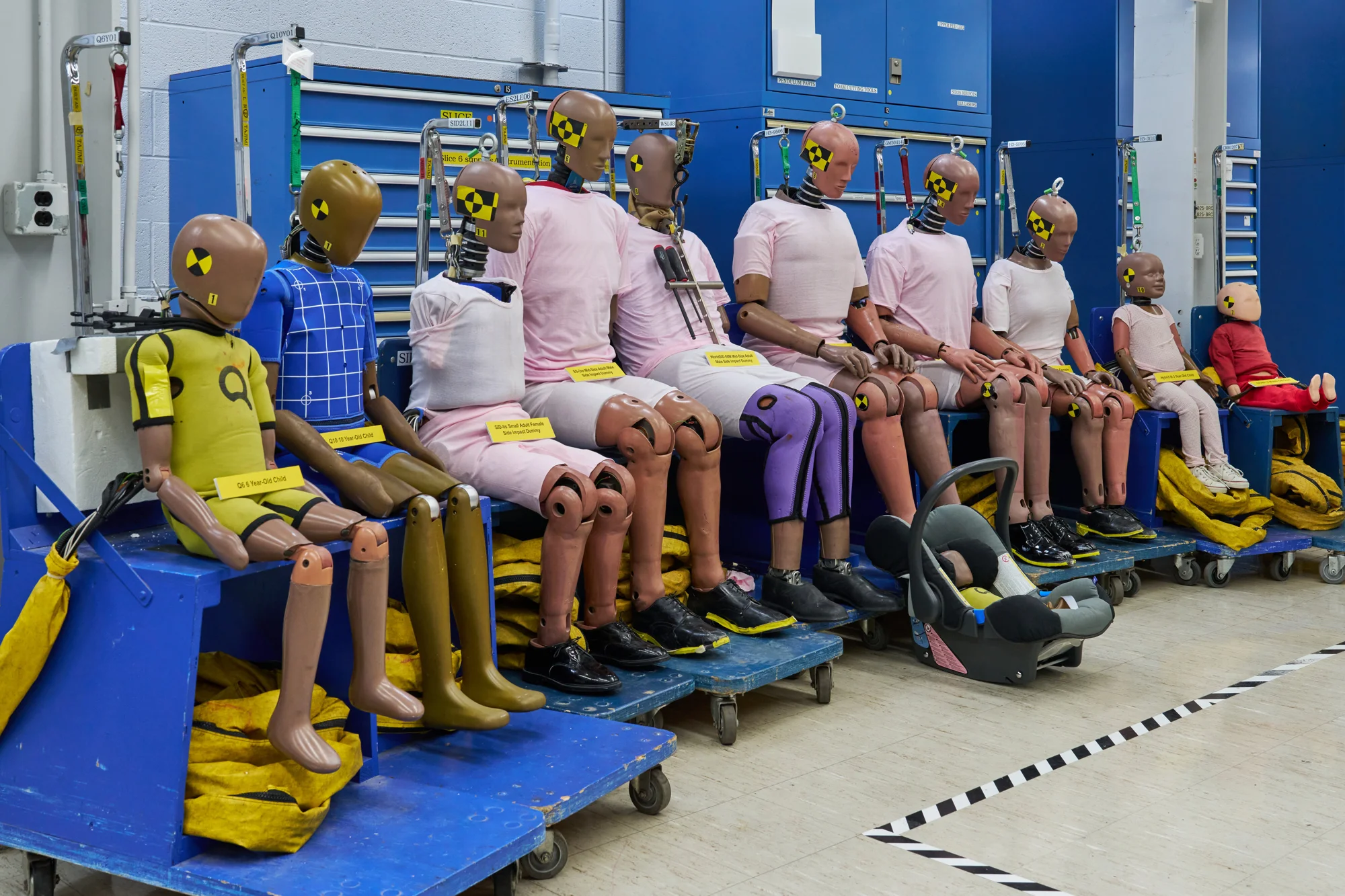
The amount of data is staggering. The Silverado program generated almost 2 petabytes, which is about 2.1 million gigabytes, or roughly a trillion pages of text.
To make sense of it all, GM is turning to artificial intelligence. AI already helps engineers process data and debug models, and it will take on more repetitive tasks soon. Ultimately, GM wants to cut vehicle development time in half from today’s industry standard of four to five years.
What It Means for Families
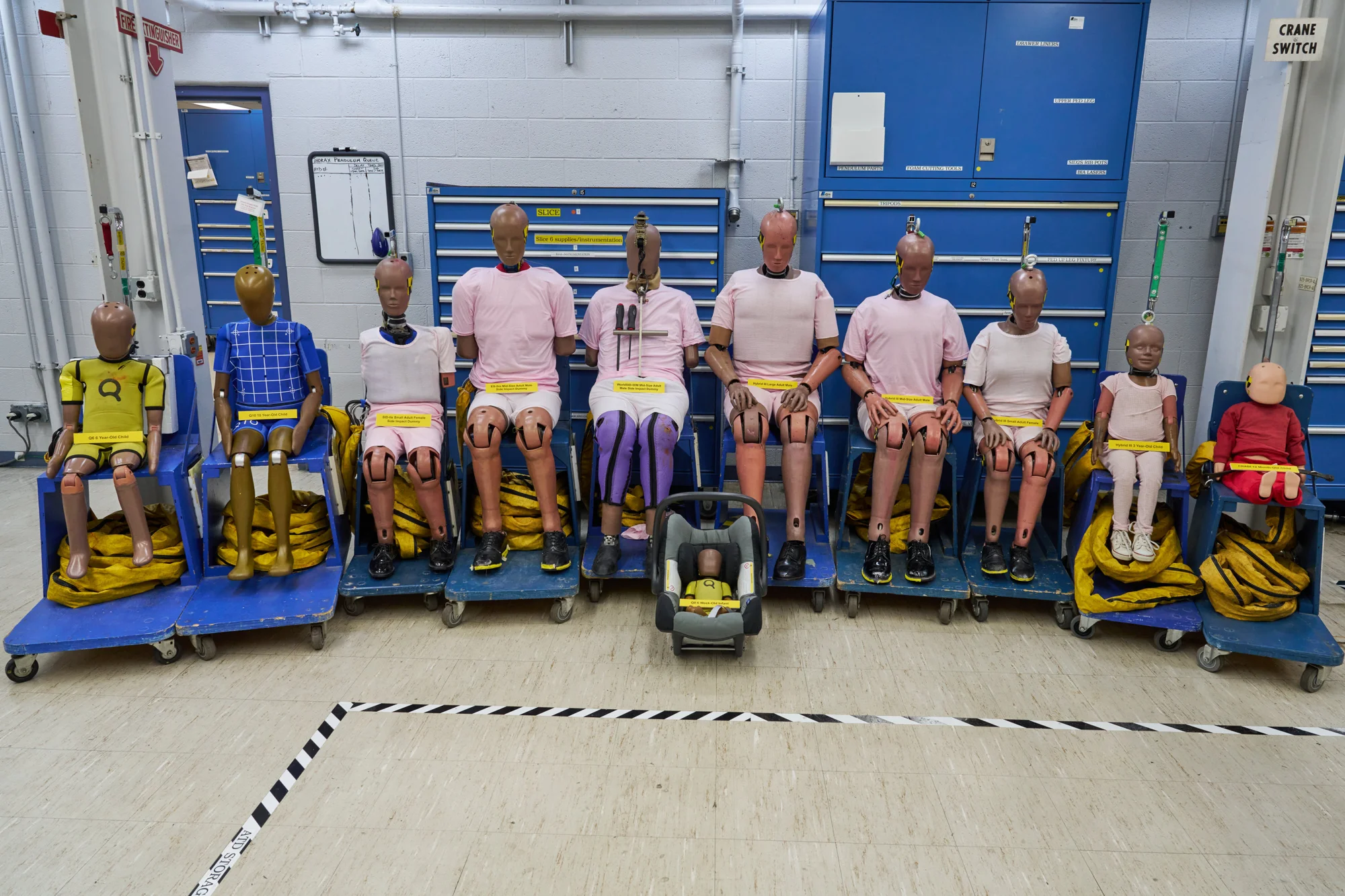
For families, the most interesting detail is the rear-seat dummy. Plenty of Silverado crew cabs haul kids in the back seat every day, including ours. Our family will soon be driving a 2027 Silverado, so this story hits close to home. We have even tested whether the Silverado’s Teen Driver feature can keep us honest during break-in.
GM says the goal is to protect people in the worst possible moments, and that no one gets into a vehicle expecting a crash. You can build your own on Chevrolet’s website.
Safety has been a big focus for us lately. Holli recently explored how GM safety is making family vehicles smarter, not just bigger, and she sat down with Mazda’s safety director to learn what families should know about the 2026 CX-5. Structural safety is getting creative across the industry, too, as Genesis showed by hiding a B-pillar and roll cage inside the GV90 to protect passengers behind its coach doors.
Our Take on the 2027 Chevrolet Silverado 1500
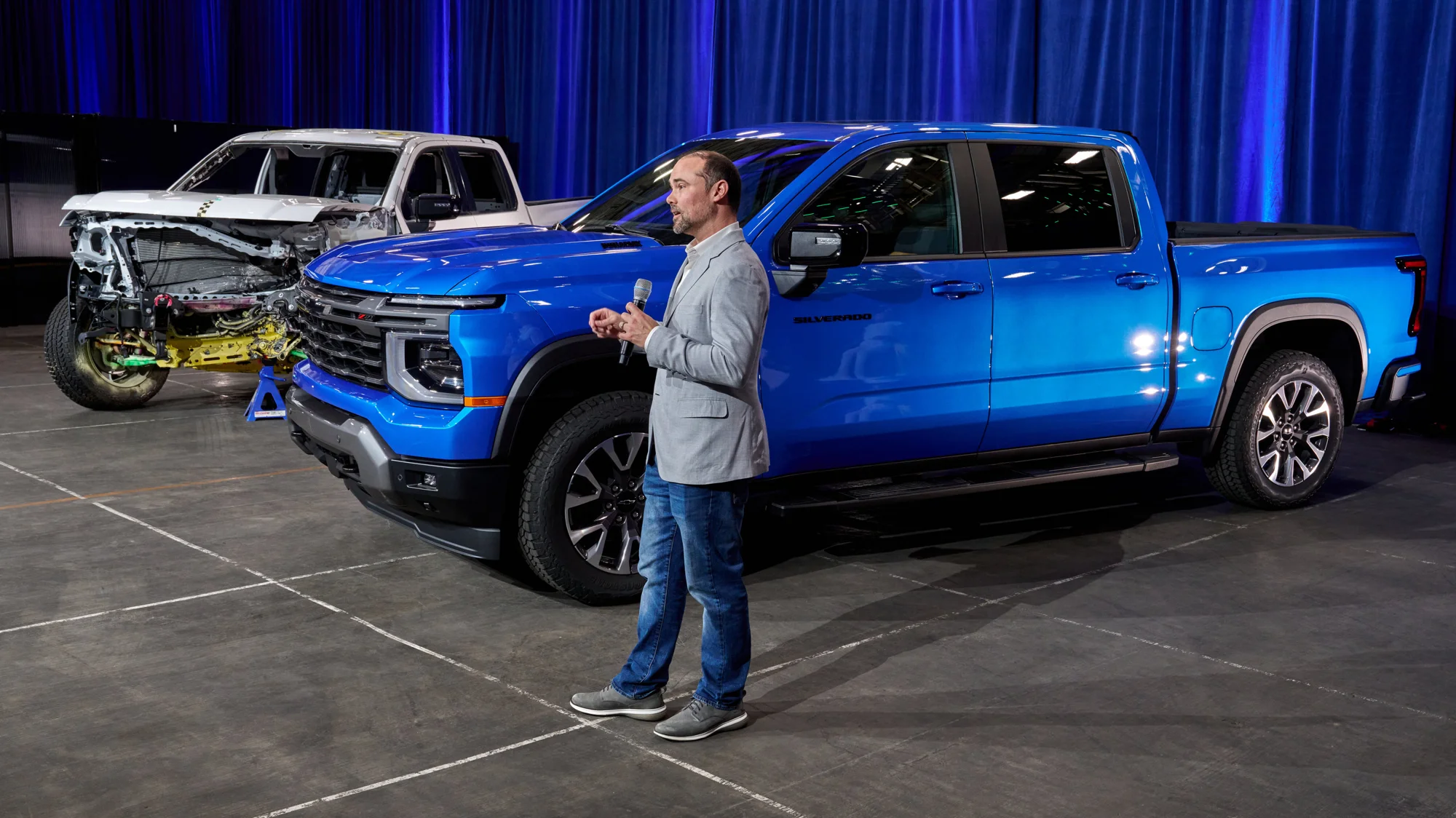
I love seeing this kind of behind-the-scenes engineering. Most of us never think about crash structures until we need them, and 92,000 virtual tests shows how much work goes into a truck before it reaches a dealer lot.
Of course, simulations do not replace independent crash ratings, so I will be watching for official results on the new truck. We have also been comparing trims, including the 2027 Silverado Z71 that almost made me cancel our custom Trail Boss order.
Want more automotive news like this? Sign up for our weekly newsletter using the form at the bottom of this page to get the latest stories delivered to your inbox every Thursday morning.