
2027 GMC Sierra Denali First Look: Why the 5.7L V8 Is the Engine to Get

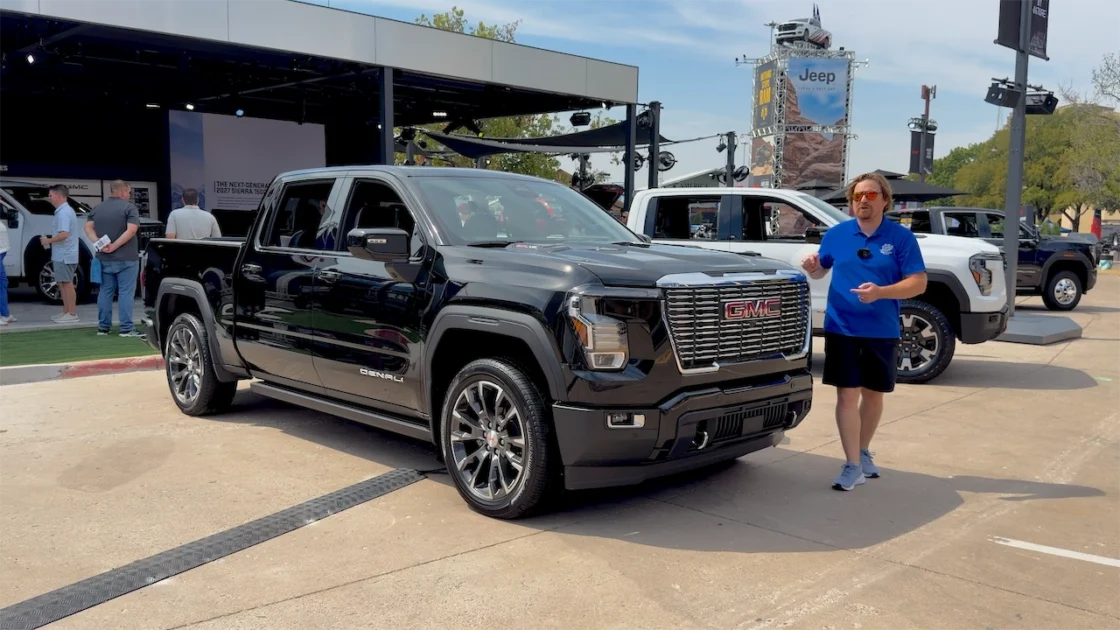
The 2027 model year is shaping up to be a very big one for GMC, because the light-duty Sierra 1500 is all new. I got up close with the 2027 GMC Sierra Denali at the GMC booth at the State Fair of Texas in Dallas, and while the styling changes are the first thing you notice, the biggest news is hiding under the hood.
The Denali starts at $76,795, including destination. You can see how that stacks up against the rest of the lineup in our 2027 GMC Sierra 1500 specs and pricing breakdown. These show trucks were parked in show mode, so I could not drive one or power up every screen, but here’s what stood out to me.
Four Engines, Including Two All-New V8s
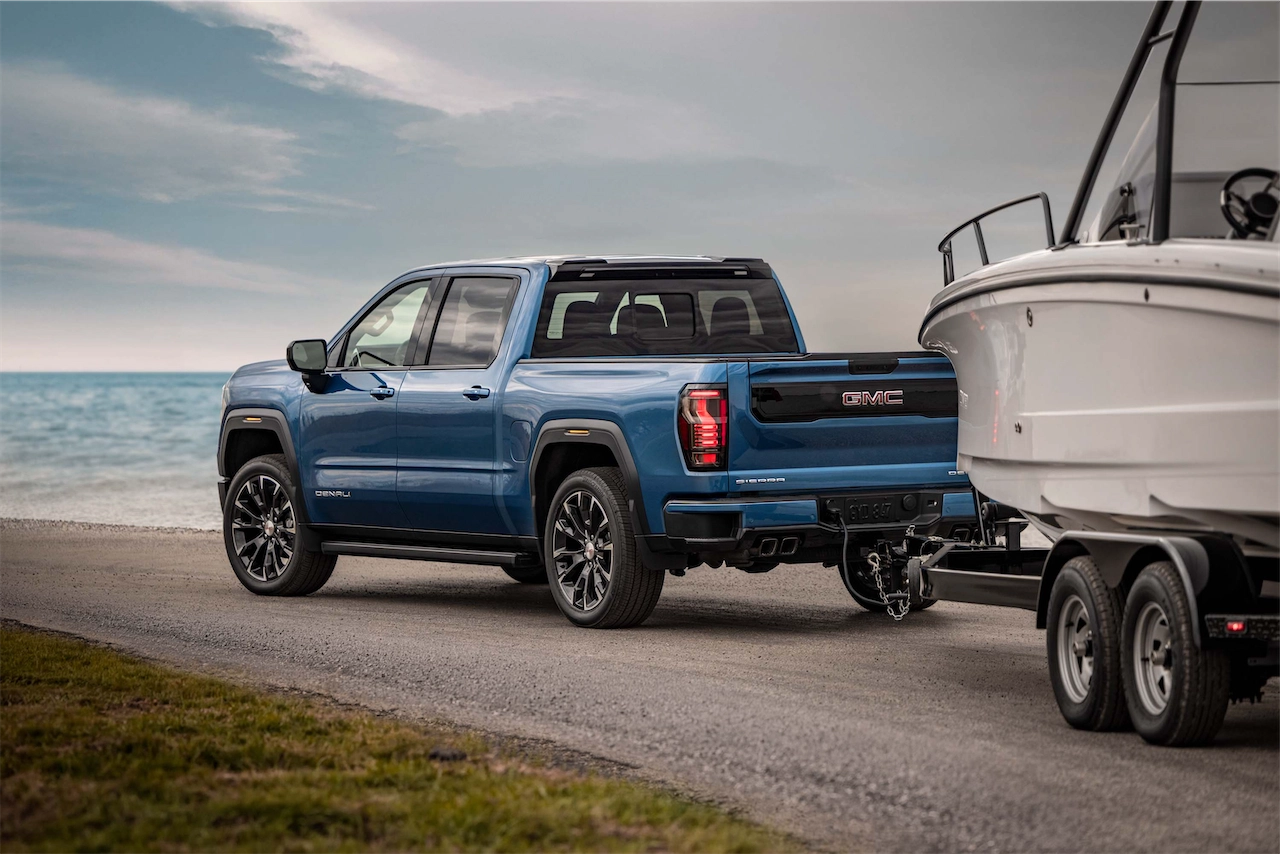
The new Sierra gets two carryover engines and two brand-new ones. You can see how they line up across the lineup in our 2027 GMC Sierra 1500 engines by trim breakdown, but here’s the quick version.
The first carryover is the 2.7-liter TurboMax, which is heavily updated with a new turbocharger. It now makes 350 horsepower and 455 lb-ft of torque, gains of 40 horsepower and 25 lb-ft. The second is the 3.0-liter Duramax inline-six turbodiesel, or the “baby Duramax,” as I like to call it. It makes 305 horsepower and 495 lb-ft, and I absolutely love this engine.
Then come the two all-new sixth-generation small-block V8s: a 5.7-liter and a 6.6-liter. They replace the outgoing 5.3-liter and 6.2-liter, and they are backed by an $888 million investment in GM’s Tonawanda Propulsion plant in New York. That tells you how important these two engines are to the brand. Our story on GM’s new small-block V8 engines digs deeper into the engineering.
On the 2027 GMC Sierra Denali, the 5.7-liter V8 is standard. The 6.6-liter V8 and the Duramax are both available.
The 5.7-Liter V8 Is the Towing King
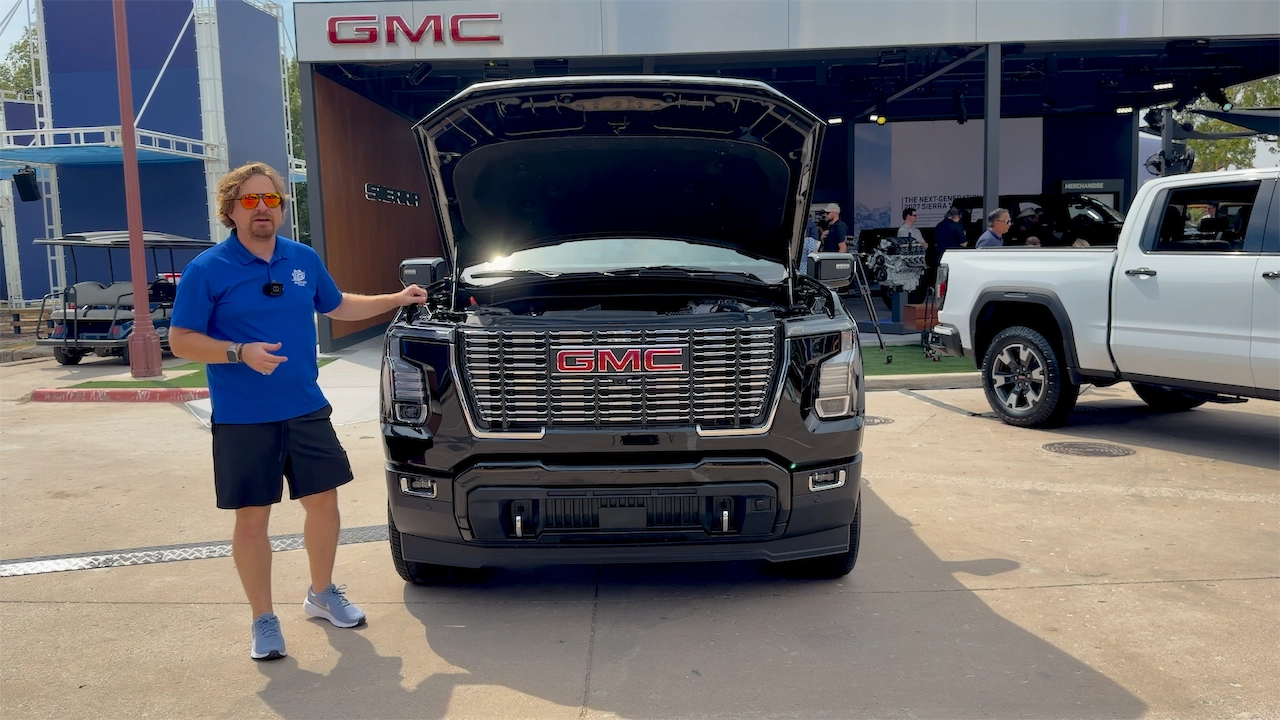
The 5.7-liter is the engine that caught my eye. I talked with Scott Garver of GM at the fair, and he did not hesitate to call it the “workhorse.”
“It’s for most of our customers,” Garver said. GM expects the 5.7 to be a much higher volume engine than the 6.6, and it is packaged in everything from work trucks to upper trims.
It makes 402 horsepower and 428 lb-ft of torque. When I asked why 428 and not a nice round 425 (my OCD brain needed to know), Garver said the team wanted to squeeze every bit out of it and let customers know exactly what it can do.
It is the less powerful of the two V8s, but it is by no means weak. Properly equipped, the 5.7 tows up to 13,500 pounds in the Sierra and 13,700 pounds in the Chevy Silverado. If you really want to tow heavy things in a light-duty Sierra, this is the engine to get.
There is also a fun bit of heritage here. GM stamped “350” into the block of the 5.7. As a Camaro guy, I can tell you that number means something to old-school GM fans.
The 6.6-Liter V8 Brings Big Power, and No Dipstick
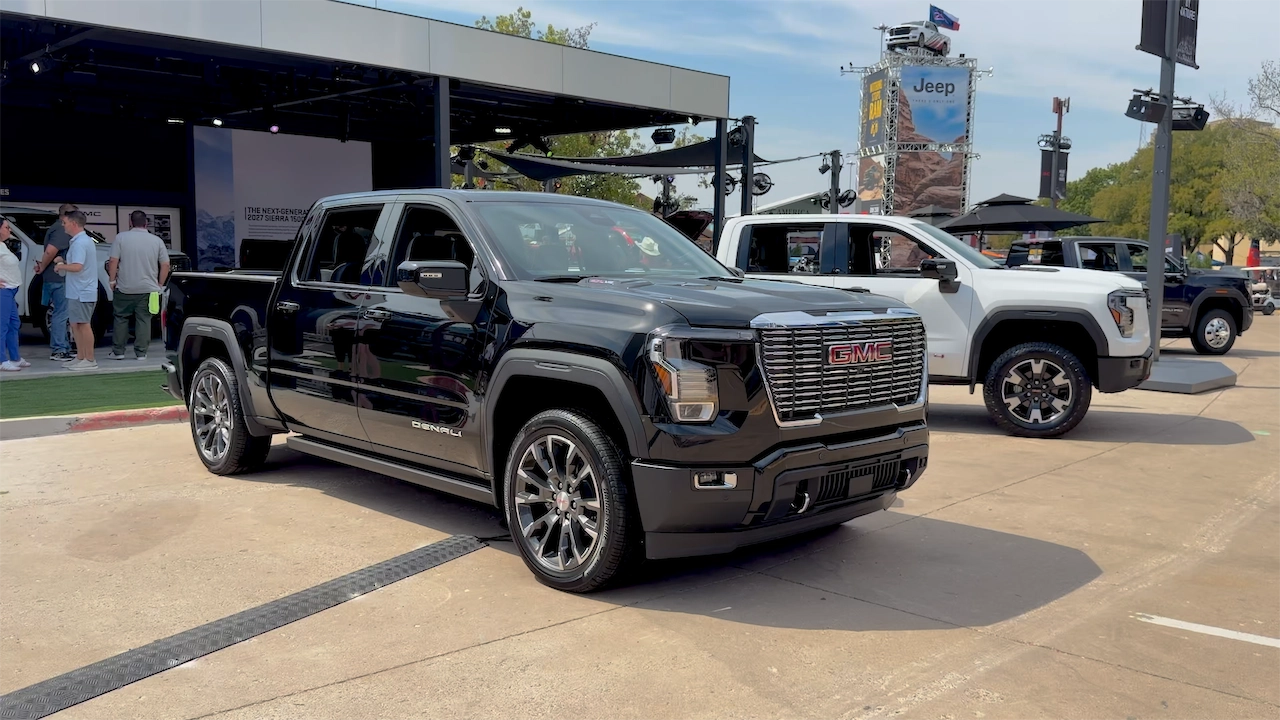
If towing isn’t really your thing and you want big, strong power, the 6.6-liter is your engine. There is no replacement for displacement, after all. It makes 481 horsepower and 501 lb-ft of torque, and GMC calls it the most powerful naturally aspirated V8 in its class. It is more of a highway cruiser, and it tops out at 9,400 pounds of towing in the Sierra.
Garver said the 6.6 is aimed at buyers who don’t want to compromise on performance. On the GMC side, it is standard on the Denali Ultimate and optional on the Denali. This one wears a “400” stamp for its own dose of heritage.
When I asked Garver what he is most proud of, his answer was simple. “What I truly love the most is the torque,” he said. GM increased the stroke on both engines and fitted new crankshafts to get there.
You might also notice something missing under the hood: the yellow dipstick ring. All of the Gen 6 V8s use an electronic oil level sensor that sends the reading to the center screen and driver information center, so you can see your oil level in real time.
No more guessing, and no more realizing halfway through a four-hour road trip that you forgot to check. “You can’t check your dipstick when you’re driving,” Garver said. “You can with the oil level sensor.”
Smarter Badging and a Toned-Down Denali Face
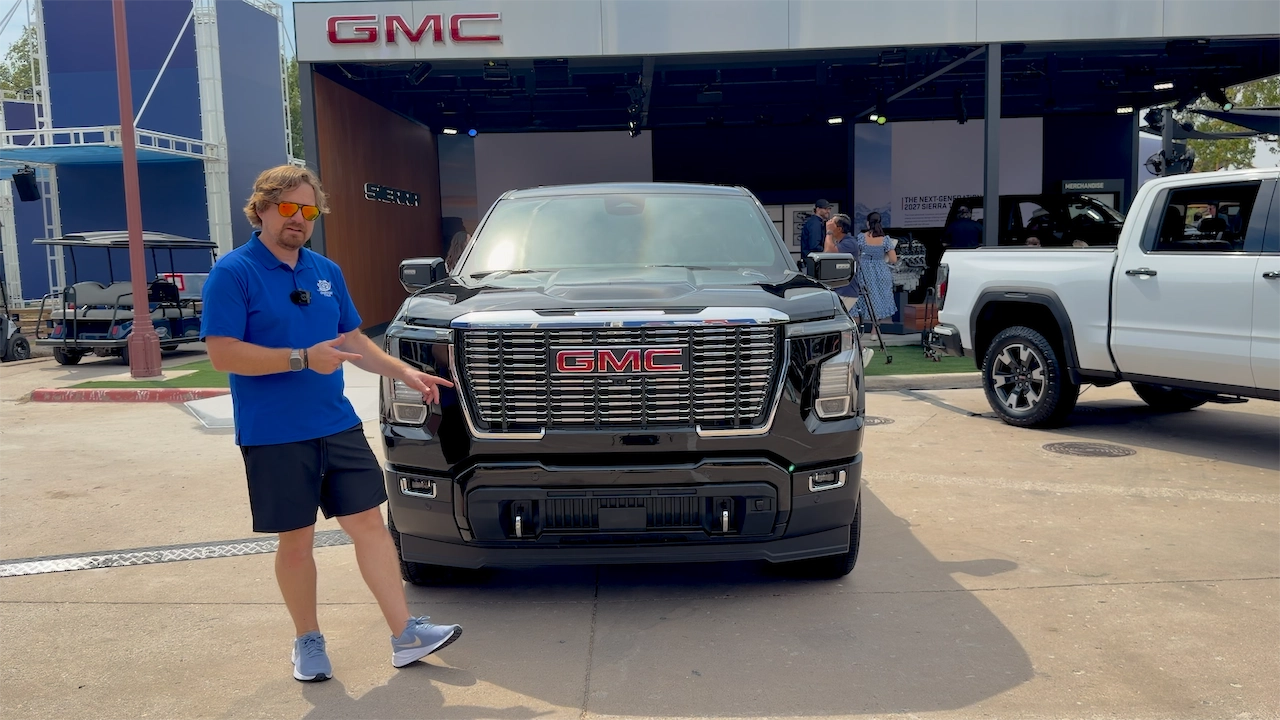
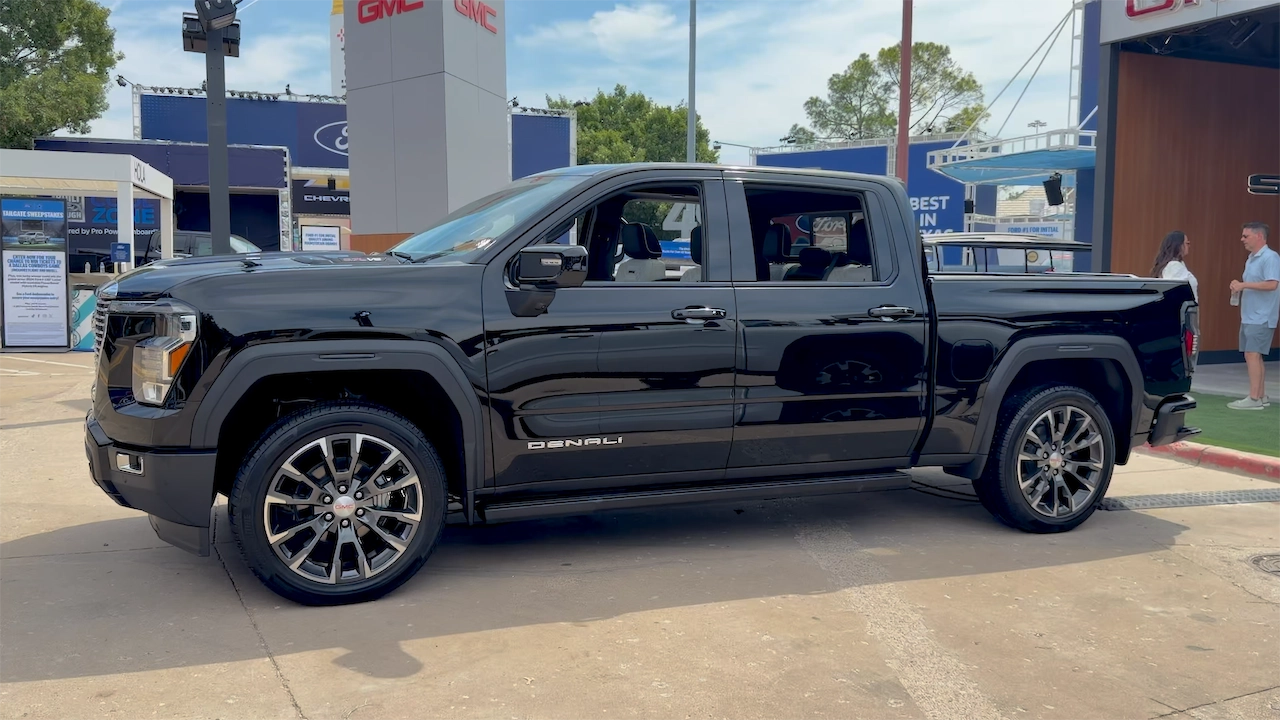
One thing I believe GMC has done better than Chevy is badging and placement. The previous Sierra put its engine badge on a faux vent on the fender. Now the “5.7L V8” badge sits up on the hood, and the Denali badge lives in a more logical spot on the door. I believe these door panels are shared between the Silverado and Sierra, but GMC’s placement makes more sense to me.
Up front, the Sierra’s face is an evolution of the look GMC has used for several years. You still get the question mark-style lighting, now with body-color insets, and a toned-down grille. This is a Denali, so there is chrome on all the things, but it is far from the giant sheet of chrome with a few holes drilled in it that I remember from older Denalis. If bling isn’t your thing, the Denali Ultimate uses dark chrome instead.
The black plastic wheel arches surprised me when I first built one on the online visualizer. I asked GMC about it, and body-color trim is available as a dealer-installed accessory.
My display truck rode on massive 22-inch wheels with a machined face and dark gray accents, wrapped in 275/50R22 Bridgestone Alenza tires. From the side, the Sierra doesn’t look drastically different from the 2026 model, but the longer you look, the more details you notice.
A Better MultiPro Tailgate and Power Running Boards
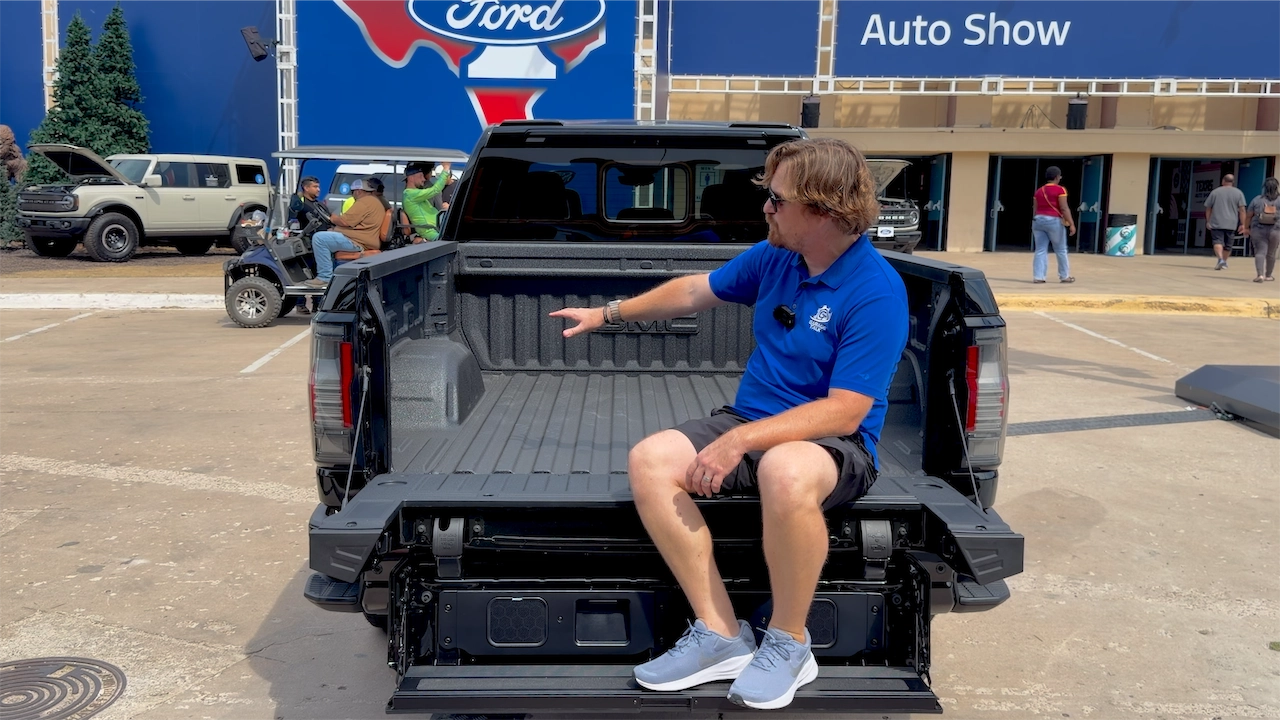
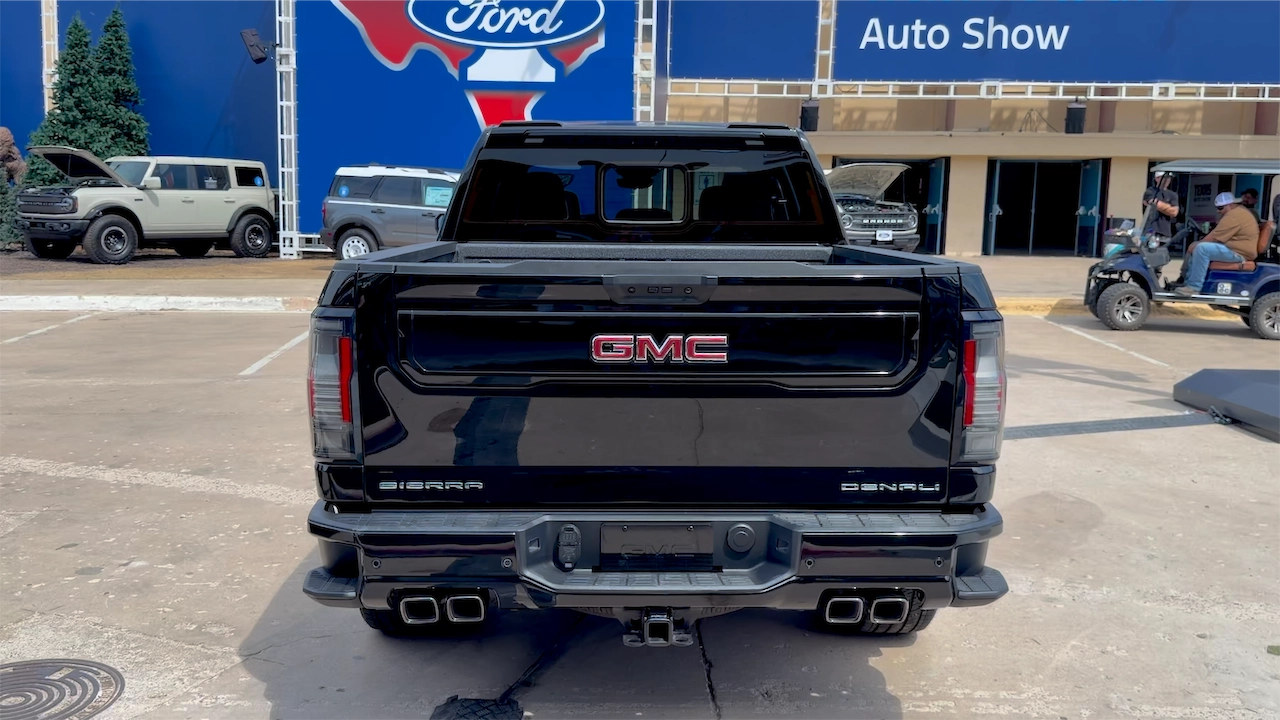
Around back, the Denali still wears chrome badging and a red GMC logo, while the Denali Ultimate goes black. The MultiPro tailgate, the tailgate within a tailgate, returns with some useful updates. New D-rings are each rated at 250 pounds to help secure cargo, and the revised release buttons make it very clear which one drops the outer tailgate and which one drops the smaller upper gate.
Drop the tailgate, and you’ll find ruler markings to keep your fish tales honest. The tick marks aren’t precise enough for woodworking, but they are handy. You can also fold the tailgate into a step for climbing into the bed, which features a spray-in bedliner, LED lighting, and 16 standard tie-down locations.
GMC also showed me an infotainment setting that prevents the upper tailgate from opening when a trailer is hooked up. That should save plenty of owners from denting the tailgate on a trailer tongue.
Up front, the Denali uses proximity keys with lock and unlock buttons on the door handles, rather than fully passive entry. I really appreciate that the rear doors get the button too, so I can load a kid into the back seat without walking to the front door first. The power running boards extend outward on a scissor mechanism rather than dropping down, and a tap of a button near the rear lets you deploy them to reach into the bed.
A Softer, Leather-Free Denali Cabin
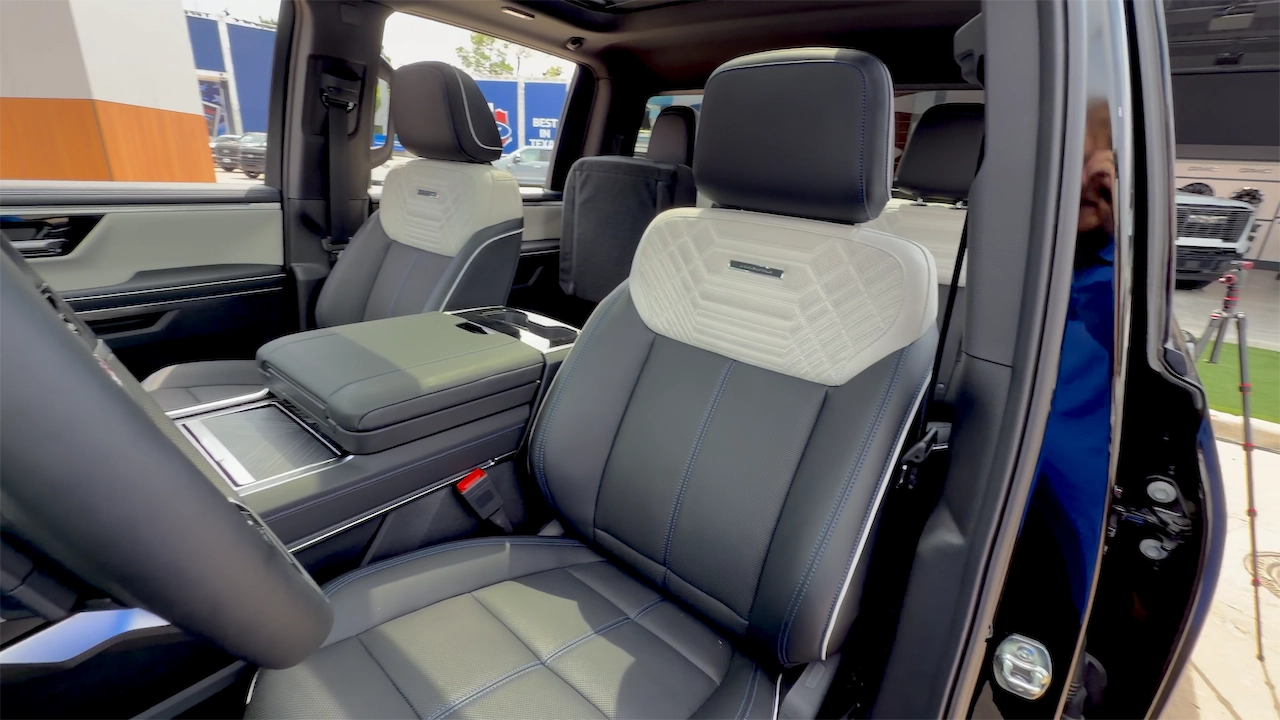
Leather has left the chat for 2027. As we covered in our story on why the 2027 Silverado and Sierra have no leather seats, every trim that would have offered leather now gets what GMC simply calls a premium leather alternative.
In the 2027 GMC Sierra Denali, that means white seats with blue stitching and white piping. The material has no grain, but it is very smooth and soft to the touch. After sitting in these trucks, I can tell you the seat bottoms are nowhere near as firm as the outgoing models. The front seats also offer four-way lumbar adjustment.
The door panels bring more blue stitching, which I like, and more gloss black, which I don’t. It was already collecting dust at the fair. New window switches are tiny, with express up and down for the front windows only. Each front door gets a pass-through storage bin with a lip and a large lower pocket, and A-pillar grab handles help with climbing in.
The Tech Is Less Imposing in Person
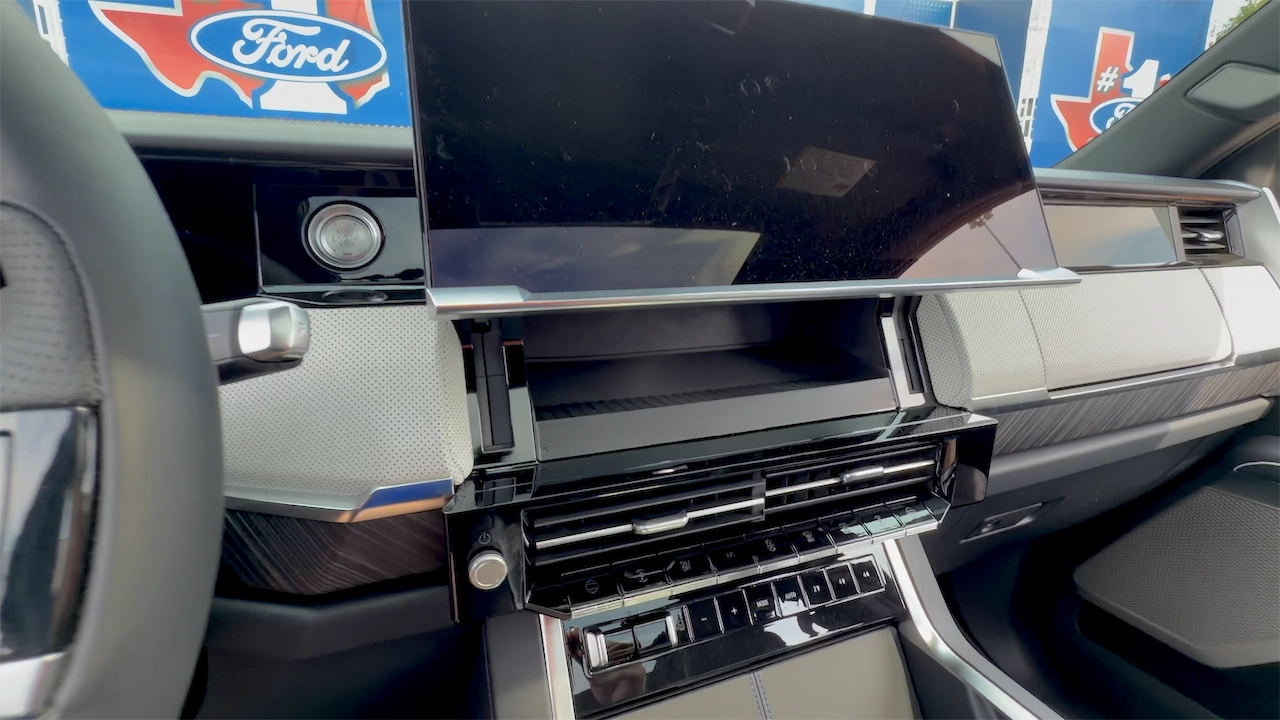
I was critical of how tall the dash looked in my online visualizer run-throughs. In reality, it is nowhere near as bad as it looks in pictures. It is a higher dash, but it doesn’t feel intrusive, and the light-colored leather-alternative trim helps.
The 16.3-inch center touchscreen dominates the dash, and an 11.5-inch passenger display sits on the right. The passenger screen’s polarization keeps it from distracting the driver, and even when it’s off, a clean black-and-white readout shows the time, outside temperature, and navigation arrival time. I have criticized GM for moving away from secondary glove boxes, but I was impressed when GMC showed me that the infotainment screen lifts up and out of the way to reveal decent storage behind it.
I couldn’t explore the software because these trucks were in show mode. GMC did show me a dedicated home screen, trailer profiles you can run alongside navigation, an off-road pages screen, and ambient lighting customization. Unfortunately, some controls, including the headlights, now live in the screen.
The best news is that Apple CarPlay and Android Auto remain, after GM reversed course on CarPlay. They now run inset within the screen, and you can even keep CarPlay audio controls in the side panel.
Below the screen, you get dual-zone climate control with physical toggle switches for temperature and fan speed. The steering wheel has a large button panel and paddle shifters, and this truck had Super Cruise. Moving the electronic shifter to the column frees up the center console to act as a work desk, with sliding cup holders, MagSafe-style magnetic phone chargers, two USB-C ports, and a power outlet. The lid lifts without a latch to reveal storage big enough to hide a laptop.
A rearview camera mirror and a panoramic sunroof round out the front row.
A Back Seat Built for Texas Families
The back seat is where so many Texas truck buyers spend their family time. Pickups are the family vehicle of Texas, after all. At 5 feet, 10 inches tall, I had plenty of legroom and decent headroom, even with the panoramic sunroof overhead.
My favorite rear-seat feature is the latchless seat bottom. You simply lift the cushion to reach the underfloor storage, and you can fold the far side up without walking around the truck. That under-seat bin is now the only hidden storage back here, since GMC dropped the seatback storage pockets for 2027.
You also get dual-tone seats, adjustable headrests that fold for better rearward visibility, three-stage heated outboard seats, rear air vents, and map pockets on both front seatbacks. I counted seven USB-C ports throughout the cabin, plus an HDMI port for the passenger screen. A sliding rear window uses one large sheet of glass with a small opening panel.
Final Thoughts on the 2027 GMC Sierra Denali
The 2027 GMC Sierra Denali is a big winner with me. I really like the seat comfort, the smarter tailgate, and the storage hidden behind the passenger screen. Under the hood, the 5.7-liter V8 is the engine that speaks to me, with its heritage “350” stamp and up to 13,500 pounds of towing.
Until I get one on the channel for a long trip, I can’t tell you exactly how those seats hold up after a few hundred miles, and we are still waiting on EPA fuel economy figures. If you want to see more from the State Fair of Texas, check out our 2027 GMC Sierra AT4 first look and our 2027 Chevrolet Silverado ZR2 first look.
Until then, subscribe to the GT: Garage Talk® newsletter for the latest automotive news every week.