
2026 Hyundai Tucson XRT AWD: A Rugged-Looking Bargain With the 2027 Model on Deck

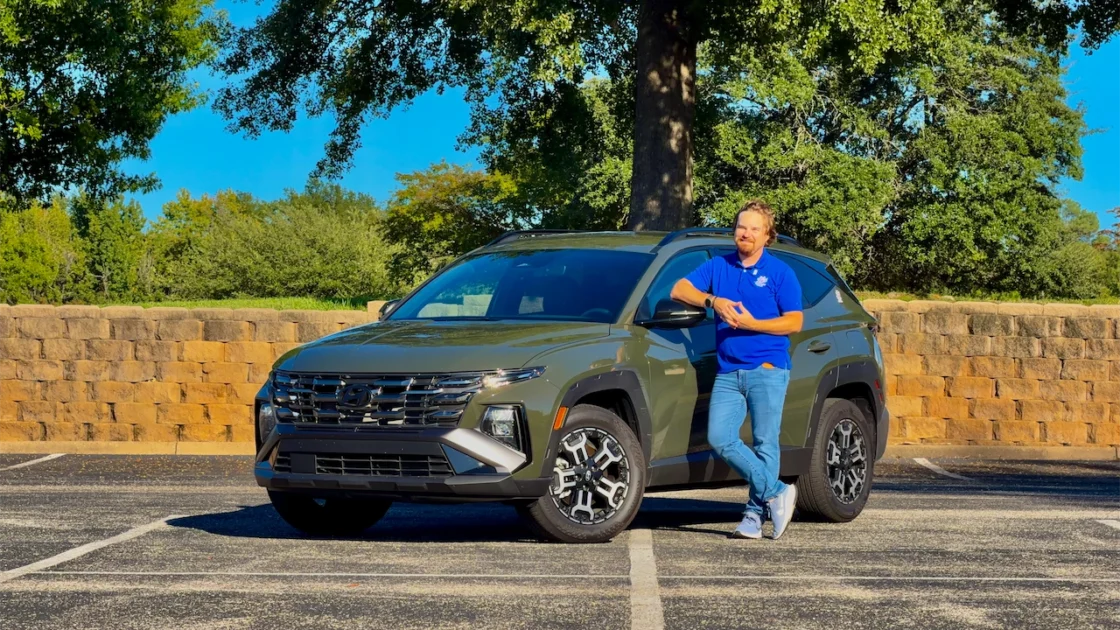
It figures. The week Hyundai delivered a 2026 Tucson XRT to us for testing is the same week the company unveiled its all-new, boldest-ever 2027 Tucson. All jokes aside, the timing was a bit weird, but that doesn’t mean there isn’t a lot to like about the outgoing model.
So what are you getting if you opt for the 2026 Tucson XRT over the redesigned 2027 XRT Pro? After a full week with it here on our home turf in East Texas, here’s my take on this rugged-looking compact SUV.
What Powers the 2026 Tucson XRT
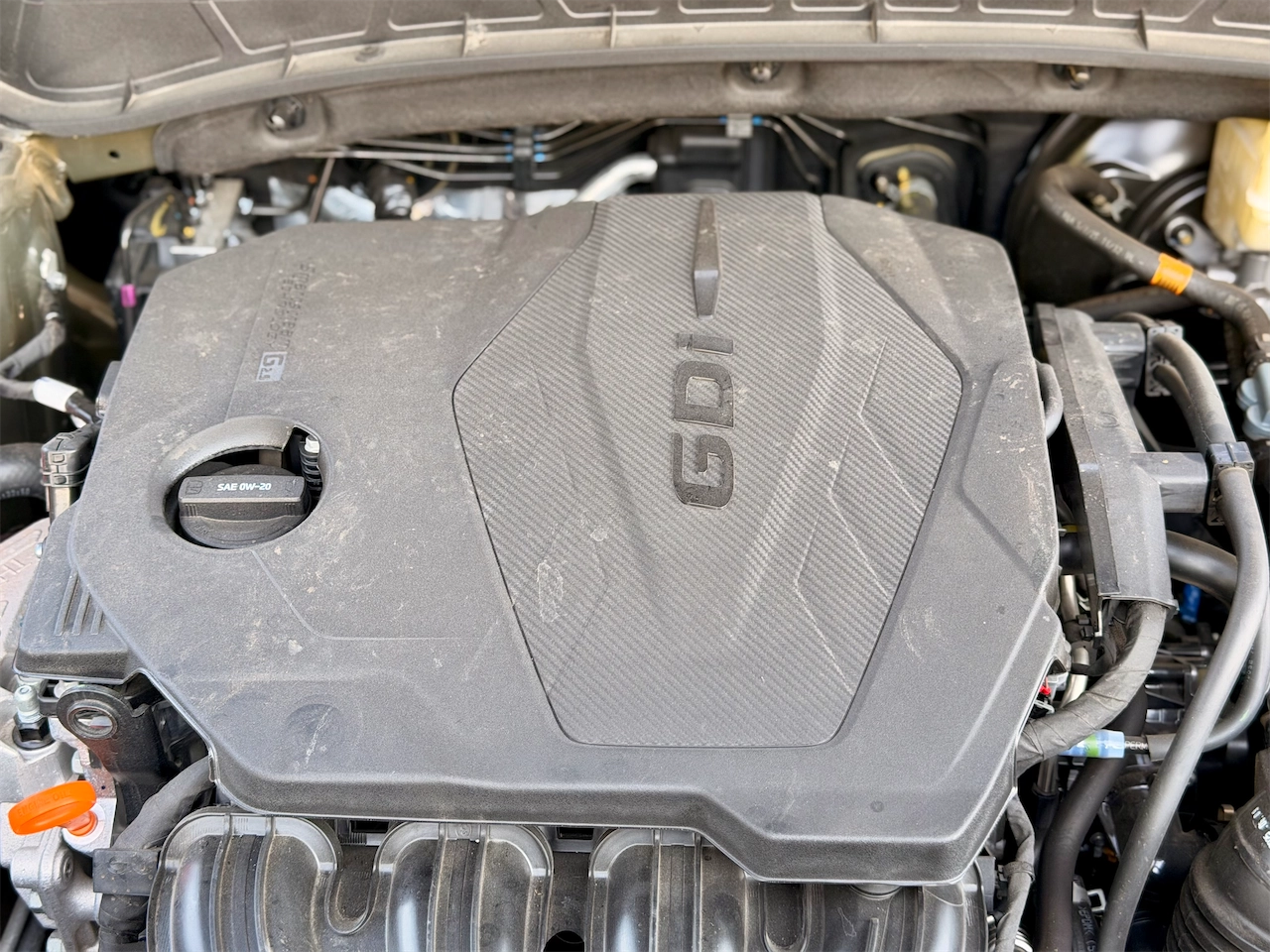
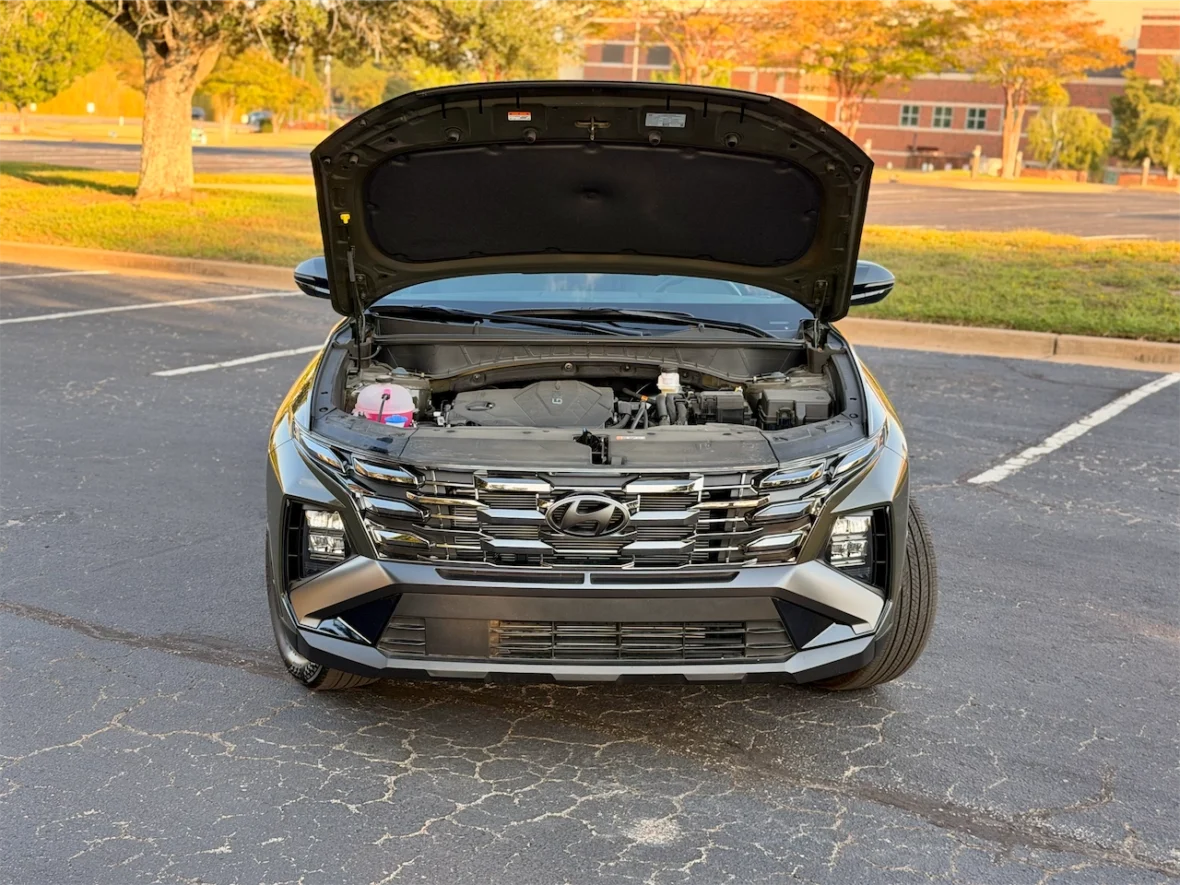
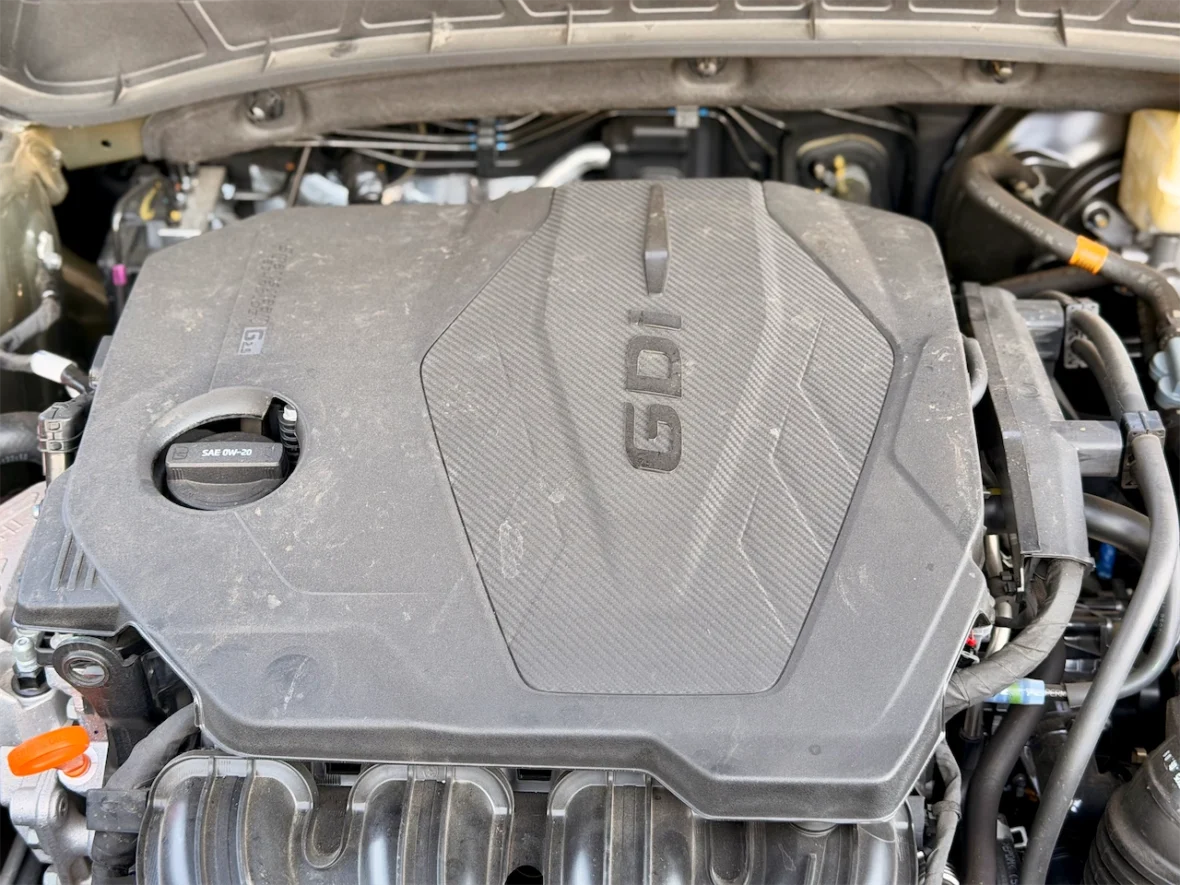
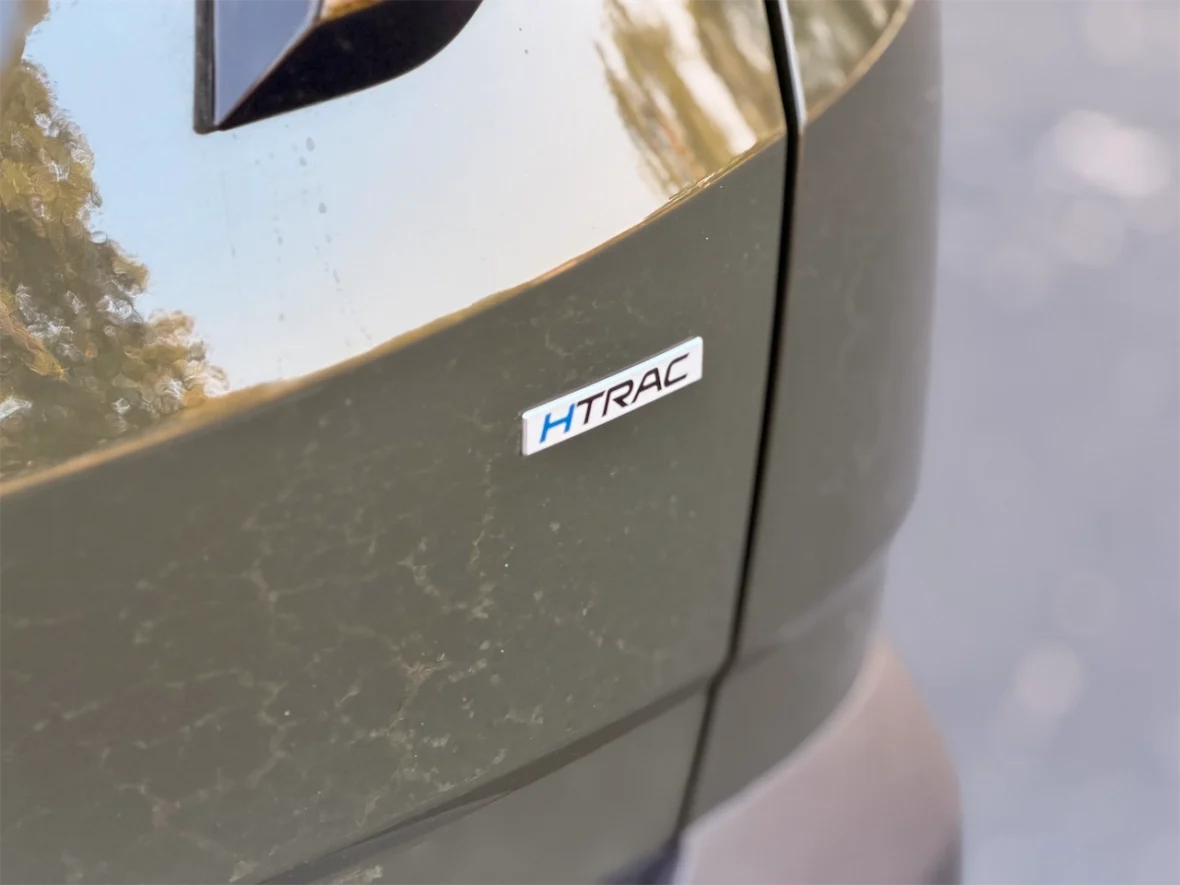
Under the hood, the Tucson XRT uses a naturally aspirated 2.5-liter four-cylinder that makes 187 horsepower and 178 lb-ft of torque. It’s paired with an eight-speed automatic transmission, and our tester had HTRAC all-wheel drive (AWD).
The engine is decently powerful, but it’s not quick by any means. It’s a great commuter, but I much prefer the 1.6-liter turbocharged hybrid powertrain also offered in this generation. Curiously, the 2.5-liter disappears for 2027, replaced by a 1.6-liter turbo or a 1.6-liter turbo hybrid.
Styling That Should Age Gracefully
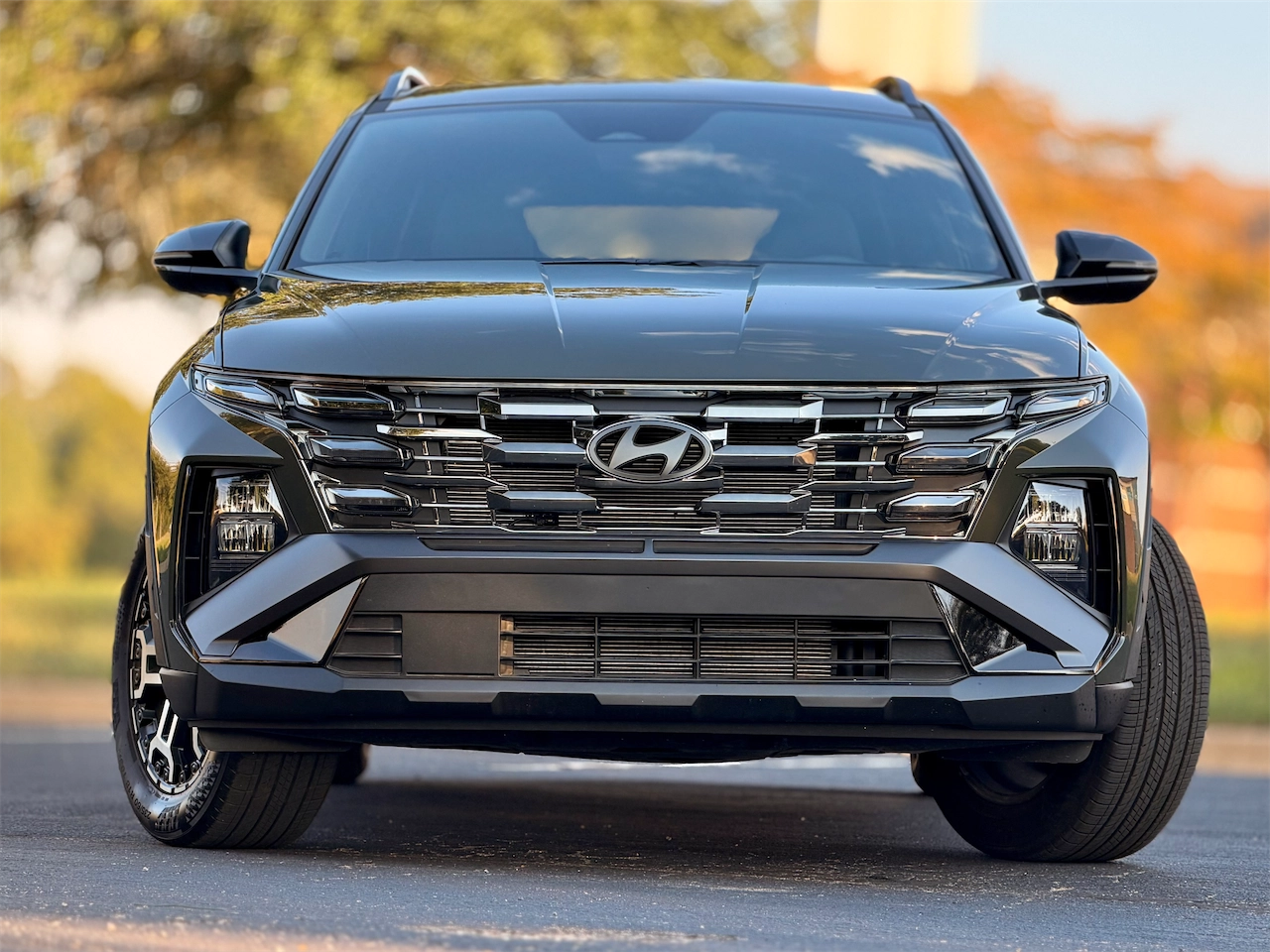
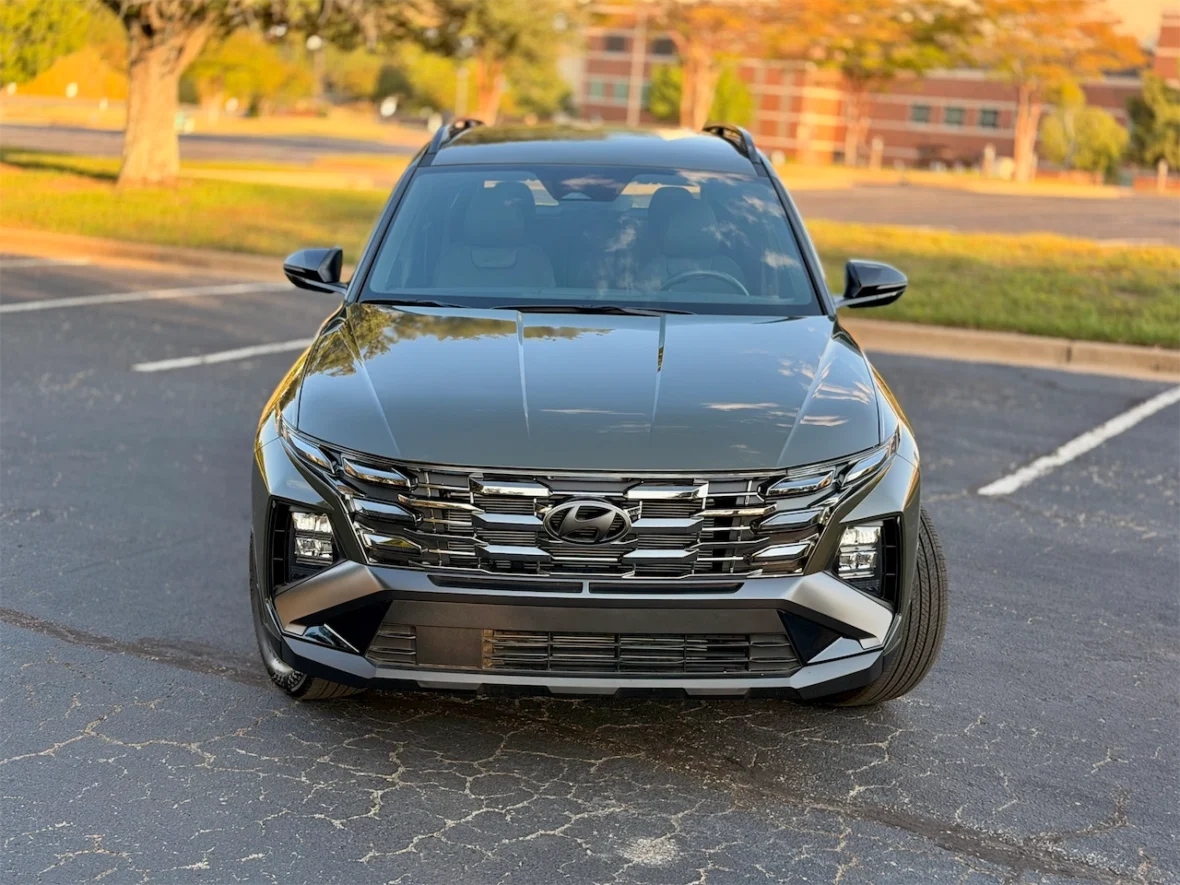
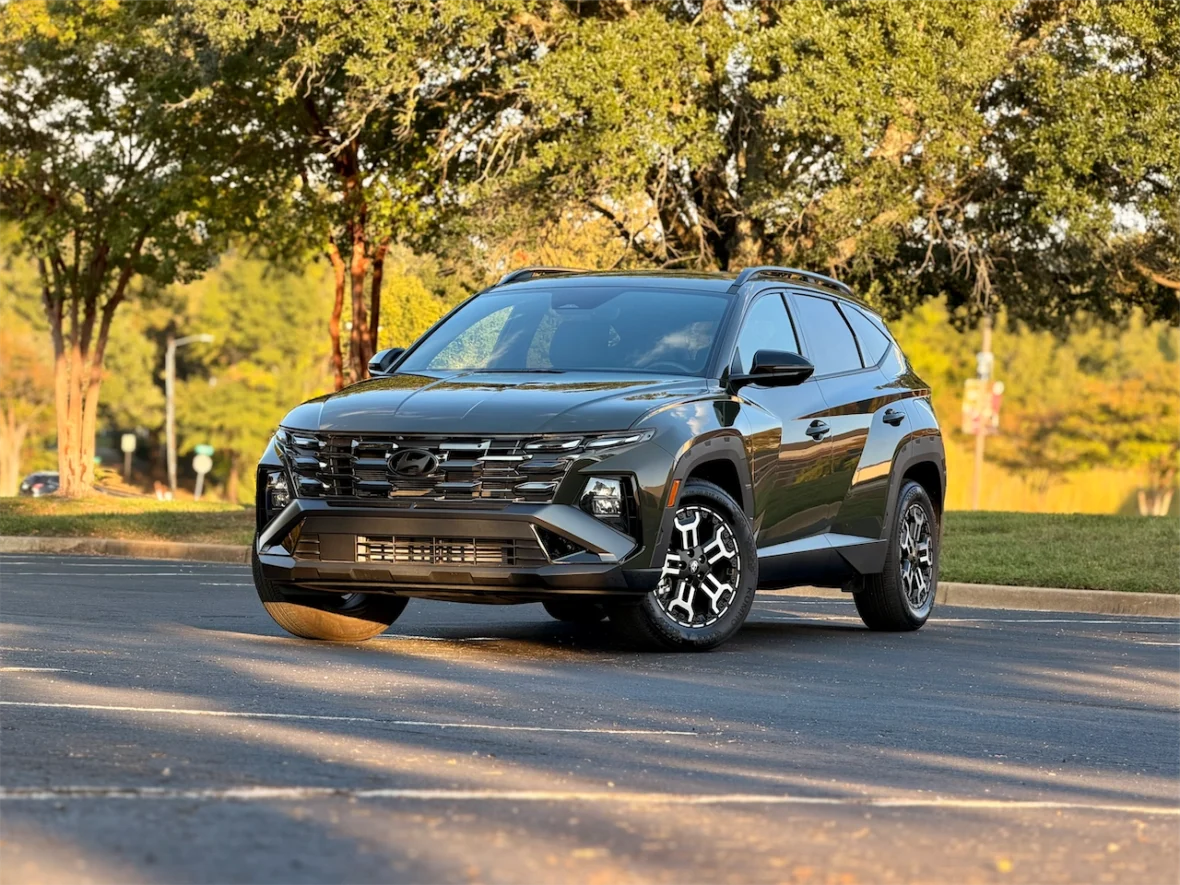
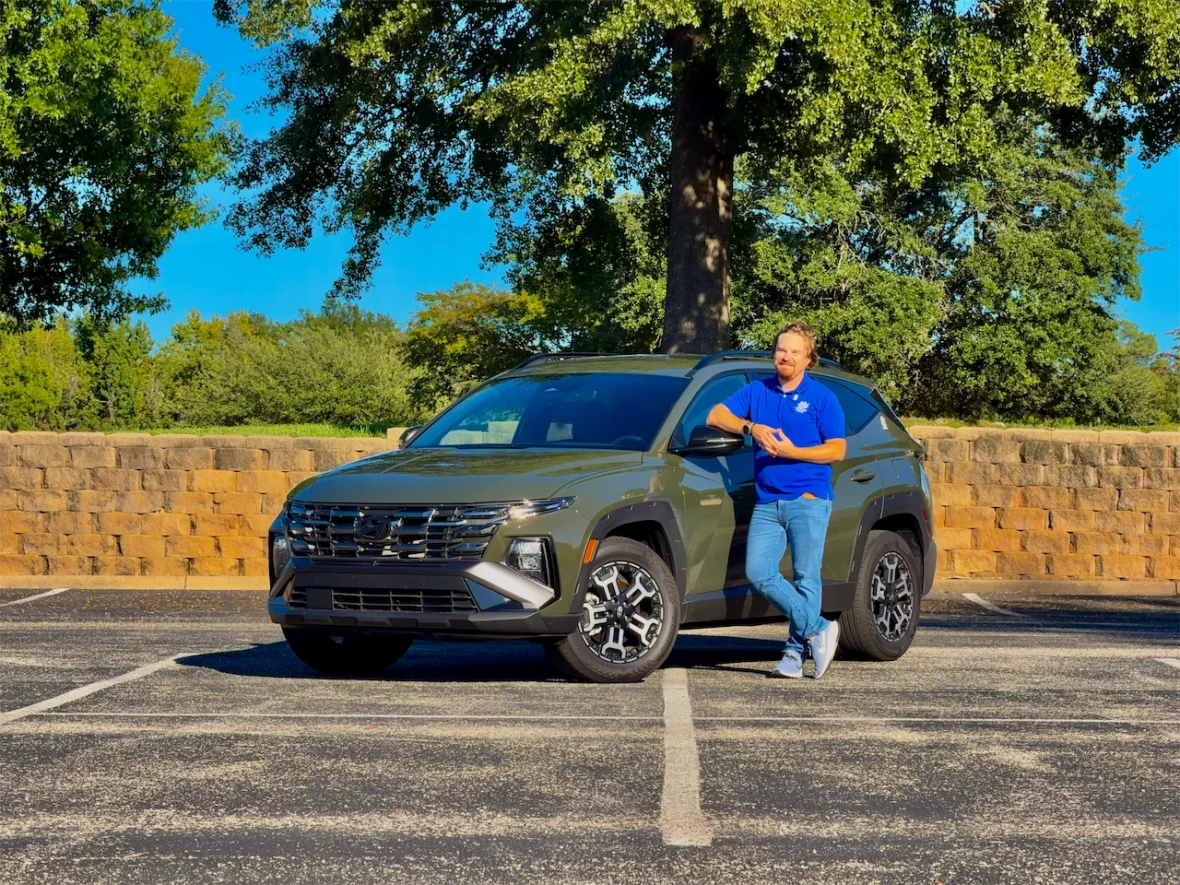
Hyundai drastically changes its lineup from generation to generation, and even from model to model. As a result, the 2026 Tucson looks nothing like anything else in the family, and there’s no mistaking it for the 2027 model.
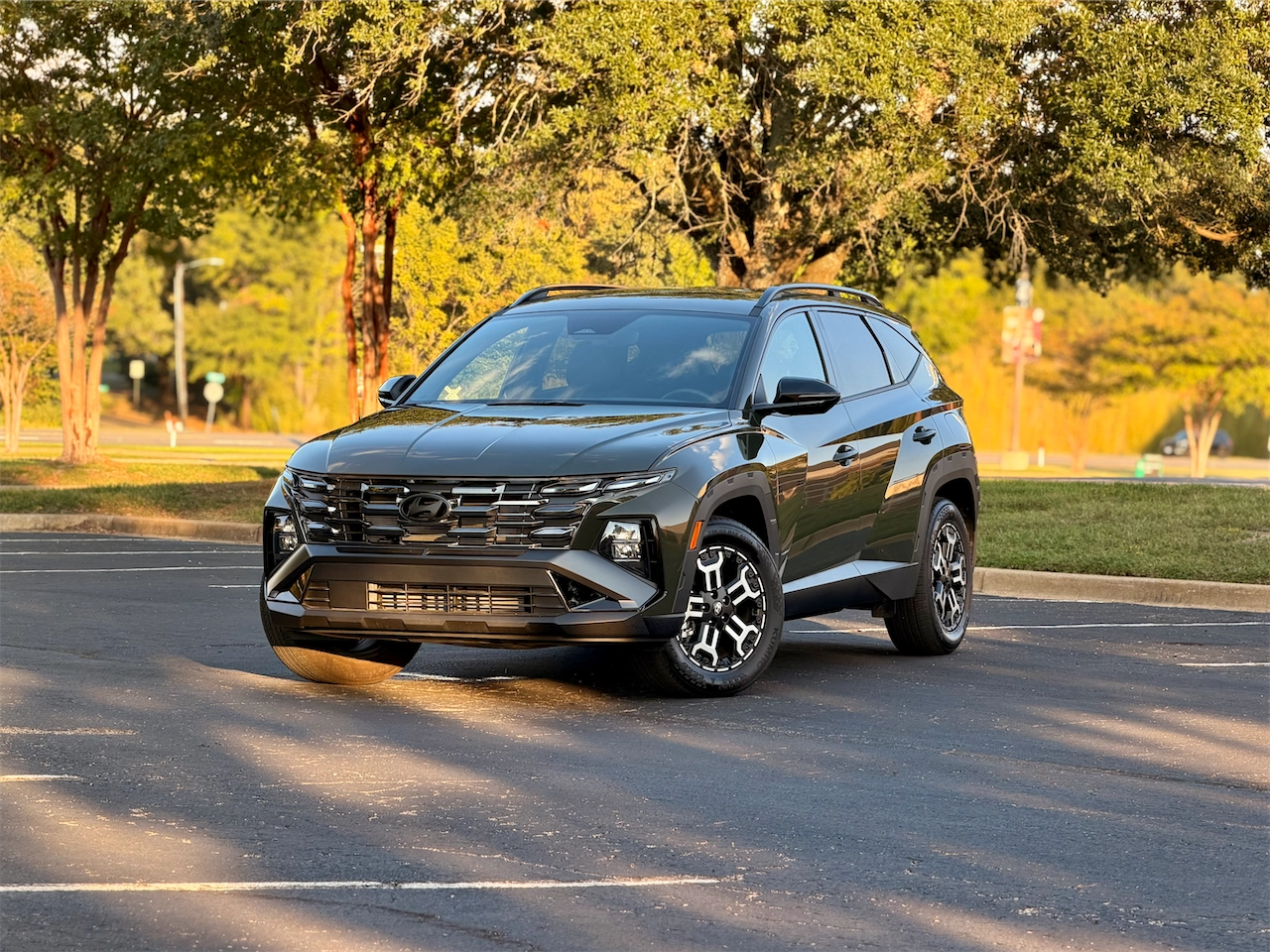
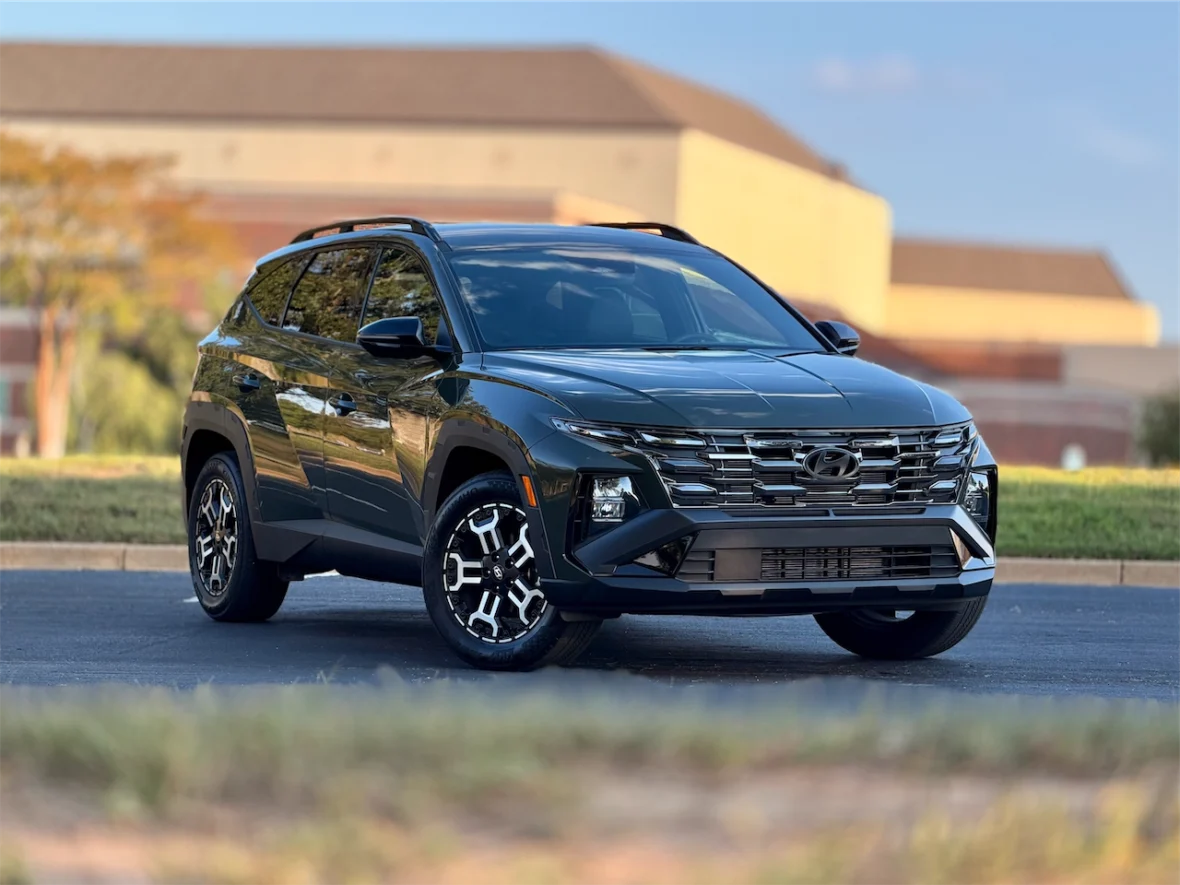
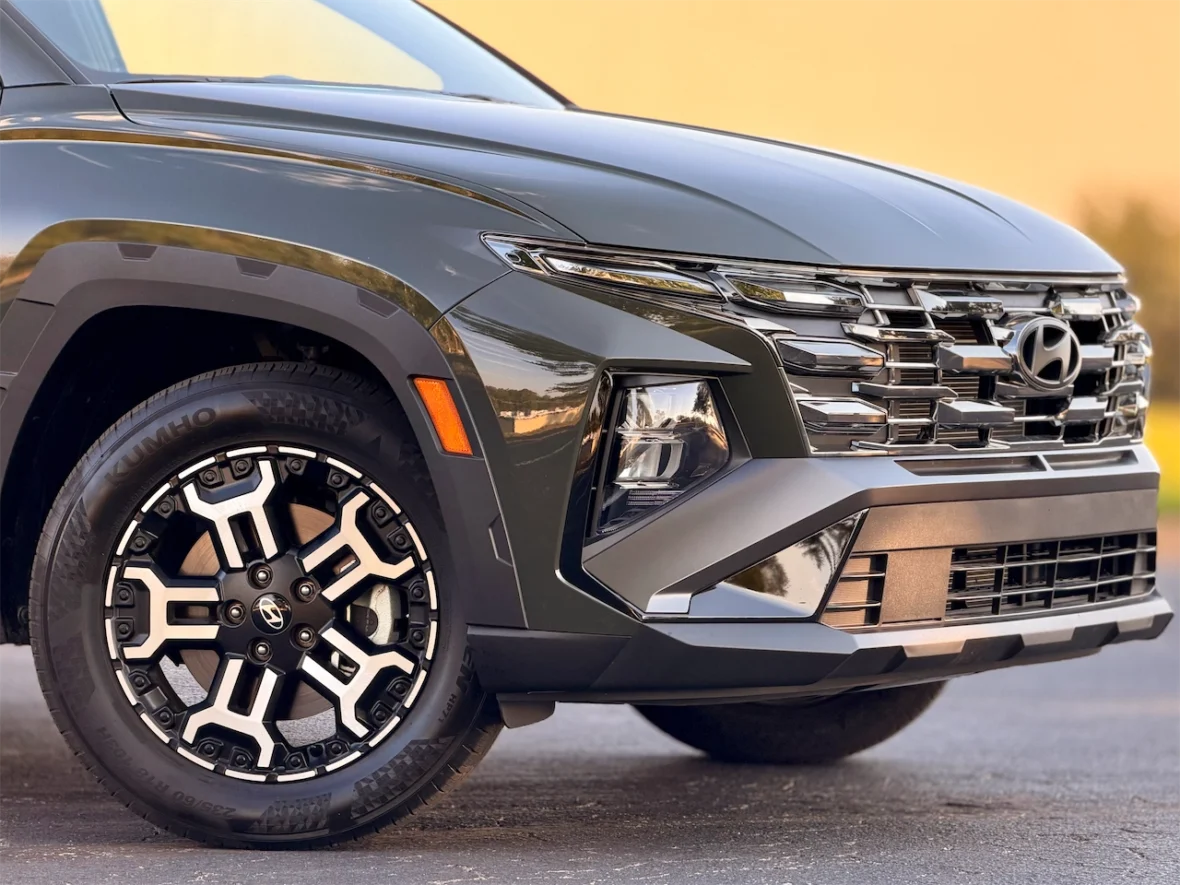
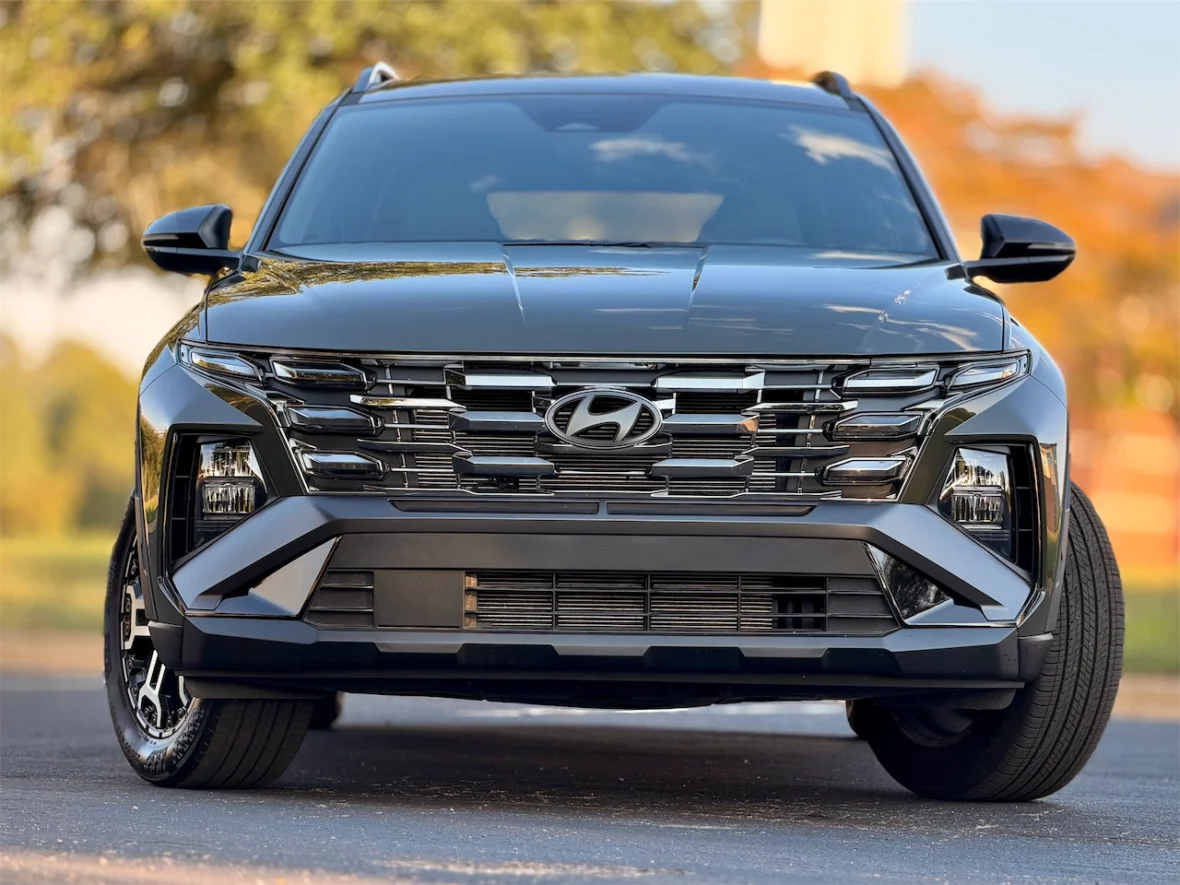
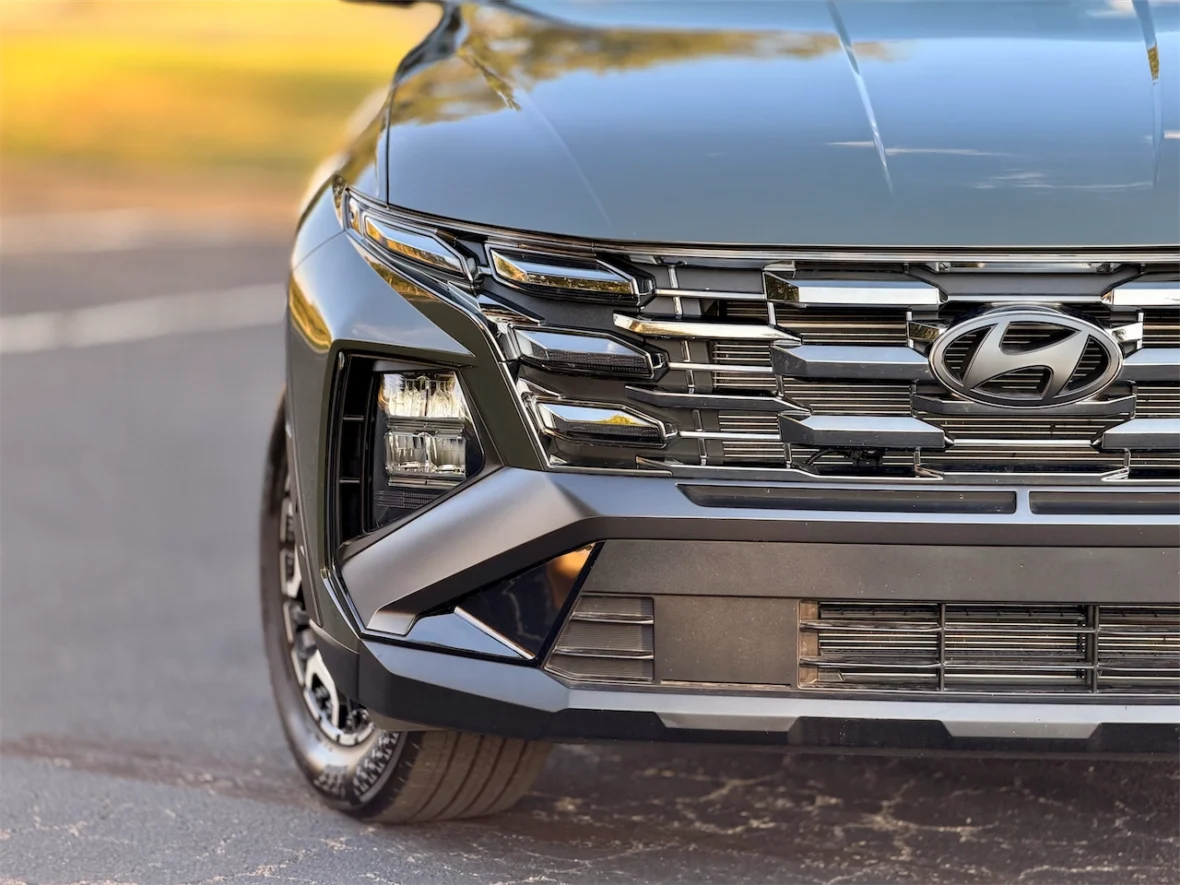
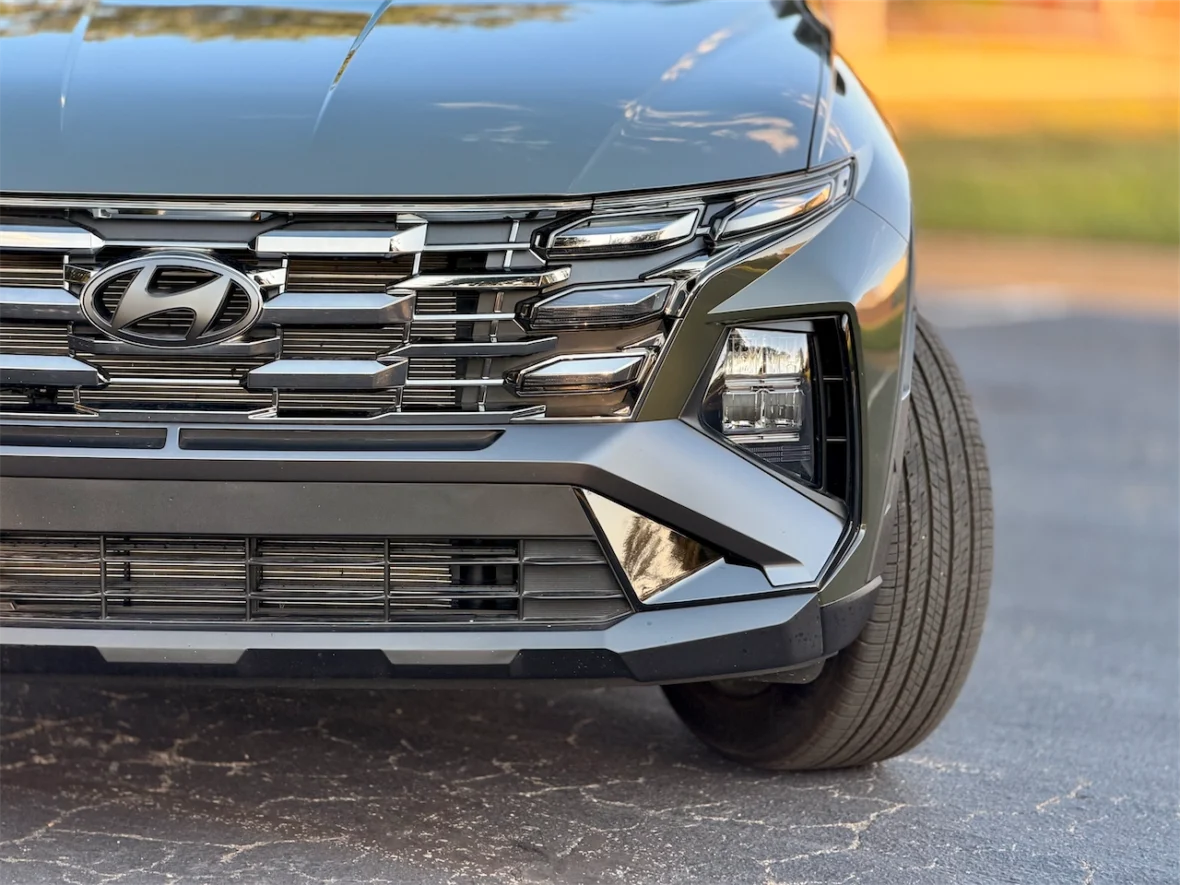
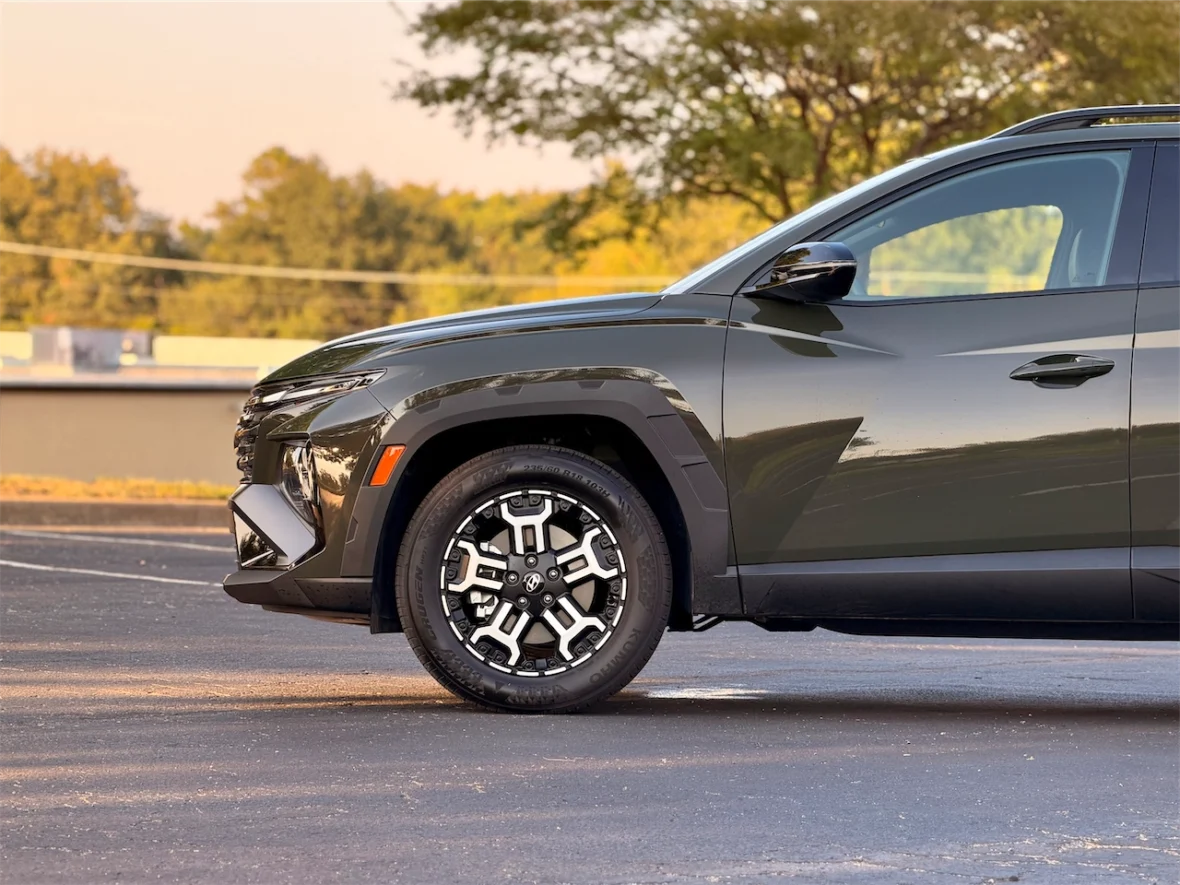
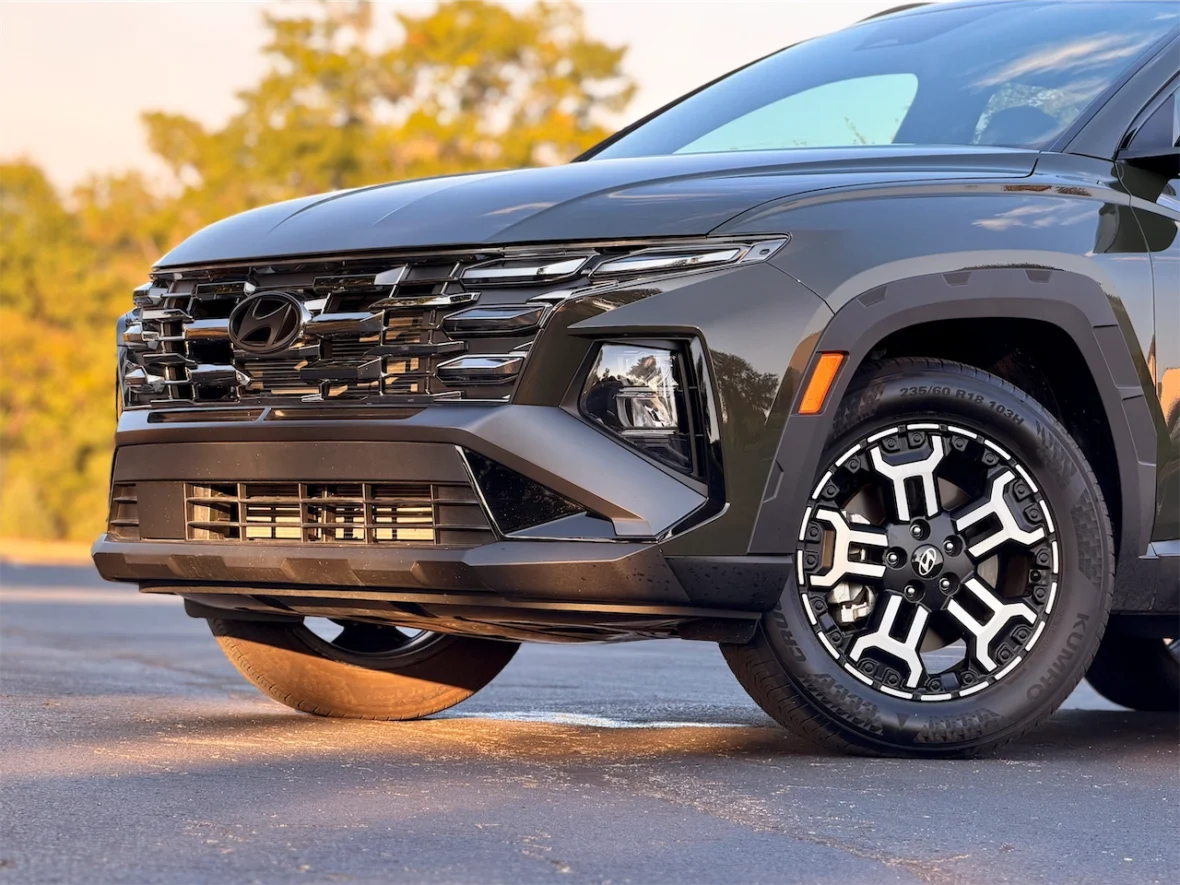
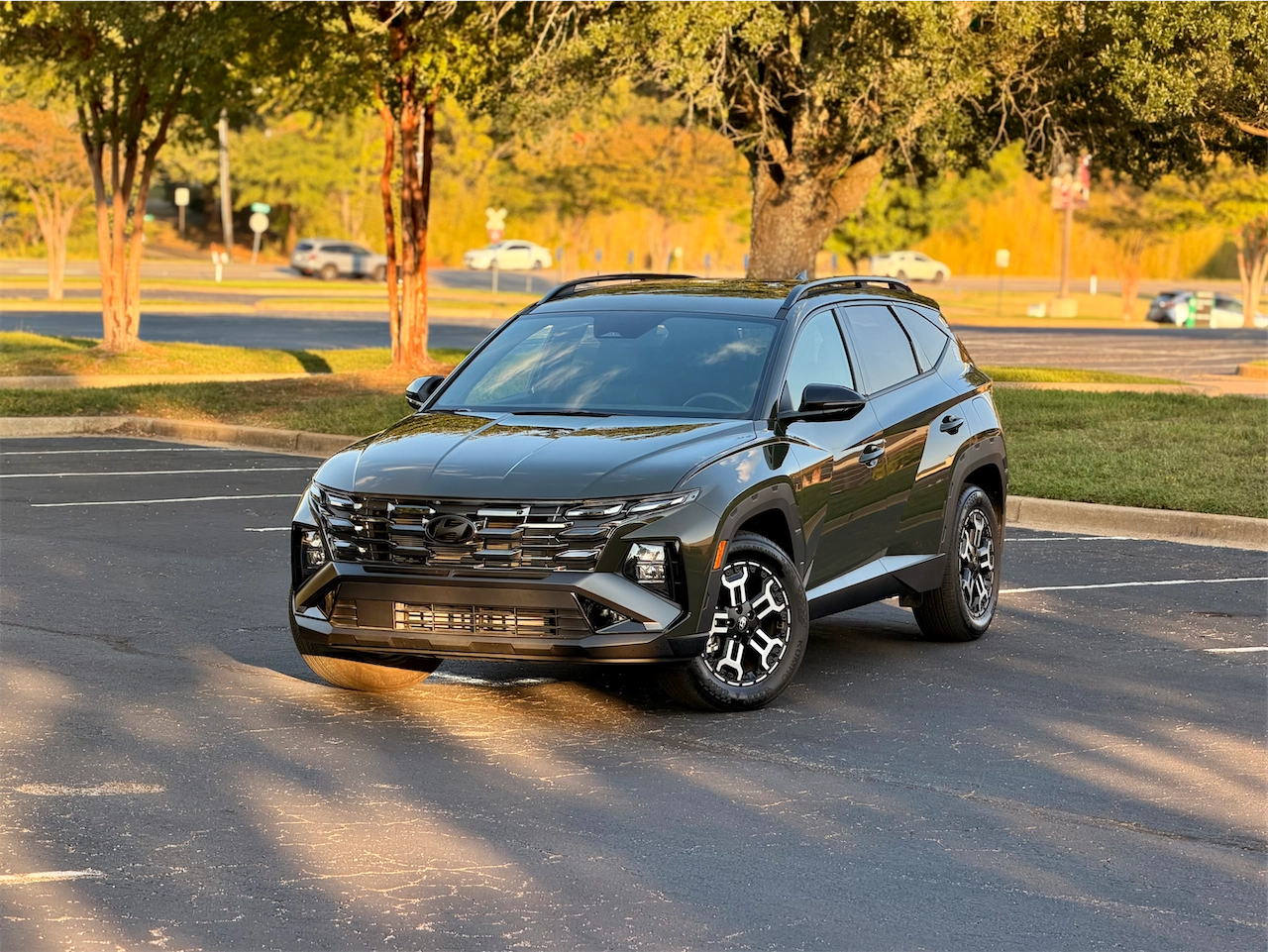
For example, up front, the turn signals sit up high and, along with the running lights, hide within the overall grille design. Meanwhile, the headlights sit lower, divorced from the running lamps. It’s a clean, handsome look that has been updated over the years, and I think it will continue to age very gracefully.
XRT Looks, Not Off-Road Hardware
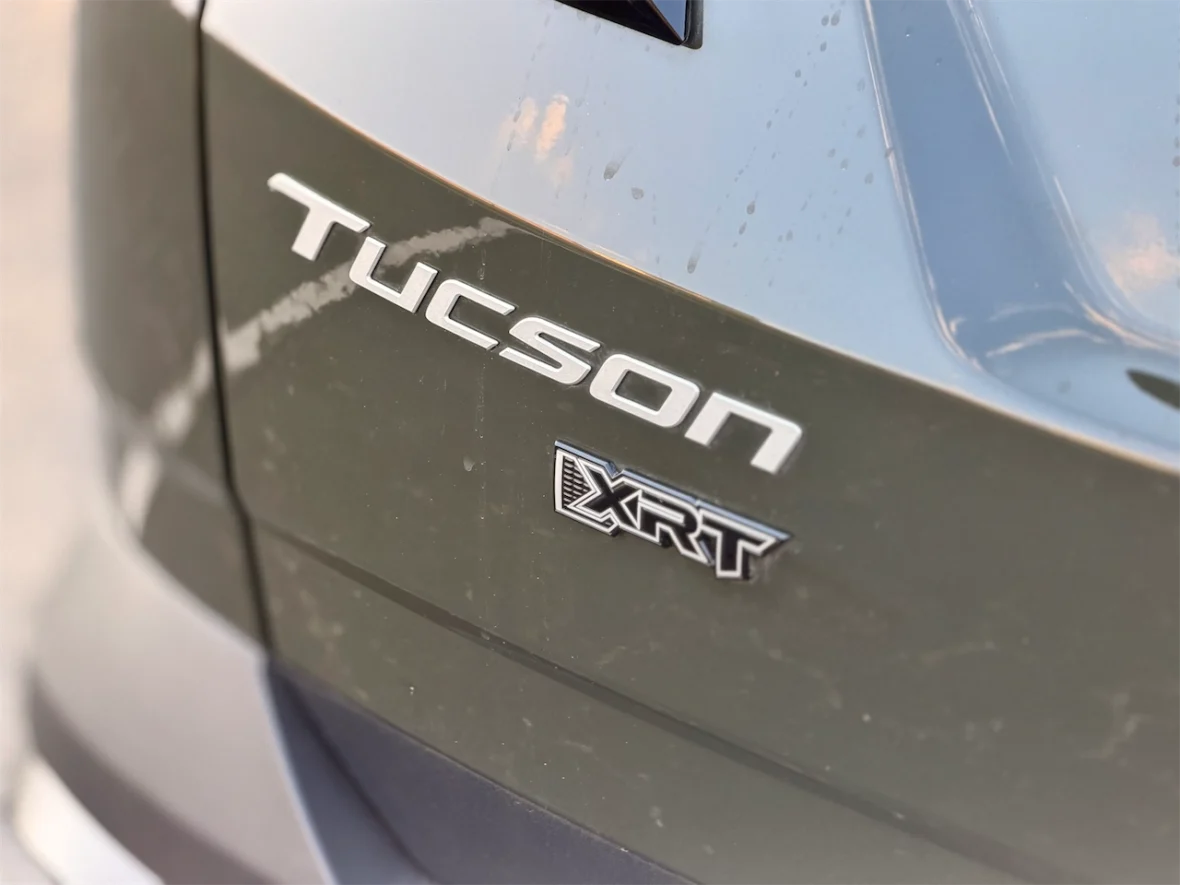
Here’s where the 2026 and 2027 models really go in separate directions. The XRT name debuted on this generation, but for 2027, Hyundai takes it a step further with the XRT Pro. Pro actually means something at Hyundai now, perhaps like Trail Rated means something at Jeep.
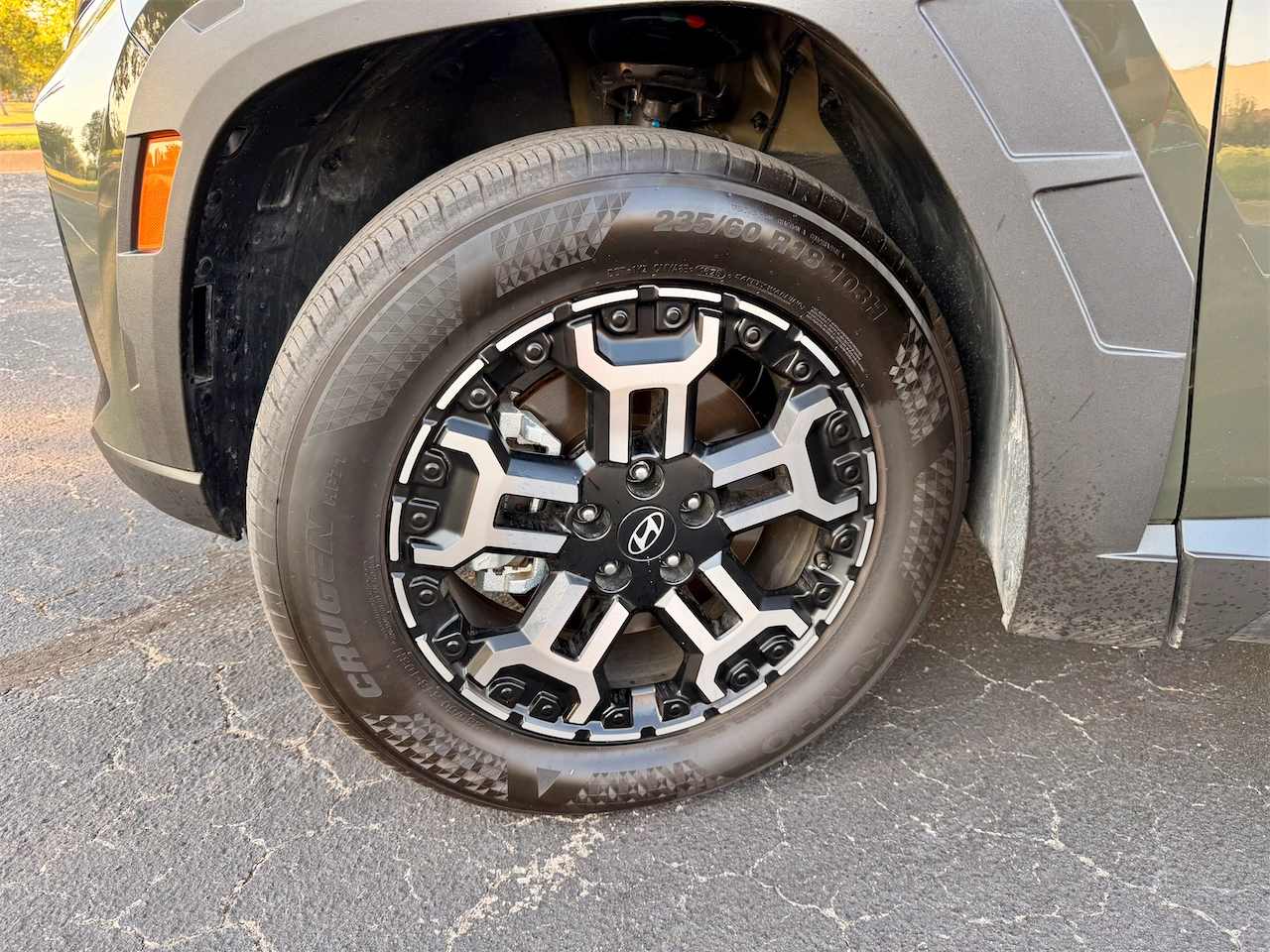
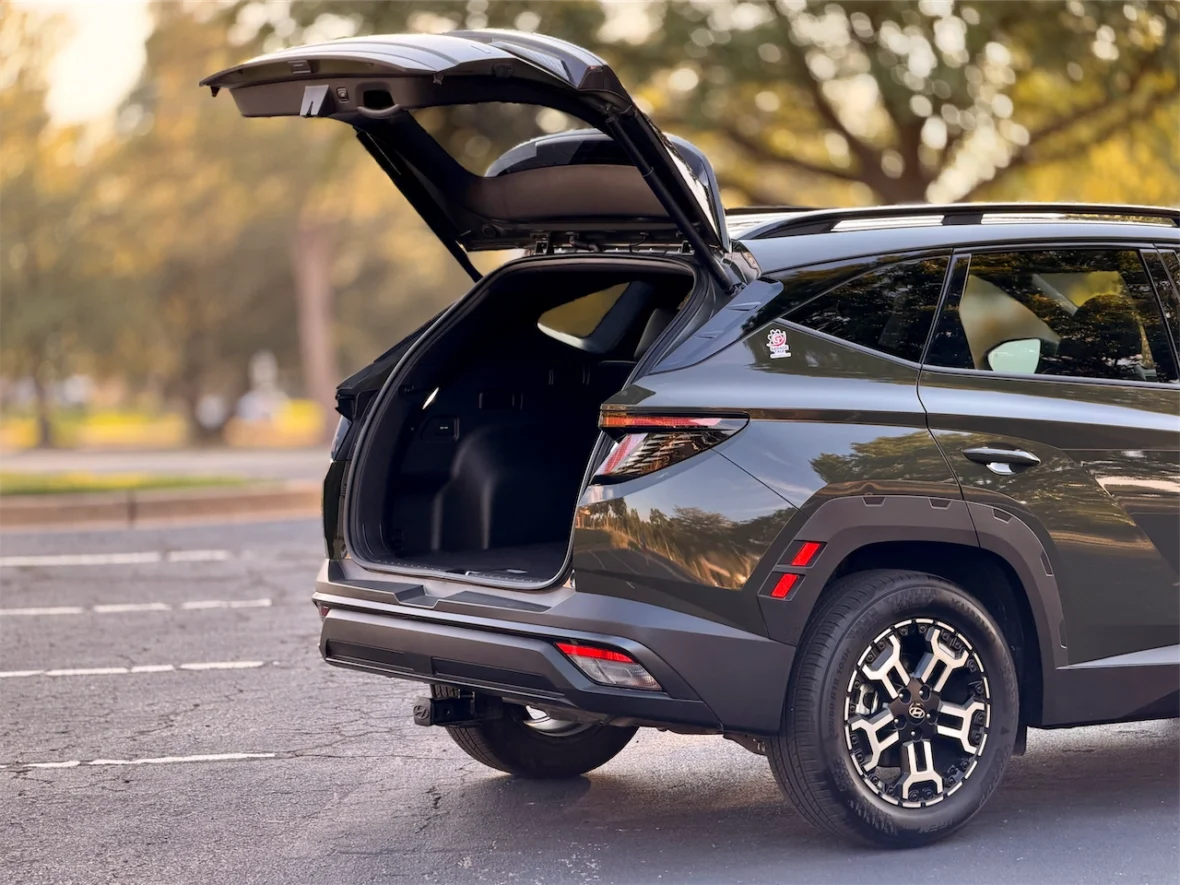
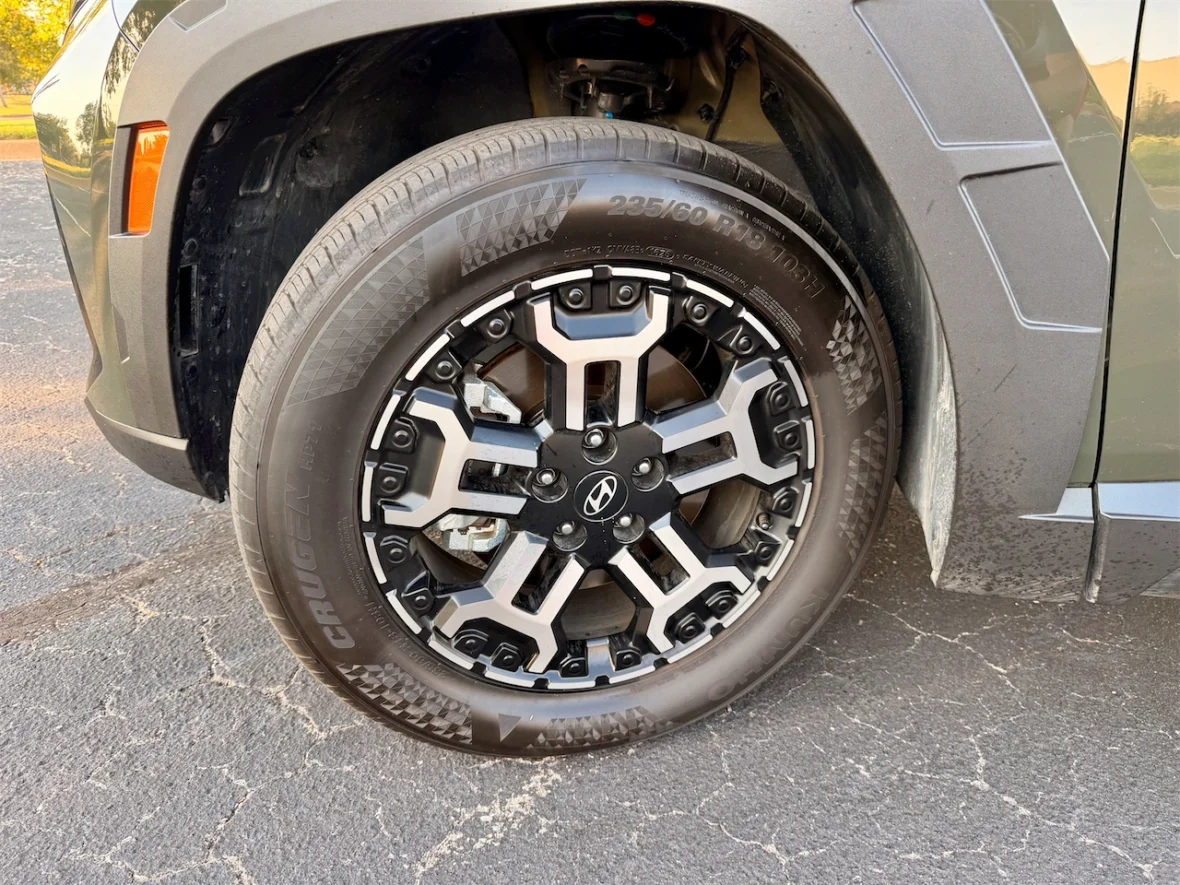
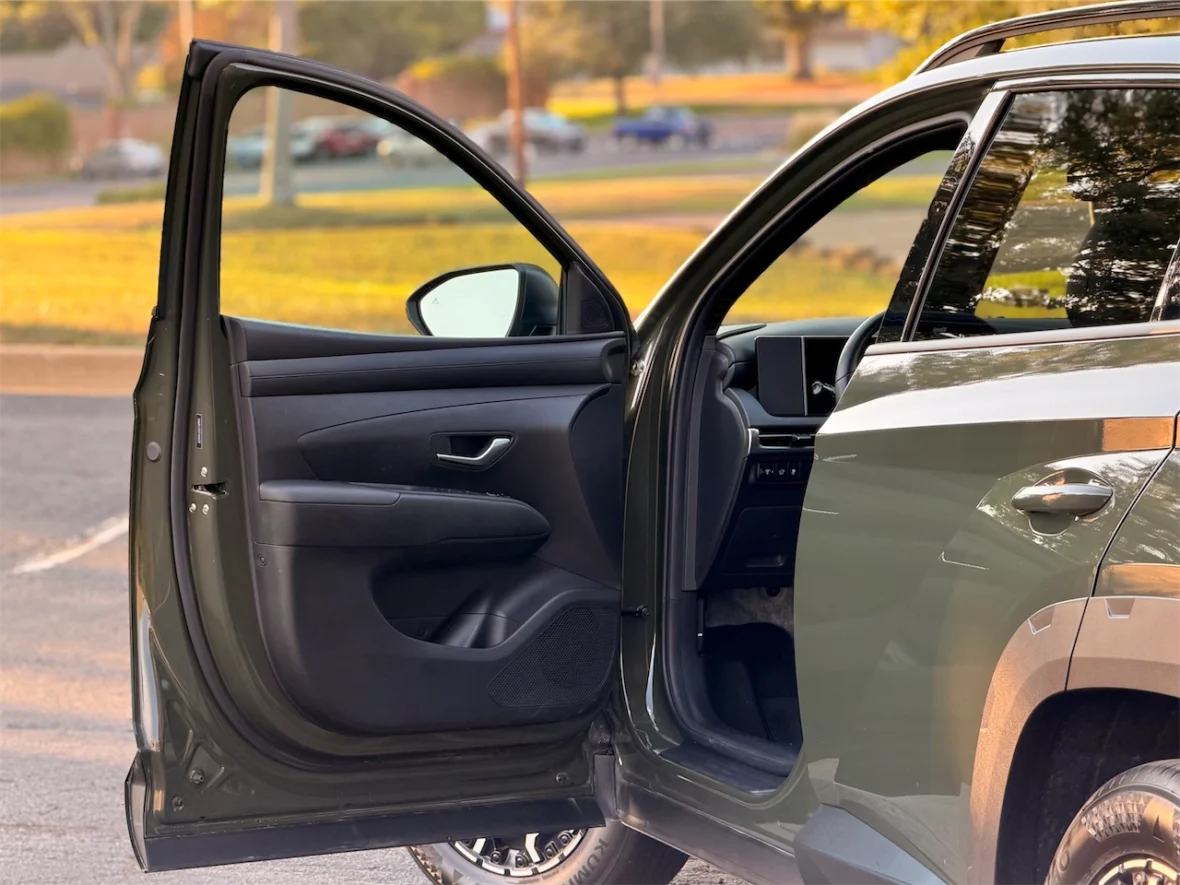
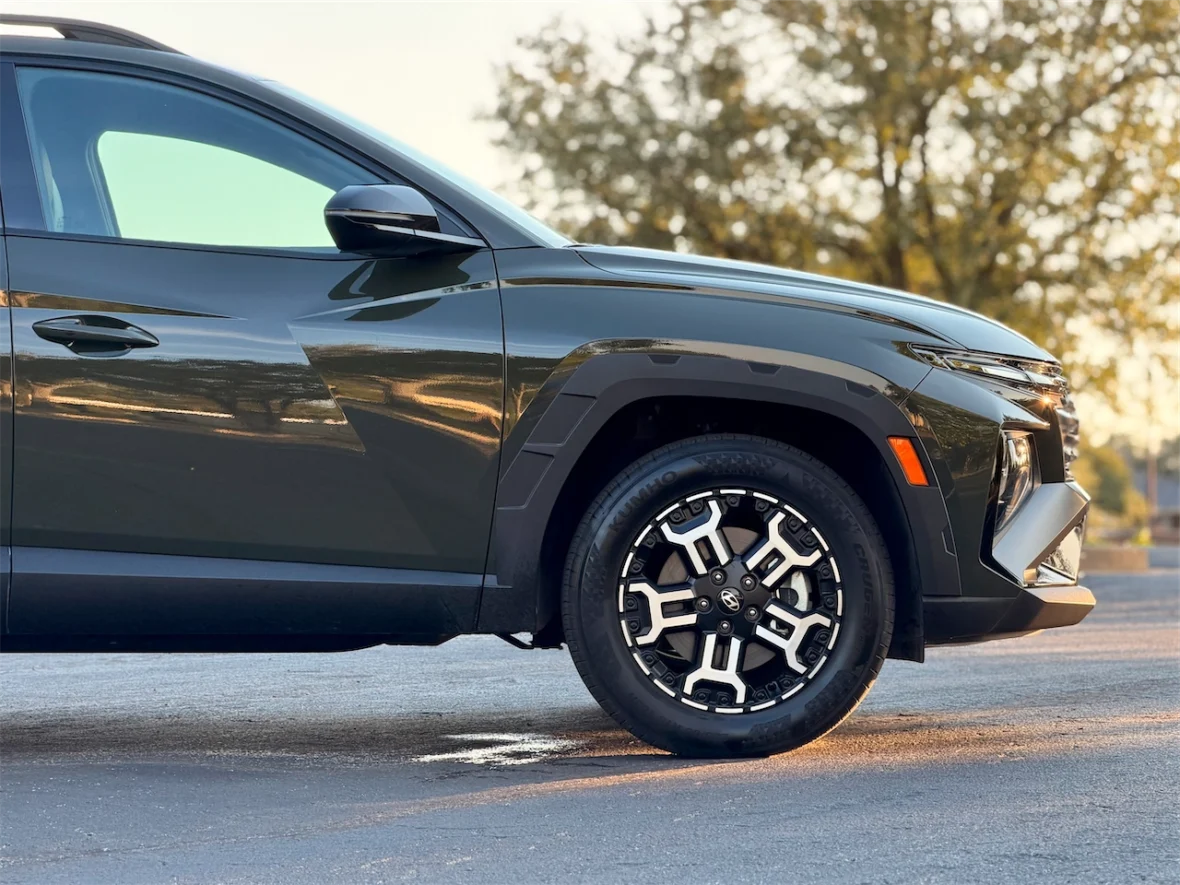
For the 2026 XRT, however, the name (short for “extreme rugged terrain”) doesn’t mean a whole lot. Sure, we get chunky beadlock-style wheels, but they aren’t actually beadlocks. Still, the 18-inch machine-faced wheels give it a nice rugged presence. They’re wrapped in 235/60R18 Kumho Crugen tires, which are on-road tires, not off-road rubber in any way, shape, or form. In fact, Hyundai even offers the XRT with front-wheel drive (FWD), starting at $33,725 and rated at 25 MPG city, 33 MPG highway, and 28 MPG combined.
The Hanbok Line and Rounded Profile
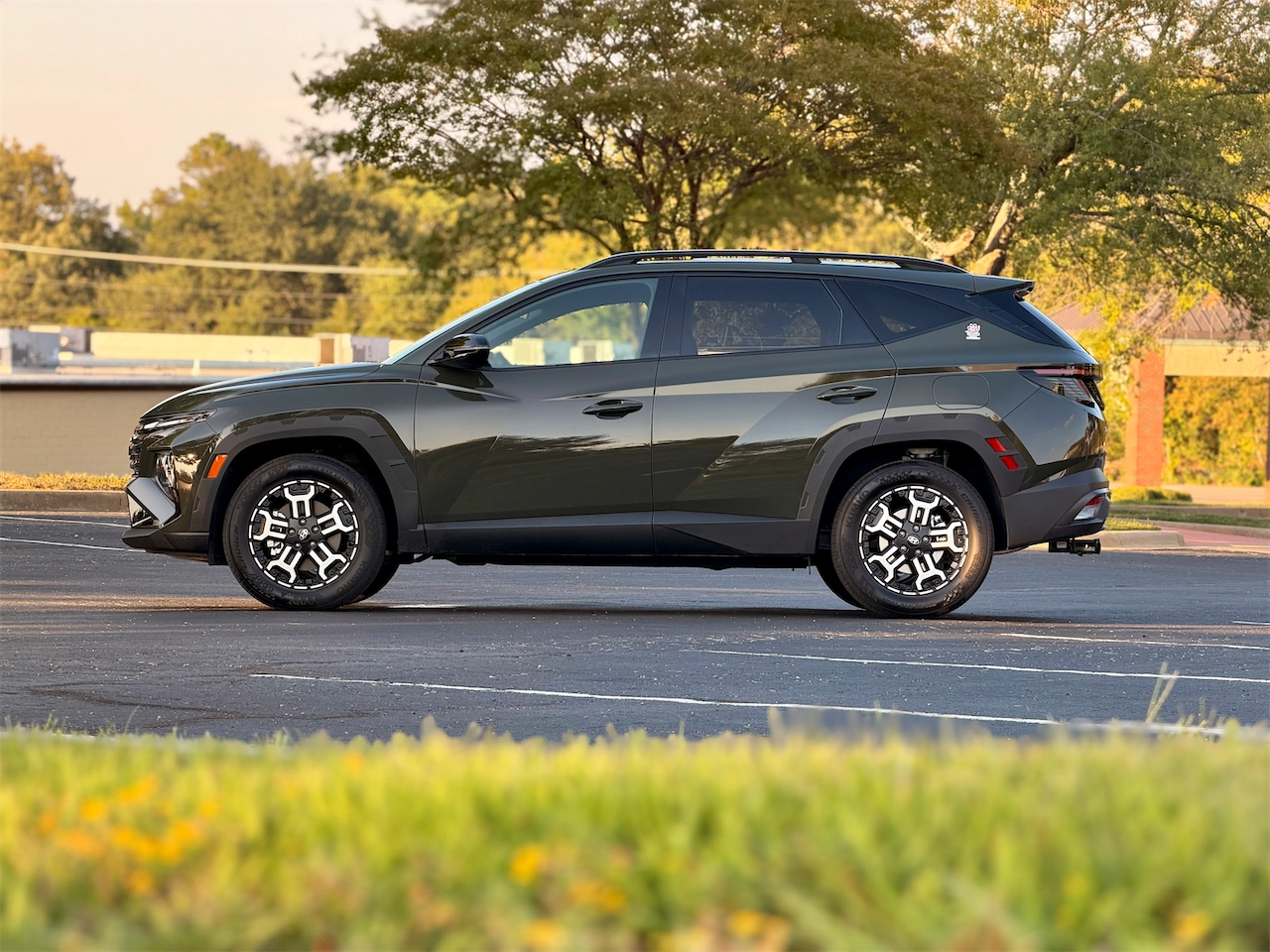
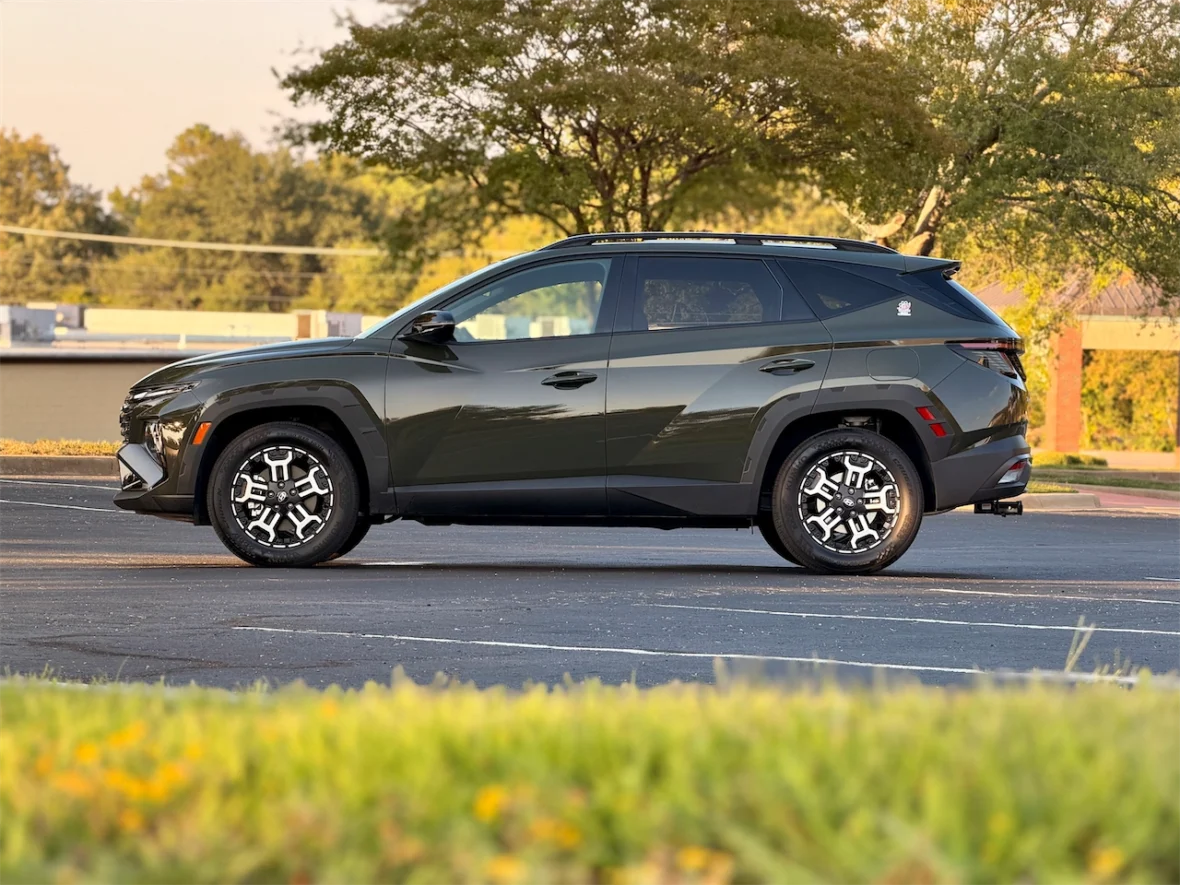
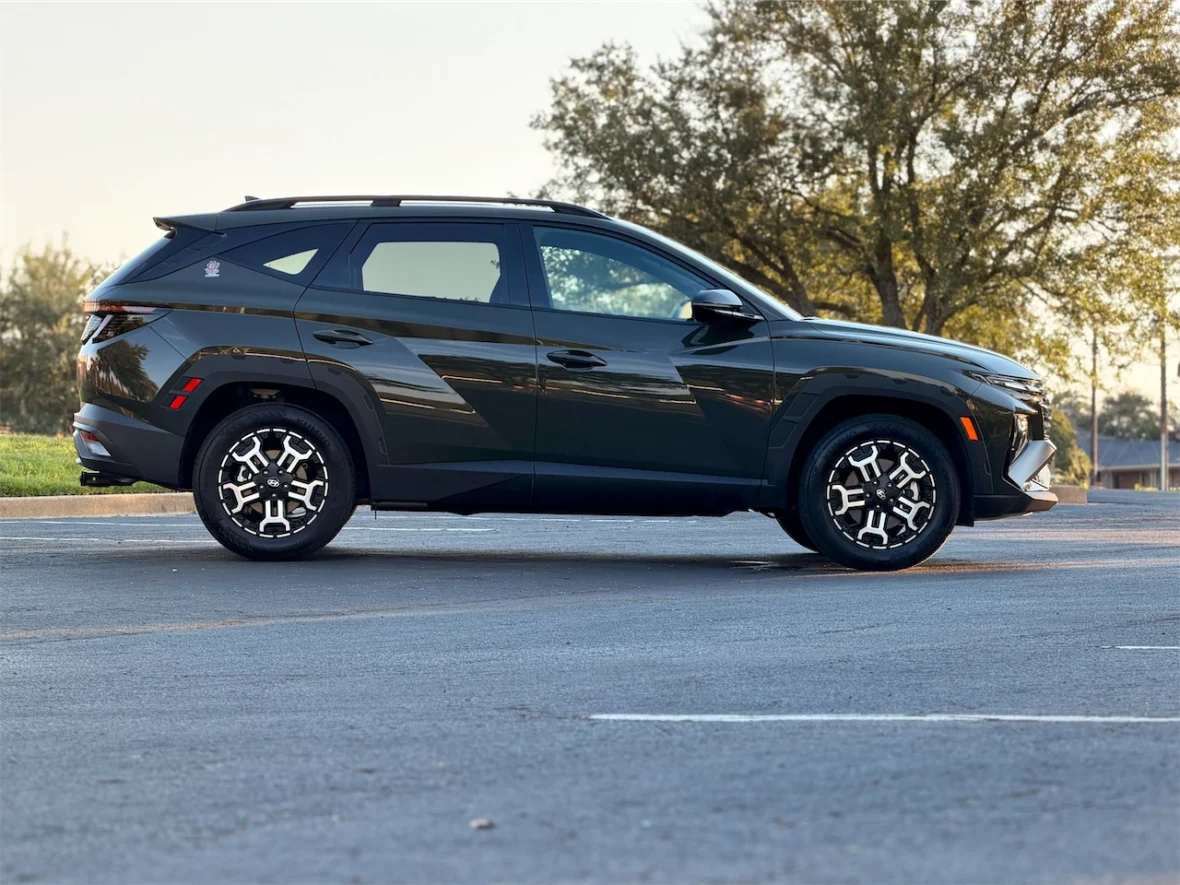
For 2027, the Tucson grows longer and wider, and it gets boxier and bolder (Hyundai’s words, not mine). However, one design line carries over from this generation. It’s the Hanbok line, a crease meant to recall a traditional Korean garment, a robe that folds over much like this line along the side.
Like the front, this side profile should age very gracefully. Still, it’s very round and curvaceous compared with the bolder, boxier 2027 replacing it.
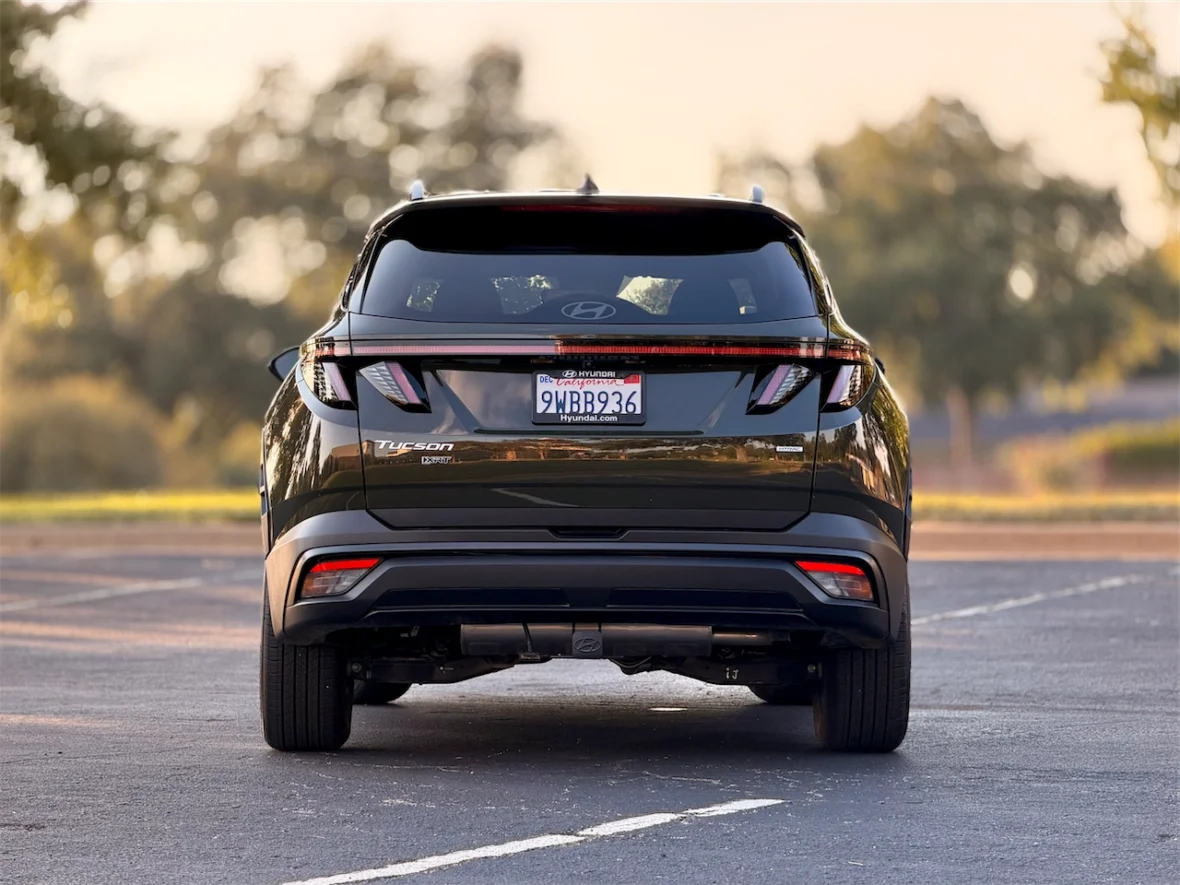
Rear Styling and Those Low Turn Signals
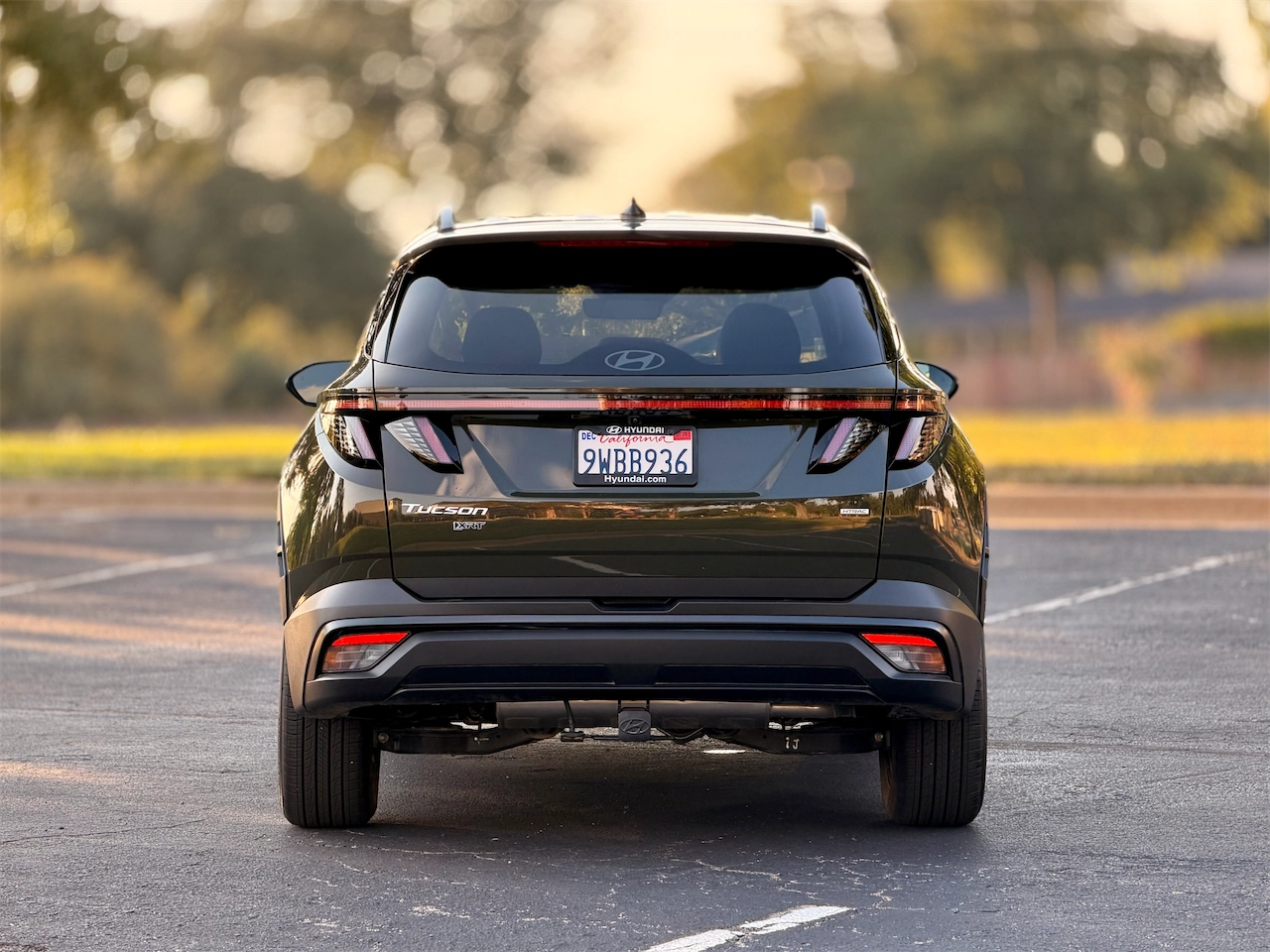
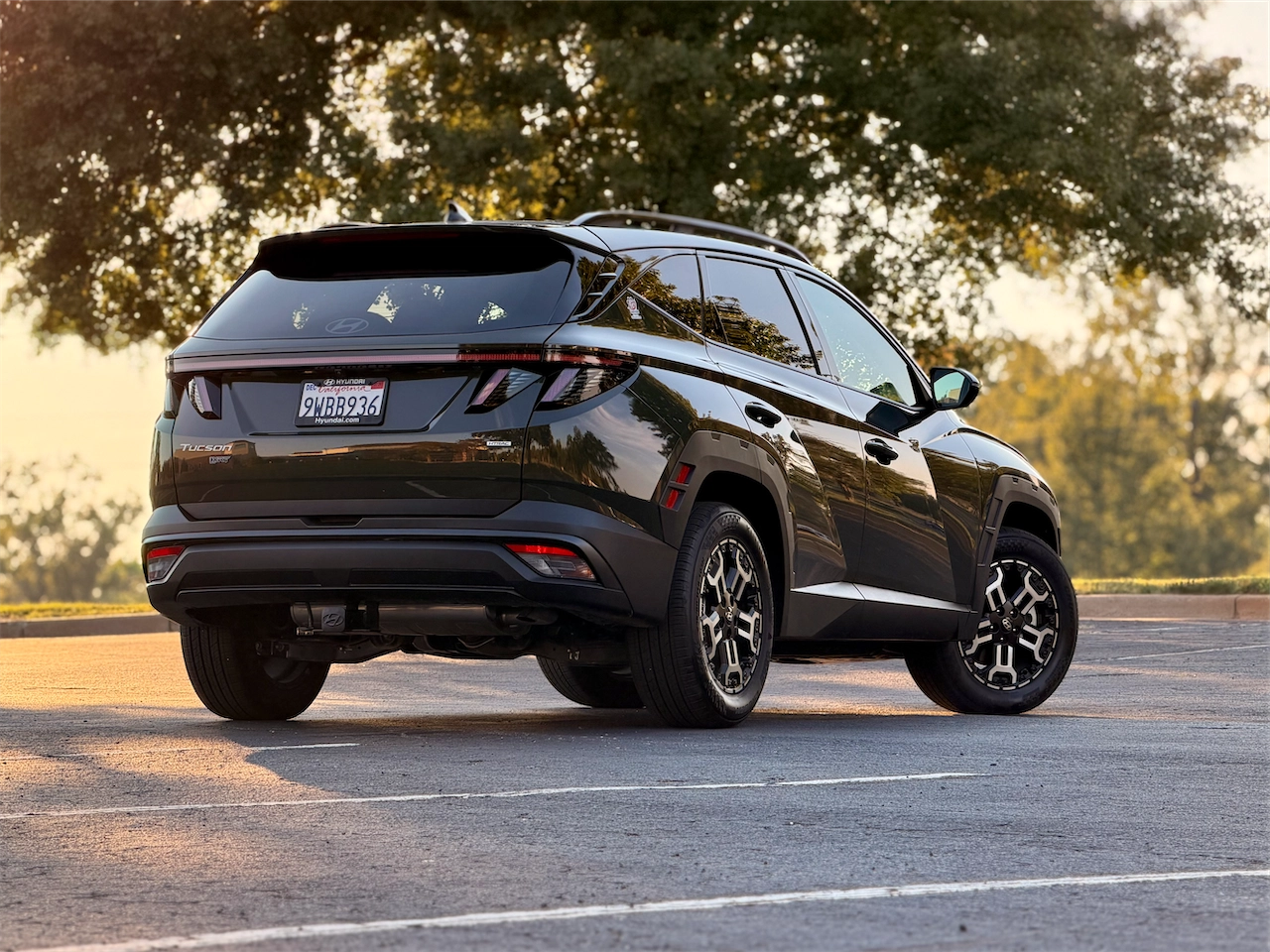
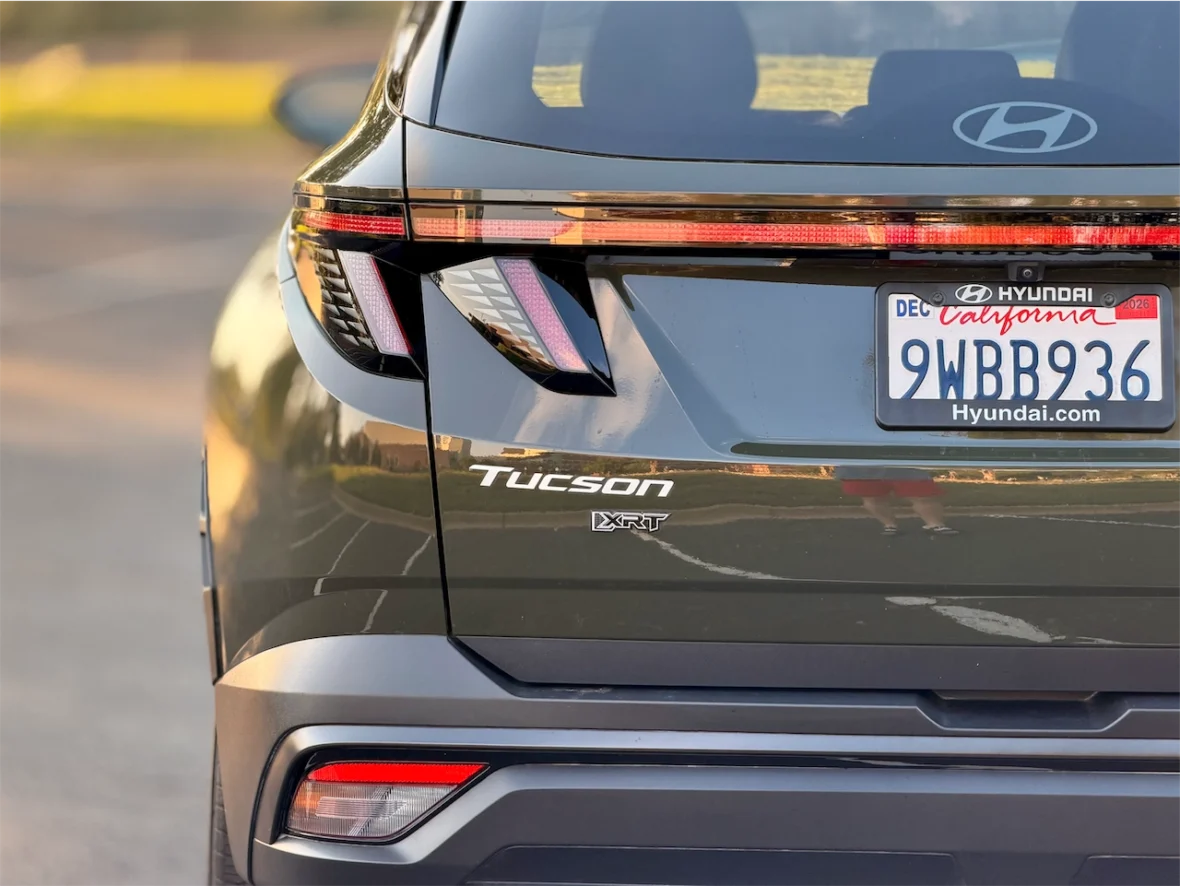
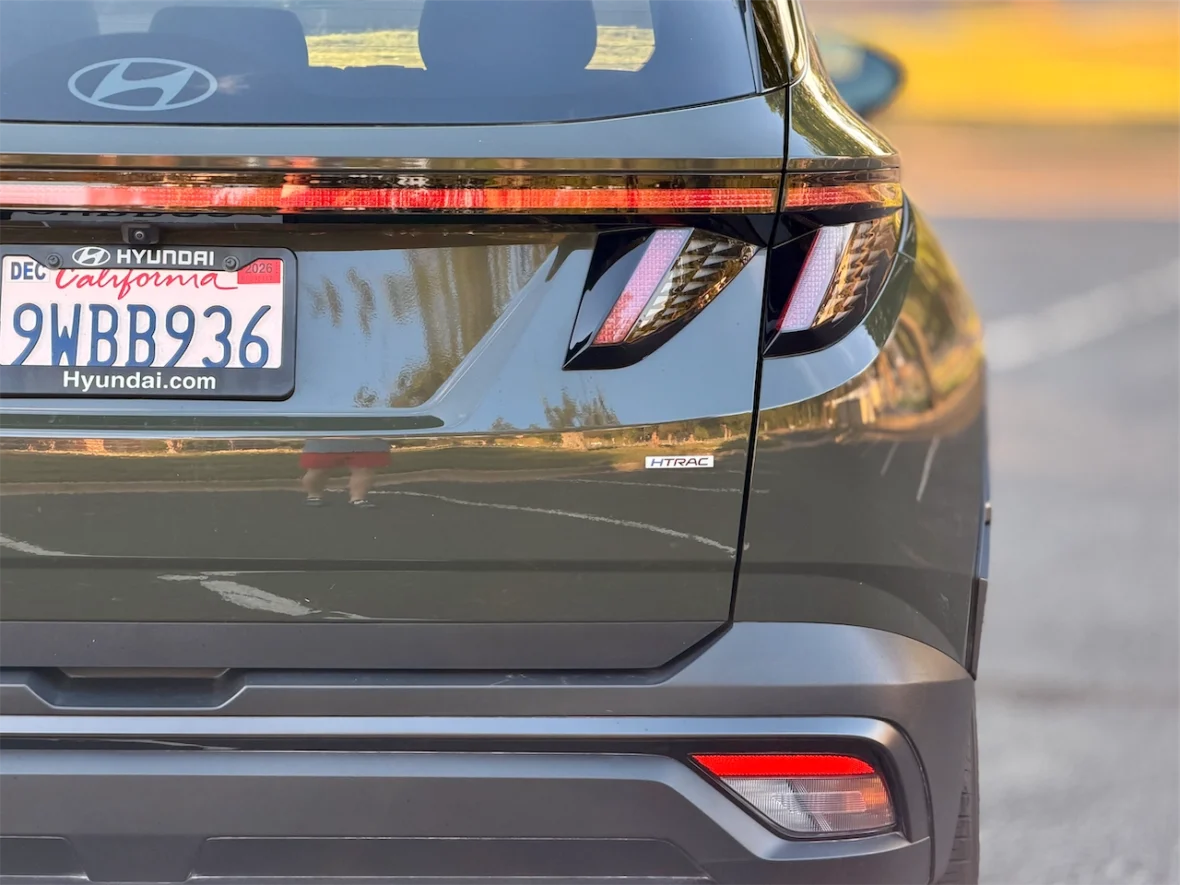
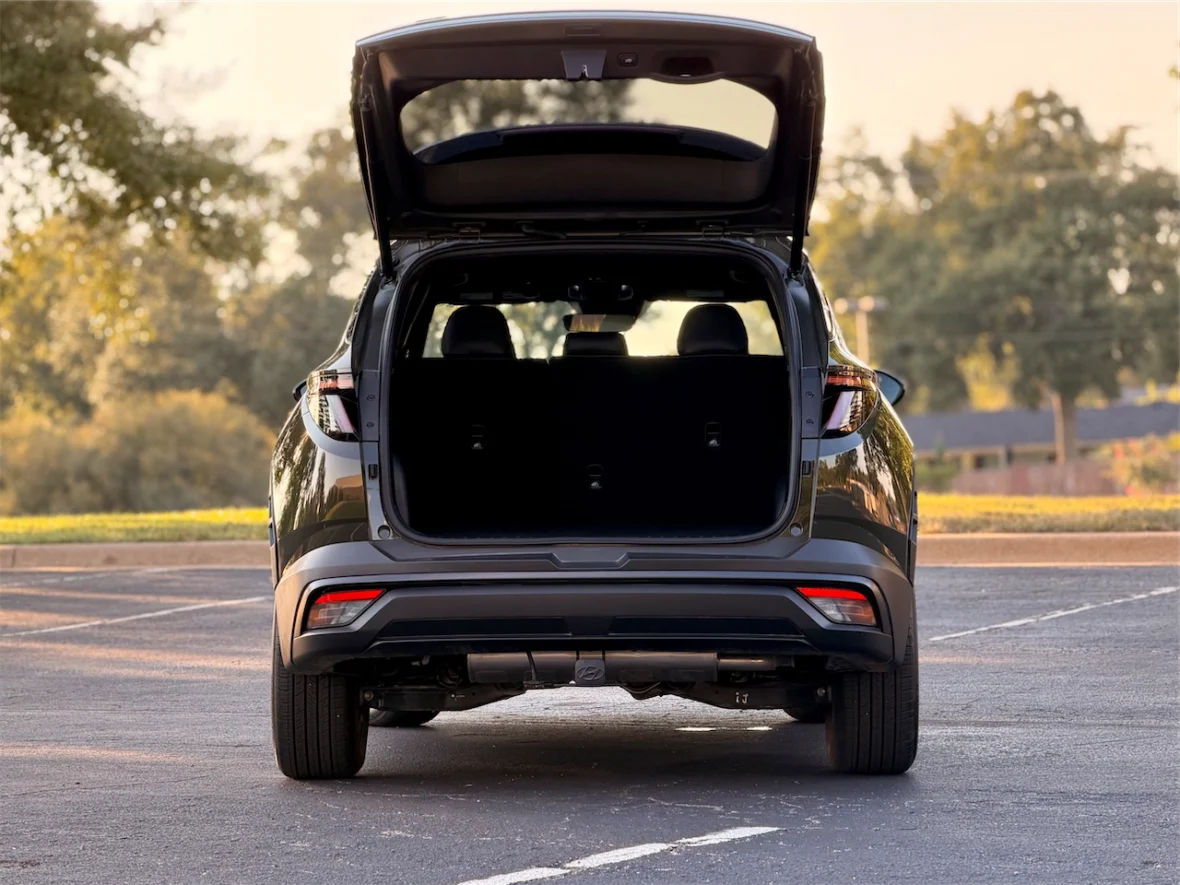
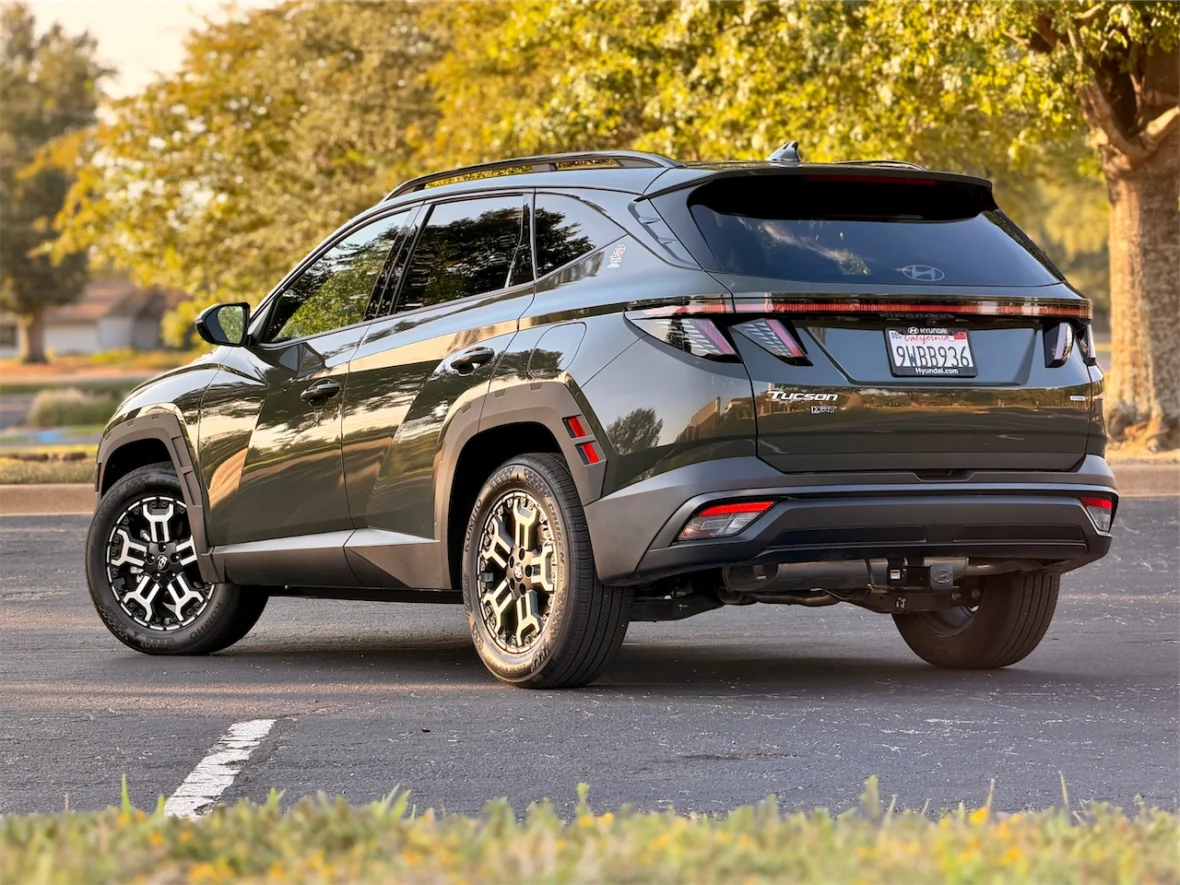
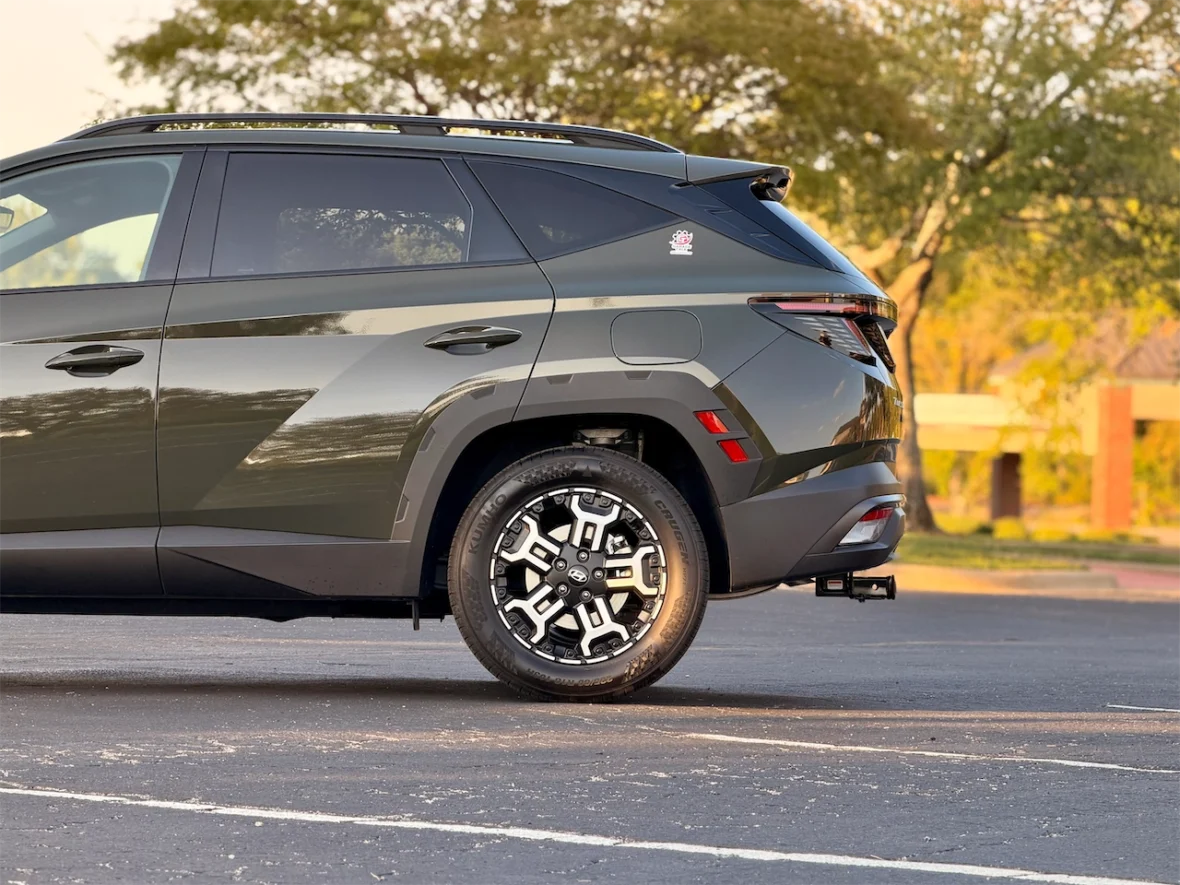
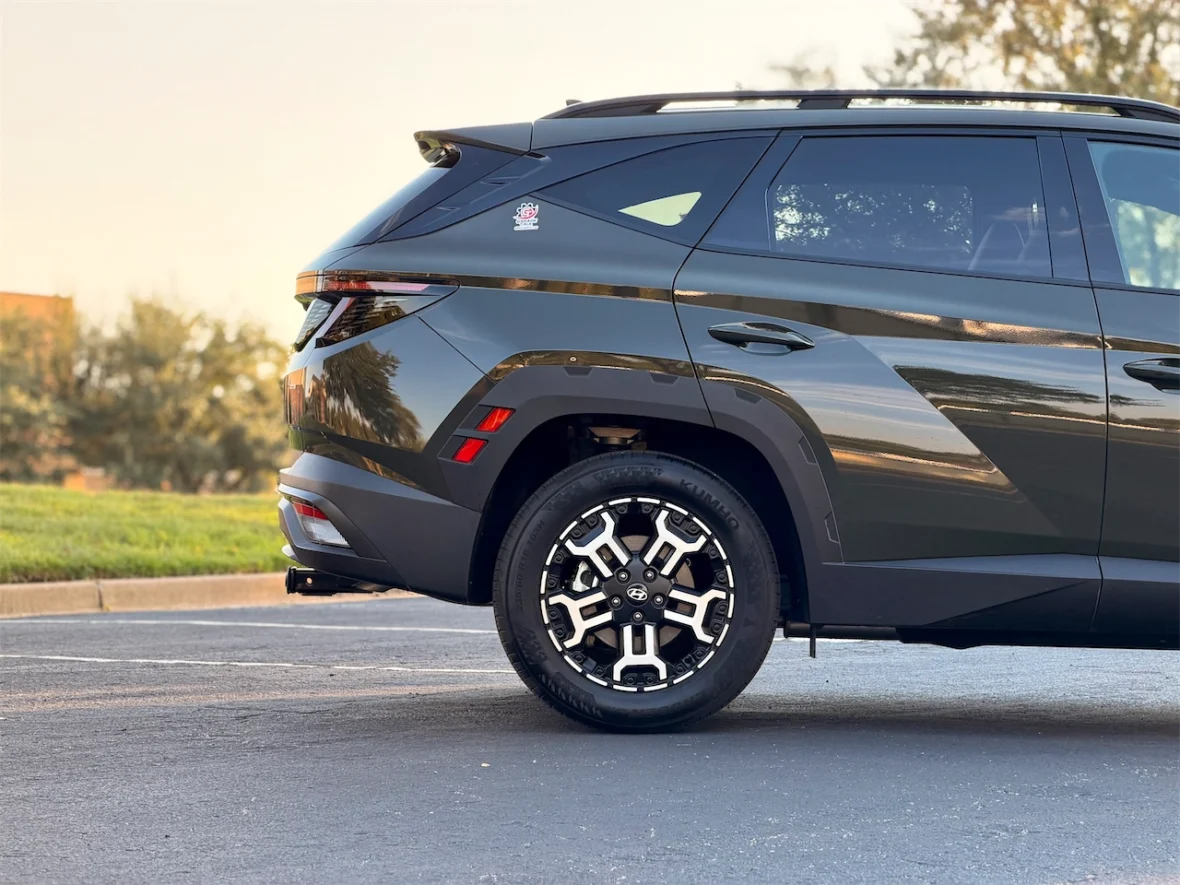
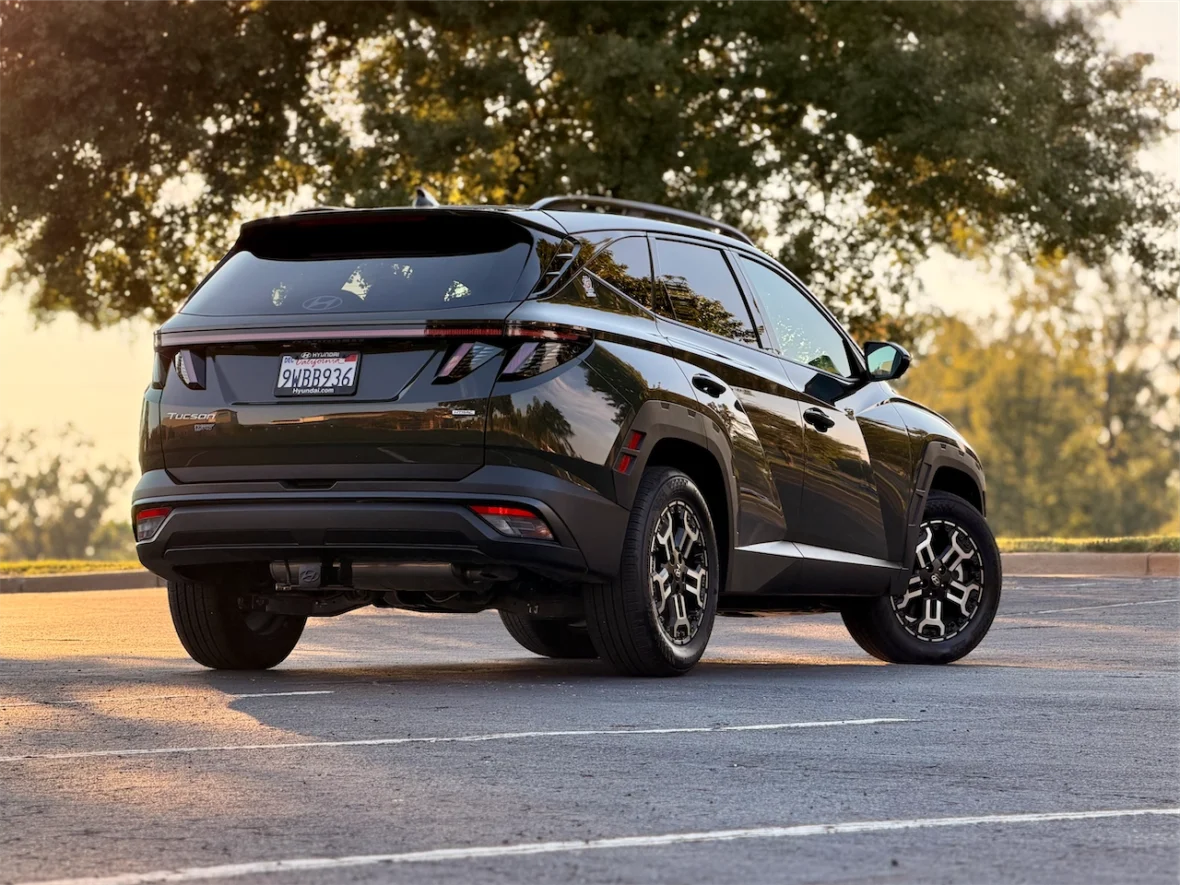
One of the biggest upgrades for 2027 is the placement of the rear turn signals. When people see the back of a 2026 Tucson with the blinkers on, they expect them up in the taillight assembly. Instead, they’re down in the bumper.
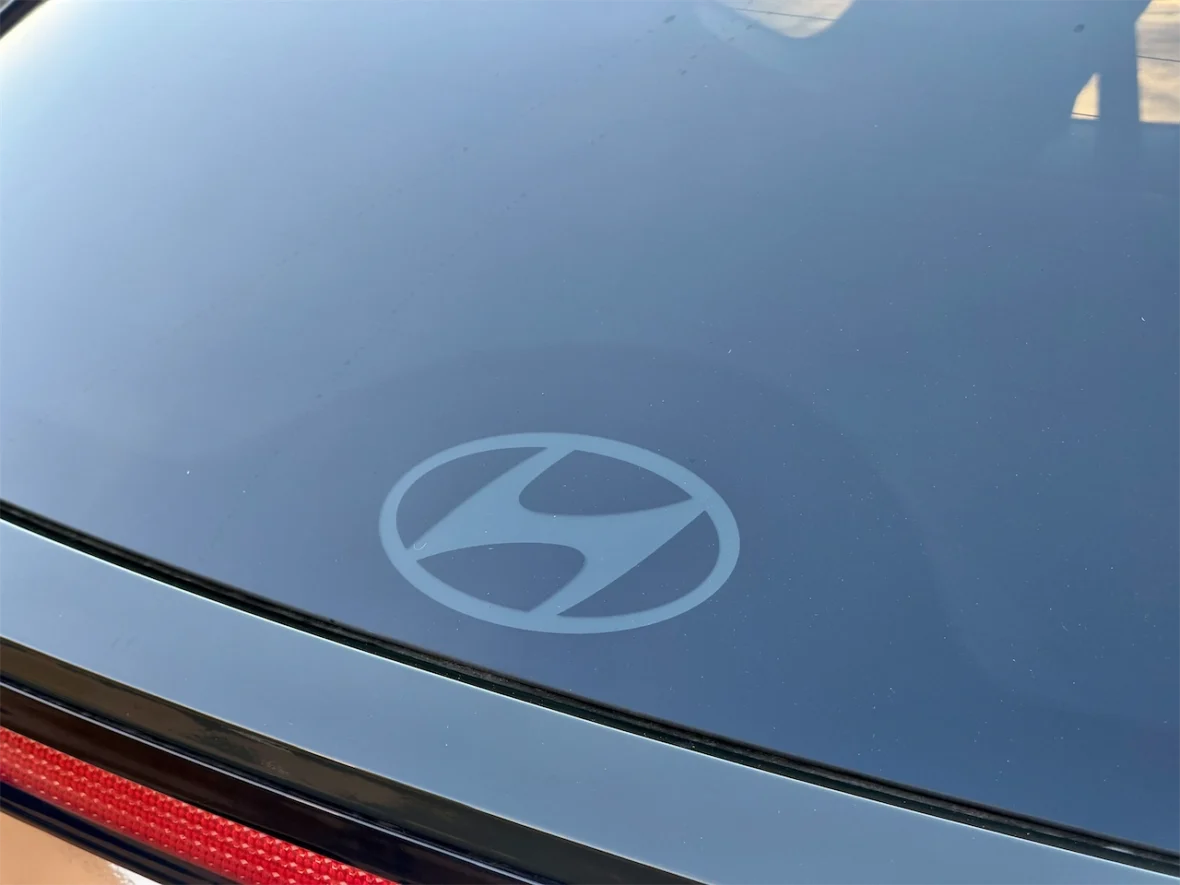
That’s apparently a problem internationally, because it’s going away in 2027, when the brake lights double as turn signals. Here in Tyler, those low signals are especially hard to see, where nearly everybody drives a big truck if they’re not in a crossover like this one. On top of that, the rear logo moves from behind the glass to the hatch for 2027.
Generous Cargo Space
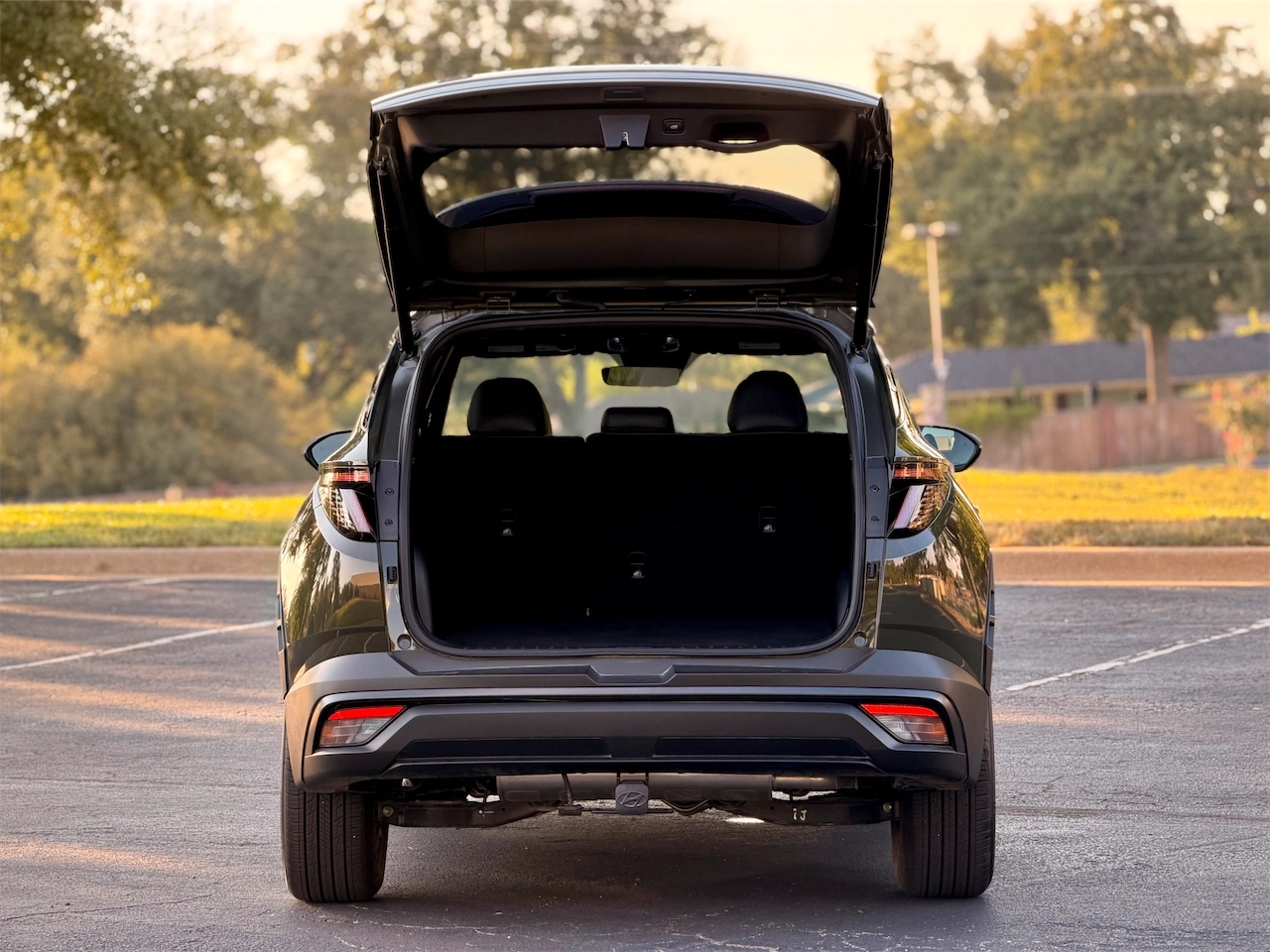
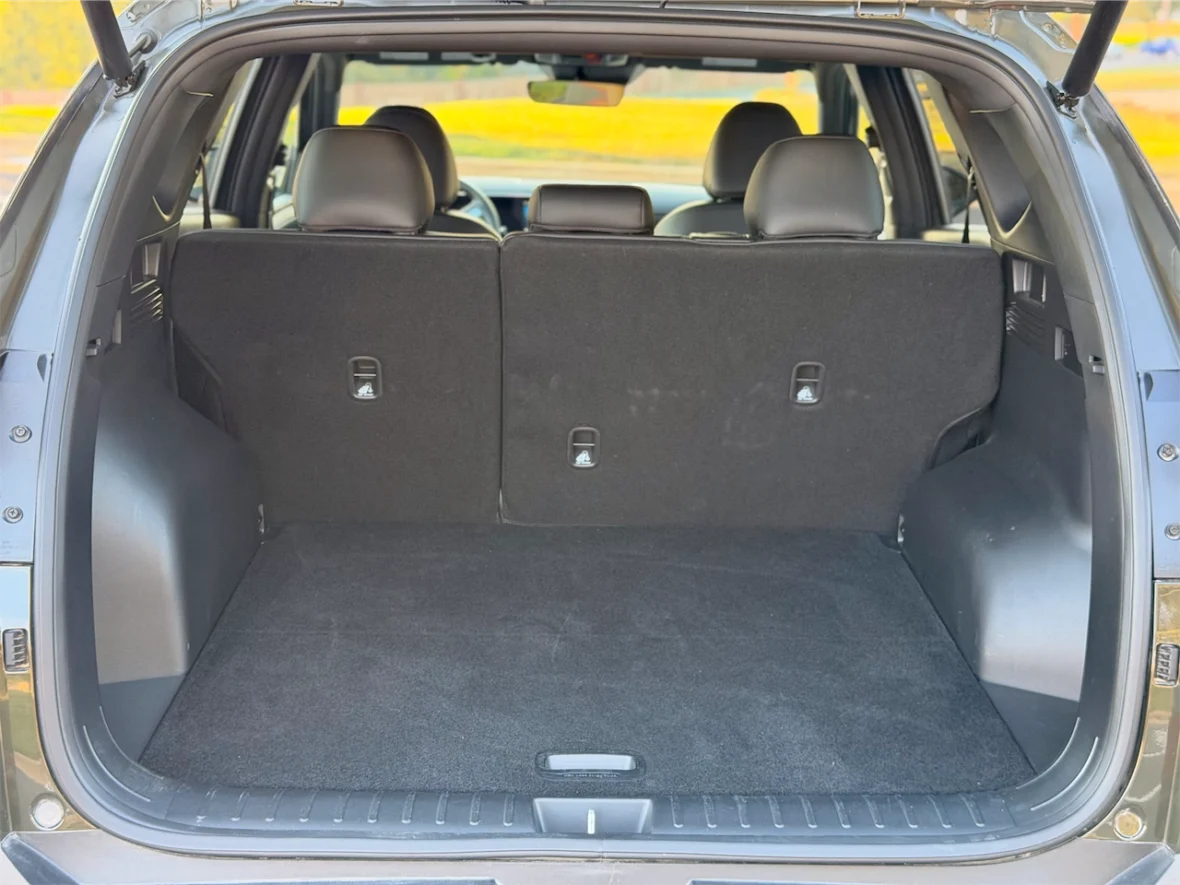
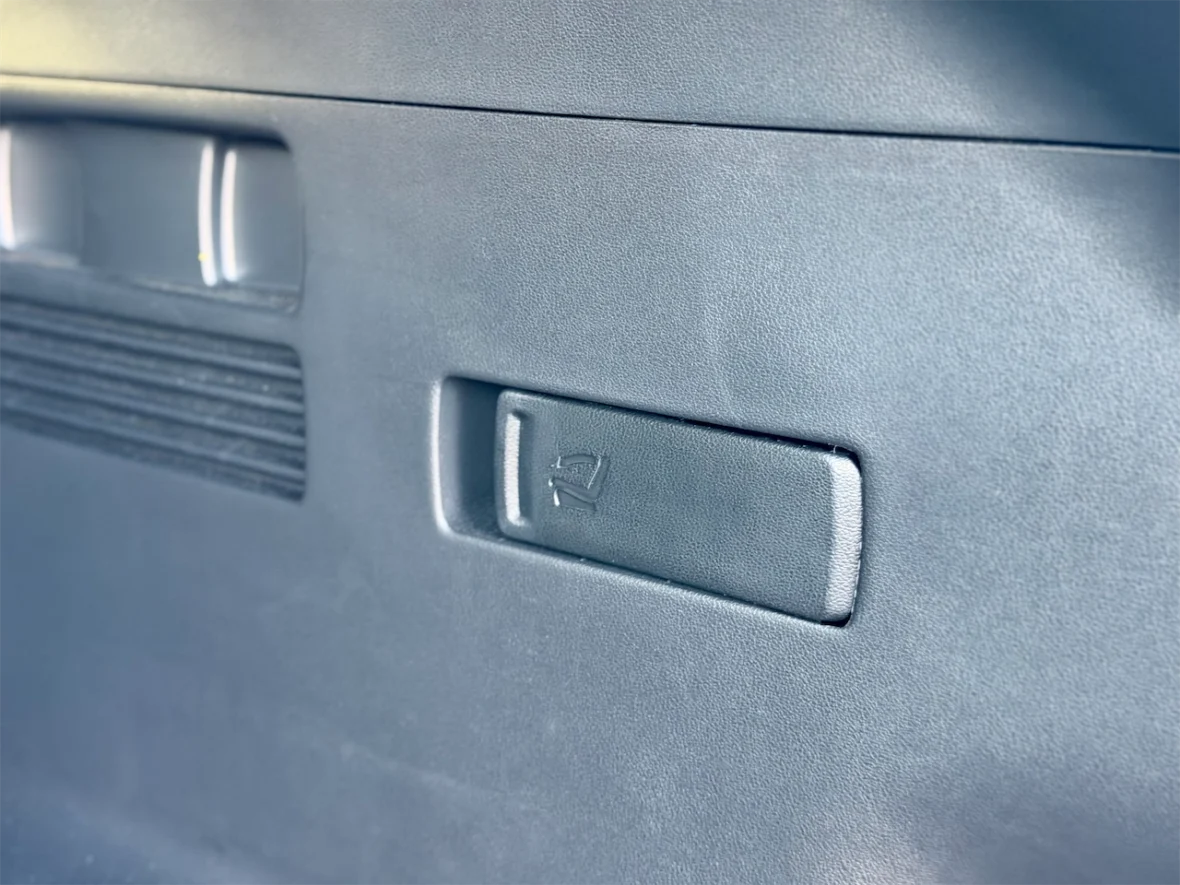
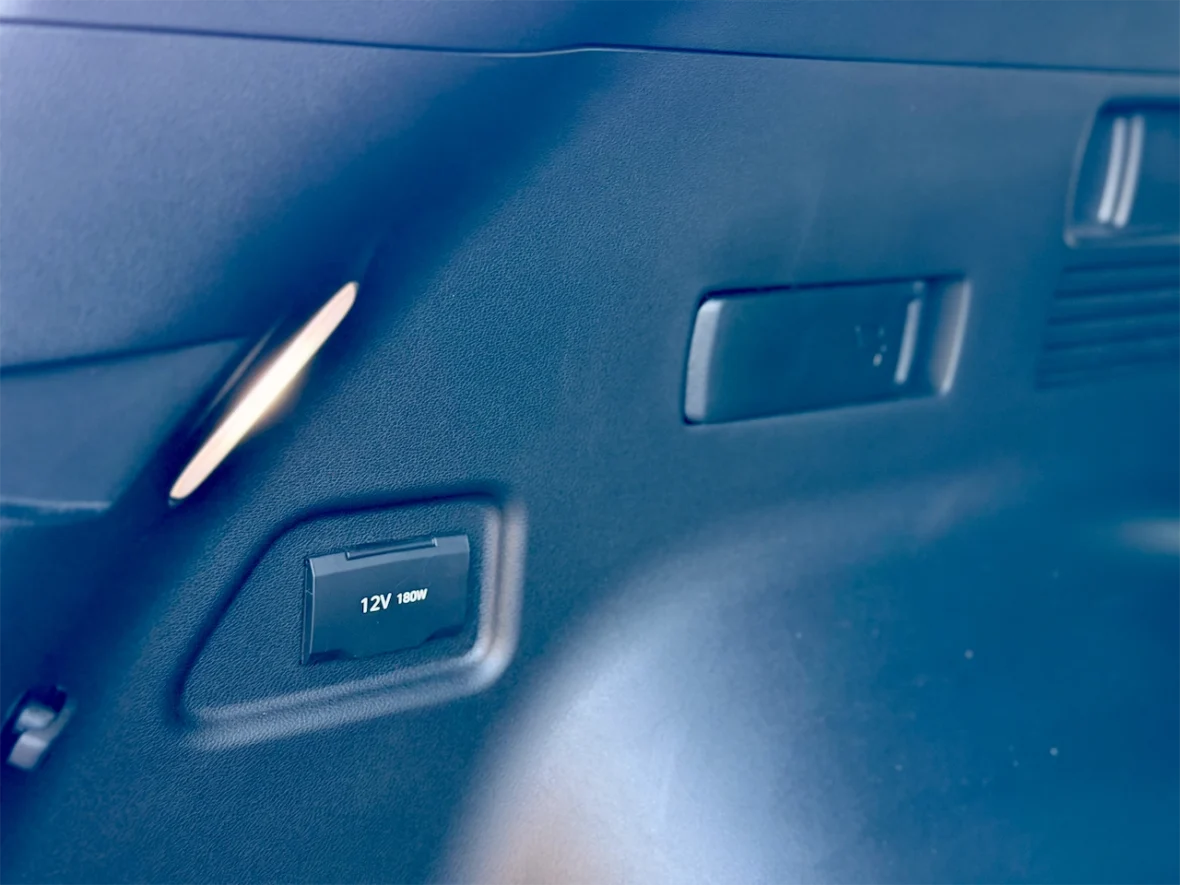
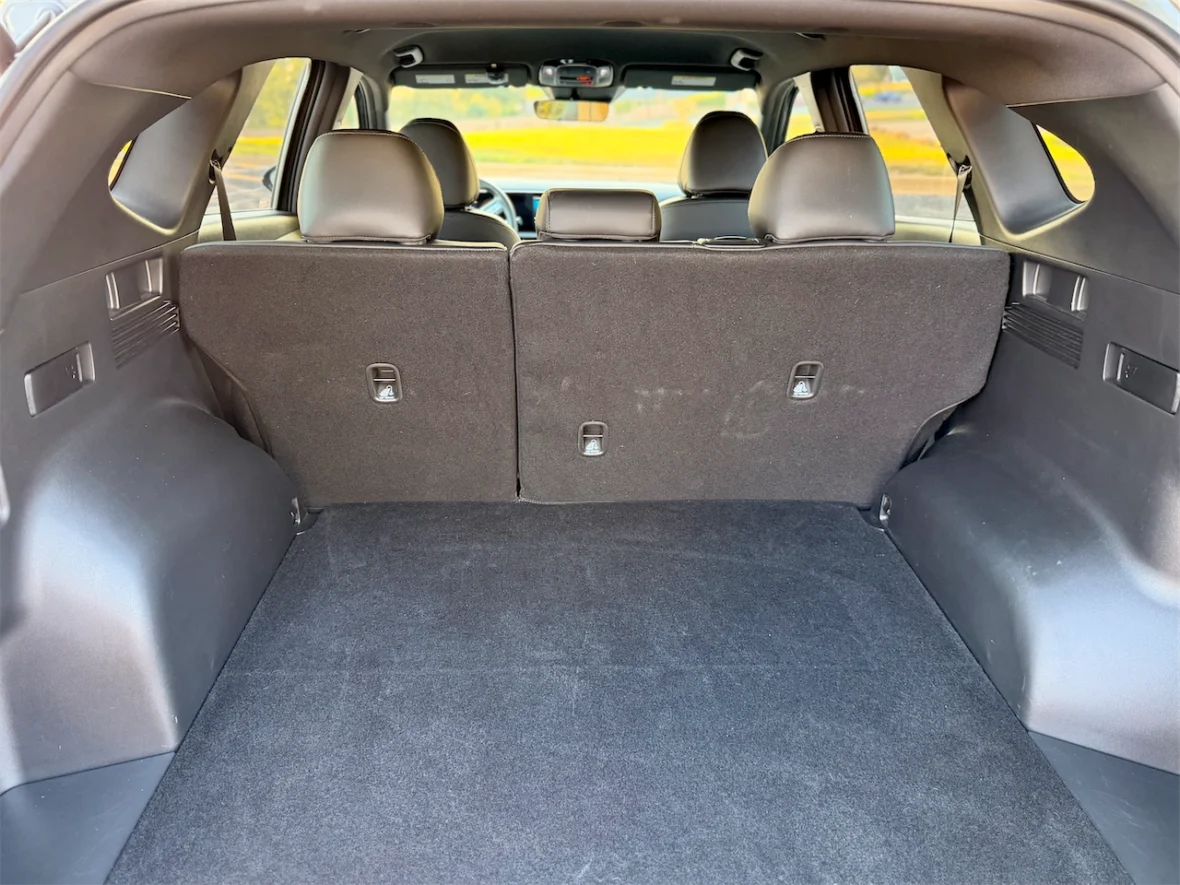
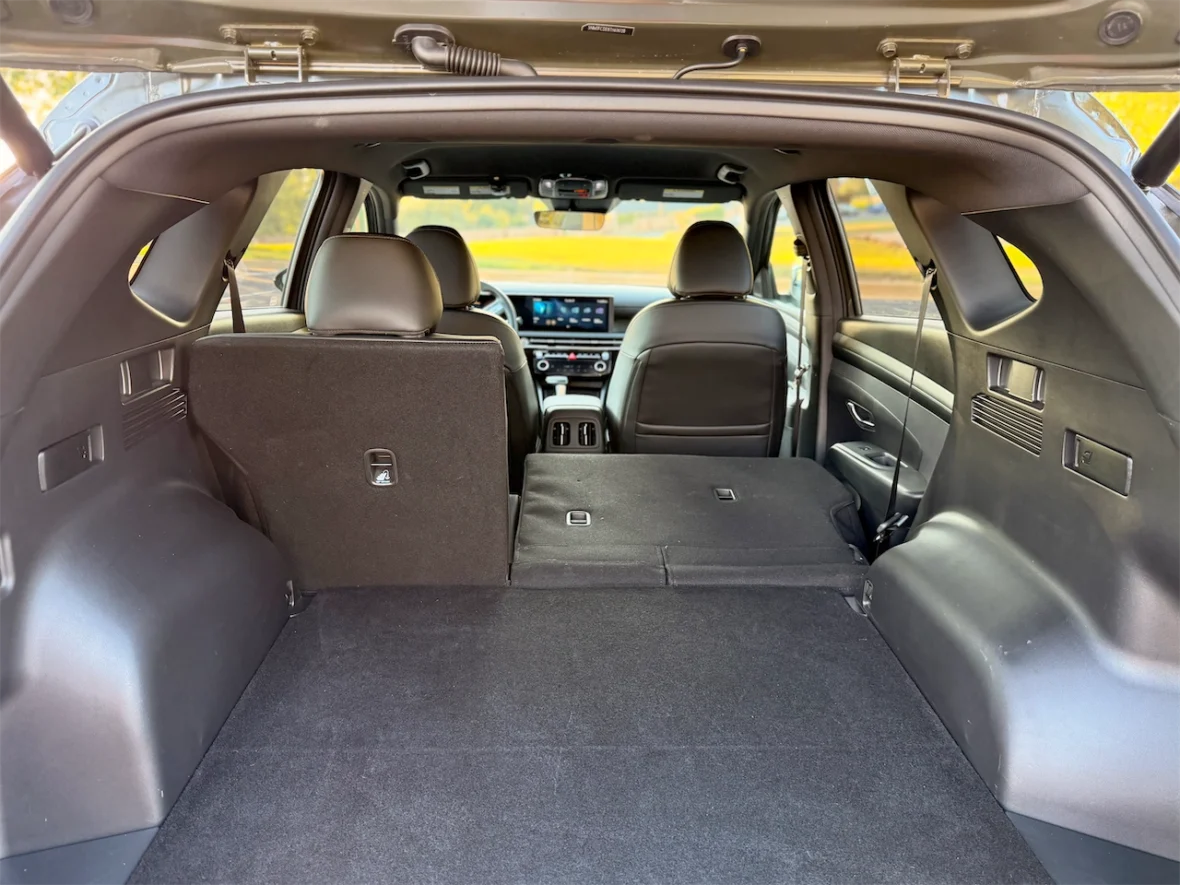
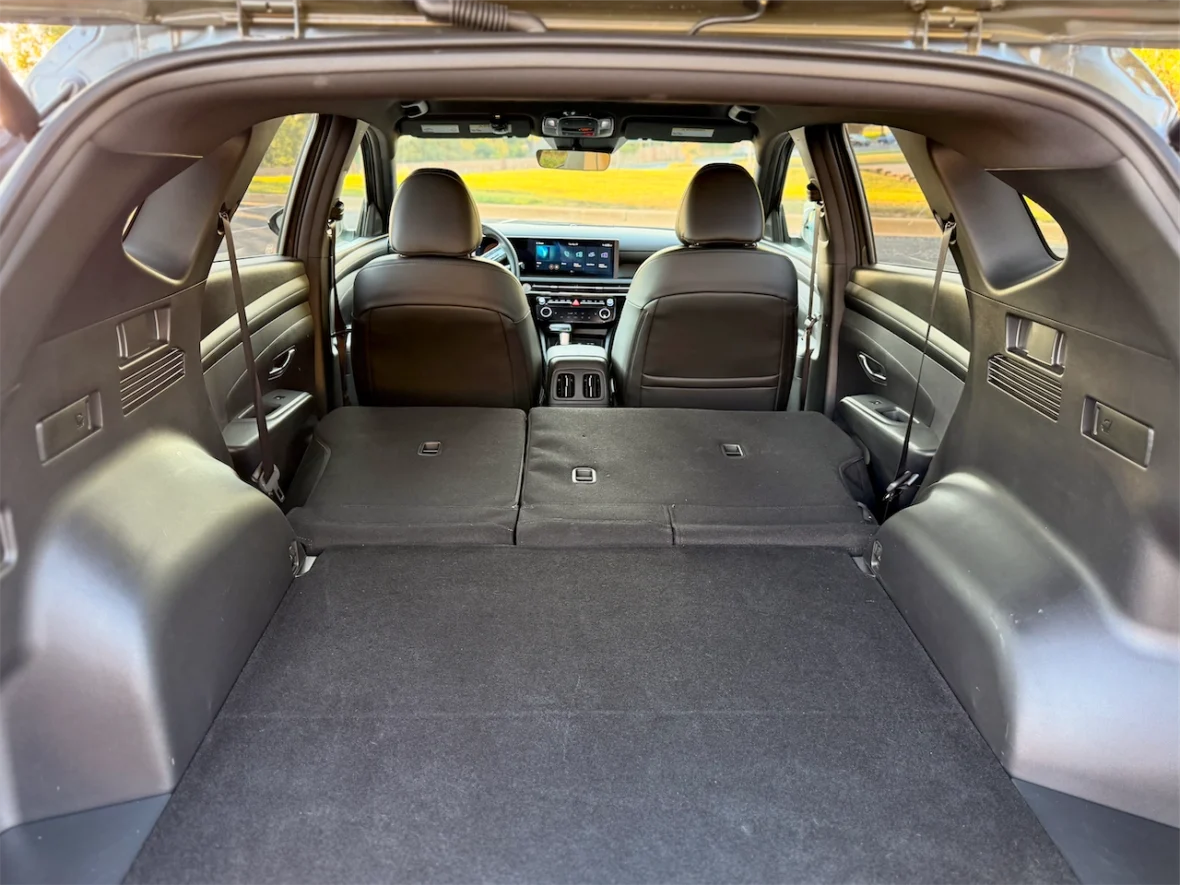
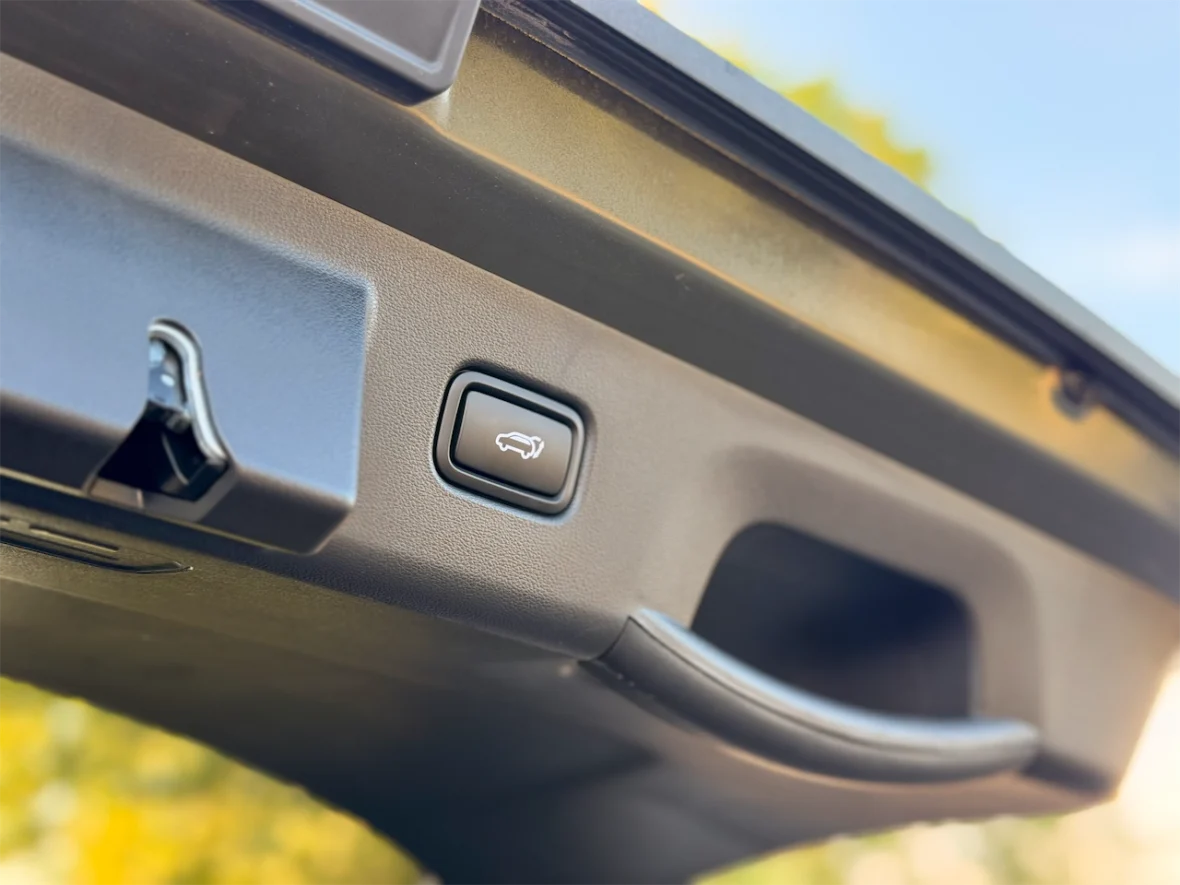
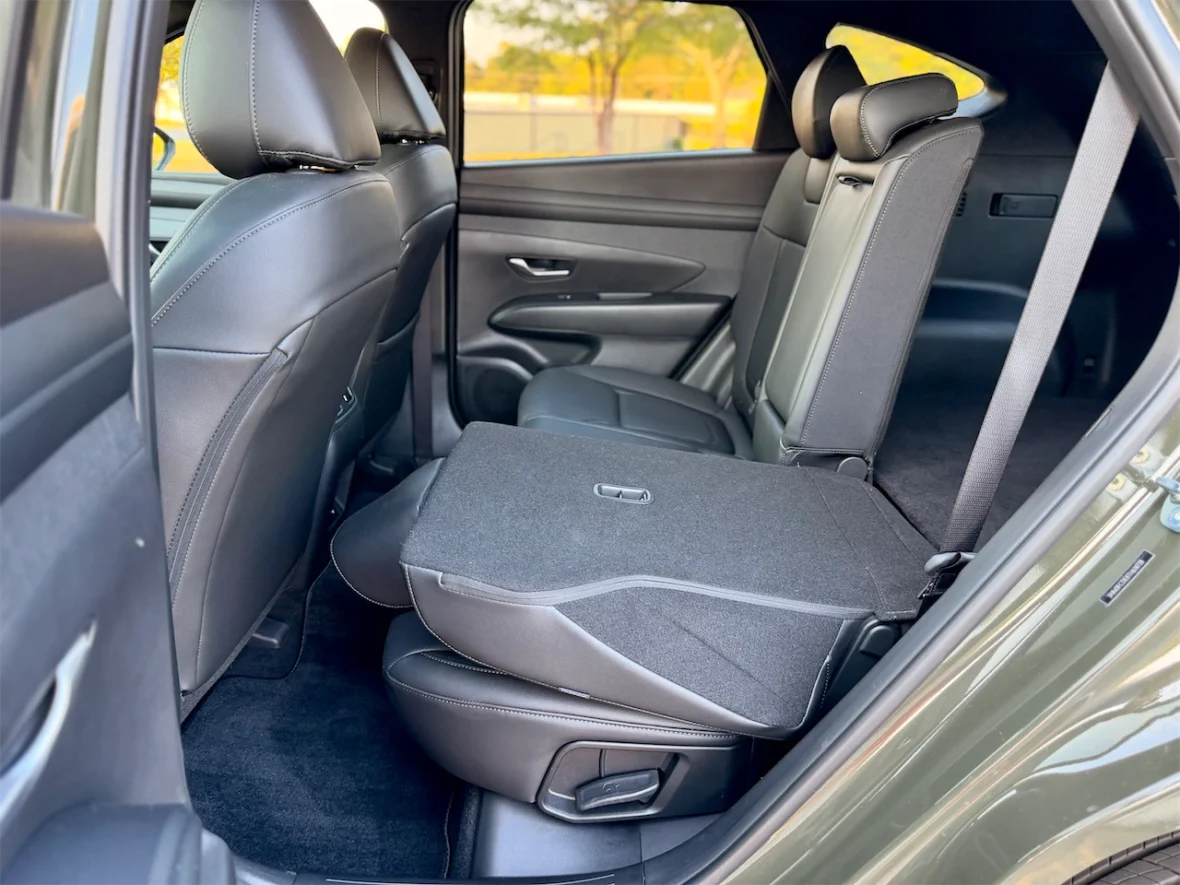
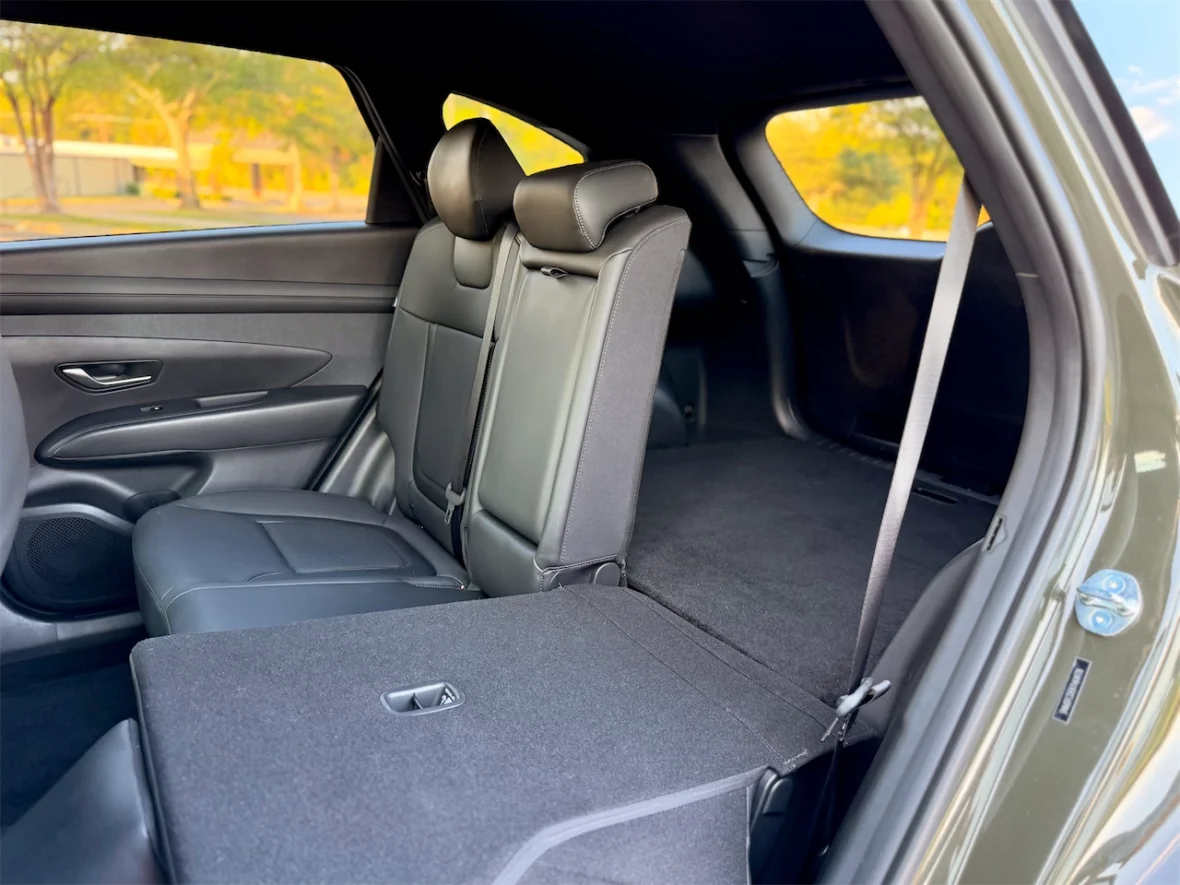
First, both the 2026 and 2027 models get a power liftgate, which is a nice touch. Hyundai found even more cargo room in the 2027, but there’s plenty of space here already. If you need more, handles on either side of the cargo area fold the 60/40 split rear seat down.
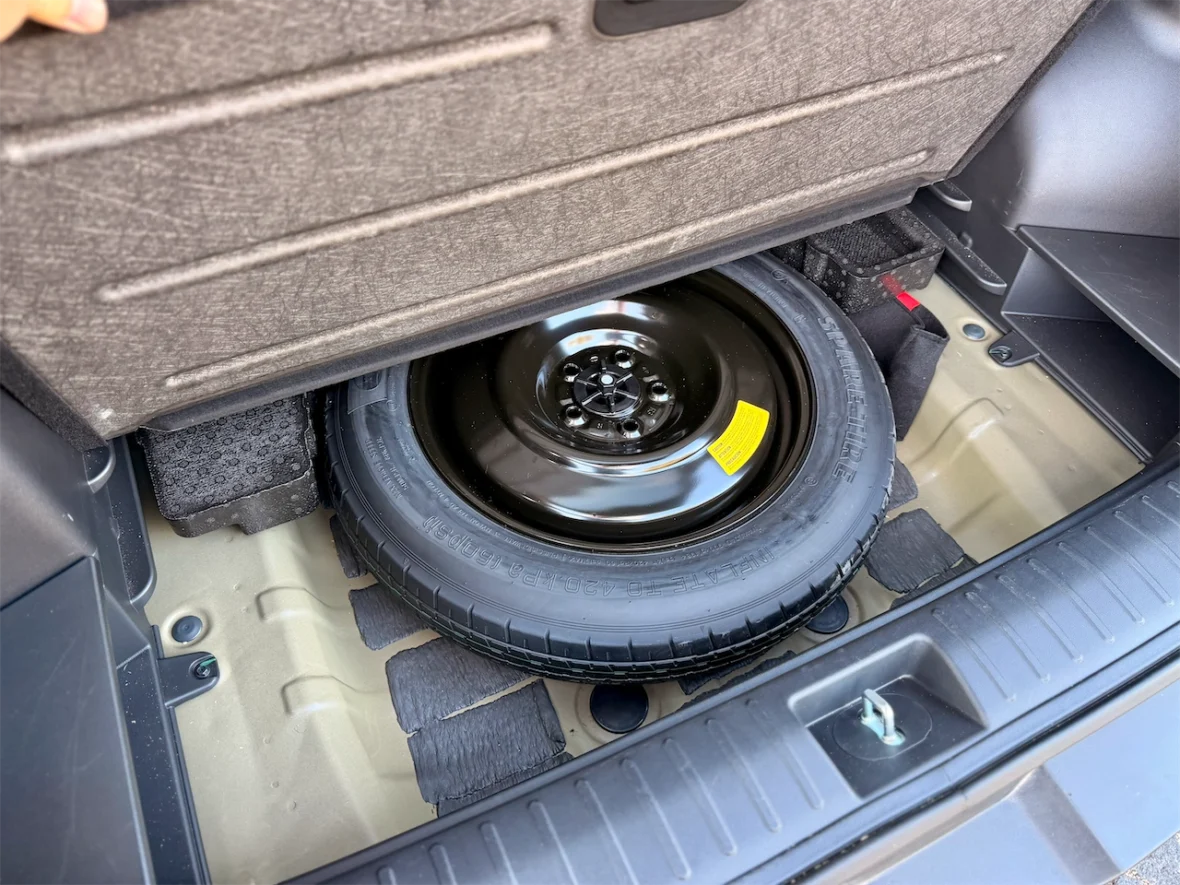
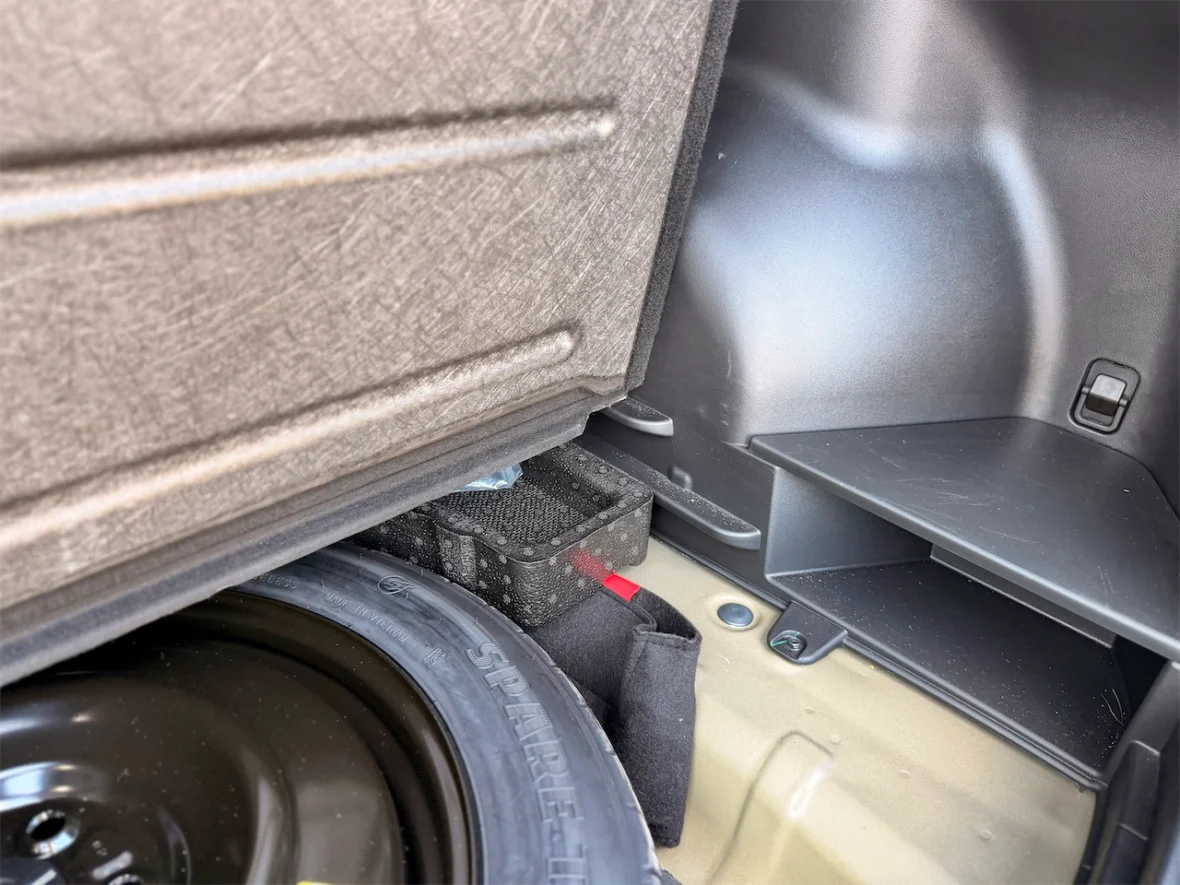
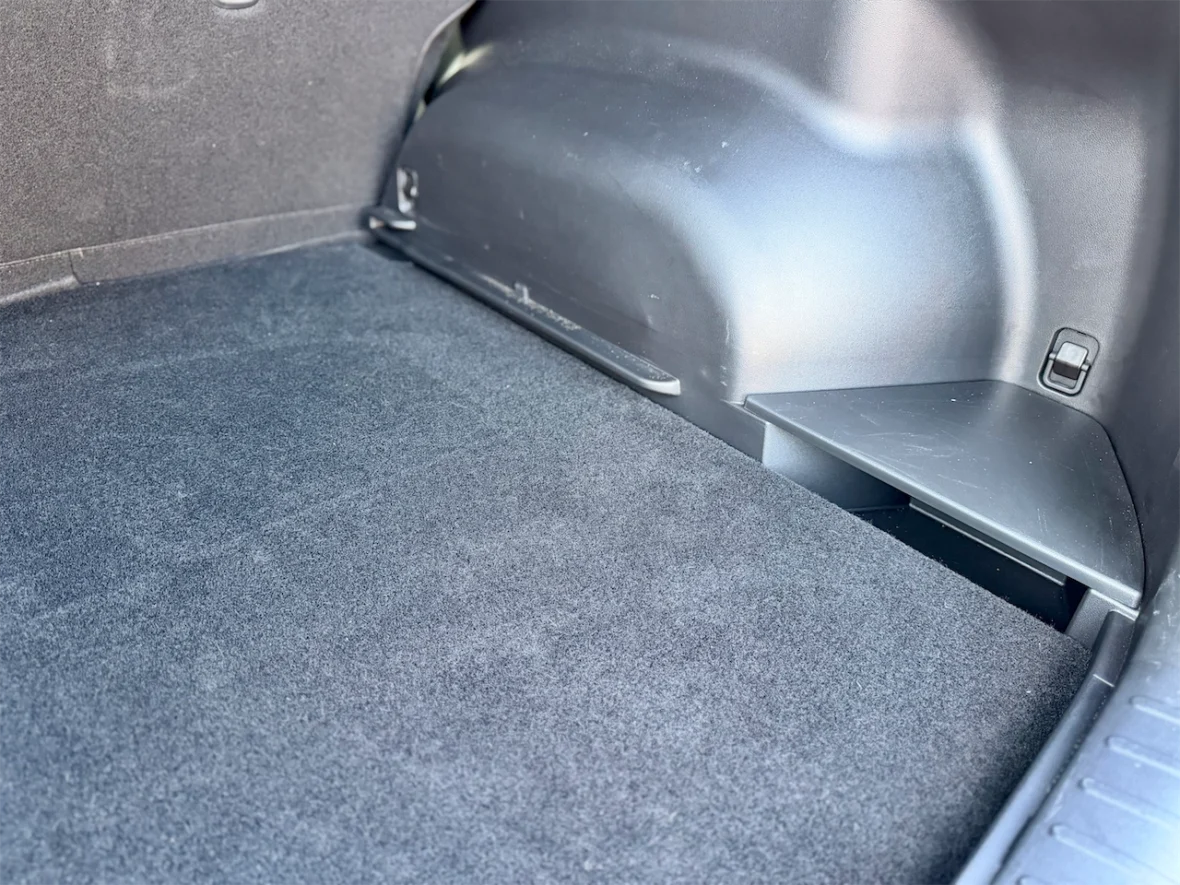
Under the floor, there’s a temporary spare tire with a little storage around it. Better yet, the cargo floor drops down for extra height when you’re hauling larger items, which is very handy in a vehicle that will be used in a variety of ways.
A Comfortable but Plain Cabin
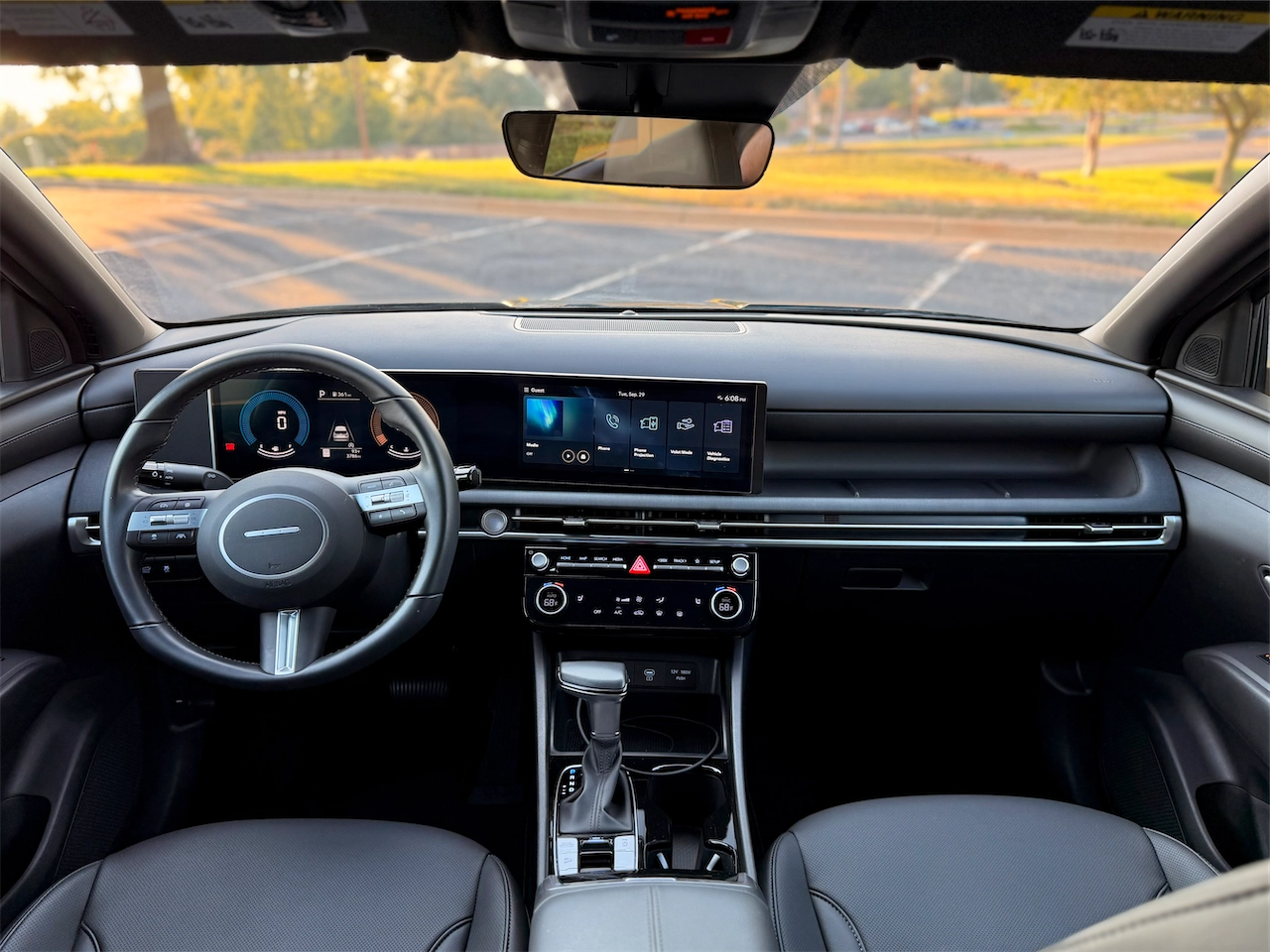
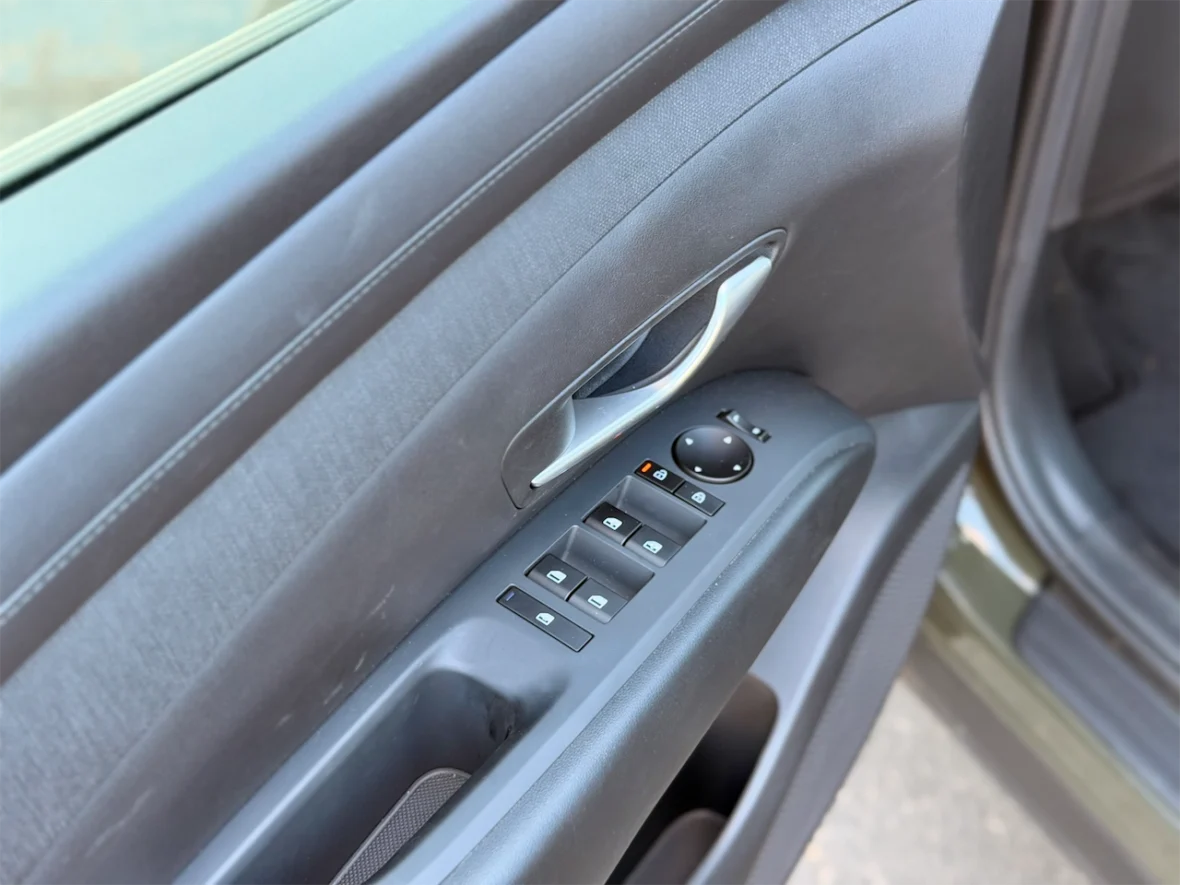
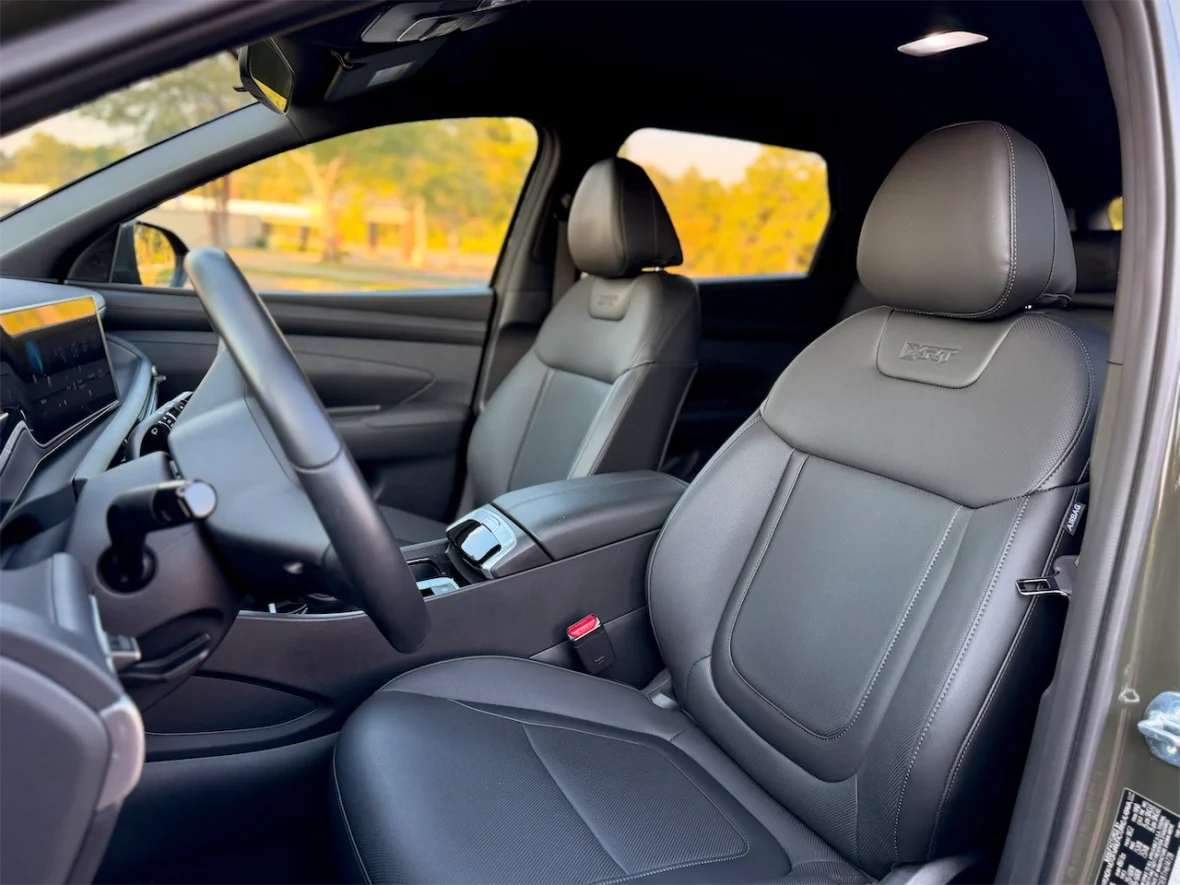
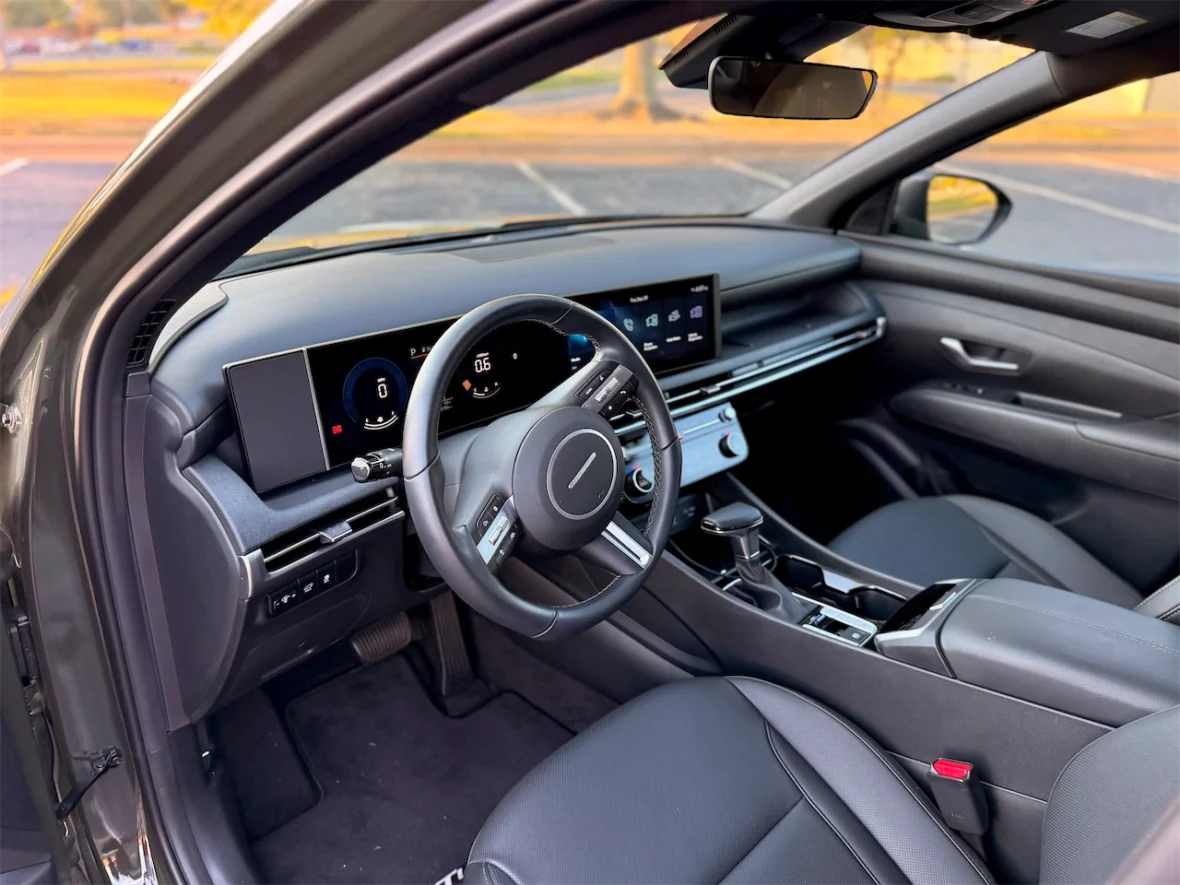
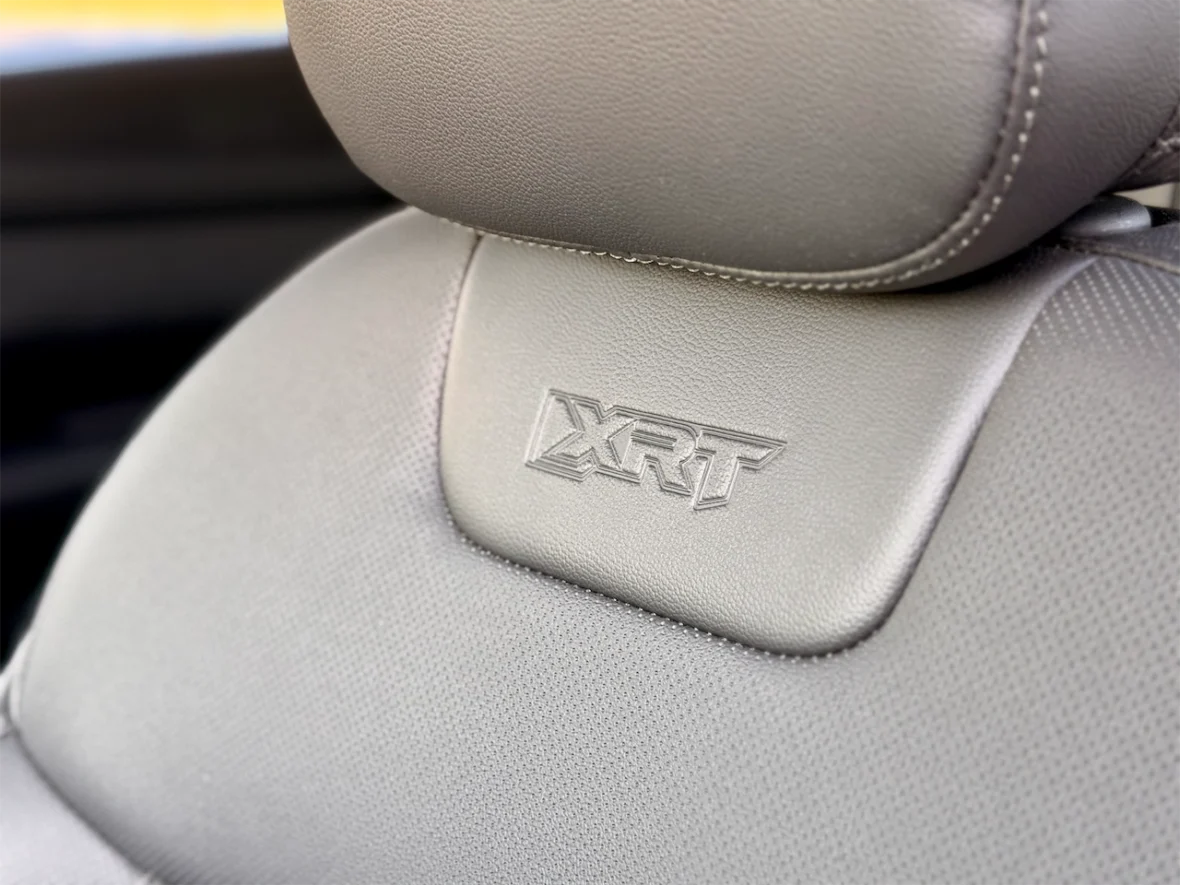
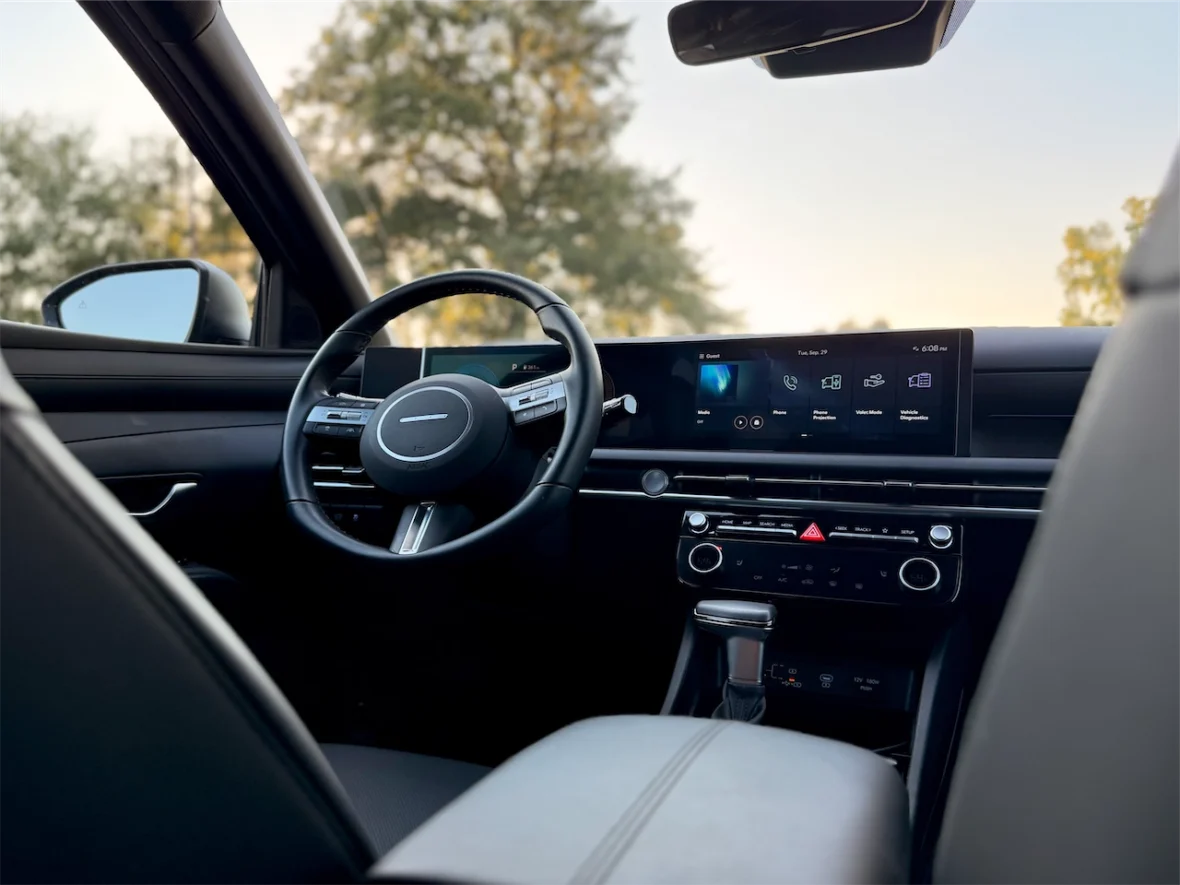
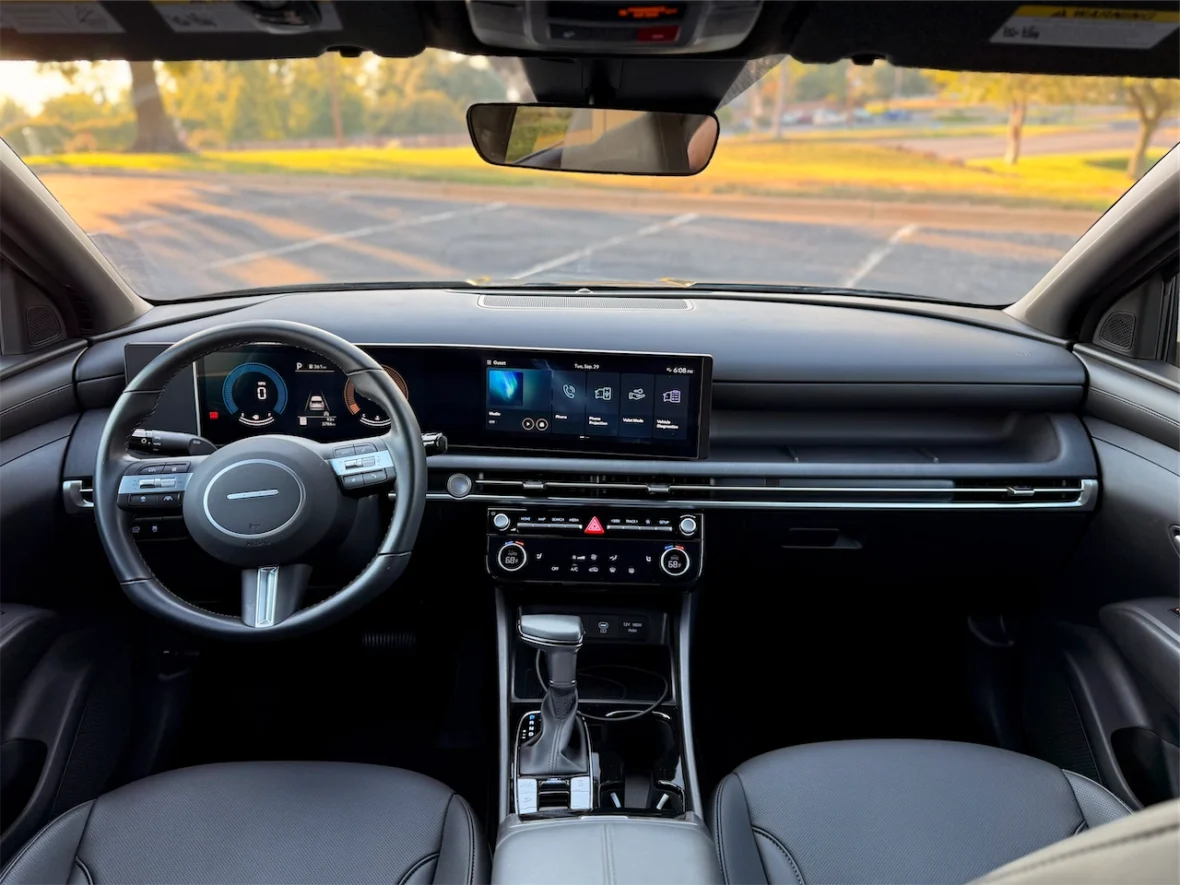
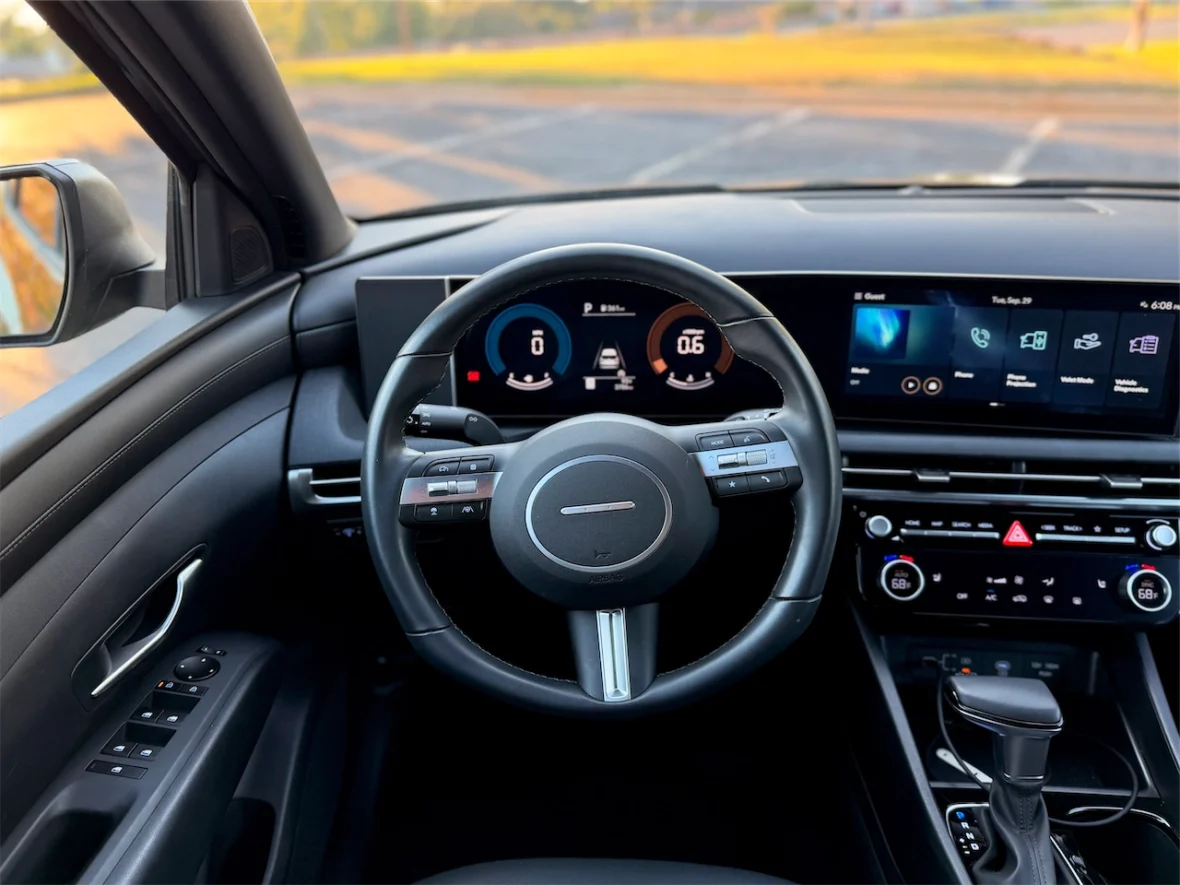
There’s no passive entry, but active entry lets you lock and unlock the doors with a button on the handle. Inside, the XRT comes only with a black interior. Unfortunately, it’s almost all hard black plastic, including a section that looks like textile on camera. Thankfully, it looks nice enough paired with very comfortable seats embossed with XRT logos.
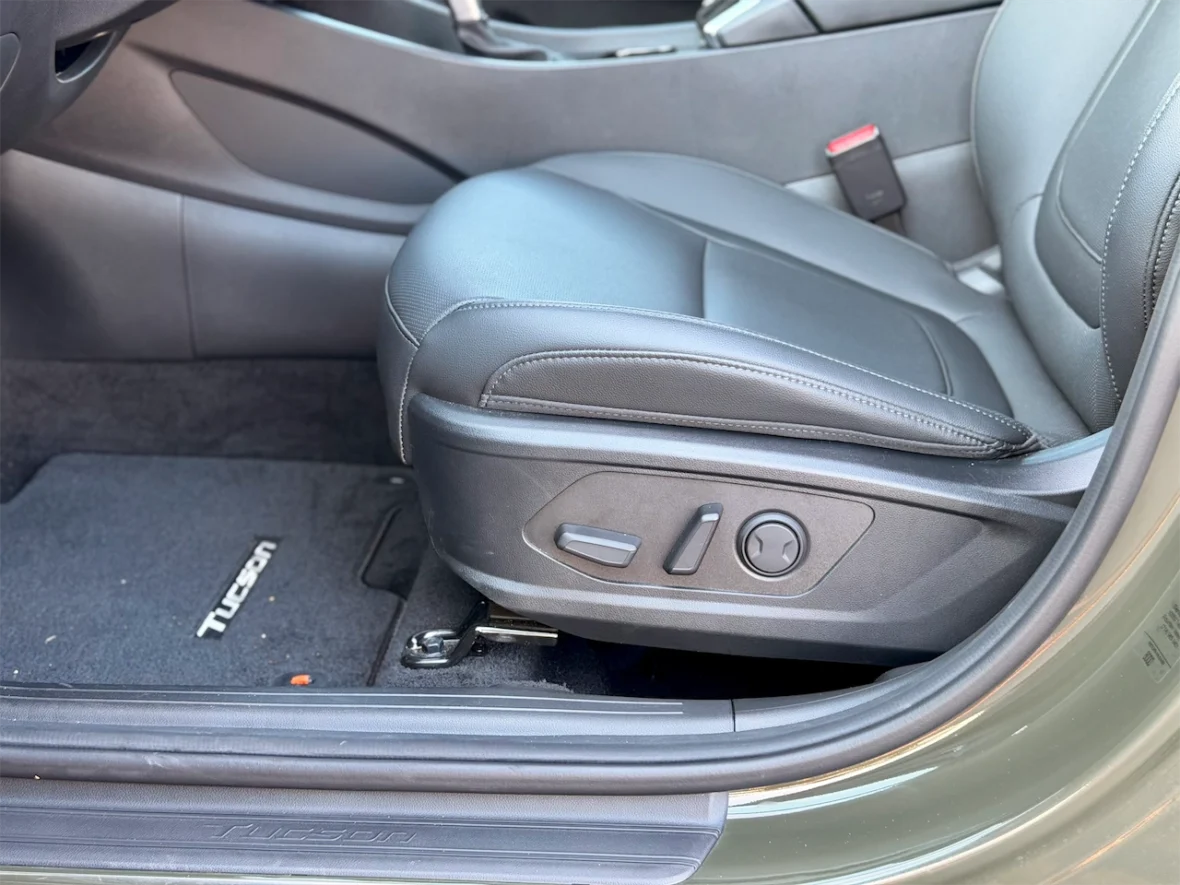
Meanwhile, the driver’s seat is power-adjustable with lumbar support, while the passenger seat adjusts manually. Behind the Morse code-branded steering wheel, the digital driver display is actually larger than the thin strip you’ll get in the 2027. Part of it is customizable, and it showed we averaged 27 MPG over 318 miles.
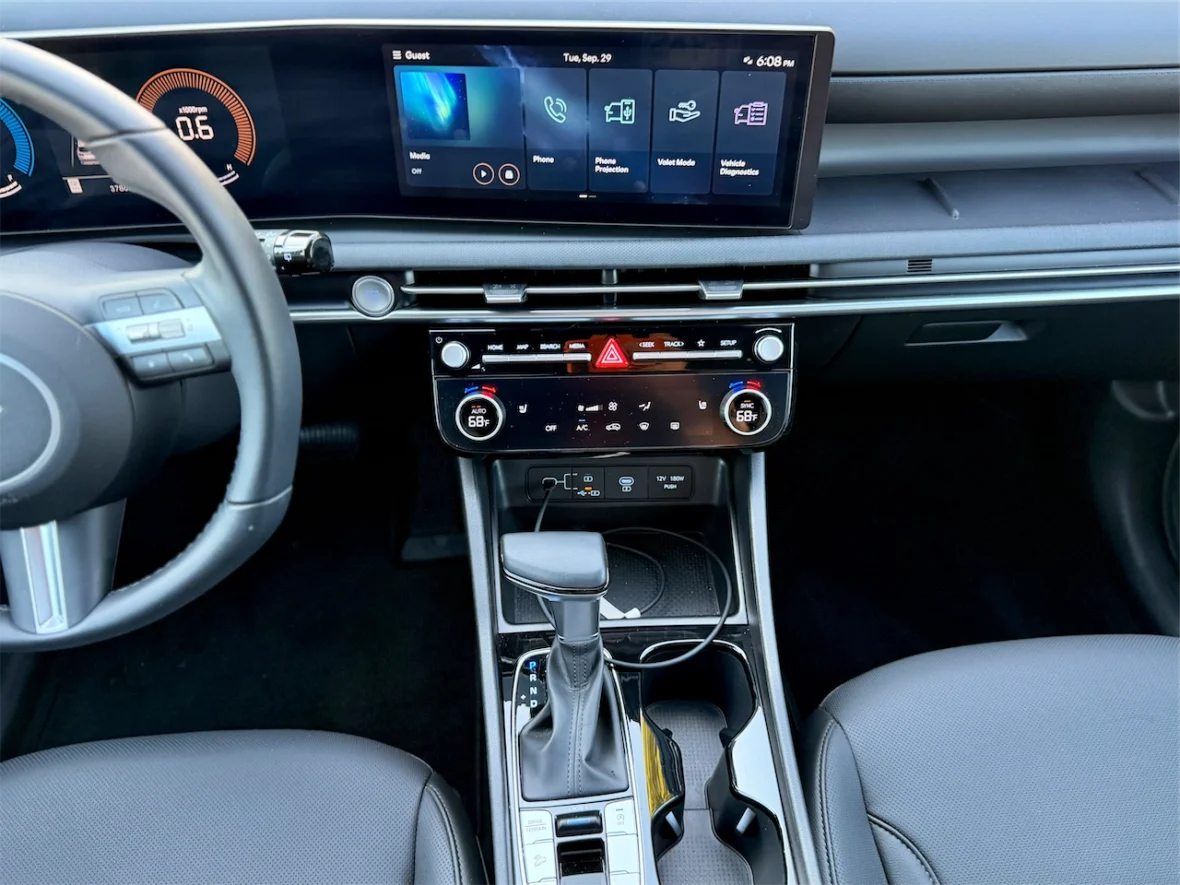
The 12.3-inch touchscreen runs Hyundai’s older infotainment system with wireless Apple CarPlay and Android Auto. By comparison, the 2027 gets the new Pleos Connect system, but there’s no Gleo AI assistant here. Thankfully, Hyundai kept physical buttons for volume and tuning, plus haptic touch controls for the dual-zone climate system.
Storage and Center Console Controls
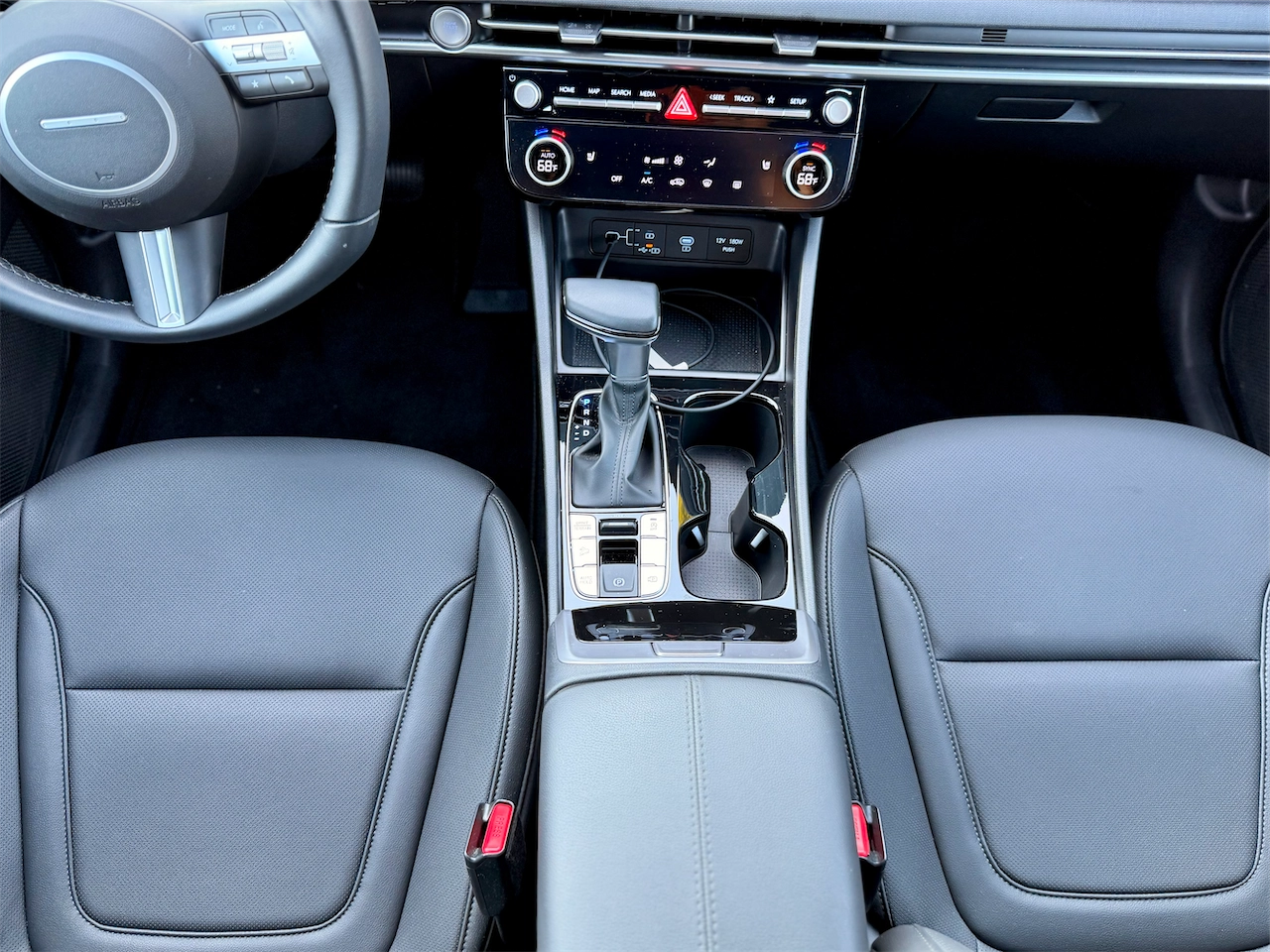
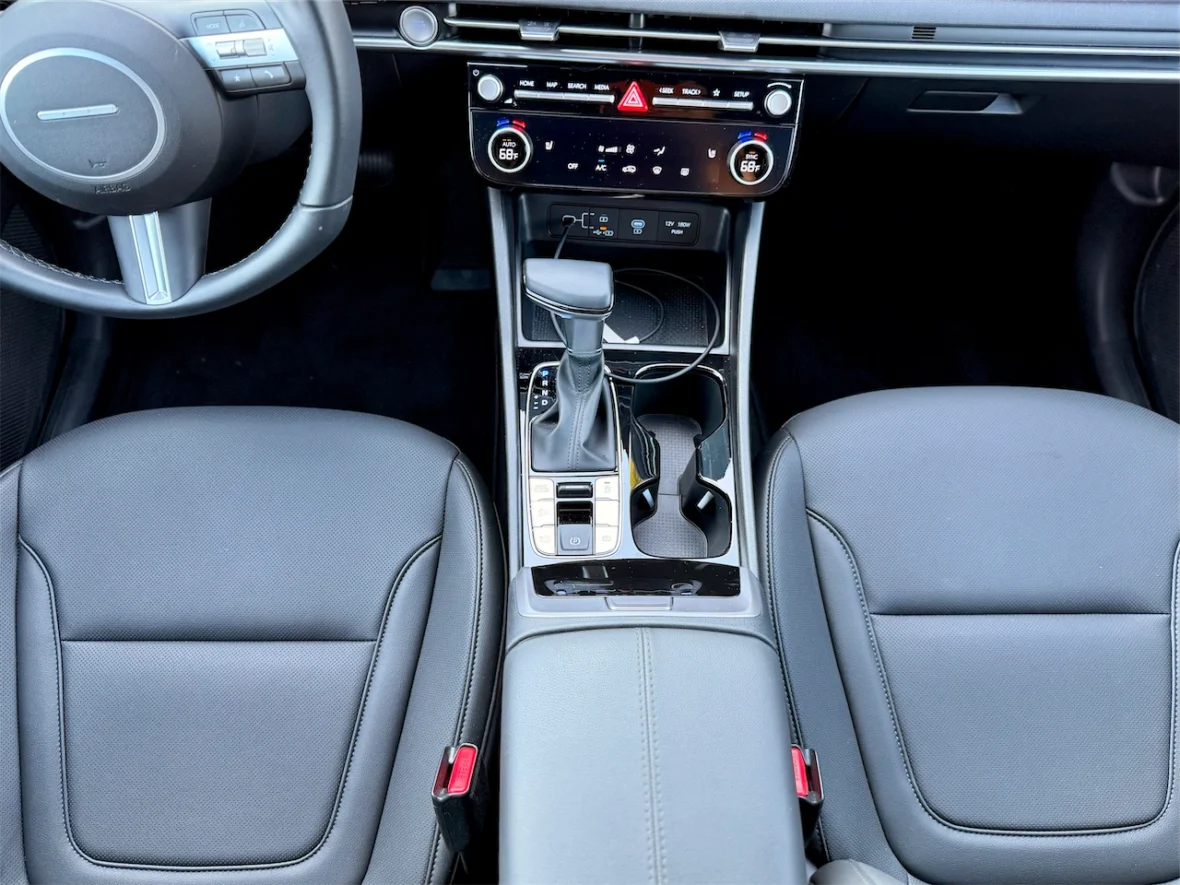
Below the climate controls, two USB-C ports sit beside a slightly rubberized storage tray. One port is power only, while the other toggles between data and power, glowing orange or white to show which mode it’s in. However, the rest of the bins are hard plastic, so anything you toss in there will rattle around.
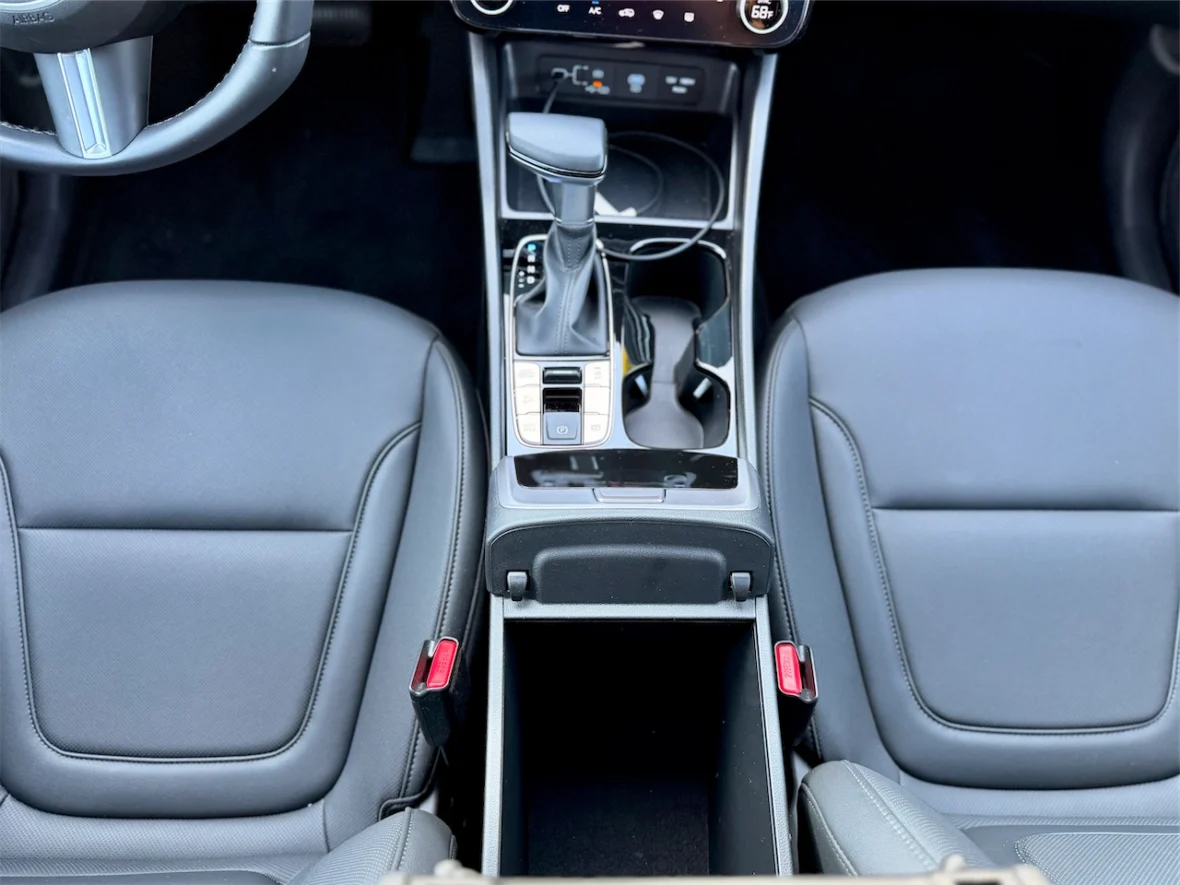
There’s also quite a bit of gloss black around the center console. The illuminated buttons work well at night, but they could use more contrast, because in bright sunlight you can’t see what they’re for. Those controls handle the drive and terrain modes, downhill assist, auto hold, electronic parking brake, camera, and auto start/stop. Our tester only had the standard rearview camera, but it did offer Normal, Snow, Mud, and Sand terrain modes, plus Normal, Sport, and My drive modes.
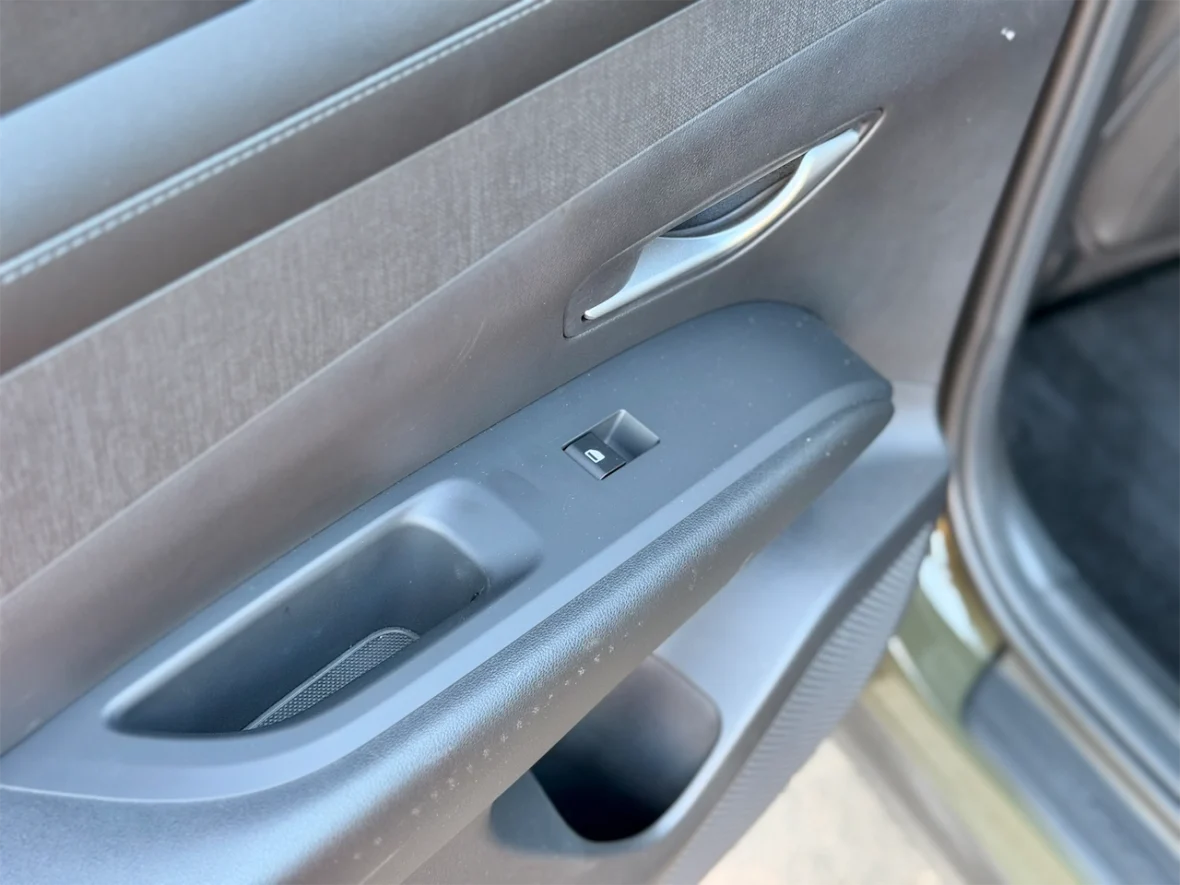
Overall, there’s not a whole lot to write home about inside. Still, I appreciate the storage spots, including door cubbies, a spacious center console, and a roomy glove box, which come in handy on a long road trip.
Room to Stretch Out in the Back Seat
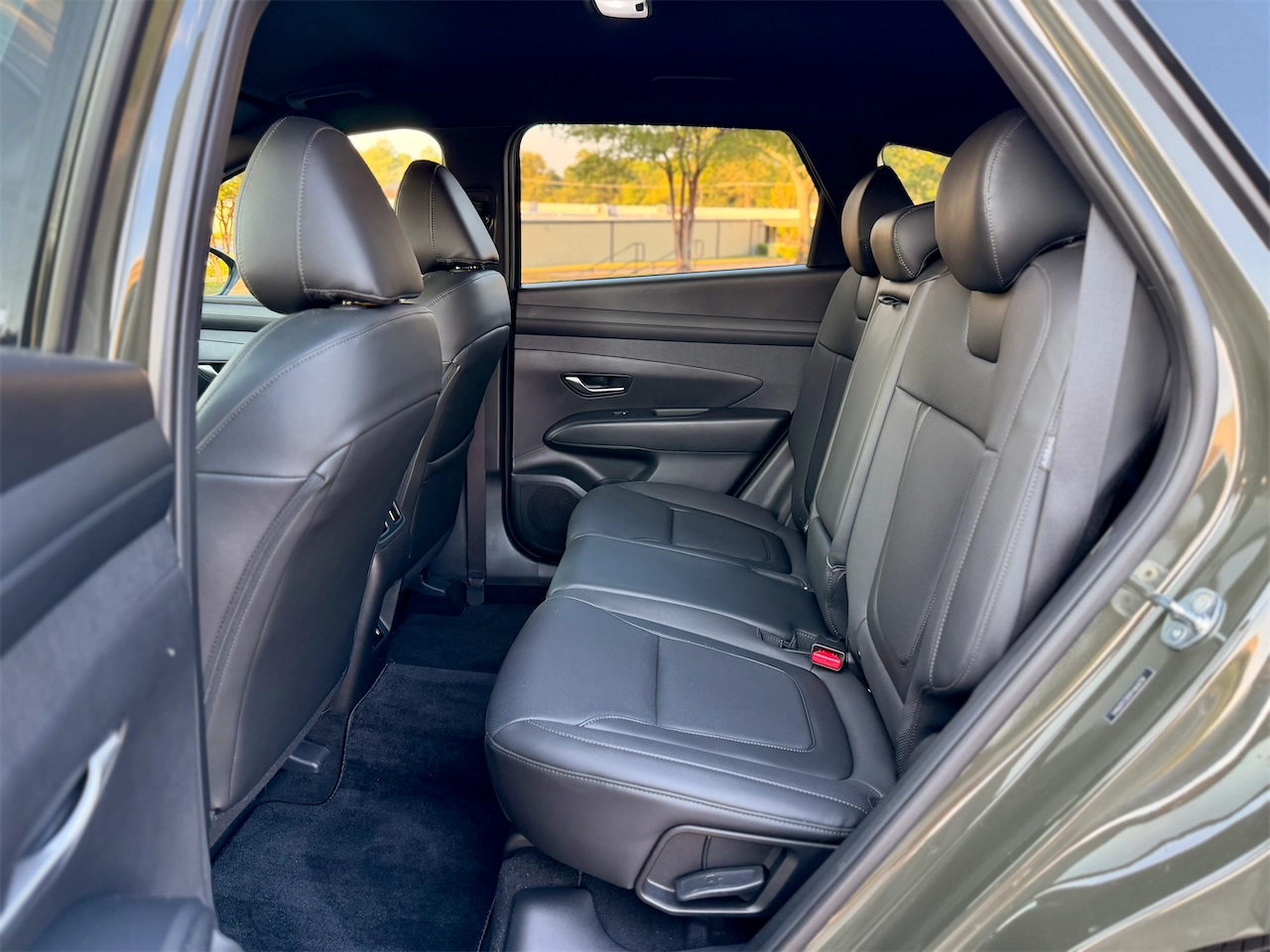
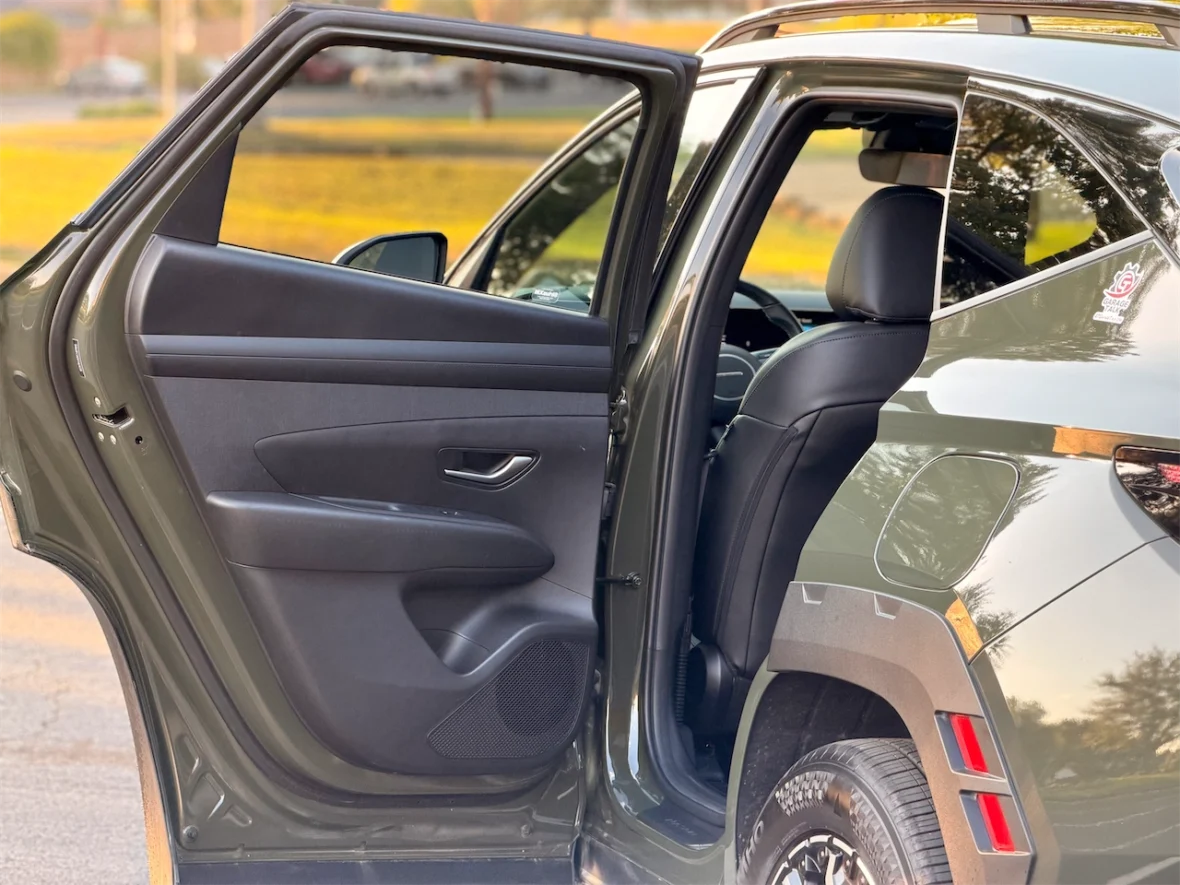
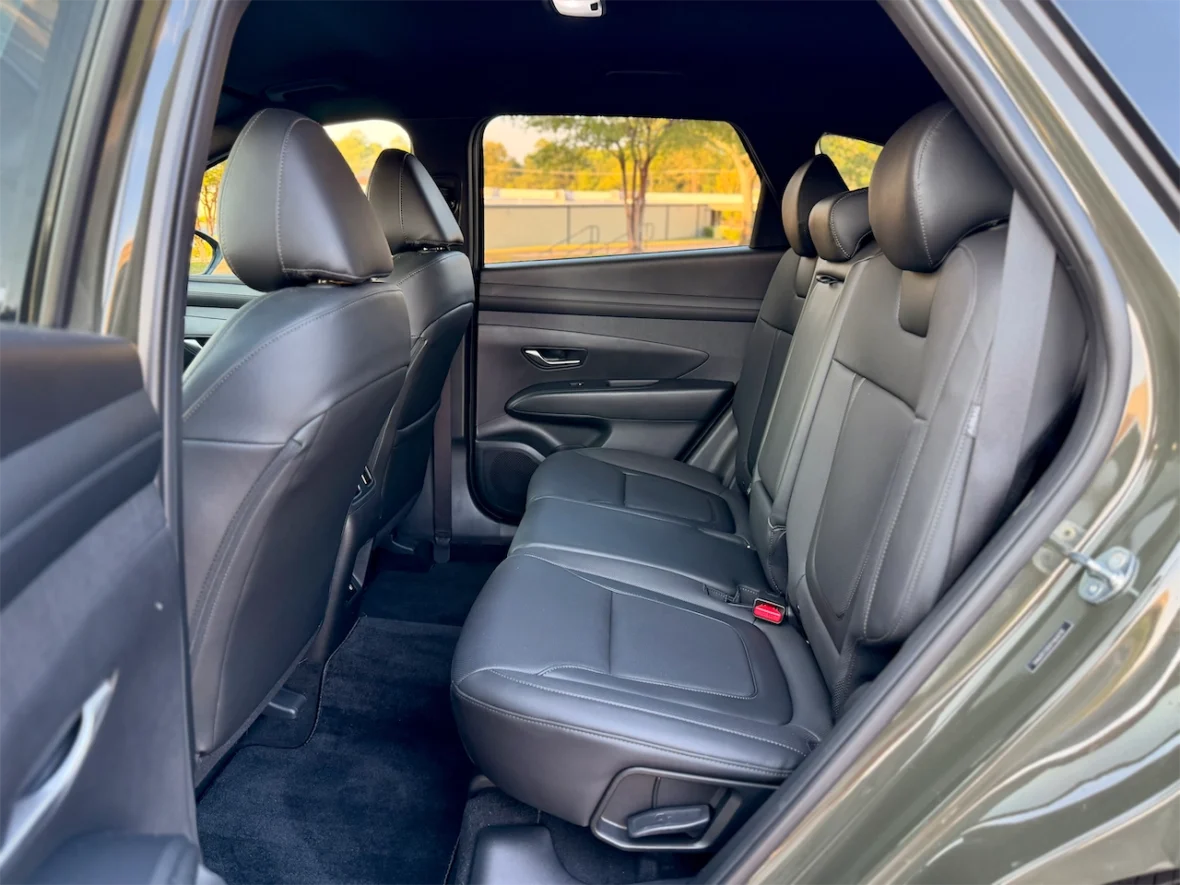
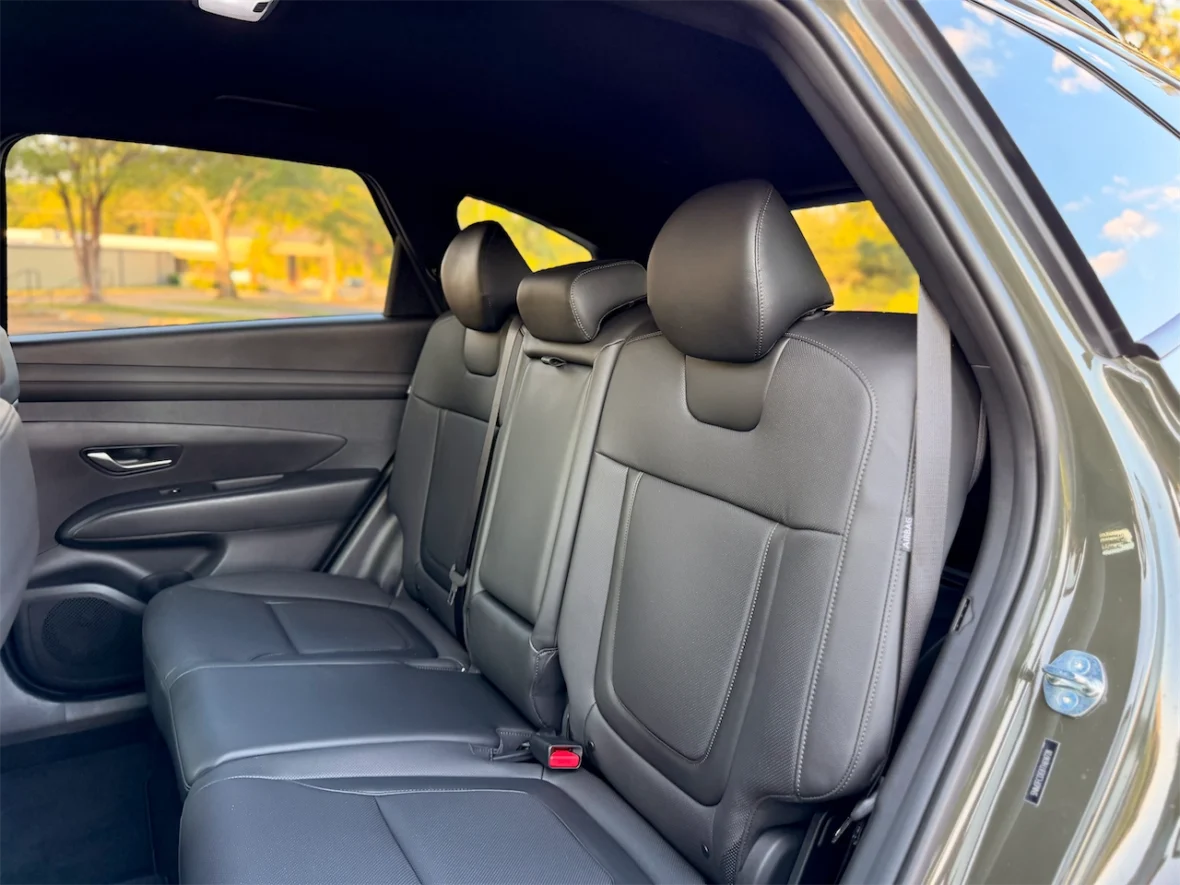
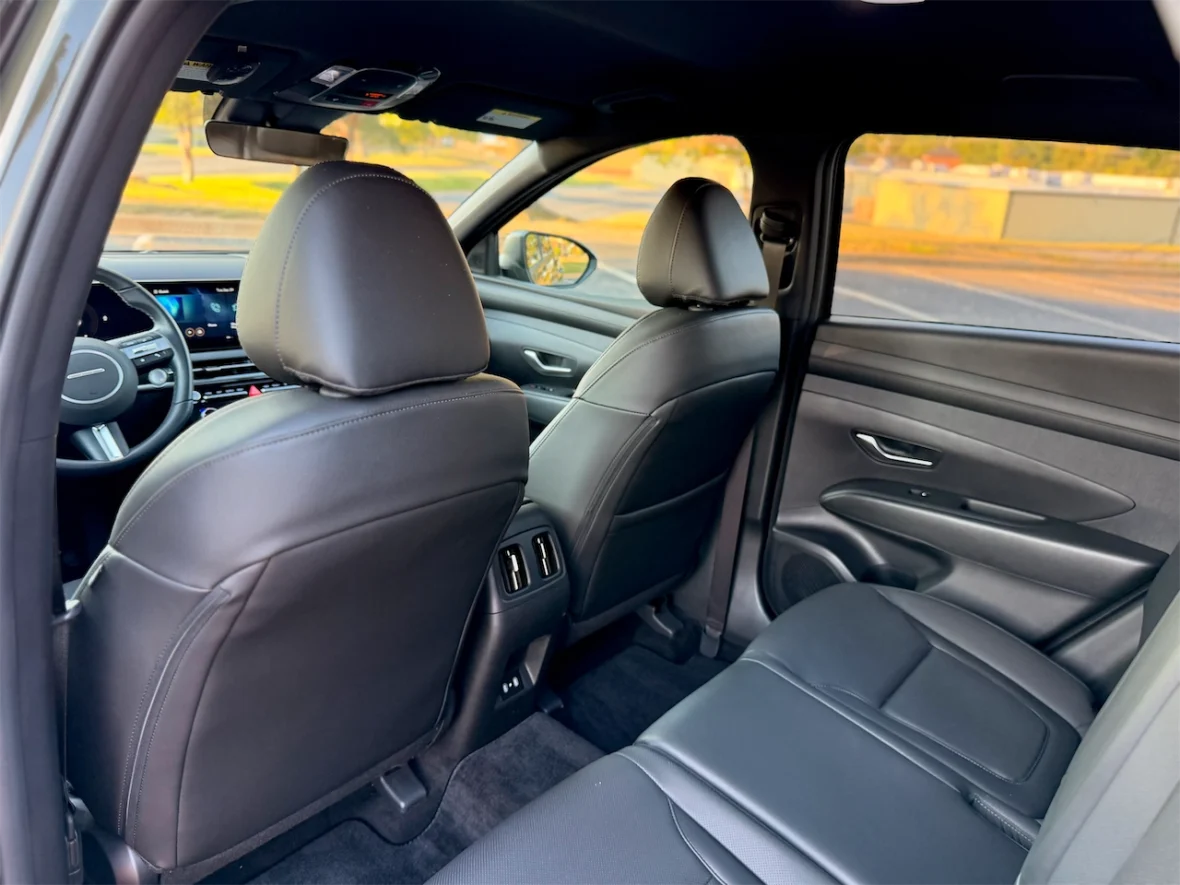
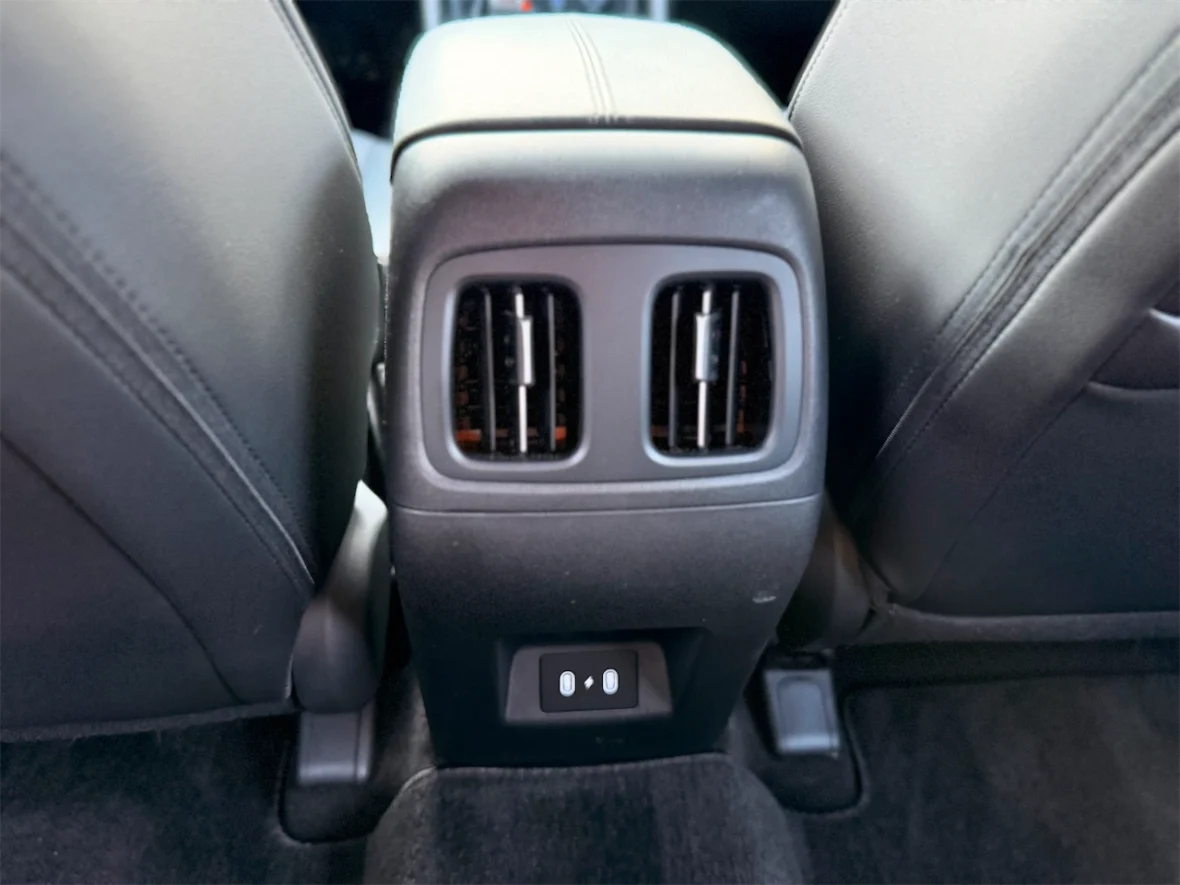
The rear doors open nice and wide, something Hyundai is also proud of on the 2027. Sitting behind myself at 5-foot-10, I have a lot of room, and my feet don’t even touch the seat in front of me. In addition, you’ll find two air vents, two USB-C ports, and a map pocket on the back of the passenger seat. The center seat folds down into an armrest with two cup holders, and the rear seatbacks recline.
One drawback is that the center seatbelt sits so far inboard that it gets in the way of Tucker’s car seat, and an adult in that seat would have a buckle in their back. I also wish the larger 60% section of the split seat were on the driver side, because my shoulder kept hitting the seat next to me. Small complaints, I know. On the bright side, the very rectangular rear window offers great visibility. For more on car seats and family life, check out our upcoming family review.
How the 2026 Tucson XRT Drives
Unfortunately, the 2.5-liter is very predictable in its power delivery, which is to say it’s slow to get going. It takes a moment to get into its powerband, and that can be a problem when you’re pulling into oncoming traffic or merging onto the highway. Once you’re moving, though, it’s perfectly acceptable in normal situations, if a little on the noisy side.
I didn’t paint the best picture of the powertrain, but the suspension is really good. Driving through neighborhoods with dips for water drainage, the Tucson XRT is not a bad sprung car at all. In fact, it’s very comfortable. The seats are a little firm but still very comfortable, and our XRT had heated front seats. If you want ventilated seats, you’ll have to step up to the top Limited trim.
Final Thoughts on the 2026 Tucson XRT
The 2026 Tucson XRT is an affordable family crossover with an off-road flair. It’s a good all-around grocery getter, perfectly fine for running errands, and even a great first vehicle. The XRT package gives it a little attitude, but it has more character than capability when things get rough. Then again, how many people really take their crossovers off-road anyway?
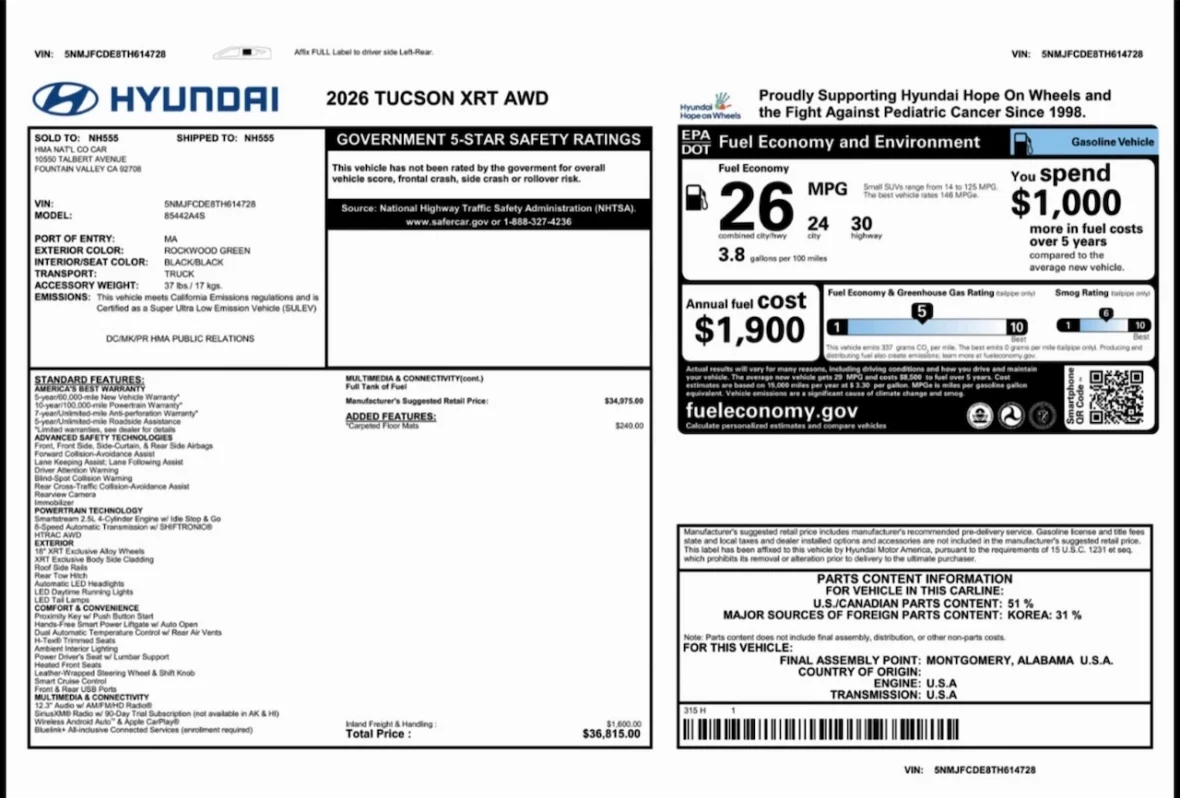
For just over $35,000, this is a good package, and our 27 MPG on regular fuel means it won’t break the bank either. Now that the 2027 model has been announced, you can probably find an even better deal than what the window sticker says. Learn more at HyundaiUSA.com.
Stay tuned for our family review, with Holli behind the wheel and Tucker in his booster seat. In the meantime, sign up for our newsletter using the form at the bottom of this page.
2026 Hyundai Tucson XRT AWD Specs
Powertrain
- Smartstream 2.5-Liter GDI/MPI Inline 4-Cylinder Engine With Idle Stop & Go
- 187 Horsepower @ 6,100 RPM
- 178 lb-ft of Torque @ 4,000 RPM
- 8-Speed Automatic Transmission With SHIFTRONIC
- HTRAC All-Wheel Drive (AWD)
Capability, Wheels, and Towing
- 8.3 Inches of Ground Clearance
- XRT Exclusive 18-Inch Alloy Wheels
- 235/60R18 Tires
- Rear Tow Hitch
- 2,750-Pound Towing Capacity (With Trailer Brakes)
Exterior
- XRT Exclusive Body Side Cladding
- Roof Side Rails
- Hands-Free Smart Power Liftgate With Auto Open
- Automatic LED Headlights, LED Daytime Running Lights, and LED Taillights
Interior and Seating
- Seating for 5
- Black H-Tex Trimmed Seats
- Power Driver’s Seat With Lumbar Support
- Heated Front Seats
- Leather-Wrapped Steering Wheel and Shift Knob
- Ambient Interior Lighting
- Dual Automatic Temperature Control With Rear Air Vents
- Proximity Key With Push Button Start
Technology
- 12.3-Inch Digital Instrument Cluster
- 12.3-Inch Touchscreen Audio With AM/FM/HD Radio
- Wireless Apple CarPlay and Android Auto
- SiriusXM Radio With 90-Day Trial Subscription
- Bluelink+ All-Inclusive Connected Services
- Front and Rear USB Ports
Driver Assistance and Safety
- Forward Collision-Avoidance Assist
- Lane Keeping Assist and Lane Following Assist
- Smart Cruise Control
- Blind-Spot Collision Warning
- Rear Cross-Traffic Collision-Avoidance Assist
- Driver Attention Warning
- Rearview Camera
- Front, Front Side, Side-Curtain, and Rear Side Airbags
Fuel Economy
- EPA Estimated 24 City / 30 Highway / 26 Combined MPG
- 27 MPG Observed in GT: Garage Talk Testing
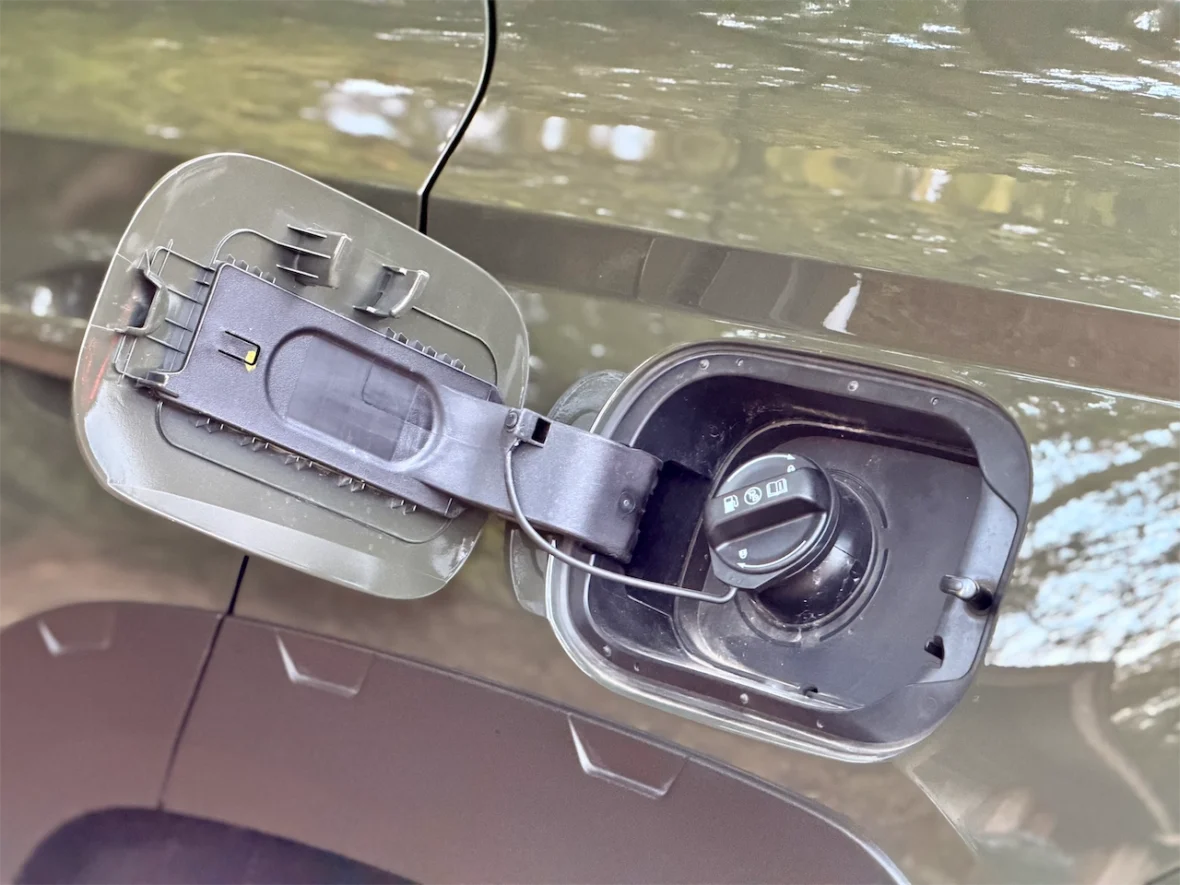
- Regular Unleaded Fuel
- 14.3-Gallon Fuel Tank
Warranty
- 5-Year/60,000-Mile New Vehicle Warranty
- 10-Year/100,000-Mile Powertrain Warranty
- 7-Year/Unlimited-Mile Anti-Perforation Warranty
- 5-Year/Unlimited-Mile Roadside Assistance
Pricing and Colors
- Exterior Color: Rockwood Green
- Interior Color: Black
- Standard MSRP: $34,975
- Carpeted Floor Mats: $240
- Price as Tested: $36,815 (Including $1,600 Inland Freight and Handling)